
Two Plans, One Big Difference
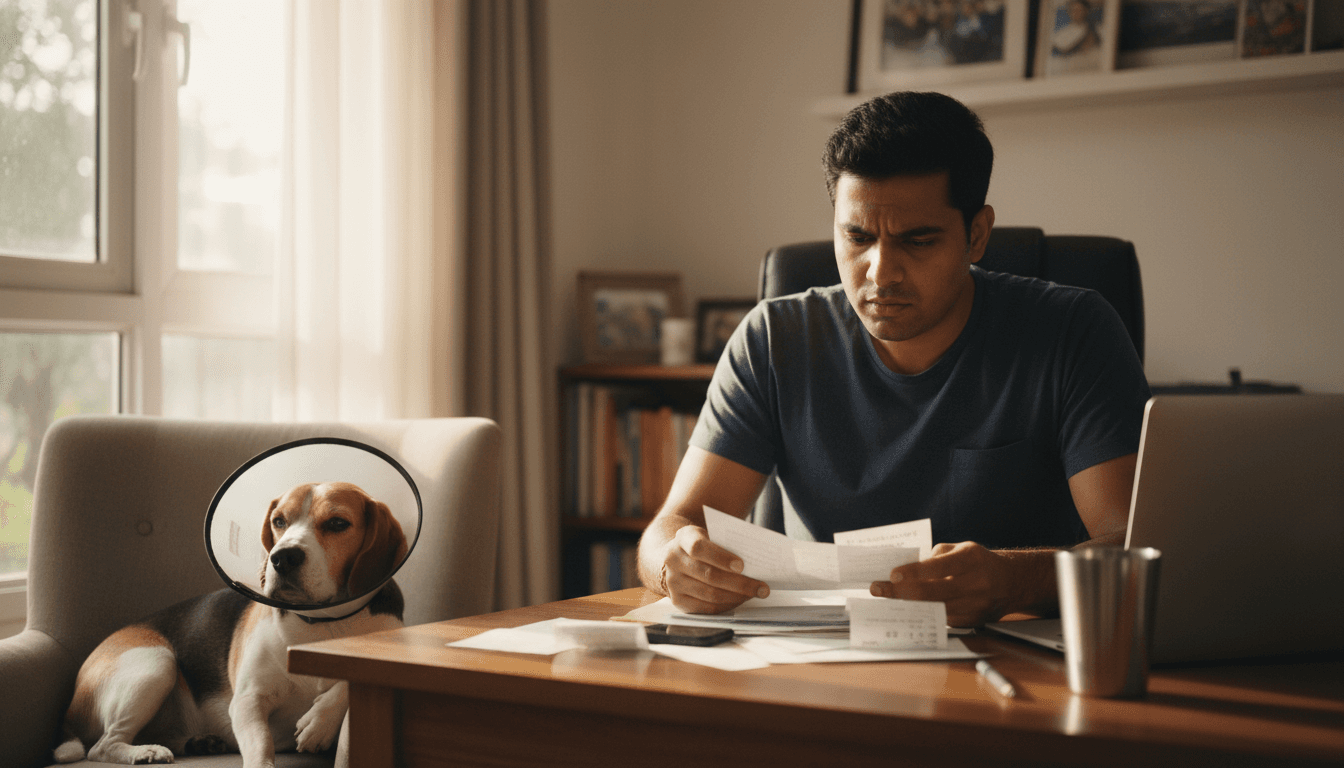
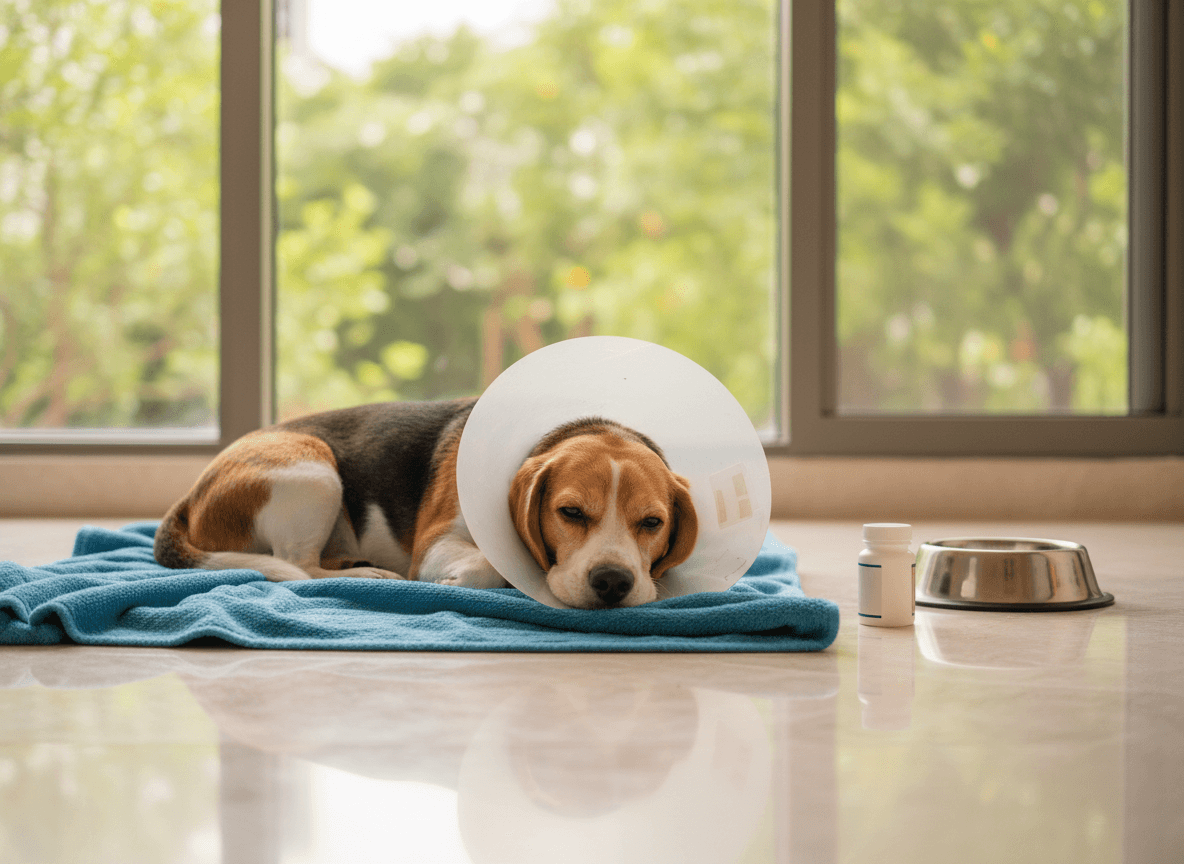
My Labrador, Mango, had a rough week in January 2025. A tick bite turned into ehrlichiosis (tick fever), and the doxycycline course plus blood work at our Bengaluru clinic came to Rs 8,400. A friend whose Golden Retriever developed lymphoma the same month spent Rs 1,76,000 over five months of treatment. Both of us had pet insurance. Only one of us got reimbursed.
The difference wasn't the insurer. It was the plan type. My friend had accident-only coverage. I had full accident-and-illness coverage. That gap, illness vs. injury, is the single most important decision you'll make when choosing pet insurance in India.
This guide breaks down exactly what each plan covers, what Indian insurers actually offer (with real premium figures from Bajaj Allianz, ICICI Lombard, and Digit), and the honest financial case for each option depending on your dog's age, breed, and your city.
Key Fact
According to IRDAI-registered policy documents, accident-only plans have zero waiting period for injuries. Illness coverage under full accident-and-illness plans has a 90-day waiting period. That gap matters enormously if your dog shows symptoms shortly after you buy the policy.
What Full Accident-and-Illness Coverage Includes
Full accident-and-illness coverage is what most people picture when they hear 'pet insurance.' It covers both unexpected injuries and disease. Bajaj Allianz's full coverage plan (UIN: IRDAN113RP0029V01201920) is currently India's most widely available retail option and covers surgery expenses, hospitalization, and illness treatment as the base.
The base plan covers: fractures and trauma injuries, illness hospitalization (after 90-day waiting period), surgery costs, prescribed medications during covered treatments, and diagnostic tests ordered by your vet. Optional add-ons include a Terminal Diseases Cover, Long Term Care Cover for chronic conditions, OPD Cover, and Third Party Liability.
ICICI Lombard's Pet-O-Sure plan covers accidental death, death from disease, third-party liability, hospitalization, and surgery, with sum insured options from Rs 10,000 to Rs 5,00,000 and entry age from 3 months to 8 years. Digit Insurance offers a digital-first full coverage plan with premiums from around Rs 5,000 to Rs 15,000 annually for a Rs 1 lakh sum insured, with optional wellness add-ons for vaccinations and annual check-ups.

Bajaj Allianz Breed Categories
Bajaj Allianz classifies dogs into Small, Medium, Large, and Giant categories. Giant breeds (Great Dane, Saint Bernard) can only be enrolled up to age 4 and exit at 6. Small, Medium, and Large breeds enroll up to age 7 and exit at 10. Brachycephalic breeds, including Pugs, Bulldogs, and Boxers, face extra scrutiny during underwriting.
What Accident-Only Insurance Covers (and What It Doesn't)
Accident-only plans cover injuries from unexpected external events. A dog hit by a vehicle on MG Road, a puppy that swallowed a sock and needed endoscopic removal, a Husky that fell off a terrace and fractured a leg. These all qualify.
What doesn't qualify is everything illness-related. Parvovirus, ehrlichiosis, canine distemper, skin allergies, urinary tract infections, cancer, diabetes, kidney disease. None of it. And this is not a small gap. According to data from Vetic's veterinary clinics, tick fever alone is among the most common presentations in Indian cities, particularly in Delhi, Bengaluru, and Pune during monsoon and post-monsoon season.
The Bajaj Allianz accident-only plan starts at Rs 169 per year for a Rs 50,000 sum insured. Genuinely cheap. But that low entry price is built on the assumption that most expensive vet visits (illness) never get filed.
What Accident-Only Misses
Roughly 65-70% of Indian vet visits are illness-related: infections, skin conditions, gastrointestinal issues, chronic diseases. Accident-only insurance covers the remaining 30-35%. If your dog gets tick fever in Delhi's October tick season, you pay 100% out-of-pocket.
Side-by-Side: What Each Plan Type Covers
Here's a direct comparison across the scenarios Indian dog owners actually face at their vet clinic:
| Scenario | Accident-Only | Full Coverage |
|---|---|---|
| Hit by vehicle, fracture surgery | Covered | Covered |
| Tick fever (ehrlichiosis), doxycycline + blood work | NOT covered | Covered* |
| Parvovirus hospitalization 5 days | NOT covered | Covered* |
| Foreign body (sock/ball) endoscopy | Covered | Covered |
| Skin allergy, ongoing treatment | NOT covered | Covered* |
| Cancer chemotherapy | NOT covered | Covered* |
| Hip dysplasia surgery (Labrador) | NOT covered | Covered* (6-12 month wait) |
| Gastroenteritis, IV fluids 2 days | NOT covered | Covered* |
Real INR Costs: What Indian Dog Owners Actually Pay
The cost gap between plan types is real, but so is the cost gap between insured and uninsured vet bills. Here's what Indian dog owners are actually paying at clinics in 2025-2026, based on data from HDFC ERGO's vet cost guide and Vetnest's parvo treatment breakdown:
| Condition | Estimated INR Cost |
|---|---|
| Parvovirus treatment (5-7 days hospitalization) | Rs 6,000 - Rs 18,000+ |
| Ehrlichiosis/tick fever (diagnosis + doxycycline) | Rs 5,000 - Rs 12,000 |
| Fracture surgery (leg, plates/pins) | Rs 25,000 - Rs 80,000 |
| Foreign body removal (endoscopy or surgery) | Rs 15,000 - Rs 60,000 |
| Cancer treatment (lymphoma, 6 cycles chemo) | Rs 80,000 - Rs 2,00,000 |
| Hip dysplasia surgery | Rs 1,50,000 - Rs 2,50,000 |
| Emergency consultation (metro clinic) | Rs 2,000 - Rs 5,000 |
| Annual wellness check-up | Rs 3,000 - Rs 7,000 |
One parvovirus episode at a Bengaluru clinic like Cessna Lifeline or DCC Animal Hospital will cost more than three years of full-coverage premiums for a young Labrador. That math is uncomfortable but accurate. If you're still deciding whether insurance makes financial sense at all, our pet insurance is it worth it guide runs the numbers over a 10-year dog lifespan.

RFID Discount
Bajaj Allianz gives a 5% premium discount if your dog is RFID-tagged (microchipped). For a Rs 15,000 full-coverage premium, that's Rs 750 back annually. The microchip itself costs Rs 500-Rs 1,500 at most Indian vet clinics, so it pays for itself in year one.
Upgrading Later Has Serious Limits
If you start with accident-only and later try to upgrade to full illness coverage, any condition treated during the accident-only period becomes a pre-existing exclusion. Your Golden Retriever's ear infection treated out-of-pocket in year 1 means ear conditions are excluded forever from the upgraded plan you switch to in year 2.
Which Breeds Need Full Illness Coverage
India's most popular breeds carry specific health risks that make accident-only coverage financially dangerous. These aren't theoretical risks. Indian vets see them constantly.
Labradors and Golden Retrievers have high rates of hip dysplasia (Rs 1.5-2.5 lakh surgery), ear infections (Rs 8,000-Rs 12,000 annually), and cancer. German Shepherds are prone to degenerative myelopathy and gastric dilation-volvulus (bloat), an emergency surgery costing Rs 60,000-Rs 1.2 lakh. Pugs and Bulldogs need respiratory interventions (BOAS surgery Rs 40,000-Rs 1 lakh) and have chronic skin fold infections. Dachshunds have a 1-in-4 lifetime risk of IVDD (intervertebral disc disease), with spinal surgery running Rs 1.2-Rs 2.5 lakh.
If you own any of these breeds, accident-only coverage is like buying fire insurance that doesn't cover electrical fires. You're protected for the rare event and exposed to the likely one. Our guide on pre-existing conditions coverage explains how to handle existing health issues when applying.

When Accident-Only Actually Makes Sense
I'm not dismissing accident-only entirely. There are genuine situations where it's a reasonable choice. The key is being honest with yourself about the tradeoffs.
Senior dogs (8 years and older) are the clearest case. Full illness-and-accident premiums for an 8-year-old German Shepherd run Rs 25,000-Rs 40,000 annually and come loaded with age-related exclusions. Most pre-existing conditions your senior dog has accumulated over a lifetime won't be covered anyway. An accident-only plan at Rs 3,000-Rs 6,000 protects against fractures and trauma at a cost that makes actuarial sense. Read more on our pet insurance for senior dogs guide for the detailed numbers.
Indian Pariah Dogs (INDogs) and other mixed-breed dogs with no known genetic predispositions are another case. Their genetic diversity means lower rates of hereditary conditions. A healthy, young INDog with no health history, owned by someone with Rs 30,000-Rs 50,000 in liquid savings for illness emergencies, is a reasonable candidate for accident-only coverage.
The third scenario: temporary coverage gaps. If you're waiting for a new full-coverage policy's waiting period to pass (or between jobs), accident-only provides trauma protection at minimal cost. Just be careful that any illness during this period doesn't become a permanent pre-existing exclusion when you upgrade.
The Emergency Fund Alternative
If you choose accident-only, redirect the premium savings into a dedicated emergency health fund. At Rs 10,000-Rs 20,000 per year saved versus full coverage, you'd have Rs 50,000-Rs 1,00,000 after five years. Keep this in a separate savings account, not your main account. That buffer covers most illness episodes except cancer or major surgery.


Five Real Claim Scenarios from Indian Dog Owners
Here's how the same vet bill plays out under each plan type, using realistic Indian costs:
Scenario 1, Parvovirus, Pune, 6-month Labrador puppy. Five days of IV fluids, antibiotics, anti-nausea medication at a private Pune clinic. Total cost: Rs 14,000. Accident-only payout: Rs 0. Full-coverage payout (after 10% co-pay, assuming past 90-day wait): Rs 12,600. That Rs 12,600 difference is nearly two years of full-coverage premiums for a small breed.
Scenario 2, Leg fracture, Bengaluru, 3-year-old German Shepherd. Fell from terrace, fractured hind leg, surgery with plates, follow-up care. Total: Rs 45,000. Accident-only payout (after 10% co-pay): Rs 40,500. Full-coverage payout: Rs 40,500. This is where accident-only covers exactly as well. Both plans produce identical results for true accidents.
Scenario 3, Tick fever, Delhi, 2-year-old INDog. Ehrlichiosis confirmed by PCR (Rs 1,200-Rs 1,500 for the test alone per Vetnest), doxycycline for 30 days, liver support. Total: Rs 9,500. Accident-only payout: Rs 0. Full-coverage payout: Rs 8,550. Delhi's October tick season makes this scenario extremely common.
Scenario 4, Lymphoma, Chennai, 7-year-old Golden Retriever. Six chemotherapy cycles, diagnostics, medications over 5 months. Total: Rs 1,76,000. Accident-only payout: Rs 0. Full-coverage payout (Rs 2 lakh sum insured, 10% co-pay): Rs 1,58,400. Without insurance, the owner either finds Rs 1,76,000 or chooses palliative care.
Scenario 5, Foreign body removal, Mumbai, 1-year-old Beagle. Swallowed a rubber toy, endoscopic removal at a Bandra clinic. Total: Rs 22,000. Accident-only payout: Rs 19,800. Full-coverage payout: Rs 19,800. Again, identical outcomes for true accidents. For a comparison of how to build your overall coverage approach, see our basic vs premium insurance guide.
The Math Across Five Scenarios
Total vet bills across five scenarios: Rs 2,66,500. Full illness-and-accident coverage paid: Rs 2,39,850 (90%). Accident-only paid: Rs 60,300 (23%). The illness scenarios (parvo, tick fever, lymphoma) account for Rs 1,99,500 of bills that accident-only doesn't touch.
How to Choose: A Decision Framework
Run through these four checks before deciding:
Dog's age and breed: Young purebred dogs with known genetic risks (Labrador, GSD, Pug, Dachshund, Golden Retriever) should get full illness-and-accident coverage before any symptoms appear. Young INDogs and mixed breeds under 3 years with clean health histories can reasonably go accident-only if finances are tight, provided you have savings to back it up. Senior dogs over 8 should usually stay accident-only because full-coverage premiums rarely make actuarial sense at that age.
Your city's disease risk: Bengaluru, Delhi, Pune, and Mumbai have documented tick-borne disease problems year-round, with peaks in monsoon and post-monsoon seasons. If your dog goes to parks, playgrounds, or uses a dog walker, full illness coverage isn't optional. A single ehrlichiosis episode costs Rs 8,000-Rs 15,000 and can recur.
Your financial cushion: Can you absorb a Rs 50,000-Rs 1,00,000 vet bill without financial strain? If yes, accident-only with dedicated savings is viable. If that bill would mean skipping loan payments or raiding your emergency fund, full illness coverage is genuinely protective. Our article on pet insurance vs a savings account covers this tradeoff in detail.
Timeline: Are you planning to keep this dog for 10-15 years? Over a dog's lifetime, a single cancer diagnosis or orthopedic surgery will cost more than 5-8 years of full-coverage premiums combined. The senior dog insurance guide walks through how coverage costs and value shift as your dog ages.
Start Full Coverage, Switch Later if Needed
Buy full illness-and-accident coverage when your dog is young and healthy, ideally between 3-12 months old. You can always drop to accident-only later if premiums become unaffordable. You cannot retroactively cover illnesses that developed while you had accident-only coverage.
Reading the Fine Print Before You Buy
Indian pet insurance policies are filed with IRDAI and the full policy wordings are publicly available on the IRDAI policyholder portal. Before committing to any plan, download the actual policy document, not the brochure, and look specifically for: the Exclusions annex, the waiting period table, the definition of 'accident' vs 'illness,' and the bilateral condition clause.
The definition of 'accident' varies between insurers. Most require an unexpected external event for accident claims. Bajaj Allianz's policy defines it as sudden, unforeseen, and violent events. A dog that develops a joint problem from long-term wear won't qualify as an 'accident' even if the symptoms appear suddenly. Torsion (bloat in German Shepherds) is classified as illness by some insurers and accident-equivalent by others. Check before assuming. For a detailed breakdown of Bajaj Allianz vs ICICI Lombard policy terms, see our insurer comparison guide.
One more area worth reviewing: common insurance mistakes Indian owners make. Waiting periods, lapsing coverage, and not reading exclusions account for most claim rejections.

Frequently Asked Questions
What is the cheapest pet insurance option in India for 2026?
Does accident-only insurance cover tick fever and parvovirus in India?
Can I switch from accident-only to full illness coverage in India?
Is full illness coverage worth it for Indian Pariah Dogs (INDogs)?
Which Indian insurers offer full illness-and-accident pet insurance, and how do they compare?
What waiting period applies for full illness coverage in India?
The Bottom Line
If I had to give one recommendation: buy full illness-and-accident coverage when your dog is young and healthy, before anything goes wrong. The math almost always favors it for Indian conditions. Endemic tick disease, active parvo risk in most cities, and breed-specific health issues in the dogs most commonly owned here (Labradors, German Shepherds, Pugs, Golden Retrievers) make illness coverage the financially sensible default.
Accident-only is a legitimate choice for specific situations: senior dogs where full-coverage premiums are prohibitive, healthy young INDogs with illness savings as backup, or temporary coverage gaps. It's not bad insurance. It's just limited in a way that catches owners off guard when illness strikes.
Whatever you choose, read the actual IRDAI-filed policy document before you buy. Not the brochure. Not the marketing website. The document. India has good pet insurance options, but only if you understand what you're actually purchasing. For a broader look at how pet insurance works in India, that guide covers the full ecosystem.
If you're in Bengaluru, costs vary significantly by neighbourhood — Raghavendra Colony, Chamrajpet averages ₹300 while DOMALUR, Domlur runs around ₹8,500.