My Golden Retriever's ₹72,000 Wake-Up Call
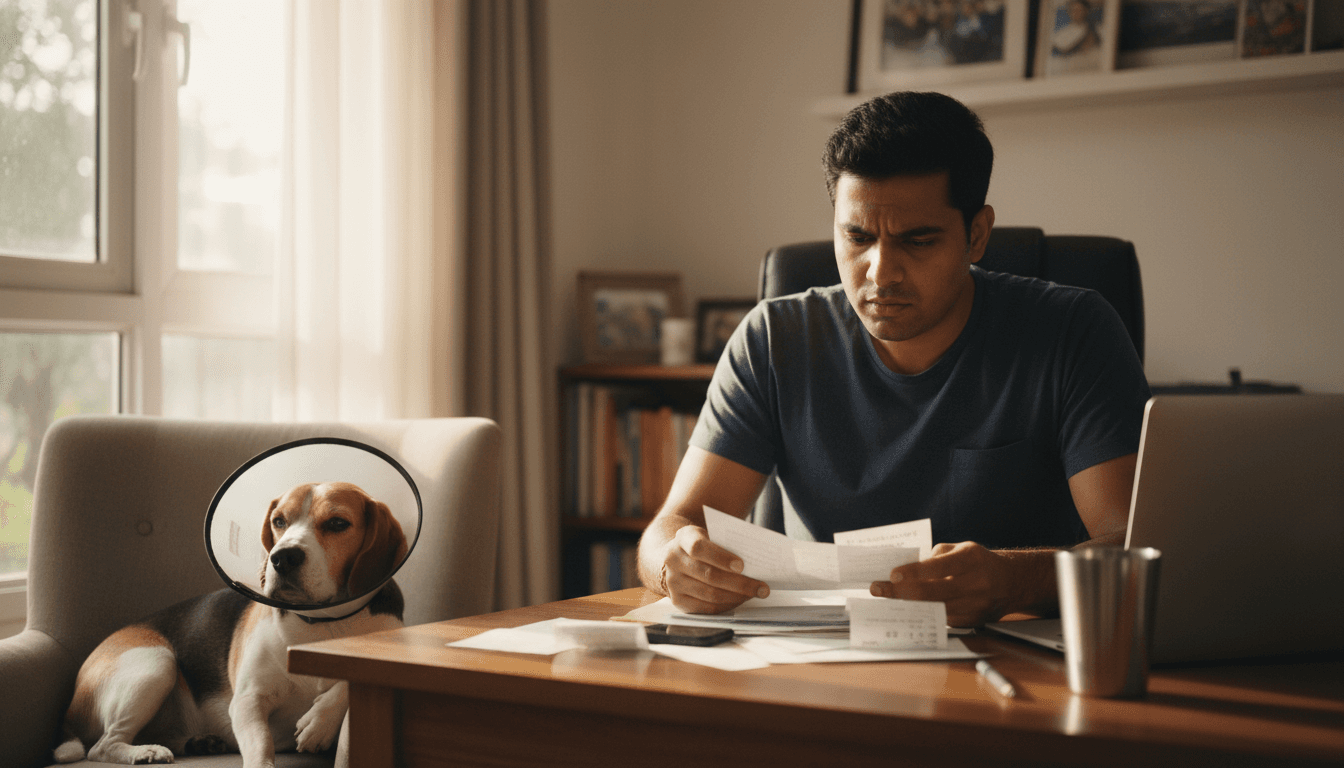
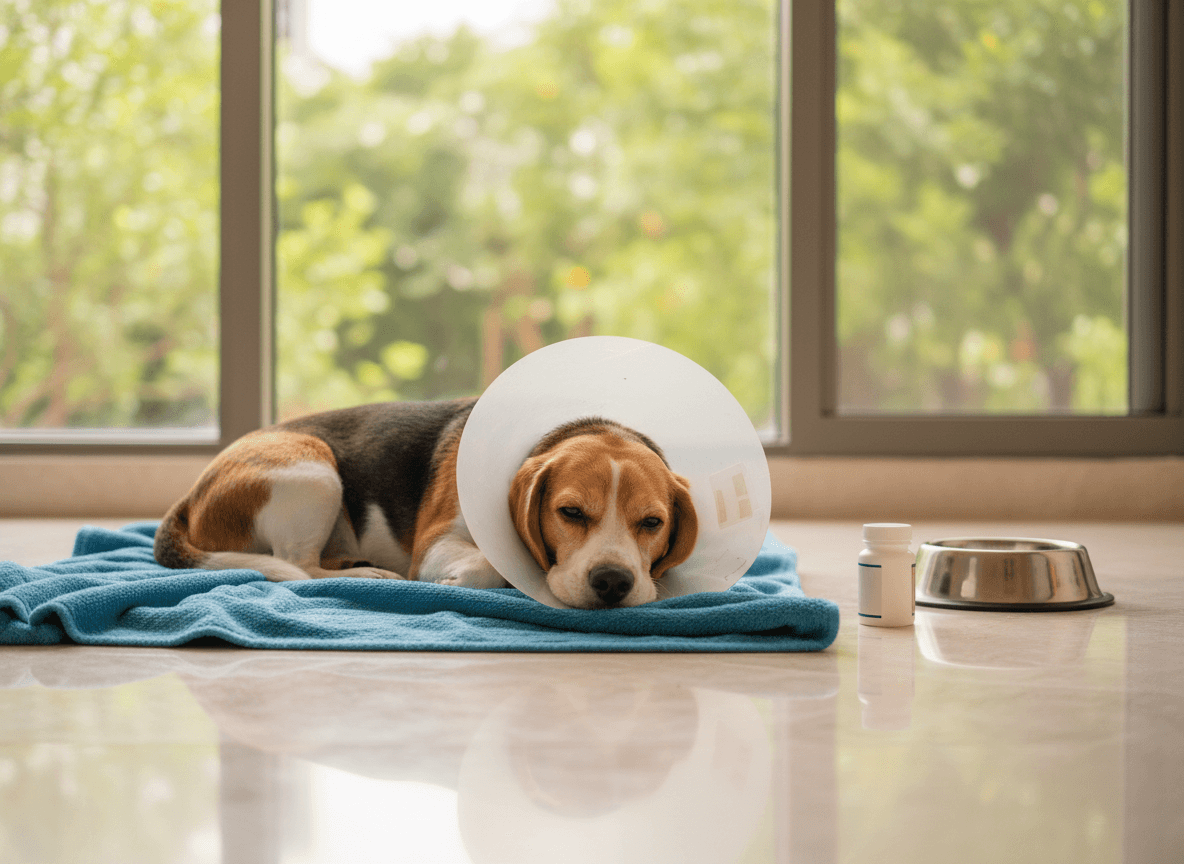
Two years ago, my Golden Retriever tore his cruciate ligament chasing a stray cat near our Pune apartment. The surgery bill at a private veterinary hospital came to ₹72,000. I didn't have pet insurance. My "dog savings fund" had exactly ₹11,400 in it because I'd raided it twice for vaccinations and a dental cleaning.
That experience forced me to sit down with actual numbers, not vague feelings about whether insurance "seems worth it." This article breaks down precisely when pet insurance beats a savings account, when self-funding wins, and the hybrid option most Indian dog owners overlook. If you're new to pet insurance, the how pet insurance works in India guide covers the basics before you read this comparison.
Key Takeaways
- Bajaj Allianz pet insurance starts at ₹315/year with surgery coverage up to ₹3,00,000, while Digit starts at ₹1,879/year with a 20% co-payment
- A savings-only approach needs ₹50,000+ to cover one emergency, yet 68% of Indian dog owners haven't saved that much for pet care
- Break-even happens after one major surgery: a single ligament repair (₹40,000-₹80,000) wipes out 4-8 years of premiums instantly
- Large and giant breeds have a 55-85% chance of needing major veterinary intervention within 10 years, making insurance the clear winner
- The hybrid approach, insurance for catastrophic events plus ₹500-₹1,000/month in a recurring deposit, suits most middle-income Indian households
What Indian Pet Insurance Actually Covers (and Doesn't)
Indian pet insurance operates differently from health insurance you'd buy for yourself. The Insurance Regulatory and Development Authority of India (IRDAI) classifies pet insurance under general insurance, not health insurance. That classification matters because it affects claim processes, tax treatment, and what providers can legally offer.
Right now, five insurers dominate the Indian market: Bajaj Allianz, New India Assurance, Digit, Oriental Insurance, and Future Generali. Coverage typically splits into a base plan (surgery and hospitalization) plus optional add-ons like mortality benefit, terminal disease cover, OPD expenses, and third-party liability.
Here's what trips up most buyers. Standard policies exclude pre-existing conditions, congenital diseases, breeding-related treatment, cosmetic procedures, and dental care unless caused by injury. Waiting periods run 15-30 days for illness claims, though accident coverage kicks in from day one with Bajaj Allianz's plan. Comparing basic vs premium pet insurance plans helps you decide which tier fits your budget before committing.
Indian Pet Insurance Providers: Coverage and Premium Comparison
| Provider | Premium Range | Key Details |
|---|---|---|
| Bajaj Allianz | ₹315-₹15,000/year | Surgery cover up to ₹3,00,000. Entry age 3 months to 7 years. 10% co-pay (min ₹1,000). 5% RFID discount. |
| Digit | ₹1,879-₹7,500/year | Sum insured ₹40,000-₹1,50,000. Entry age 12 weeks to 10 years. 20% co-pay. Digital claims. |
| New India Assurance | 5% of sum insured/year | Max ₹50,000 annual coverage. Entry age 8 weeks to 8 years. 20% co-pay. Government-backed insurer. |
| Oriental Insurance | Varies by breed | Max ₹50,000 annual. Entry age 8 weeks to 8 years. Excludes rabies and distemper claims. |
| Future Generali | Varies by breed/size | Entry age 6 months to 10 years. Doctor-on-call add-on available. Lost/stolen cover option. |
The Savings Account Approach: Building a Pet Emergency Fund
A dedicated pet savings fund gives you complete control. No claim forms, no waiting periods, no arguments about what's covered. You can spend it on anything from a ₹500 ear cleaning to a ₹80,000 orthopedic surgery.
The math looks attractive at first glance. A recurring deposit at HDFC Bank earns 6.0-6.45% interest. Deposit ₹1,000 per month and you'll have roughly ₹75,000 after 5 years including interest. That sounds decent until you check what emergencies actually cost at veterinary hospitals in Mumbai or Bangalore.
The biggest danger with self-funding is what I call the "slow leak" problem. You set up a ₹1,000/month deposit, but then your dog needs a ₹3,500 tick treatment in monsoon season. Next month, an ear infection runs ₹2,800. You dip into the fund both times. By month eight, you've saved ₹8,000 but spent ₹6,300, leaving just ₹1,700 for actual emergencies.
Real Veterinary Costs in India: The Numbers That Decide Everything
I pulled these figures from HDFC ERGO's 2025 veterinary cost report and cross-checked with actual invoices from veterinary clinics in Pune, Mumbai, and Delhi. Metro city prices run 30-50% higher than tier-2 cities, so these ranges cover both. For a breakdown by clinic type and procedure, the vet costs India 2026 price guide has itemized data from private hospitals and veterinary colleges across the country.
Veterinary Costs in India (2025-2026)
| Procedure | Cost Range (INR) | Insurance Covered? |
|---|---|---|
| Basic consultation | ₹500-₹1,000 | OPD add-on only |
| Core vaccinations (annual) | ₹1,500-₹3,000 | Usually excluded |
| X-ray or ultrasound | ₹1,200-₹4,000 | Yes, under diagnostics |
| Emergency consultation | ₹1,000-₹2,500 | Yes |
| Overnight hospitalization | ₹1,500-₹5,000/night | Yes |
| Minor surgery (wound, abscess) | ₹5,000-₹15,000 | Yes |
| Ligament repair (cruciate) | ₹40,000-₹80,000 | Yes |
| GDV/bloat emergency surgery | ₹35,000-₹75,000 | Yes |
| Cancer chemotherapy (per cycle) | ₹8,000-₹12,000 | Terminal disease add-on |
| Full cancer treatment (4-6 cycles) | ₹40,000-₹60,000 | Terminal disease add-on |
| Hip dysplasia surgery | ₹25,000-₹70,000 | Depends on policy |
| Dental cleaning under anesthesia | ₹3,000-₹8,000 | Usually excluded |
The Metro City Premium
A ligament repair that costs ₹45,000 at a veterinary college hospital in Hyderabad might run ₹78,000 at a private specialty clinic in South Mumbai. If you live in a metro city, budget for the higher end of every range. Clinics like Max Vets in Delhi and Cessna Lifeline in Bangalore charge premium rates but offer specialist surgeons and better post-op monitoring.
Break-Even Math: When Insurance Pays for Itself
Let's work through a concrete example. You insure a 1-year-old Labrador with Bajaj Allianz at ₹6,000/year (mid-range plan with surgery coverage up to ₹3,00,000 and 10% co-pay). Over 5 years, you'll pay ₹30,000 in premiums, assuming zero increases.
Now compare that to a savings account. You deposit the same ₹6,000 per year into an SBI recurring deposit at roughly 6.5% interest. After 5 years, you'd have about ₹35,200 including interest.
If your dog stays perfectly healthy for all 5 years, savings wins by ₹35,200 vs ₹0 (premiums are gone forever). But one ligament surgery at ₹60,000 changes everything. With insurance, you'd pay your 10% co-pay of ₹6,000 and the policy covers the remaining ₹54,000. With savings, your entire ₹35,200 fund vanishes and you still owe ₹24,800 out of pocket.
5-Year Outcome Comparison: Three Scenarios
| Scenario | Insurance Cost | Savings Available |
|---|---|---|
| No health events | ₹30,000 in premiums (lost) | ₹35,200 saved (you keep it) |
| One major surgery (₹60,000) | ₹30,000 premiums + ₹6,000 co-pay = ₹36,000 | ₹35,200 wiped out + ₹24,800 shortfall |
| Two surgeries (₹60,000 + ₹40,000) | ₹30,000 premiums + ₹10,000 co-pays = ₹40,000 | ₹35,200 wiped out + ₹64,800 shortfall |
The Break-Even Calculation
Divide your total premiums by the expected claim value. At ₹6,000/year premium, one ₹60,000 surgery in 10 years (₹60,000 in premiums paid) means you break perfectly even. But Labradors have a 40-55% probability of needing at least one major procedure within a decade, according to breed health data from the Indian Veterinary Research Institute. That probability makes insurance the statistically better bet for medium and large breeds.
Breed-by-Breed Risk Analysis
Not every dog needs insurance. An Indian Pariah (Indie) dog with strong genetic diversity has far fewer hereditary health problems than a purebred German Shepherd or a brachycephalic Pug. Your breed choice should directly drive your financial strategy.
I've spoken to veterinary surgeons at DCC Animal Hospital in Mumbai and Cessna Lifeline in Bangalore about which breeds they operate on most frequently. German Shepherds and Labradors dominate their orthopedic surgery lists. Pugs and Bulldogs fill their respiratory and eye surgery slots. Indies rarely show up for anything beyond accident-related trauma.
Insurance vs Savings Recommendation by Breed
| Breed Category | 10-Year Major Event Probability | Recommendation |
|---|---|---|
| Indie/mixed breeds | 15-25% | Savings account at ₹500/month usually sufficient. Consider accident-only policy. |
| Small breeds (Beagle, Spitz) | 20-30% | Savings works if disciplined. Insurance for Pugs and Shih Tzus due to respiratory risks. |
| Medium breeds (Labrador, Golden) | 40-55% | Insurance recommended. Hip and elbow dysplasia common. Cruciate tears frequent after age 5. |
| Large breeds (GSD, Rottweiler) | 55-70% | Insurance strongly recommended. Orthopedic and spinal issues dominate. GDV risk in deep-chested breeds. |
| Giant breeds (Great Dane, Mastiff) | 70-85% | Insurance non-negotiable. A single GDV surgery (₹35,000-₹75,000) justifies years of premiums. |
The Pre-Existing Condition Trap: Why Timing Matters
This is the single most important factor most people miss. If you start with a savings-only approach and your dog develops hip dysplasia at age 3, you can't retroactively buy insurance for it. Every Indian insurer, from Bajaj Allianz to Digit, permanently excludes pre-existing conditions. That diagnosis follows your dog for life.
My neighbor in Pune learned this the hard way. Her 4-year-old Labrador developed chronic allergies requiring ₹2,500/month in medication. She tried to buy insurance at that point, but allergies were classified as pre-existing and excluded. Over the next 6 years, she spent ₹1,80,000 on allergy treatment alone, all out of pocket.
Starting with insurance at a young age, ideally between 3 months and 1 year, preserves your options. If your dog stays healthy, you can always drop insurance later and switch to savings. But you can't go the other direction once a condition appears on your dog's veterinary records.
The Hybrid Strategy: What Most Indian Dog Owners Should Do
After my ₹72,000 cruciate ligament experience, I switched to what I call the 60/40 split. Sixty percent of my monthly pet budget goes to a Bajaj Allianz policy (₹500/month covers a mid-range plan with ₹3,00,000 surgery coverage). The remaining 40% goes into a dedicated SBI recurring deposit at ₹350/month.
Insurance handles the catastrophic risks, the ₹40,000+ surgeries and multi-day hospitalizations that would wreck a savings account. The RD fund covers everything insurance doesn't: routine vaccinations (₹1,500-₹3,000/year), dental cleanings (₹3,000-₹8,000), tick and flea treatments during monsoon (₹300-₹800 per treatment), and those ear infections that pop up every humid season in Chennai or Mumbai. Unlike pet wellness plans, this money stays yours to use however your dog needs, with no claim process required.
Setting Up the Hybrid System
Open a separate savings account or recurring deposit exclusively for pet expenses. Don't mix it with your general emergency fund. Most Indian banks let you open an RD with as little as ₹500/month. Label it clearly. When I named mine "Bruno Emergency Fund" at HDFC Bank, I stopped raiding it for non-pet expenses within the first month.
Age-Based Decision Framework
Your dog's age when you make this decision changes the entire calculus. A 6-month-old puppy and a 7-year-old senior dog face completely different risk profiles and insurance eligibility windows.
Puppies aged 3 months to 1 year get the cheapest premiums and the widest coverage options. Bajaj Allianz accepts dogs up to 7 years for initial enrollment (4 years for giant breeds), while Digit extends to 10 years. After those age cutoffs, you're locked out of new policies entirely. If your dog is currently 5 years old with no insurance, the window is closing fast.
Senior dogs aged 7+ face the toughest situation. Insurance premiums spike 40-60% compared to puppy rates when available at all. Most claims get scrutinized heavily for pre-existing conditions. At this stage, a well-funded savings account of ₹1,00,000+ becomes the more practical option, supplemented by a senior dog insurance policy if your dog still qualifies. The choice between annual vs lifetime pet insurance coverage also matters more at this stage, since lifetime policies can be more cost-effective for dogs with recurring conditions.
Tax Treatment and Investment Returns
Pet insurance premiums in India don't qualify for tax deductions under Section 80D of the Income Tax Act. That section covers health insurance for humans and dependents only. Pets aren't classified as dependents under Indian tax law, so your ₹6,000-₹15,000 annual premium is a pure expense with no tax benefit.
GST at 18% applies to pet insurance premiums, which adds to the effective cost. On a ₹6,000 base premium, you're actually paying ₹7,080 total. This is a common surprise for first-time buyers who compare headline premium numbers between Bajaj Allianz and Digit without accounting for GST. IRDAI does not exempt pet insurance from GST, unlike some health insurance products.
A savings account or recurring deposit earns interest taxable as "Income from Other Sources." At current rates, an HDFC Bank RD at 6.0-6.45% generates modest returns. On ₹12,000 annual deposits, you'd earn roughly ₹780 in interest the first year, taxable at your income slab rate. From a pure investment angle, savings wins in any scenario where your dog never needs expensive treatment. But insurance isn't an investment. It's risk transfer, and comparing the two on returns alone is like comparing a fire extinguisher to a stock portfolio.
Real Case Studies from Indian Dog Owners
Rahul in Bangalore adopted a 2-year-old Indie from CUPA (Compassion Unlimited Plus Action) and chose the savings-only route. He deposits ₹500/month into an SBI RD. After 4 years, his dog has needed only annual vaccinations (₹2,000/year) and one minor wound treatment (₹3,500). His fund has ₹20,400 remaining. For his low-risk Indie, savings has been the right call so far.
Sneha in Delhi bought a German Shepherd puppy and enrolled in Digit insurance at ₹4,200/year. At age 3, her dog developed hip dysplasia requiring surgery at ₹55,000 through Max Vets Delhi. After the 20% co-payment of ₹11,000, Digit covered ₹44,000. She'd paid ₹12,600 in total premiums at that point. Insurance saved her ₹31,400 on a single claim, and her dog's hip dysplasia treatment going forward remains covered because it wasn't pre-existing at enrollment.
Arjun in Chennai skipped insurance for his 3-year-old Rottweiler, planning to save instead. He managed ₹800/month for 18 months before his dog needed GDV emergency surgery at a private clinic. The bill: ₹62,000. His savings fund had ₹14,400. He borrowed ₹47,600 from family. He's now enrolled in Bajaj Allianz's pet insurance plan and maintains a parallel savings account.
Common Mistakes to Avoid
After talking to dozens of dog owners across Mumbai, Pune, Delhi, and Bangalore, I see the same errors repeated. The 12 most common pet insurance mistakes in India covers these in depth, but the biggest one is buying the cheapest policy without reading exclusions. A ₹315/year Bajaj Allianz plan gives you minimal coverage, and owners who file their first claim discover the sum insured doesn't cover half the surgery bill.
On the savings side, the most frequent mistake is treating your pet fund as a general emergency fund. You save ₹800/month for your dog, but then your car needs repairs and you "borrow" from the pet account. Six months later your dog has an emergency and the fund is half of what it should be.
Another trap: assuming you'll "start saving later." I hear this constantly from new puppy owners who spend ₹15,000-₹30,000 on the puppy purchase and then claim they can't afford ₹500/month for a savings fund. The first 2 years are your most affordable window, both for insurance premiums and building a savings buffer. Don't waste it.
Watch Out for Policy Gaps
Oriental Insurance excludes rabies, canine distemper, and leptospirosis from coverage. These are common and sometimes fatal conditions in India, especially if your dog spends time outdoors or in areas with stray dog populations. Check exclusion lists carefully before buying. A policy that excludes the diseases most likely to affect Indian dogs isn't protecting you from much.
Your Decision Checklist
I've boiled this down to four questions. Answer them honestly and the right strategy becomes obvious.
Can you absorb a ₹50,000-₹80,000 vet bill without financial stress? If yes, savings works. If that amount would mean borrowing from family or putting it on a credit card at 36% APR, you need insurance. Do you own a breed with known hereditary conditions like hip dysplasia (Labradors, GSDs), respiratory problems (Pugs, Bulldogs), or cardiac issues (Cavalier King Charles)? If yes, insurance is the mathematically sound choice.
Is your dog under 5 years old? If yes, you still have time to enroll with most Indian insurers. If your dog is older than 5, options narrow fast, so consider building a ₹1,00,000+ savings buffer as your primary strategy.
Can you consistently deposit ₹500-₹1,000/month into a pet fund without touching it for at least 2 years? If you're disciplined enough, savings can work for low-risk breeds. If you know you'll dip into it, insurance removes that temptation entirely because premiums are non-refundable. Once paid, you can't spend that money on something else.
The Bottom Line for Most Indian Dog Owners
If your household income is ₹50,000+/month and you own a medium to large breed, the hybrid approach costs ₹9,000-₹13,000/year and covers both catastrophic and routine expenses. Insurance (₹4,000-₹8,000/year with a ₹10,000 deductible) handles emergencies. A recurring deposit (₹500-₹700/month) handles vaccinations, dental, grooming, and the co-payment portion of insurance claims. Start before your dog turns 2 for the lowest premiums and broadest coverage.