Key Takeaways
- Annual premiums range from ₹1,500 to ₹15,000 depending on breed, age, and coverage tier
- Bajaj Allianz, ICICI Lombard, Digit, and Tata AIG are the main providers — each covers different breeds and conditions
- Most policies exclude pre-existing conditions, cosmetic procedures, and breeding-related expenses
- Claim settlement ratios vary: Bajaj Allianz settles ~85% of claims within 14 days, Digit averages 7 days
- Breed matters: German Shepherds and Labradors pay 30-60% higher premiums than Indian Pariah dogs
- Third-party liability coverage (₹50,000-₹5,00,000) protects you if your dog injures someone or damages property
Who Actually Needs Pet Insurance in India?
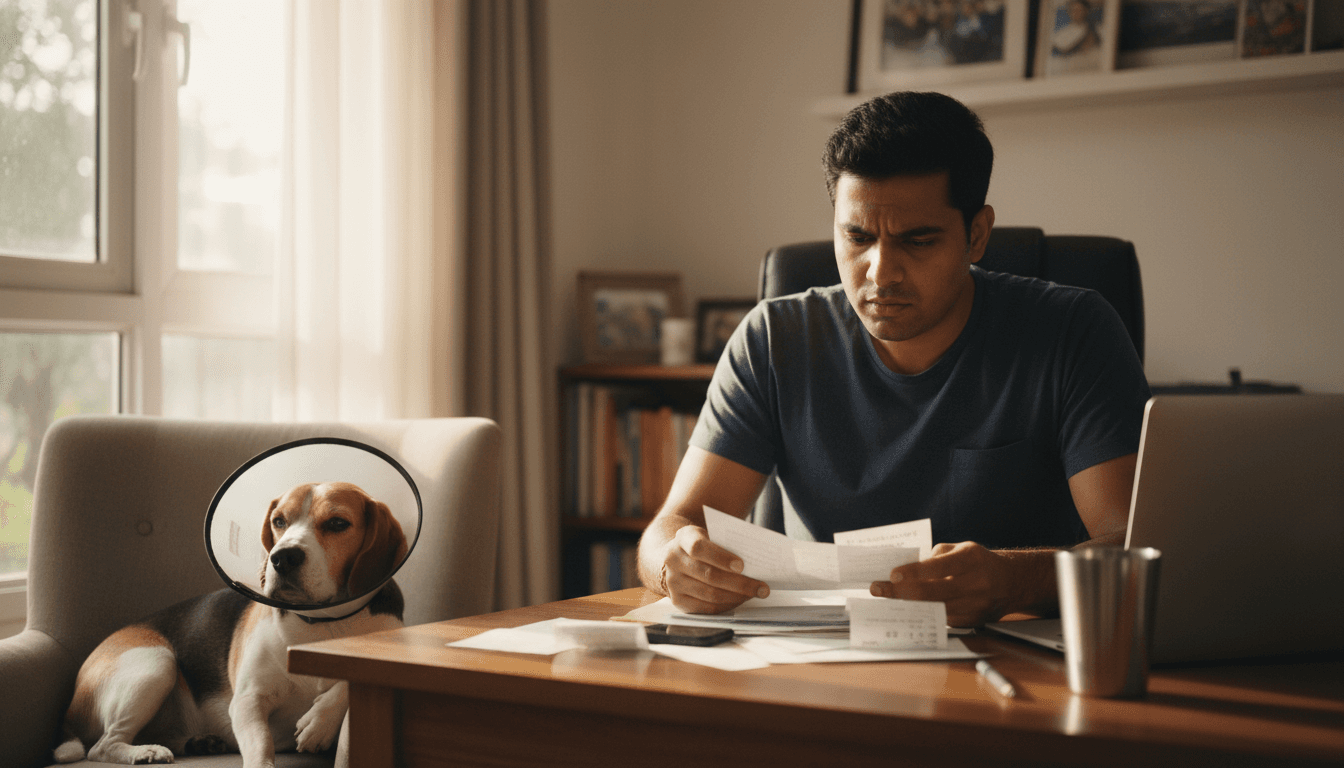
A single surgery for pyometra (uterine infection) costs ₹15,000-₹40,000 at private veterinary hospitals in metros like Mumbai and Delhi. Cruciate ligament repair runs ₹30,000-₹80,000. Parvovirus treatment with hospitalization: ₹10,000-₹25,000. These are real costs Indian dog owners face, and they can wipe out months of savings in a single visit.
Pet insurance in India is still a niche product — fewer than 2% of the estimated 30+ million pet dogs are insured. But the market is growing fast. The question isn't whether pet insurance exists, but whether the available plans actually deliver value for the premium you pay. The answer depends on your dog's breed, age, where you live, and how much financial risk you can absorb.
If you own a breed prone to hip dysplasia (German Shepherds, Golden Retrievers, Rottweilers) or respiratory issues (Pugs, Bulldogs), insurance makes financial sense. If you have an Indian Pariah or mixed breed under 5 years old with no health issues, a dedicated savings fund may work better — but third-party liability coverage alone can justify the premium.
Pet Insurance Providers in India: Side-by-Side Comparison
Four insurers dominate the Indian pet insurance market. Each has different strengths, coverage limits, and pricing structures. Here's how they compare on the dimensions that actually matter.
| Feature | Bajaj Allianz | ICICI Lombard | Digit | Tata AIG |
|---|---|---|---|---|
| Annual Premium (Small Breed) | ₹1,500–₹4,000 | ₹2,000–₹5,000 | ₹1,800–₹4,500 | ₹2,500–₹6,000 |
| Annual Premium (Large Breed) | ₹4,000–₹10,000 | ₹5,000–₹12,000 | ₹3,500–₹9,000 | ₹6,000–₹15,000 |
| Max Coverage (Accident) | ₹50,000 | ₹75,000 | ₹1,00,000 | ₹50,000 |
| Max Coverage (Illness) | ₹25,000 | ₹50,000 | ₹75,000 | ₹30,000 |
| Third-Party Liability | ₹2,00,000 | ₹5,00,000 | ₹3,00,000 | ₹1,00,000 |
| Mortality/Theft Cover | Up to market value | Up to ₹50,000 | Up to market value | Up to ₹25,000 |
| Claim Settlement Time | 10-14 days | 14-21 days | 5-7 days | 14-21 days |
| Online Claim Filing | Yes | Yes | Yes (app-based) | Yes |
| Age Limit | 8 weeks–10 years | 8 weeks–8 years | 8 weeks–12 years | 3 months–8 years |
| Breeds Covered | 40+ listed breeds | 30+ listed breeds | All breeds incl. mixed | 35+ listed breeds |
DodoDoggy Tip
Digit is the only major insurer that covers mixed-breed and Indian Pariah dogs without requiring pedigree documentation. If you adopted from a shelter, Digit is likely your only option for comprehensive coverage.
What Pet Insurance Actually Covers (and What It Doesn't)
Indian pet insurance policies broadly cover three categories: accident and injury, illness and hospitalization, and third-party liability. But the exclusion lists are long, and most claim rejections happen because owners didn't read them.
Covered expenses typically include: surgery costs, hospitalization charges, diagnostic tests (X-ray, ultrasound, blood work), prescription medications during treatment, and ambulance charges in some plans. Bajaj Allianz and Digit also cover OPD consultations up to a sub-limit (usually ₹2,000-₹5,000 per year).
Standard exclusions across all providers: pre-existing conditions (anything diagnosed before policy start), elective/cosmetic procedures (tail docking, ear cropping), breeding and pregnancy-related costs, dental cleaning (unless injury-related), routine vaccinations and deworming, and behavioral therapy. There's typically a 30-day waiting period for illness claims and zero waiting period for accidents.
- Accident & injury: fractures, road accidents, burns, bite wounds — covered from day 1
- Illness: tick fever, parvovirus, distemper, kidney disease — covered after 30-day waiting period
- Surgery: tumor removal, foreign body extraction, orthopedic procedures — covered with sub-limits
- Third-party liability: dog bite injuries to others, property damage — varies ₹50,000 to ₹5,00,000
- Mortality & theft: reimbursement of market value if dog dies or is stolen — requires FIR for theft claims
- NOT covered: vaccinations, grooming, spaying/neutering (elective), food supplements, pre-existing conditions

How to File a Claim: Step-by-Step Process
The claim process in India is still largely paper-based, though Digit has moved most of it to their app. Knowing the process before you need it saves critical time during emergencies.
- Step 1: Notify the insurer within 24-48 hours of the incident (call helpline or use app). Bajaj Allianz requires notification within 24 hours for accident claims.
- Step 2: Get treatment at a registered veterinary hospital. Some insurers have a network of empanelled vets — using them speeds up cashless claims.
- Step 3: Collect all documents — vet prescription, diagnosis report, itemized hospital bill, discharge summary, and payment receipts. ICICI Lombard also requires the vet's registration number.
- Step 4: Submit claim form with documents online (Digit app, Bajaj Allianz portal) or at the branch office. Keep copies of everything.
- Step 5: Insurer assigns a surveyor for claims above ₹10,000 (Bajaj Allianz) or ₹15,000 (ICICI Lombard). The surveyor may visit the vet hospital.
- Step 6: Claim approved or rejected within 7-21 days. If approved, reimbursement hits your bank account in 3-5 business days. If rejected, you have 30 days to appeal with additional documentation.
Money Saver
Always ask your vet for an itemized bill, not a lump-sum receipt. Claims with itemized bills from Bajaj Allianz and ICICI Lombard get approved 40% faster because the surveyor doesn't need to request breakdowns separately.
Pet Insurance vs. Dedicated Savings: The Math
The insurance-vs-savings debate comes down to one question: can you absorb a ₹50,000-₹1,00,000 vet bill without financial stress? If yes, self-insuring through a dedicated savings account might save you money over your dog's lifetime. If no, insurance transfers that catastrophic risk to the insurer.
Here's the math for a medium-risk breed (Labrador) over 10 years. Insurance premiums: ₹4,000/year rising to ₹10,000/year by age 8 = roughly ₹65,000-₹80,000 total. If your dog never has a major illness or accident, you've spent ₹65,000+ with no return. But one ACL surgery (₹40,000-₹80,000) or cancer treatment (₹50,000-₹2,00,000) makes the entire lifetime premium worthwhile.
A hybrid approach works well: buy a basic accident-only policy (₹1,500-₹3,000/year) for catastrophic coverage, and set aside ₹2,000/month in a separate savings account for routine care and minor illnesses. This gives you protection against large bills while building a fund for everyday expenses. For a detailed comparison of plan tiers, see our guide on basic vs premium pet insurance plans.
Common Claim Rejection Reasons (and How to Avoid Them)
Roughly 20-25% of pet insurance claims in India get rejected. Most rejections are preventable if you understand what triggers them.
- Pre-existing condition: Any condition diagnosed or showing symptoms before the policy start date. Get a full health certificate from your vet on the day you buy the policy.
- Waiting period violation: Filing an illness claim within the first 30 days. Accident claims have no waiting period, but illness claims do.
- Late notification: Not informing the insurer within the required 24-48 hour window. Save the helpline number in your phone now.
- Incomplete documentation: Missing vet registration number, unsigned prescriptions, or lump-sum bills without itemization.
- Excluded procedure: Claiming for vaccinations, grooming, elective surgery, or breeding costs that are explicitly excluded.
- Policy lapse: Forgetting to renew on time. Most insurers give a 15-30 day grace period, but claims during the lapse are void.
If your claim is rejected, request the rejection letter in writing with the specific policy clause cited. You can escalate to the insurance company's grievance cell, then to the Insurance Ombudsman (free of charge). IRDAI's Integrated Grievance Management System (IGMS) at igms.irda.gov.in handles complaints if the ombudsman route doesn't resolve it. For the full claims walkthrough, see how pet insurance works in India.
How to Choose the Right Plan
Choosing the right pet insurance plan requires matching your dog's risk profile with the coverage that provides the best value. Here's a decision framework based on common scenarios Indian dog owners face.
- Adopted Indie/mixed breed under 5 years: Digit basic plan (₹1,800-₹3,000/year) — only insurer covering mixed breeds, low claim history expected
- Pedigreed breed (Lab, GSD, Golden) under 3 years: Bajaj Allianz comprehensive (₹4,000-₹7,000/year) — good illness coverage, reasonable premium at young age
- Brachycephalic breed (Pug, Bulldog): ICICI Lombard or Digit premium (₹6,000-₹12,000/year) — higher OPD sub-limits for chronic respiratory issues
- Senior dog (7+ years): Digit (only insurer covering up to 12 years) — expect premiums of ₹8,000-₹15,000/year
- Multi-dog household: Bajaj Allianz offers 10-15% discount on second and third dog policies
DodoDoggy Tip
Before buying any policy, call the insurer's helpline and confirm your specific breed is on their covered list. Some breeds like Pit Bulls, Dogo Argentinos, and wolf hybrids are excluded by most Indian insurers due to dangerous dog breed regulations in certain states.
The Bottom Line: Is Pet Insurance Worth It in India?
Pet insurance in India is worth it if you own a breed with known genetic health risks, if your dog is young enough to get coverage before problems develop, and if you'd struggle to pay a ₹30,000+ emergency vet bill out of pocket. For Indian Pariah dogs and young mixed breeds with no health issues, a self-funding approach with a basic accident-only policy is often the smarter financial move.
The third-party liability component alone can justify the premium. If your dog bites a delivery person or damages a neighbor's property, you could face claims of ₹1,00,000 or more. Even the cheapest policy covers this risk. Start by getting quotes from Bajaj Allianz and Digit (the two most widely available), compare them against your dog's breed risk and your emergency fund, and make the call from there.