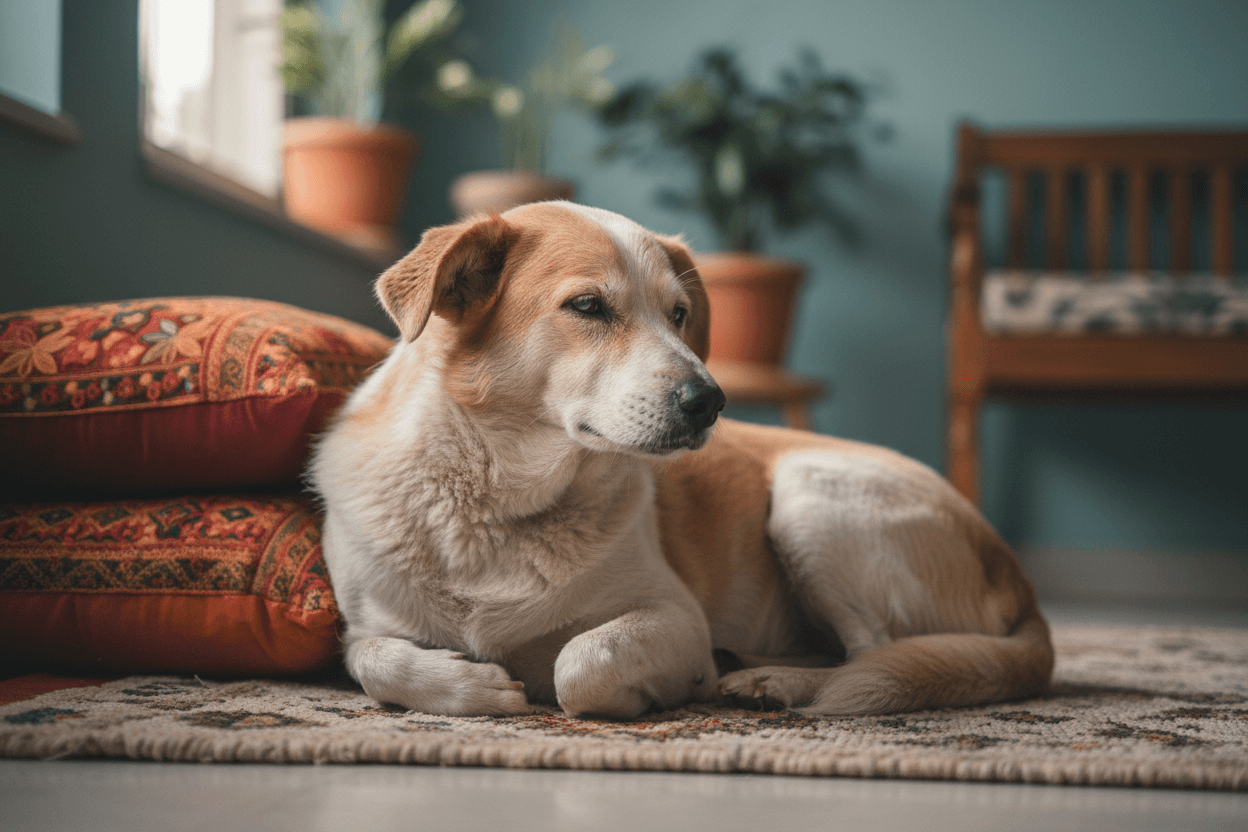
My Labrador's belly turned into a sound effects machine — constant gurgling, gas that could clear our Koramangala flat, and loose morning stools for two straight weeks. My vet used two words I hadn't heard before: gut dysbiosis. That conversation changed how I think about dog health entirely. The <a href='/learn/dog-vomiting-causes-and-treatment-india'>causes of vomiting and loose stools in Indian dogs</a> are often gut-rooted, not isolated incidents.
The gut does more than digest food. Research published in <a href='https://pmc.ncbi.nlm.nih.gov/articles/PMC10609632/' target='_blank' rel='noopener'>Frontiers in Microbiology</a> confirms it houses roughly 70% of a dog's immune system. When gut flora tips out of balance — from antibiotics, contaminated water, monsoon food spoilage, or an abrupt food switch — the effects ripple outward: dull coat, recurring skin infections, sluggish energy, poor appetite. The gut is the first thing worth investigating when anything seems persistently off.
What Is Gut Dysbiosis and Why Indian Dogs Are Vulnerable
Gut dysbiosis means the balance of bacteria in your dog's intestine has shifted — good bacteria (Lactobacillus, Bifidobacterium) get outnumbered by harmful strains. <a href='https://pmc.ncbi.nlm.nih.gov/articles/PMC6971114/' target='_blank' rel='noopener'>Research published in Frontiers in Veterinary Science</a> identifies dysbiosis as the underlying driver of IBD, chronic diarrhea, food allergies, and immune dysfunction in dogs.
Indian dogs face a specific set of pressures that Western veterinary literature rarely covers. Monsoon months (June–September) bring contaminated puddle water, rapid fungal growth in open food bags, and elevated Leptospirosis risk — all of which hit the gut first. Summer temperatures above 40°C in Delhi, Nagpur, and Hyderabad cause kibble left in a bowl for two hours to develop bacterial contamination. Frequent antibiotic courses for <a href='/learn/dog-skin-diseases-india'>skin infections common in Indian dogs</a> during humidity spikes wipe out gut flora indiscriminately, with no probiotic follow-up.
Street food scavenging adds another layer. A walk through any Mumbai or Chennai neighbourhood puts dogs in reach of fried snacks, dal scraps, and spiced roti — none of which the gut of a dog fed consistent kibble is prepared for.
7 Signs Your Dog's Gut Health Is Off
Most gut problems build quietly. By the time dramatic symptoms appear, disruption has usually been accumulating for weeks. These are the warning signs to watch, roughly in the order they tend to present.
- <strong>Chronic loose stools or alternating constipation.</strong> Not a one-day upset — irregular stool quality persisting more than five days without obvious cause.
- <strong>Excessive gas and visible bloating.</strong> Every dog produces some gas. A significantly gassy dog whose abdomen looks visibly distended warrants attention.
- <strong>Mucus or yellow-orange tinge in stool.</strong> Mucus coating on stool indicates gut lining irritation. It's easier to spot on concrete than grass.
- <strong>Sudden food refusal.</strong> A dog who happily ate Drools Focus Adult now turns away from the bowl. Gut discomfort suppresses appetite before other symptoms appear.
- <strong>Frequent vomiting of undigested food.</strong> Vomiting food that looks unchanged 30–60 minutes after eating suggests a motility problem rather than simple overeating.
Two signs that most owners miss: bad breath that isn't <a href='/learn/dog-dental-health-complete-guide'>dental-related</a> (gut fermentation sends foul gases upward through the digestive tract) and recurring skin issues — hot spots, paw licking, flaky coat — that don't respond to topical treatment. A 2022 study found gut dysbiosis directly contributes to skin inflammation in dogs, which is why some Bangalore vets run a gut assessment before treating what looks like a pure skin problem.
Diet Solutions: What to Feed a Dog With Gut Problems
Diet is always the first lever. <a href='https://www.purinainstitute.com/centresquare/therapeutic-nutrition/intestinal-dysbiosis-in-dogs-and-cats' target='_blank' rel='noopener'>The Purina Institute's clinical guidance on dysbiosis</a> explicitly states dietary modulation should be the first line of treatment — often clinically effective before supplements are introduced.
The Bland Diet: Immediate Relief
For acute digestive upset, switch to a bland diet for 3–5 days. Plain boiled white rice with boiled chicken — no spices, no oil, no onion or garlic — in a 3:1 ratio is the standard approach. Roughly 1 cup of cooked rice plus 50g boiled chicken per 10kg of body weight, split across 3–4 small meals. A 5-litre pressure cooker can batch-cook three days' worth at once.
Curd-rice is a culturally familiar variation that works equally well. Plain unsweetened dahi mixed with boiled rice provides natural Lactobacillus cultures alongside the gut-calming starch. 2–3 tablespoons of fresh curd for a medium dog like a Beagle or Indian Pariah. Don't use flavoured yoghurts — added sugars feed the wrong bacteria.
Longer-Term Dietary Adjustments
Once the acute phase passes, these changes support sustained gut health:
- <strong>Add soluble fibre via cooked pumpkin (kaddu).</strong> 1–2 teaspoons per 10kg body weight bulks loose stools and softens hard ones. Available at every Indian vegetable market for under ₹20/kg.
- <strong>Slow down feeding.</strong> Dogs who eat too fast swallow air and overload digestive enzymes. A puzzle bowl or simply spreading kibble on a flat tray costs almost nothing.
- <strong>Transition all food changes over 7–10 days.</strong> Abrupt food switches are the single most preventable cause of gut disruption — mix old and new food in increasing ratios over a week.
- <strong>Remove all treats and chews during recovery.</strong> Even 'healthy' treats contain fats and proteins that delay gut healing when the system is already stressed. A plain boiled chicken cube is the only reward worth giving during a gut reset.
For dogs whose gut problems are driven by <a href='/learn/dog-food-allergies-symptoms-diagnosis-treatment-india'>food allergies</a>, an 8–12 week elimination diet using a novel protein (rabbit, fish, or duck-based food) is the diagnostic gold standard. Royal Canin India's Hypoallergenic range (around ₹3,200/kg) and Hill's z/d (₹2,950/kg) are the main options available at Indian vet clinics.
Probiotic Guide: What Works, What Doesn't, and What to Buy in India
Probiotics are live microorganisms that benefit gut health when given in adequate amounts. A 2023 systematic review in <a href='https://pmc.ncbi.nlm.nih.gov/articles/PMC10609632/' target='_blank' rel='noopener'>Frontiers in Microbiology</a> confirmed that multi-strain probiotics consistently improve stool consistency and reduce diarrhea duration in dogs. Single-strain products showed less reliable results across breeds.
CFU count matters less than strain selection and heat stability. A product with 800 million CFU from five well-researched strains will outperform a 5-billion CFU single-strain powder that degrades in 40°C heat — a real problem in Indian summers. Saccharomyces boulardii is particularly useful because it's a yeast, not a bacterium, making it antibiotic-resistant.
Indian Probiotic Products Compared
| Product | CFU / Strains | Price (approx.) |
|---|---|---|
| JOLLY GUT (Unleash Wellness) | 800M CFU, 5 strains + 7 enzymes + FOS/MOS | ₹850–950 per 100g |
| K9 Vitality Pre+Probiotics | 12 probiotic strains + prebiotics | ₹699–799 per pack |
| Absolut Pet Probiotic Chews | 14 strains + digestive enzymes | ₹550–650 per 30 chews |
| Petfusion Multivitamin Plus | 5 billion CFU + vitamins | ₹749 per pack |
JOLLY GUT is formulated for Indian conditions — the company explicitly addresses heat stability and Indian breed sensitivities. K9 Vitality's 12-strain formula suits dogs with chronic issues. Absolut Pet's chew format is easiest for dogs who resist powder mixed into food. All three include prebiotics, which matters: a probiotic without prebiotics is like planting seeds in unfertilised soil.
Plain curd remains the most accessible natural probiotic for Indian dog owners. A 400g pack costs ₹25–40. The Lactobacillus cultures in fresh dahi are genuinely beneficial — but pasteurised shelf-stable yoghurt from supermarkets doesn't carry the same live culture counts. Fresh homemade dahi or store-bought fresh curd (not the tetra-pack variety) is what you want.
How Long Before You See Results
For acute diarrhea, probiotic effects appear within 3–5 days. Chronic gut issues — recurring loose stools, persistent skin-gut connection problems — typically need 4–6 weeks of consistent supplementation before flora stabilises. Don't abandon the protocol at two weeks just because nothing visible has changed.
Dogs recovering from antibiotic courses need probiotics started the same day antibiotics begin — give them 2 hours apart so the antibiotic doesn't immediately destroy the live cultures — and continued for at least 2 weeks after the antibiotic course ends. Dogs who recently received <a href='/learn/dog-vaccination-schedule-india'>vaccination boosters</a> sometimes show temporary appetite and stool changes, which is normal but worth monitoring with daily probiotic support during that window.
Prebiotics: The Part Most People Skip
Prebiotics are the fuel that allows probiotic bacteria to thrive long-term. Without them, even the best probiotic supplement won't colonise effectively. Fructooligosaccharides (FOS) and mannan-oligosaccharides (MOS) are the main ones used in commercial dog supplements. In food form, the best sources are cooked sweet potato, small amounts of ripe banana, and the pumpkin already mentioned.
A synbiotic — combining probiotic and prebiotic — outperforms either alone. Research from <a href='https://pmc.ncbi.nlm.nih.gov/articles/PMC11205510/' target='_blank' rel='noopener'>PMC (2024)</a> found synbiotics were more effective than antibacterial drugs for treating chronic diarrhea in dogs. JOLLY GUT's inclusion of FOS/MOS alongside its probiotic strains is why combined products tend to justify the premium.
Seasonal Gut Care: Monsoon, Summer, and Winter
India's climate extremes each create distinct gut health risks. <a href='/learn/monsoon-dog-care-tips-india'>Monsoon pet care</a> covers the most acute period — June to September — when contaminated puddle water, rapid kibble spoilage in humid air, and elevated Leptospirosis risk all converge on the gut simultaneously. During this period I add plain curd daily to my Lab's meals, store all dry food in sealed containers with silica gel packets, and rinse his paws after every walk before he licks them.
If your dog gets a monsoon gut episode, the bland diet protocol above applies. If symptoms persist beyond 48 hours or you see blood in stool, don't wait — <a href='/learn/vet-costs-india-2026-price-guide'>standard vet consultations in India cost ₹300–800</a>, and catching a bacterial infection early saves significant money and discomfort. <a href='/learn/monsoon-health-issues-dogs-india'>Monsoon health issues in Indian dogs</a> include gut symptoms as an early leptospirosis warning.
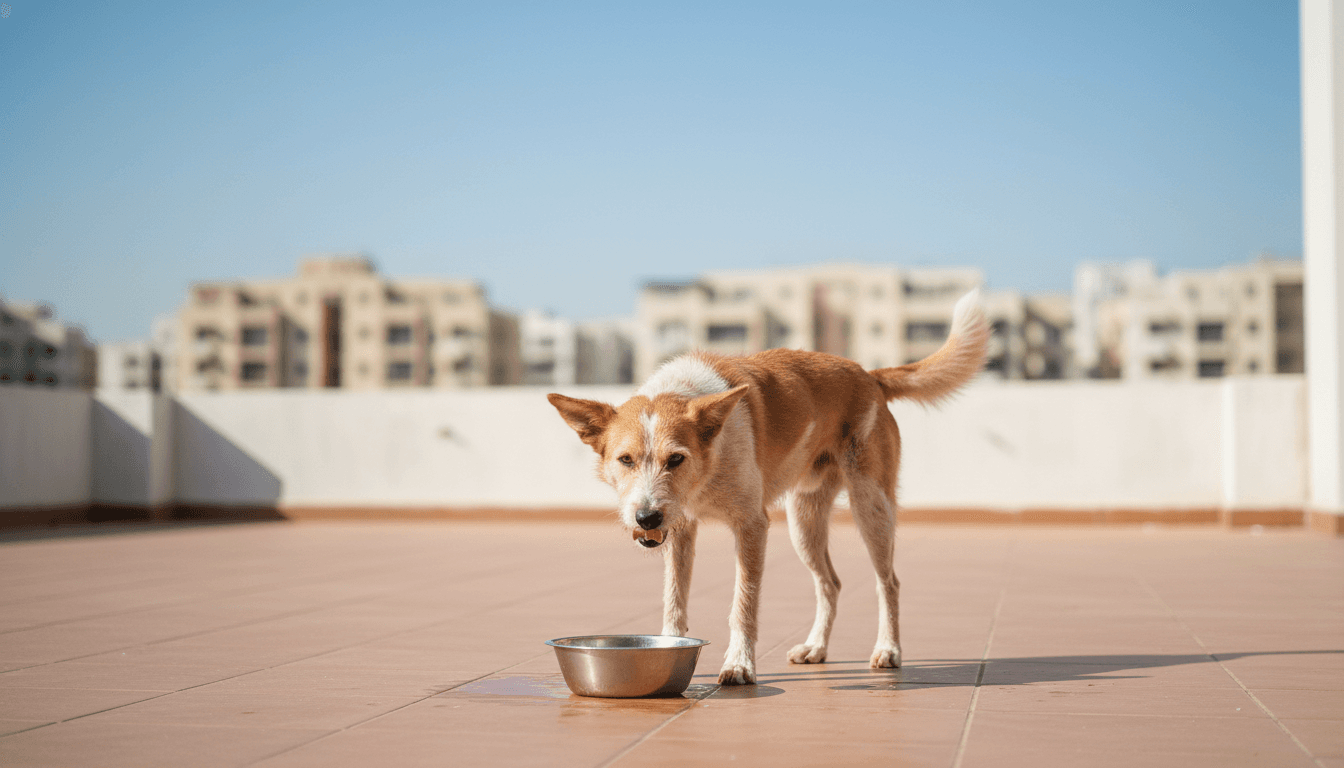
<a href='/learn/summer-dog-care-beat-heat'>Summer heat management</a> is different territory. Temperatures above 40°C in April–June cause food to spoil in hours. Raw feeding becomes particularly risky during this window. Dogs seek outdoor water sources. Heat stress itself suppresses gut motility and can trigger vomiting and diarrhea even without any pathogen. Feed in early morning and evening, store food sealed, and watch gut symptoms as a possible heat-related early warning.
<a href='/learn/winter-dog-care-tips-india'>Winter care in North India</a> presents a less discussed but real gut risk. Dogs in Delhi and Chandigarh in December and January tend to drink significantly less water, slowing intestinal transit and causing constipation. Warming their drinking water slightly encourages hydration in cold weather. Consistent meal timing helps maintain gut rhythms when dogs are less active.
When to See a Vet: Signs That Cannot Wait
Home management works well for mild, short-duration gut issues. The following symptoms require a vet visit — no waiting, no home treatment first:
- Blood (red or dark/tarry) in stool or vomit
- Diarrhea or vomiting persisting more than 48 hours in an adult dog
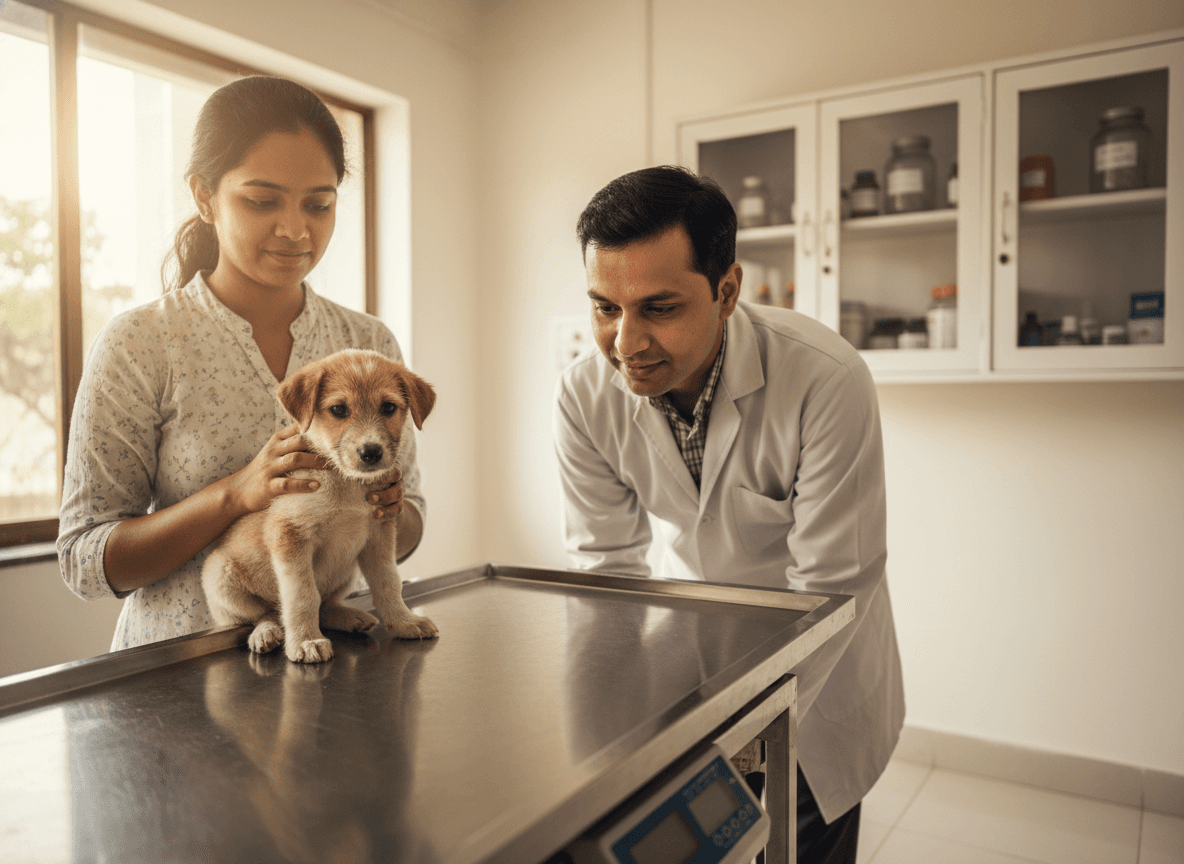
- Any gut symptoms in puppies under 6 months (dehydration sets in very fast)
- Visible abdominal bloating with restlessness and failed attempts to vomit — this is bloat/GDV, a life-threatening emergency
- Significant lethargy or collapse alongside digestive symptoms
Vet chains with gastroenterology capability include Cessna Lifeline (Bangalore), DCC Animal Hospital (Delhi), and Max Vets (multiple cities). A stool culture costs ₹400–600 at most labs and identifies exactly which bacteria are imbalanced — it lets the vet prescribe targeted treatment rather than a broad antibiotic that deepens dysbiosis. For <a href='/learn/dog-diarrhea-treatment-india-guide'>dogs with chronic diarrhea</a>, a Dysbiosis Index test (quantitative PCR measuring seven gut bacterial taxa) is available at specialist vet labs in India for ₹1,800–2,500.
The Gut-Skin Axis: Why Skin Problems Often Begin in the Gut
My Lab's recurring hot spots and paw licking — which I'd treated with topical sprays for months — cleared up significantly after a sustained probiotic course. The mechanism isn't mysterious: gut dysbiosis causes increased intestinal permeability (leaky gut), allowing bacterial metabolites into the bloodstream that trigger immune responses manifesting as skin inflammation.
If your dog has <a href='/learn/dog-skin-diseases-india'>recurrent skin issues</a> that don't respond well to topical treatments, ask your vet about gut health assessment before trying another course of antihistamines. Research found dogs receiving multi-strain probiotics showed 25–50% better outcomes on skin inflammation markers compared to placebo groups over 30 days. The connection is particularly relevant during and after monsoon, when both gut and skin problems peak simultaneously in Indian dogs.
Daily Gut Health Maintenance Checklist
| Action | Frequency |
|---|---|
| Feed consistent meals, same brand and type | Daily |
| Add 1–2 tsp cooked pumpkin to meals | 3–4x per week |
| Give plain fresh curd (2–3 tbsp) mixed into food | Daily during antibiotics/recovery; 3–4x/week otherwise |
| Check stool quality (1–7 scale) | Every walk |
| Give commercial probiotic during high-risk periods (monsoon, post-antibiotics) | As needed |
| Transition any food change over 7–10 days | Every food change |
| Schedule annual fecal check with vet | Yearly |
Frequently Asked Questions
Frequently Asked Questions
Can I give my dog the same probiotic I take?
How much curd is safe for a dog daily?
My dog just finished an antibiotic course. What should I do for gut recovery?
What is the difference between probiotics and digestive enzymes?
Are there gut health risks specific to Indian dogs during summer?
The Bottom Line
Gut health isn't a niche concern for dogs with obvious digestive problems. It's a foundation affecting immunity, skin, energy, and mood. Indian dogs face specific pressures — monsoon pathogens, summer food spoilage, frequent antibiotic use for skin infections, inconsistent food access — that make proactive gut care more important here than in temperate climates.
Start with diet: bland food during flares, pumpkin and curd as daily staples, consistent food without abrupt switches. Add a quality commercial probiotic during high-risk periods. Know the signs that require a vet visit. If your dog has recurring skin problems that aren't responding to topical treatment, investigate the gut before assuming it's purely a skin condition.
The <a href='/learn/dog-health-wellness-india-2'>complete dog health reference</a> covers the full spectrum of conditions worth monitoring. For daily tracking, stool quality tells you more about what's happening internally than almost anything else you can observe on a morning walk — it's the gut's daily report card.