Key Takeaways
- Tick-borne diseases infect nearly 50% of dogs in high-risk Indian cities like Chennai, Mumbai, and Delhi \u2014 monsoon humidity accelerates tick breeding cycles by 3-5x
- Leptospirosis treatment costs \u20b98,000-\u20b925,000 with hospitalization, but the vaccine costs just \u20b9250-\u20b9500 per dose \u2014 a 50x cost difference
- Ehrlichiosis (tick fever) treatment ranges from \u20b93,000 for early-stage doxycycline to \u20b915,000+ when blood transfusions are needed
- Fungal dermatitis treatment runs \u20b92,000-\u20b96,000 over 6-12 weeks \u2014 but prevention with fortnightly antifungal baths costs under \u20b9500/month
- Three monsoon diseases share one warning sign: unexplained lethargy lasting more than 48 hours demands an immediate CBC blood test (\u20b9300-\u20b9800)
- Post-monsoon (October-November) is the second peak \u2014 infections acquired in September often show symptoms weeks later
Why Indian Monsoons Are a Disease Factory for Dogs
Between June and September, India's humidity sits at 80-95% and temperatures hover around 28-34\u00b0C \u2014 the exact range where Rhipicephalus sanguineus (the brown dog tick) completes its life cycle fastest. A 2011 study published in Parasites & Vectors found that 49.7% of 525 dogs tested across Tamil Nadu carried at least one tick-borne pathogen. A more recent 2019 survey of stray dogs pushed that figure to 67.8%.
Stagnant water from monsoon flooding creates breeding pools for Leptospira bacteria. Kerala's 2018 post-flood outbreak confirmed the link: leptospirosis cases in both humans and dogs spiked 400% within weeks. Southern India reports the highest positivity rate at 25.6%, compared to 8.3% in the north and 3.5% in the west. Mumbai, Chennai, Bengaluru, Kolkata, and Kochi are the highest-risk cities for monsoon dog diseases due to a combination of flooding, stray dog density, and sustained humidity.
A Chennai study published in *Acta Tropica* (2024) found 58.57% of 210 dogs tested seropositive for anti-leptospiral antibodies by Microscopic Agglutination Test, with the Australis serogroup most prevalent. The WSAVA Vaccination Guidelines (2024) now classify leptospirosis vaccination as core in endemic regions — a significant shift that Indian vets have started acting on. Our monsoon prevention guide covers proactive steps for each risk. These aren't abstract statistics for owners in Chennai, Mumbai, or Kolkata where post-monsoon flooding creates ideal transmission conditions.
Leptospirosis: The Silent Monsoon Killer
Leptospirosis spreads when dogs wade through or drink from puddles, drains, or flooded streets contaminated with infected animal urine. The Leptospira spirochete bacteria penetrate through skin abrasions or mucous membranes. Incubation takes 4-12 days, which means a walk through a waterlogged lane in early July can produce symptoms by mid-July \u2014 often after the owner has forgotten the exposure.
Early symptoms mimic generic illness: fever (39.5-40.5\u00b0C), vomiting, loss of appetite, and muscle stiffness. Within 48-72 hours, the disease attacks the kidneys and liver. Jaundice (yellowing of gums and eye whites), dark orange urine, and sudden increased thirst are red flags that demand emergency veterinary care. Without treatment, mortality in dogs reaches 10-15%.
| Item | Cost (INR) | Frequency |
|---|---|---|
| DHPPi-L vaccine (prevention) | \u20b9250-\u20b9500 | Annually after initial 2 doses |
| Diagnostic blood panel (MAT test + CBC) | \u20b91,500-\u20b93,000 | Per episode |
| Antibiotic course (doxycycline 14 days) | \u20b9800-\u20b91,500 | Per episode |
| IV fluids + hospitalization (3-7 days) | \u20b95,000-\u20b915,000 | Per episode |
| Kidney support medication (if organ damage) | \u20b93,000-\u20b98,000 | Per episode + follow-up |
| Total treatment (moderate to severe case) | \u20b98,000-\u20b925,000 | Single episode |
Safety First
Leptospirosis is zoonotic \u2014 it spreads from dogs to humans. If your dog is diagnosed, wear gloves when handling their urine, wash hands thoroughly, and inform your doctor. Human leptospirosis cases in India peak at 16.9% seropositivity during monsoon months.
Ehrlichiosis and Babesiosis: The Twin Tick Fevers
Ehrlichia canis and Babesia canis are the two most common tick-borne pathogens in Indian dogs. Ehrlichia attacks white blood cells, causing immune suppression. Babesia invades red blood cells, causing hemolytic anemia. Both are transmitted by the brown dog tick (Rhipicephalus sanguineus), and co-infection is common \u2014 a PCR study in Andhra Pradesh found that 23% of tick-positive dogs carried both pathogens simultaneously.
Ehrlichiosis progresses through three stages. The acute phase (1-3 weeks post-bite) shows fever, nasal discharge, and swollen lymph nodes. The subclinical phase is dangerous because the dog appears healthy while the pathogen persists for months or years. The chronic phase triggers severe bleeding, organ failure, and bone marrow suppression \u2014 treatment at this stage requires blood transfusions (\u20b93,000-\u20b95,000 per unit) and carries a guarded prognosis.
Babesiosis presents differently: high fever, dark red-brown urine (hemoglobinuria from RBC destruction), pale gums, and rapid breathing. Treatment uses imidocarb dipropionate injections \u2014 typically one or two shots at \u20b9500-\u20b91,500 per injection. However, the commonly available Babesia vaccines used in Europe are ineffective against Indian strains (B. gibsoni and B. vogeli), so tick prevention is the only real protection.
| Stage | Treatment | Cost (INR) |
|---|---|---|
| Early/Acute Ehrlichiosis | Doxycycline 28-day course + supportive care | \u20b93,000-\u20b95,000 |
| Chronic Ehrlichiosis | Doxycycline + blood transfusions + immunosuppressants | \u20b910,000-\u20b920,000 |
| Babesiosis (uncomplicated) | Imidocarb injections (1-2 doses) | \u20b92,000-\u20b95,000 |
| Babesiosis (severe anemia) | Imidocarb + blood transfusion + IV fluids + hospitalization | \u20b98,000-\u20b918,000 |
| Tick PCR diagnostic panel | CBC + blood smear + PCR (Ehrlichia + Babesia) | \u20b91,500-\u20b94,000 |
Fungal Dermatitis: The Infection You Can Smell
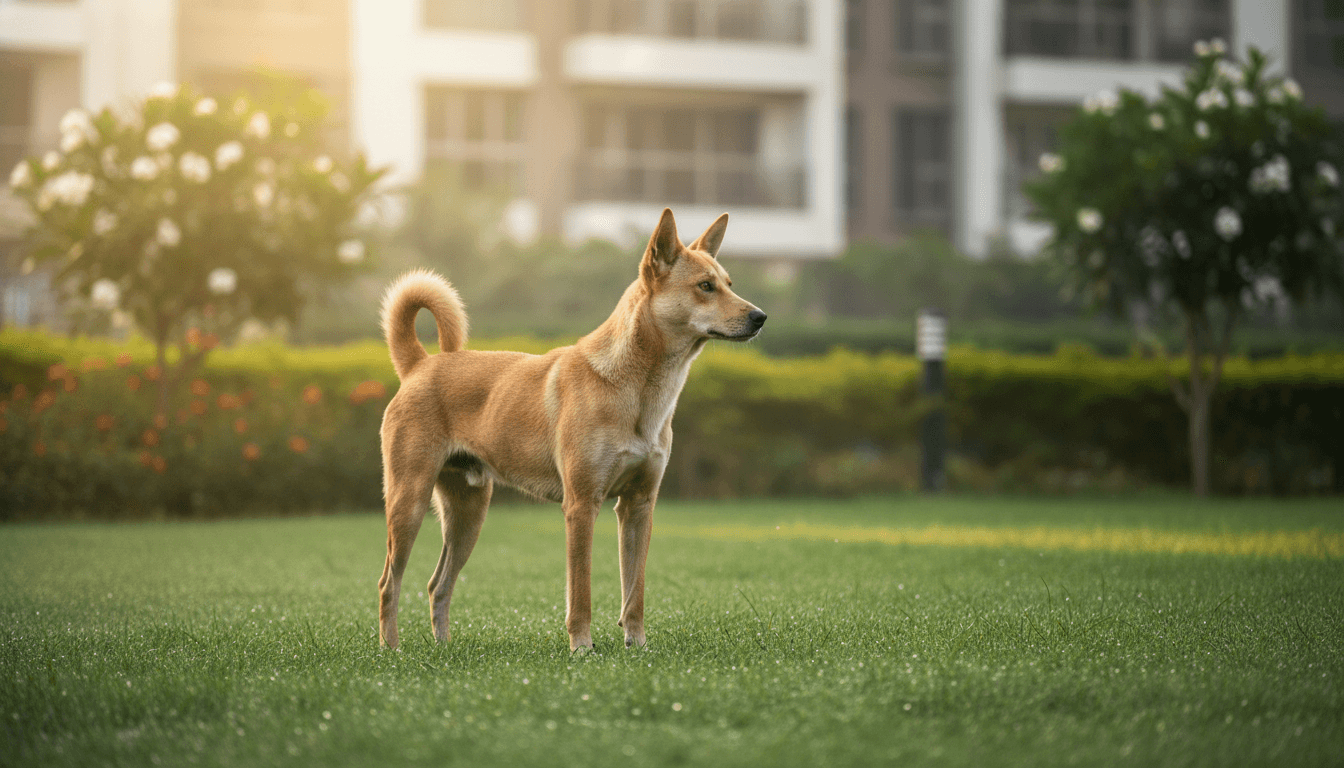
Mumbai veterinary clinics report 5-8 fungal skin cases per week during monsoon \u2014 roughly triple the dry-season rate. The culprits are dermatophytes (Microsporum canis, Trichophyton mentagrophytes) and Malassezia yeast, both of which thrive when skin stays damp. Breeds with thick double coats \u2014 Labradors, Golden Retrievers, German Shepherds, Huskies \u2014 are disproportionately affected because their undercoat traps moisture against the skin for hours.
Dermatophytosis (ringworm) appears as circular bald patches with crusty edges, while Malassezia overgrowth causes greasy skin, a rancid yeast odor, and intense scratching concentrated in ears, paws, and skin folds. Left untreated, secondary bacterial infections develop within 5-7 days, compounding treatment costs. Diagnosis requires a skin scraping and fungal culture (\u20b9500-\u20b91,200), and treatment spans 6-12 weeks of oral antifungals.
| Treatment | Cost (INR) | Duration |
|---|---|---|
| Skin scraping + fungal culture | \u20b9500-\u20b91,200 | One-time diagnostic |
| Ketoconazole tablets (daily) | \u20b9600-\u20b91,200 | 6-12 weeks |
| Terbinafine tablets (alternative) | \u20b9800-\u20b91,800 | 6-12 weeks |
| Medicated shampoo (Ketochlor/Notix) | \u20b9300-\u20b9500 per bottle | Twice weekly during treatment |
| Secondary bacterial infection antibiotics | \u20b9500-\u20b91,500 | 7-14 days if needed |
| Total mild case | \u20b92,000-\u20b93,500 | 6-8 weeks |
| Total severe/recurring case | \u20b94,000-\u20b96,500 | 8-12 weeks |
DodoDoggy Tip
The musty 'monsoon dog smell' is actually Malassezia yeast starting to overgrow. If your dog smells worse than usual within 2-3 days of monsoon onset, start fortnightly antifungal baths (Ketochlor or miconazole/chlorhexidine shampoo, \u20b9300-\u20b9500) before the infection establishes. Prevention costs \u20b9500/month vs. \u20b94,000+ for treatment.
The Diagnostic Flowchart: What to Test and When
Monsoon diseases share overlapping early symptoms \u2014 fever, lethargy, appetite loss. Running the wrong tests wastes money and delays treatment. Here is the decision framework Indian veterinarians use based on the presenting symptoms.
- Fever + lethargy + swollen lymph nodes \u2192 Request CBC + Ehrlichia/Babesia rapid test (\u20b9800-\u20b91,500). If platelet count is below 100,000/\u03bcL, tick fever is highly likely
- Fever + vomiting + dark urine + recent puddle exposure \u2192 Request Leptospira MAT test + kidney function panel (BUN/creatinine) (\u20b91,500-\u20b93,000). Jaundice confirms urgency
- Circular bald patches + scratching + musty odor \u2192 Request skin scraping + Wood's lamp exam (\u20b9500-\u20b9800). Fungal culture (\u20b9800-\u20b91,200) confirms species
- Pale gums + dark red-brown urine + rapid breathing \u2192 Emergency: Babesiosis with hemolytic anemia. Request packed cell volume (PCV) immediately. Below 15% needs blood transfusion
- Persistent low-grade fever with no other symptoms \u2192 Request full tick panel (PCR for Ehrlichia + Babesia + Hepatozoon, \u20b92,500-\u20b94,000). Subclinical ehrlichiosis hides this way
Vaccination and Prevention: Cost-per-Disease Analysis
Not every monsoon disease has a vaccine. Leptospirosis does (included in DHPPi-L combination vaccine). Ehrlichiosis and babesiosis do not \u2014 tick prevention is the only defense. Fungal infections have no vaccine either, but environmental management cuts incidence significantly. Here is what actually works, ranked by cost-effectiveness.
- Leptospirosis vaccine (\u20b9250-\u20b9500/year) \u2014 Prevents a \u20b98,000-\u20b925,000 hospitalization. ROI: 16-100x. Ensure booster is given before June. The L4 vaccine covers four serovars most common in India
- Fipronil spot-on treatment (\u20b9250-\u20b9600/month, May through October) \u2014 Six months of protection costs \u20b91,500-\u20b93,600 vs. \u20b93,000-\u20b920,000 for a single tick fever episode. Apply on schedule without gaps
- Tick collar (Seresto or Prazicide, \u20b91,200-\u20b93,500 for 6-8 months) \u2014 Better compliance than monthly spot-ons. Effective against Rhipicephalus sanguineus, the primary vector in Indian cities
- Fortnightly antifungal shampoo during monsoon (\u20b9300-\u20b9500 per bottle, lasts 4-6 washes) \u2014 Season cost \u20b9600-\u20b91,500 vs. \u20b92,000-\u20b96,500 treatment. Use miconazole/chlorhexidine or ketoconazole-based formulations
- Monthly deworming during monsoon (\u20b950-\u20b9150 per tablet) \u2014 Worm burden weakens immunity, making dogs more susceptible to all three disease categories above
The Parasites & Vectors 2011 survey of 525 dogs across Tamil Nadu remains the most cited baseline for tick-borne disease burden in India — 49.7% infected with at least one pathogen. If you need a broader picture of monsoon health risks, the monsoon dog care guide covers prevention across all common seasonal threats.
Emergency Red Flags: When Hours Matter
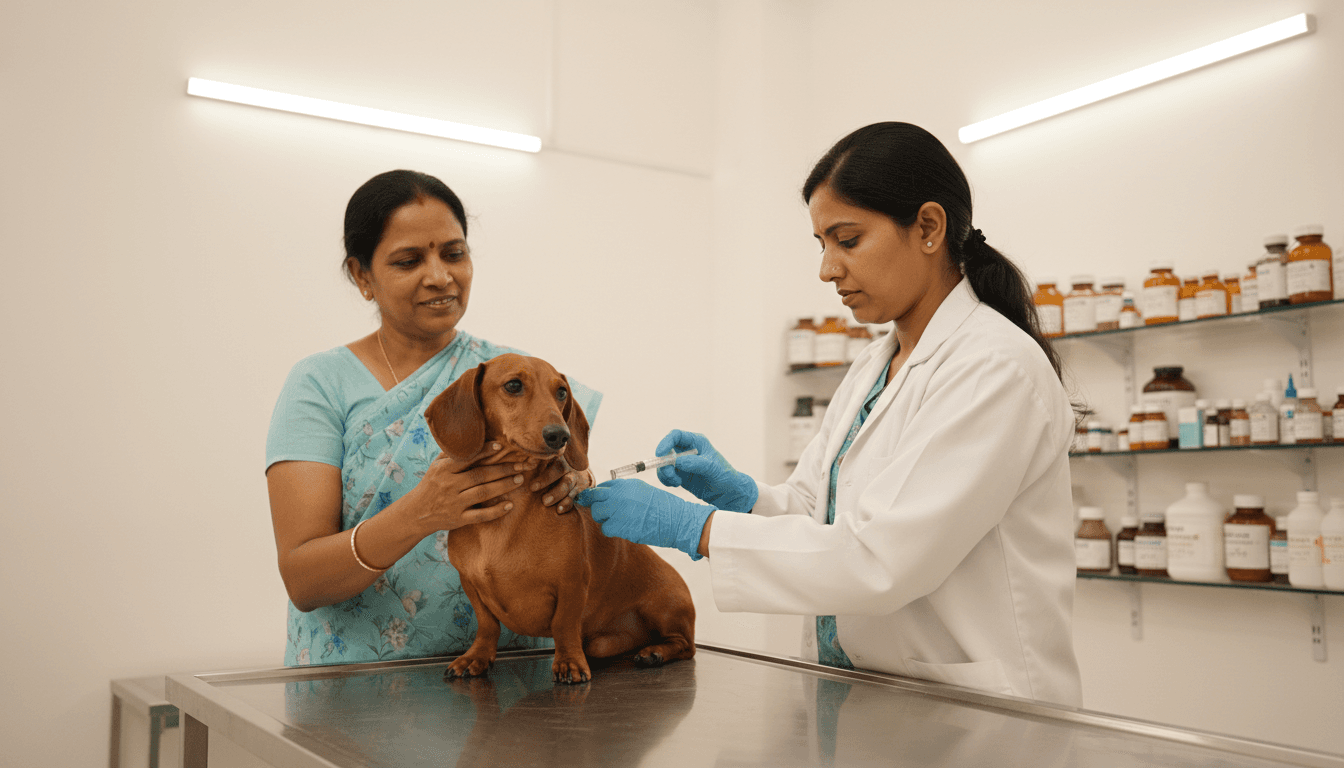
Some monsoon disease complications become fatal within 24-48 hours if untreated. Knowing when to rush to the vet — and how to recognize ear and skin infections that can mask deeper disease — versus when to monitor at home saves both money and lives.
- Dark brown or red-tinged urine \u2014 indicates either leptospirosis kidney damage or babesiosis hemolysis. Both need IV fluids within hours
- Gums that are white or pale pink instead of salmon-colored \u2014 severe anemia from babesiosis or chronic ehrlichiosis. PCV test needed immediately; blood transfusion likely
- Yellowing of gum tissue or whites of eyes (jaundice) \u2014 liver involvement from leptospirosis. Hospitalization required, not outpatient antibiotics
- Pinpoint red dots on belly skin or gums (petechiae) \u2014 platelet destruction from ehrlichiosis. Bleeding risk is high; avoid any rough play or activity
- Temperature above 40.5\u00b0C that does not respond to a single dose of meloxicam \u2014 multi-organ involvement likely. Do not wait for a second dose; get to a vet
Post-Monsoon Recovery: The October-November Second Wave
Leptospira seropositivity data from Indian studies shows a second peak at 12.19% during the post-monsoon months (October-January), down from 16.92% during active monsoon but still significantly above the 4-6% dry-season baseline. Dogs infected in late September often show symptoms in October because of incubation periods. Subclinical ehrlichiosis acquired during monsoon can reactivate months later when the immune system dips due to seasonal temperature changes. Puppies in their first year need this screening most — their immune systems haven't yet built full resistance to leptospira serovars, and a missed subclinical infection can cause chronic kidney damage. Senior dogs over seven face the reverse problem: aging kidneys clear leptospiral toxins far less efficiently, so early detection directly reduces the severity of organ damage.
Schedule a post-monsoon veterinary checkup in October that includes a CBC (\u20b9300-\u20b9500) and a tick-borne disease rapid test (\u20b9500-\u20b9800). This \u20b9800-\u20b91,300 screening catches subclinical infections before they progress to the chronic stage, where treatment costs multiply 3-5x. Continue tick prevention through November \u2014 stopping in September because the rains have ended is a common and expensive mistake.
You'll find good options like Dr. Palampalle's Pet Care Clinic in Pratikhsha Nagar, Sion East, Sion — rated 5.0/5. Check our pet stores in Mumbai directory for more choices near you.
You'll find good options like GV Pets & Clinic in KK Nagar West, Virugambakkam — rated 4.7/5. Check our pet stores in Chennai directory for more choices near you.