Why Skin Diseases Are So Common in India
My Labrador picked up ringworm during the 2024 Chennai monsoon. Fourteen days of steady rain, damp floors, and a coat that never fully dried — by week three, she had three circular bald patches on her neck. The vet at Cessna Lifeline Veterinary Hospital told me she'd seen the same thing in six other dogs that month alone.
India's climate is basically a skin disease incubator. Temperatures between 28°C and 42°C combined with 70–90% monsoon humidity create year-round ideal conditions for fungi, bacteria, and mites. According to vetic.in, a Mumbai and Delhi veterinary chain, fungal skin infections account for roughly 38% of all dermatology consultations — a figure that spikes sharply between June and September.
The diseases I cover here — fungal infections, mange, hot spots, flea allergy dermatitis, food allergies, bacterial pyoderma, environmental atopy, and seasonal flares — are not theoretical. They show up on dogs in Bangalore apartments and Kolkata bylanes week after week. Understanding what each looks like saves your dog weeks of suffering and you thousands of rupees in delayed treatment.
Skin Disease in Indian Dogs — Key Numbers
38% of vet dermatology visits are fungal infections | Monsoon season drives a 45% spike in skin cases | Flea allergy dermatitis affects roughly 25% of urban dogs | Demodicosis (red mange) is the leading skin cause of puppy surrenders to shelters | 60% of skin cases are preventable with basic hygiene
Fungal Infections: What They Look Like and How Vets Treat Them
Ringworm (dermatophytosis) is the most common fungal infection in Indian dogs, and it has nothing to do with worms. It's caused by three main fungi: Microsporum canis (about 70% of cases), Microsporum gypseum (20%), and Trichophyton mentagrophytes (10%), according to the Merck Veterinary Manual. You'll see circular patches of hair loss with scaling around the edges — typically on the face, ears, paws, and neck first.
The diagnosis is a skin scraping or Wood's lamp test, costing ₹500–₹1,000 at most clinics. Treatment follows the WAVD consensus guidelines: itraconazole 10 mg/kg daily for 6–8 weeks combined with twice-weekly baths using 2% chlorhexidine / 2% miconazole shampoo. A study from North India found fluconazole resistance at 85.6% and terbinafine resistance at 60% — so don't let any vet prescribe those as first-line treatment here. Itraconazole and ketoconazole remain sensitive.
One important note: ringworm is zoonotic. If your dog has it, anyone in the household can catch it through skin contact. I used disposable gloves for every treatment session until the vet cleared my Lab with two negative cultures. Total cost came to ₹3,600 — scraping ₹700, itraconazole for six weeks ₹2,100, and two bottles of Ketochlor shampoo at ₹400 each.
Yeast infections (Malassezia) show up differently: greasy, brownish discharge, a musty smell, and intense scratching — especially in ear infections and skin folds. Bulldogs, Cocker Spaniels, and Beagles are most vulnerable. Treatment uses the same medicated shampoos but without the oral antifungal in mild cases.
See a Vet Immediately If You Notice
Rapidly spreading hot spots covering palm-sized area within 12 hours | Face or eye swelling | Open bleeding wounds | Crusty scabs across large body areas | Sudden complete hair loss in patches | Extreme itching preventing sleep | Any skin symptom in a puppy under 4 months old | Skin turning dark or hardening
Mange: Sarcoptic vs Demodectic and Why the Difference Matters
Mange is caused by microscopic mites, but the two main types behave completely differently and need different treatment approaches. Getting this distinction right from the start saves months of wrong treatment.
Sarcoptic mange (scabies) is caused by Sarcoptes scabiei mites that burrow into the skin. The hallmark is intense, unrelenting itching — dogs will scratch themselves raw within days. It spreads fast between dogs and can jump to humans temporarily. You'll see crusty lesions starting on the ear tips, elbows, and hocks. This is what most stray dogs in Indian cities suffer from. Ivermectin (200 mcg/kg, given 2–4 times two weeks apart) is highly effective, per PubMed research. Note: never give ivermectin to Collies or Collie crosses — they carry the MDR1 gene mutation that makes the drug toxic.
Demodectic mange (red mange or demodicosis) is caused by Demodex canis mites that naturally live on every dog's skin. They cause disease only when the immune system fails — which is why puppies and immunocompromised dogs are most affected. It is NOT contagious. The itching is milder than sarcoptic mange, but you'll see patchy hair loss, especially around the eyes and muzzle, giving the classic 'spectacle' appearance. Treatment with daily oral ivermectin (0.4–0.6 mg/kg) or weekly Bravecto runs 3–6 months for generalized cases.
A skin scraping is non-negotiable before treatment — both look similar to the naked eye but respond to entirely different drugs. At DCC Animal Hospital in Delhi, a scraping costs ₹600–₹900. Don't let anyone treat your dog for mange without that test.
Sarcoptic Mange vs Demodectic Mange
SARCOPTIC: Contagious to dogs and humans | Intense itching | Ear tips and elbows | Ivermectin 2-4 doses | Treatment: 4-8 weeks | Cost: ₹3,000-₹7,000. DEMODECTIC: Not contagious | Mild to moderate itching | Face and muzzle first | Daily oral ivermectin or Bravecto | Treatment: 3-6 months | Cost: ₹5,000-₹12,000
Hot Spots: Why They Explode in Mumbai and Kolkata Summers
A hot spot can go from a small red patch to a weeping, foul-smelling sore the size of your palm within 24 hours. I've seen this twice with my Golden Retriever during Kolkata's pre-monsoon humidity (May, 38°C, 85% humidity) — once on his hip and once behind his ear.
Hot spots (acute moist dermatitis) happen when moisture gets trapped under a dense coat. The dog scratches the itch, bacteria colonize the broken skin, and the infection spreads rapidly. Breeds prone to this in India include Golden Retrievers, Labradors, German Shepherds, and Saint Bernards — all popular in metros, all with coats that trap humidity. They typically appear on the neck, hips, and cheeks.
First aid at home before the vet: clip the hair around the lesion carefully (not over it), clean gently with diluted Betadine, and dry completely. Put a cone on immediately — licking spreads the infection faster than anything. Then go to the vet that day, not tomorrow. The vet will prescribe a topical antibiotic/steroid combination spray and oral antibiotics if the infection is deep. Chlorhexidine spray (₹280–₹380 a bottle) and Melonex or Ciplox tablets are the typical prescription.
Hot spots almost always signal an underlying trigger — flea bite, allergy, dirty matted coat, ear infection, or anal gland problem. Clearing the surface lesion without addressing the cause means it comes back within weeks. My vet at Max Vets Bangalore found my Retriever had subclinical flea allergy driving his recurring hot spots and put him on monthly NexGard (₹650/month for 25-50 kg) after that. No hot spots in 14 months.
Monsoon Skin Care Routine (June–September)
After every walk: towel-dry paws and belly completely | Weekly: antifungal powder (Candid powder, ₹85) between toes and skin folds | Monthly: medicated bath with Ketochlor shampoo if prone to fungal issues | Keep bedding dry — use a waterproof mat | Check between toes and ear canals weekly | Increase brushing frequency to remove dead undercoat that traps moisture
Flea and Tick Dermatitis: The Urban Dog's Constant Problem
Flea allergy dermatitis (FAD) is the most common allergy in Indian dogs, affecting an estimated 25% of urban pets. A flea-allergic dog doesn't just itch when bitten — a single flea bite triggers an immune reaction that causes intense itching across the entire body for days. The classic sign is hair loss and thick, crusty skin at the base of the tail and inner thighs.
Here's the frustrating part: you often won't find fleas on the dog. A flea-allergic dog grooms them off obsessively. Look for flea dirt instead — tiny black specks that turn red when wet on white paper. Tick prevention matters too, since ticks transmit Ehrlichia and Babesia, which cause serious systemic illness beyond the skin reaction.
For prevention, I use Bravecto chewables (fluralaner) — one chew provides 12 weeks of protection against fleas and ticks. For a 20-kg dog, Bravecto 500mg costs around ₹1,800–₹2,100 per dose at Indian vet clinics or pet stores like Heads Up For Tails. That's ₹7,200–₹8,400 per year. NexGard (afoxolaner, monthly) costs ₹650–₹750/month for the same size dog — similar annual cost but monthly dosing. Both work. I've used both and prefer Bravecto for the convenience.
Food Allergies: The Diagnosis Takes Patience
Food allergies show up on the skin as year-round itching (not seasonal), recurrent ear infections, and paw licking. Unlike environmental allergies, they don't fluctuate with the seasons — they're consistent. The proteins most often implicated in Indian dogs are chicken, beef, wheat, and corn, which happen to be the main ingredients in most mass-market Indian dog foods like Drools and Pedigree India's standard ranges.
Diagnosis requires an elimination diet trial — 8 to 12 weeks of a single novel protein your dog has never eaten before. Fish-based or duck-based limited-ingredient diets work well. Royal Canin Veterinary Hypoallergenic (hydrolyzed protein) costs ₹2,339 for 2 kg from Petsworld and other Indian online retailers — expensive, but it's the most reliable option for the trial period because the protein molecules are broken down too small to trigger an immune response.
The trial means no treats, no table scraps, no flavored medications. Not even a bite of anything else. My neighbor in Pune tried the elimination diet twice and 'failed' both times because her family kept giving the dog chapati. Third attempt with strict discipline showed a clear response to wheat within eight weeks. The dog has been on a wheat-free diet for two years with zero skin flares.
Skin Disease Treatment Costs in India (2026)
Vet consultation: ₹500–₹1,500 | Skin scraping test: ₹500–₹1,000 | Fungal infection (full course): ₹2,500–₹8,000 | Mange treatment: ₹3,000–₹12,000 | Hot spot emergency visit + meds: ₹1,500–₹4,000 | Food allergy diet trial (12 weeks Royal Canin Hypo): ₹8,000–₹12,000 | Allergy blood test (atopy panel): ₹6,000–₹15,000 | Bravecto (quarterly flea/tick): ₹1,800–₹2,100 per dose | Apoquel (daily, chronic atopy): ₹80–₹120/tablet
Bacterial Skin Infections (Pyoderma)
Bacterial pyoderma almost always develops on top of something else — an allergic reaction, a hot spot that wasn't treated fully, or a wound. The bacteria causing it are usually Staphylococcus pseudintermedius, which lives normally on dog skin. When the skin barrier breaks down, staph proliferates.
Surface pyoderma looks like red pustules or crusts. Deep pyoderma — which goes into the skin layers — shows as draining tracts, severe swelling, and dogs that won't let you touch the area. Surface cases respond in 2–3 weeks to oral antibiotics (cephalexin or amoxicillin-clavulanate, ₹300–₹800 for a course). Deep pyoderma may need 6–8 weeks of treatment and topical therapy alongside it.
Chlorhexidine 4% shampoo (Vet-Chlor or similar, ₹350–₹480) twice weekly is the standard topical alongside the antibiotic. Don't skip the full course — stopping antibiotics early because the dog looks better is how resistant infections develop.
Environmental Allergies (Atopy): Year-Round Management
Canine atopic dermatitis (CAD) is an inherited skin condition triggered by environmental allergens — dust mites, mold spores, grass pollens, and cockroach proteins. In Indian cities, dust mite exposure is heavy year-round because of the humidity and concrete construction. Mold spores spike during monsoon. Cockroach allergens are a significant trigger in apartment-dwelling dogs in Chennai and Mumbai.
Affected dogs typically start showing symptoms between 6 months and 3 years of age. The itch focuses on the paws, ears, underbelly, armpits, and face — areas where allergens contact skin directly. Atopy cannot be cured, only managed.
Management options range from inexpensive to quite costly. Antihistamines (cetirizine, ₹2–₹5/tablet) help mildly. Prednisolone works fast but carries serious long-term risks — diabetes, immune suppression, Cushing's syndrome — so it's reserved for acute flares. Apoquel (oclacitinib) is the current standard for chronic management: ₹80–₹120 per tablet daily, meaning ₹2,400–₹3,600/month. Cytopoint injections (monoclonal antibody, monthly to every 2 months) cost ₹2,500–₹4,000 per injection at Indian specialty clinics but provide good control with fewer systemic side effects than steroids.
Environmental controls matter too. Washing your dog's bedding weekly in hot water, using a HEPA air purifier, and wiping paws after outdoor walks all reduce allergen load. The IVRI (Indian Veterinary Research Institute) recommends regular ear and paw cleaning as part of atopy management, since these are the primary entry points for allergens in Indian dogs.
Seasonal Patterns: When to Expect What
In India, skin disease is not random — it follows the calendar. Knowing what to watch for each season helps you act fast rather than react late.
March through May (pre-monsoon, 36°C–42°C): flea and tick populations peak. Hot spots start appearing in heavy-coated breeds as temperatures climb. This is the time to front-load your flea prevention dose before the season hits.
June through September (monsoon): fungal infections peak. Malassezia yeast and ringworm dominate. Every wet walk is a fungal inoculation event for dogs that don't get dried properly. In cities like Mumbai and Kolkata where streets flood, paw fungal infections become almost routine.
October through February (post-monsoon and winter): atopic dogs often flare as mold spores from the season disperse and grass pollens peak in cooler weather. Dry skin and dandruff increase in northern India's winters, especially in dogs kept in heated rooms in Delhi and Chandigarh. Omega-3 supplementation (fish oil, ₹400–₹800/month) helps significantly.
Weekly Skin Check — What to Look For
Part the coat and inspect from tail to head | Check ear canals for odor, redness, or dark discharge | Examine between all four paw pads for redness, swelling, or discharge | Look at skin folds (neck, armpits, groin) for moisture or yeast smell | Check tail base area for hair loss (flea allergy sign) | Note any new scratching behavior or location | Feel for any lumps, bumps, or hot areas | Check lips and muzzle for pustules
Grooming Practices That Prevent Skin Disease
Most skin disease in Indian dogs is directly traceable to one problem: moisture. A dog that stays damp for hours after a bath or walk is a fungal infection waiting to happen.
Bath frequency depends on the dog's skin condition. Healthy skin: once a month is enough. Skin-prone dogs: once a week with a medicated shampoo, timed so the active ingredient (ketoconazole, chlorhexidine) has 5–10 minutes of contact before rinsing. Never use human shampoo — the pH is completely wrong for dogs. Himalaya Pet's anti-tick shampoo (₹195 for 200ml) is a reasonable budget option for healthy dogs; Ketochlor or Malacetic is what you want if there's already a skin condition.
Drying is where most owners cut corners. Towel-drying alone is not enough for double-coated breeds. A handheld blow dryer on cool setting for 10–15 minutes after toweling is what actually gets the undercoat dry. I learned this the hard way after my Lab's second monsoon ringworm outbreak — both times I'd toweled and left her to air dry in a humid apartment.
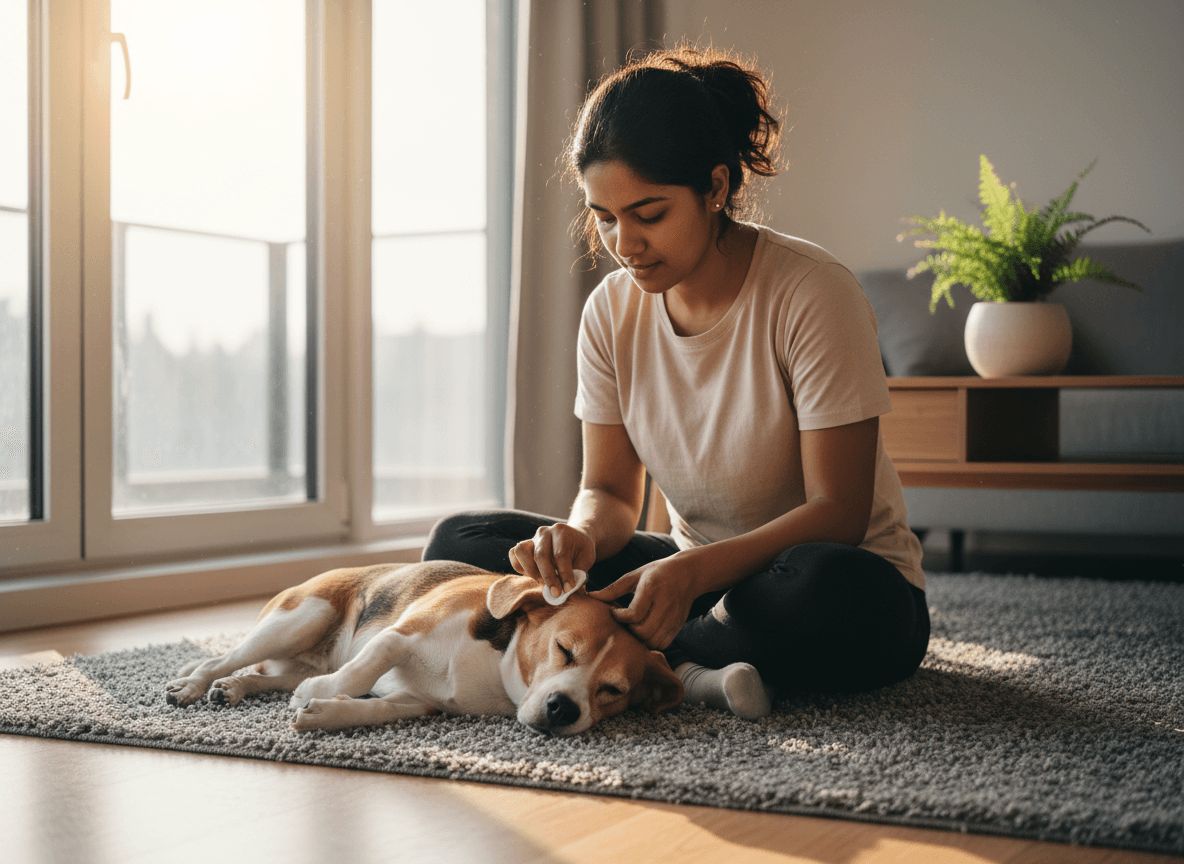
For the ears: wipe the visible part of the ear canal weekly with a cotton ball and a vet-recommended ear cleaner (Epi-Otic, ₹380–₹450). Don't dig in with a cotton swab. If the ear smells or looks abnormal, that's a vet visit, not a home cleaning.
Home Remedies: What Actually Helps vs What Wastes Time
You'll find hundreds of home remedy recommendations online for dog skin problems. Most of them delay proper treatment and make things worse. Let me be specific about what has actual evidence behind it and what doesn't.
Coconut oil gets recommended constantly. For truly mild, dry skin it may provide some temporary relief — it has modest antifungal properties. But it doesn't penetrate to kill ringworm or mange mites, and applying it to a yeast infection makes the yeast grow faster (Malassezia loves fatty acids). I use coconut oil occasionally on my dog's dry elbows. Nothing more.
Diluted apple cider vinegar rinse (1:1 with water) can help with mild surface yeast odor between baths. It acidifies the skin temporarily. But on broken or inflamed skin it causes a burning sensation and damages the barrier further. Never apply to raw, open skin.
Oatmeal baths genuinely reduce surface itching and are safe. Ground oatmeal in lukewarm water for 10 minutes provides real temporary relief for allergic dogs. It doesn't treat the cause, but it's a valid comfort measure while waiting for the vet appointment.
What you should never do: apply human antifungal creams (Clotrimazole, Candid B) on large areas without vet direction — these are safe in small amounts but contain steroids in combination formulations that can thin dog skin quickly. Neem oil in concentrated form burns dog skin. Turmeric paste creates a mess, stains everything, and has no clinical evidence for canine dermatology. The moment a skin issue has been going on for more than three days, has hair loss, spreads, or causes your dog real distress, it's a vet situation.
Long-Term Management for Chronic Skin Conditions
Atopy, food allergy, and recurrent pyoderma are chronic conditions. You're not going to cure them. You're going to build a management protocol that keeps your dog comfortable and minimizes flares.
The protocol I use for my atopic Golden Retriever, developed with his vet at Max Vets Bangalore, has three pillars. Diet: fish-based food year-round with no chicken, plus omega-3 fish oil (Nordic Naturals, ₹1,200/month for a 35 kg dog — expensive but worth it compared to Apoquel costs). Barrier support: weekly chlorhexidine-based shampoo during high-exposure seasons, monthly during winter. Rescue therapy: Apoquel 16mg tablet for acute flares only — we try to keep it under 30 days a year total, not daily. This approach costs roughly ₹3,000–₹4,000/month versus ₹7,000–₹9,000/month on daily Apoquel.
For allergen immunotherapy (allergy shots), you'll need a veterinary dermatologist. There are specialist dermatologists at IVRI Bareilly, Bombay Veterinary College, and private referral hospitals in the metros. Immunotherapy runs ₹8,000–₹15,000 for the initial testing and serum preparation, then maintenance injections at home. For dogs with severe year-round atopy, it can be more cost-effective than years of daily Apoquel.
You'll find good options like Dr. Palampalle's Pet Care Clinic in Pratikhsha Nagar, Sion East, Sion — rated 5.0/5. Check our pet stores in Mumbai directory for more choices near you.
You'll find good options like Delhi dog kennel | puppies for sale in delhi | dog sale in delhi | pet shop near me | poodle puppy | shihzu in Rashid Market, Geeta Colony — rated 5.0/5. Check our pet stores in Delhi directory for more choices near you.

Vet Perspective on Indian Skin Disease Patterns
Vetic's veterinary team notes that over 50% of skin consultations in their Mumbai and Delhi clinics involve a combination of fungal infection plus an underlying allergy — treating only one without addressing the other results in rapid recurrence. The most common owner mistake: stopping medicated shampoo as soon as the visible symptoms clear, typically 2–3 weeks too early.
Prevention vs Treatment (Annual Cost Estimate)
PREVENTION: Flea/tick prevention ₹7,000-₹9,000 | Medicated shampoo ₹3,000-₹5,000 | Omega-3 supplement ₹4,800-₹9,600 | Grooming ₹6,000-₹12,000 | Diet quality ₹18,000-₹36,000. Annual total: ₹38,000-₹71,000. TREATMENT (if skipping prevention): 2-3 skin disease episodes × ₹5,000-₹12,000 each = ₹10,000-₹36,000 in vet bills alone, plus cost of days off work and dog's suffering.