Key Takeaways
- Drools Focus Adult Super Premium (12kg, Rs 1,799-1,999 at 26% protein) offers the best cost-to-nutrition ratio for most Indian households, manufactured in Hyderabad by Drools Pet Food Pvt. Ltd.
- BIS standard IS 16758:2018 sets India's minimum pet food benchmarks (18% protein, 5% fat) but BIS certification is voluntary, and many budget brands skip it entirely.
- IVRI Bareilly found calcium deficiency in 43% of dogs with musculoskeletal complaints in a 2019 study, mostly from rice-and-roti diets without supplementation.
- Onion and garlic in any form, raw or cooked, cause hemolytic anemia in dogs from as little as 5g per kg body weight. Never feed Indian table scraps containing either.
- Indian summers require 10-15% more water intake for dogs; monsoon humidity above 80% causes opened kibble to develop mold within 24-48 hours.
- 52% of Indian Labradors are overweight according to Royal Canin India data, making this the country's most overfed popular breed and a strong case for high-protein, low-fat diets.
Best Dog Food Brands Available in India — Prices and Nutritional Content
India's commercial dog food market spans a 7x price range, from Rs 30 per day for budget kibble to Rs 200 per day for premium imports. At the entry level, Pedigree Adult Chicken & Vegetables (3kg) costs Rs 649-699 on Amazon.in and in major pet stores. Manufactured by Mars Petcare India in Roorkee, Uttarakhand, it contains minimum 21% crude protein and 10% crude fat. It is the most widely distributed brand in the country, stocked even in tier-2 and tier-3 cities.
Drools Focus Adult Super Premium Chicken & Rice (12kg), priced at Rs 1,799-1,999, is made by Drools Pet Food Pvt. Ltd. in Hyderabad and contains 26% crude protein and 16% crude fat. This is the optimal price-to-protein point for most Indian owners. Fidele Light & Active (3kg, Rs 899-999), manufactured in India under Swiss brand Virchow Laboratories, delivers 30% protein at a mid-range price, outpacing both Pedigree and Drools on protein density per rupee spent.
Premium imported brands occupy a separate bracket. Royal Canin Maxi Adult (15kg) costs Rs 6,300-6,800 through Mealtime Pet Products India Ltd., with breed-specific variants (Labrador Adult, German Shepherd Adult) ranging from Rs 3,500 to Rs 7,200 per 12-15kg bag. At the top end, Farmina N&D Grain-Free Chicken & Pomegranate (12kg) retails at Rs 9,500-11,000 and contains 38% protein and 20% fat, well above BIS IS 16758:2018 minimums. Budget-conscious owners can consider Meat Up Adult Dog Food (3kg, Rs 399-449), which meets BIS minimums at 18% protein and 6% fat and ships across India via Amazon.in.
For more on dental health — parents, see our dental health — parents guide.
For more on monsoon health issues india, see our monsoon health issues india guide.
You might also find our causes guide helpful.
Indian Dog Food Brand Comparison: Price vs Nutritional Content (2026) — Pack Size, Price (Rs)
| Brand | Pack Size | Price (Rs) |
|---|---|---|
| Meat Up Adult | 3kg | 399-449 |
| Pedigree Adult | 3kg | 649-699 |
| Fidele Light & Active | 3kg | 899-999 |
| Drools Focus Adult | 12kg | 1,799-1,999 |
| Arden Grange Adult | 12kg | 3,500-4,500 |
| Royal Canin Maxi Adult | 15kg | 6,300-6,800 |
| Farmina N&D Grain-Free | 12kg | 9,500-11,000 |
Indian Dog Food Brand Comparison: Price vs Nutritional Content (2026) — Protein %, Fat %
| Brand | Protein % | Fat % |
|---|---|---|
| Meat Up Adult | 18% (min) | 6% (min) |
| Pedigree Adult | 21% (min) | 10% (min) |
| Fidele Light & Active | 30% | 12% |
| Drools Focus Adult | 26% | 16% |
| Arden Grange Adult | 26%+ | 14%+ |
| Royal Canin Maxi Adult | Breed-specific | Breed-specific |
| Farmina N&D Grain-Free | 38% | 20% |
Indian Dog Food Brand Comparison: Price vs Nutritional Content (2026) — Made in India?
| Brand | Made in India? | |
|---|---|---|
| Meat Up Adult | Yes | |
| Pedigree Adult | Yes (Roorkee, UP) | |
| Fidele Light & Active | Yes (Virchow Labs) | |
| Drools Focus Adult | Yes (Hyderabad) | |
| Arden Grange Adult | No (UK import) | |
| Royal Canin Maxi Adult | No (imported) | |
| Farmina N&D Grain-Free | No (Italy) |
Indian Homemade Dog Food: What Works and What Doesn't
A typical Indian homemade dog meal of rice (50%), boiled chicken (30%), and vegetables like carrots and beans (20%) provides approximately 18-22% protein on a dry matter basis, meeting the AAFCO adult maintenance minimum of 18%. The critical gap is calcium: this combination delivers a calcium-to-phosphorus ratio of roughly 0.3:1 against the ideal 1.2:1. Without bone broth, crushed eggshell, or a calcium supplement like Himalaya Himcal, large-breed puppies raised on this diet consistently develop musculoskeletal problems.
Roti (wheat chapati) is the most nutritionally problematic food routinely fed to Indian dogs. It provides only 8-10% protein, lacks essential amino acids taurine and arginine, and can cause gluten sensitivity in certain breeds. IVRI Bareilly identifies roti as a primary contributor to protein-energy malnutrition in urban Indian pet dogs, a finding consistent with clinical presentations at veterinary teaching hospitals across Uttar Pradesh.
Khichdi (rice and dal porridge) is a genuinely better option. A 70:30 rice-to-moong-dal ratio reaches 14-16% protein on a dry matter basis. Adding 20% boiled egg brings that figure to roughly 22%, clearing the adult maintenance threshold. Indian veterinary nutritionists recommend supplementing any homemade diet with calcium (1 tsp crushed eggshell per day for a 10kg dog), vitamin B12 for vegetarian diets, and omega-3 fish oil at 1,000mg per 10kg body weight. Without these additions, homemade diets typically fail at least 5 of 6 AAFCO nutrient categories.
Curd (plain dahi/yogurt) is one Indian ingredient that genuinely benefits dogs. At roughly 120mg calcium per 100g, 3.5% protein, and probiotics including Lactobacillus bulgaricus, two to three tablespoons daily for dogs over 5kg supports gut microbiome health. Many Indian vets specifically prescribe curd during or after antibiotic treatment for tick-borne diseases.
For more on monsoon care india — region-wise, see our monsoon care india — region-wise guide.
For more on vomiting causes india — worry, see our vomiting causes india — worry guide.
Learn more in our detailed german shepherd resource.
Nutritional Deficiencies Plaguing Indian Dogs: The Silent Epidemic
Calcium deficiency (hypocalcemia) is the most reported nutritional disorder in Indian pet dogs, particularly in large breeds fed homemade rice-and-roti diets. IVRI Bareilly reported calcium deficiency in 43% of dogs presenting with musculoskeletal complaints in a 2019 study. Clinical signs include limb deformities, difficulty walking, pathological fractures in young dogs, and eclampsia in lactating females. Himalaya Himcal Liquid (Rs 120-150 per 200ml) is the standard Indian veterinary prescription for this deficiency.
Vitamin D deficiency compounds the calcium problem. Despite India's year-round sunlight, dogs with dark or thick coats, including black Labradors, cannot synthesize sufficient cutaneous vitamin D. IVRI recommends 500-800 IU per day of supplementation for large-breed dogs on homemade diets. This deficiency exacerbates calcium malabsorption and is a direct driver of the rickets and bone deformity cases seen in young dogs at veterinary clinics across North India.
Zinc deficiency targets specific breeds with increasing frequency. Siberian Huskies and Alaskan Malamutes, both growing in popularity in Indian metro cities, are genetically predisposed to zinc malabsorption. The result is zinc-responsive dermatosis: crusty lesions around the muzzle and eyes that do not respond to antifungals or topical treatments. Zinc methionine supplementation resolves these lesions within weeks.
Omega-3 deficiency is the most visually obvious nutritional gap in Indian dogs. Diets relying heavily on sunflower and mustard oil push the omega-6-to-omega-3 ratio to 20:1 or higher, far above the recommended 5:1 to 10:1. A PubMed study on Indian street dogs found that 58-65% of stray dogs in Delhi, Mumbai, and Bengaluru showed signs of protein deficiency including muscle wasting, dull coat, and poor wound healing, with direct implications for pet dogs fed similarly grain-heavy, oil-imbalanced diets.
For more on winter care india — keep, see our winter care india — keep guide.
<p>Read also: [whether dog vitamins are actually necessary for Indian dogs](/learn/are-dog-vitamins-necessary-in-india-what-every-pet-parent-sh).</p>For more on monsoon care — changes july, see our monsoon care — changes july guide.
India's Climate and Its Direct Impact on What You Should Feed Your Dog
India's climate extremes demand active adjustments to your dog's diet across the calendar year. During summer (March through June), temperatures in northern and central India reach 40-48 degrees Celsius, raising water requirements by 10-15% above baseline. Switching from dry kibble to wet food, or adding warm water to kibble, meaningfully improves palatability and hydration. Working dogs in peak heat may also need electrolyte supplementation with sodium and potassium.
Monsoon season (June through September) introduces a fungal storage risk unique to India's climate. Humidity consistently above 80% causes opened dry dog food to develop mold within 24-48 hours. Indian veterinary guidelines recommend buying smaller bag sizes during this period, using airtight containers, and refrigerating any opened wet food immediately. Leptospirosis risk from contaminated water also rises sharply in monsoon, making adequate dietary protein for immune support more critical than at other times of year.
South India, particularly Kerala and Tamil Nadu, faces year-round humidity above 70%, which increases metabolic demand for B vitamins, especially thiamine (B1). Local sardines at Rs 30-50/kg from coastal markets provide excellent thiamine alongside omega-3 fatty acids and are specifically recommended by Kerala-based veterinary clinics for coat quality and energy maintenance.
North India winters (December through February) in Himachal Pradesh, Uttarakhand, and Delhi NCR drive caloric needs up by 20-30% for outdoor and working dogs. Chandigarh-based veterinarians recommend high-fat protein sources such as goat meat (mutton), available from local butchers at Rs 400-600/kg, as a practical winter caloric supplement. Coastal cities including Mumbai and Chennai see year-round appetite suppression in brachycephalic breeds, and veterinary clinics in these cities recommend 3-4 smaller daily meals with higher protein density to maintain muscle mass despite reduced intake.
For more on vaccination boosters india — schedule,, see our vaccination boosters india — schedule, guide.
Learn more in our detailed ear infections — symptoms, treatment resource.
Indian Kitchen Foods: What's Safe and What Can Kill Your Dog
Onion and garlic (pyaz and lahsun) are the most dangerous common Indian foods for dogs. Both raw and cooked forms contain thiosulfates that cause Heinz body hemolytic anemia. As little as 5g per kg of body weight can cause clinical toxicity. Since both feature in virtually every Indian dish, ingestion through table scraps is among the leading causes of emergency veterinary visits across India.
Grapes and raisins (kishmish) carry an equally severe risk. Used widely in Indian sweets like laddoos and halwa, even small quantities can cause acute kidney failure. The dose-response relationship is unpredictable, making avoidance the only safe policy. Mumbai's BSPCA consistently reports spikes in grape and raisin toxicity cases during Diwali and Eid when mithai sharing is common.
Raw dough with active yeast causes alcohol toxicosis. Yeast ferments in the warm stomach, producing ethanol and carbon dioxide, leading to bloating, loss of coordination, and in severe cases respiratory failure. Indian festivals involving home baking, including Pongal and Holi, are peak risk periods for this exposure.
Several Indian kitchen staples are genuinely beneficial in measured amounts. Turmeric (haldi) at 1/4 tsp per day for a 10kg dog provides anti-inflammatory curcumin; combining it with black pepper enhances curcumin bioavailability 20-fold from a baseline of just 1%. Himalaya Pet Care incorporates curcumin in its joint support formulas sold across India. Virgin coconut oil at 1 tsp per 5kg body weight helps dogs with dry skin through medium-chain triglycerides; coconuts cost Rs 20-40 each along India's coastal belt. Drumstick (moringa/sahjan) leaves, available across South India at Rs 10-20 per bunch, contain 25% protein on a dry weight basis plus iron, calcium, and vitamins A, C, and E, making them a genuine nutritional supplement for underweight or malnourished dogs.
For more on vaccination schedule (2026 guide), see our vaccination schedule (2026 guide) guide.
Learn more in our detailed disease resource.
Breed-by-Breed Nutritional Needs: India's Most Popular Dogs
India's native INDog (Indian Pariah or Desi dog) has the most forgiving nutritional profile of any breed in the country. Adapted over 4,500 years of scavenging an omnivorous diet, INDogs carry multiple AMY2B gene copies giving them uniquely high starch digestibility. They thrive on 20-22% protein diets, resist food allergies far better than any pedigree import, and have no need for grain-free formulations.
Labrador Retrievers, India's most popular pedigree breed, face the opposite challenge. Royal Canin India data indicates 52% of Indian Labradors are overweight or obese. Adults need 25-28% protein with fat kept under 14%, plus L-carnitine supplementation to support fat metabolism. Royal Canin Labrador Adult (3kg, Rs 1,850) is formulated specifically for this breed's tendency toward obesity and is widely available in Indian pet chains.
German Shepherds need 28-30% protein to support their high activity levels. Indian breeding lines show elevated rates of exocrine pancreatic insufficiency (EPI), and veterinary consensus recommends avoiding diets above 18% fat while supplementing with 2,000mg of fish oil daily. Royal Canin German Shepherd Adult (11kg) is available across India at Rs 4,800-5,200.
Pugs in India require calorie restriction at 280-350 kcal per day for a 6-8kg adult, plus zinc supplementation to prevent skin fold infections. Flat-faced feeding bowls and wet or semi-moist food textures ease ingestion given extreme brachycephaly. Royal Canin Pug Adult (1.5kg, Rs 1,050) is stocked by most Indian pet chains. Beagles, which Indian veterinary clinics rank as their top obesity complaint, need strictly measured meals since free-choice feeding leads to 30-40% overconsumption. Average adult Beagles require 674-922 kcal per day depending on activity, with Royal Canin Satiety Support (Rs 2,800 per 3.5kg) commonly prescribed.
For more on vet costs 2026 — price, see our vet costs 2026 — price guide.
For more on owners, see our owners guide.

India's Dog Food Regulation Gap: What BIS Standards Actually Mean
India's pet food regulatory framework is more limited than most owners realize. BIS standard IS 16758:2018, India's processed pet food specification, is the primary reference. It mandates minimum 18% crude protein, 5% crude fat, and maximum 12% moisture for dry food, with a requirement to declare metabolizable energy content on labels. The ISI certification mark is, however, entirely voluntary for pet food manufacturers. Many budget brands, including Meat Up, Paw Up, and SmartHeart, are sold in India without mandatory third-party quality verification.
The deeper limitation is that BIS IS 16758 is a compositional standard only. It requires lab analysis of nutrients but no feeding trials. AAFCO (Association of American Feed Control Officials), whose protocol is followed by premium brands sold in India such as Royal Canin, Farmina, and Orijen, requires six-month feeding trials that prove nutritional bioavailability. A food can pass IS 16758 compositional testing while delivering inferior nutritional outcomes compared to an AAFCO-compliant equivalent.
FSSAI, India's primary food safety regulator, has historically excluded pet food from its jurisdiction entirely. As of 2024, FSSAI was circulating a consultation draft to bring pet food under its purview, but that regulation had not been finalized. Orijen Original (1.8kg, Rs 2,100), sold in India, carries a full AAFCO nutritional adequacy statement on its label, a meaningful assurance that IS 16758 alone does not provide. Until FSSAI finalizes its pet food framework, Indian owners buying budget brands should look for the ISI mark as a minimum quality signal.
For more on heat stroke prevention india, see our heat stroke prevention india guide.
For more on first aid — emergency, see our first aid — emergency guide.
Seasonal Storage Rule for Indian Dog Owners
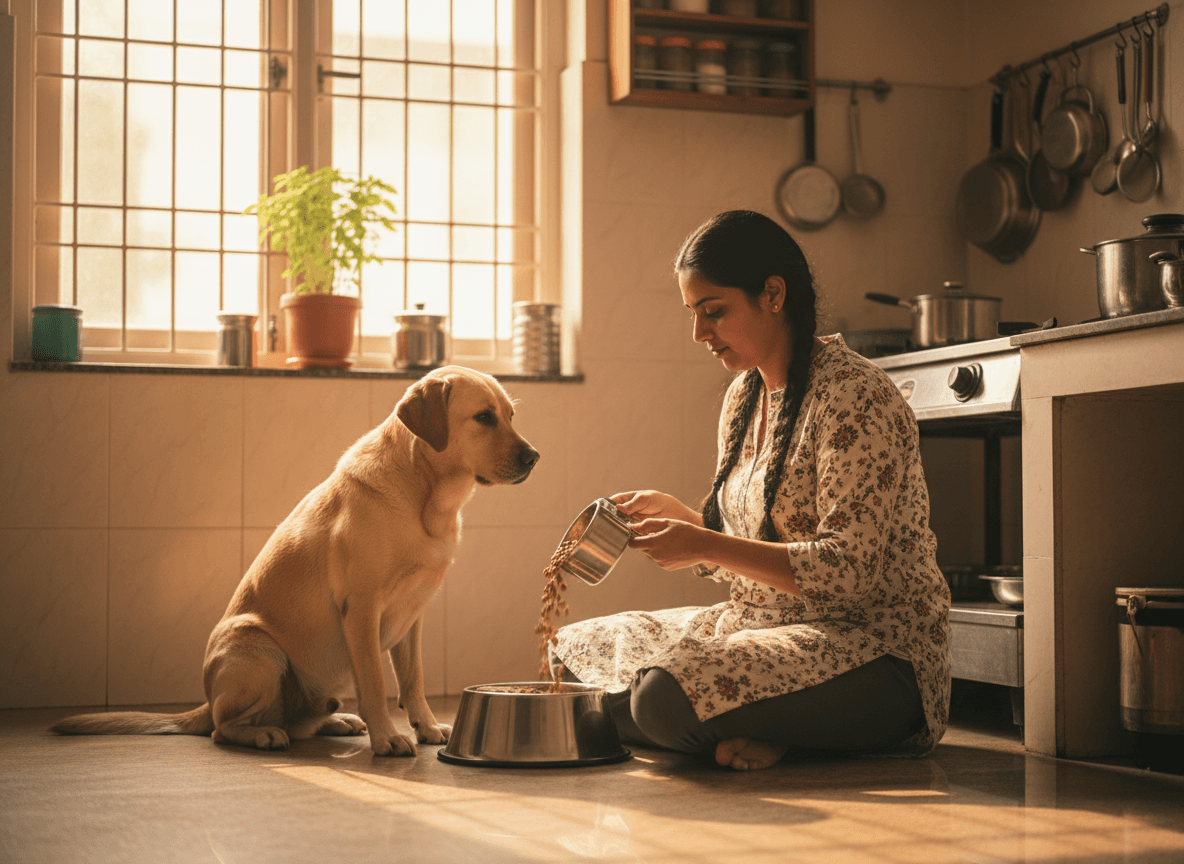
During monsoon (June-September), humidity above 80% causes opened dry kibble to develop mold within 24-48 hours. Store opened bags in an airtight container, buy 3kg bags rather than 12-15kg bags during this season, and never leave food in the bowl for more than 30 minutes. In summer, add 2-3 tablespoons of warm water to each serving and increase fresh drinking water availability by at least 10-15% above your dog's normal intake.
Best Protein Sources for Indian Dogs: From Butcher to Bowl
Chicken (murga) is the foundation of Indian dog nutrition for good reason. Whole broiler chicken runs Rs 100-150/kg at most city markets; boneless breast costs Rs 220-280/kg. Chicken provides complete essential amino acids including arginine, lysine, and methionine and serves as the primary protein in virtually every Indian commercial dog food, including Pedigree, Drools, and Fidele.
Eggs (anda) offer exceptional nutritional value at minimal cost. With a biological value of 100, the reference standard against which all other proteins are measured, one large egg provides 7g protein and 5g fat for Rs 6-8. Cooked eggs are preferable to raw: raw eggs carry Salmonella risk and contain avidin, which blocks biotin absorption over extended feeding periods.
Fish from Indian waters is a widely underused resource. Sardines at Rs 30-50/kg, rohu (Indian carp) at Rs 100-150/kg, and catla provide high-quality protein alongside EPA and DHA omega-3 fatty acids. Fish is the recommended primary protein for dogs with chicken or beef allergies and is specifically endorsed by nutritional researchers at TANUVAS (Tamil Nadu Veterinary and Animal Sciences University) for South Indian dog owners.
Goat meat (mutton/bakra), available at Rs 400-600/kg nationally, has higher fat content (15-20%) than chicken and is particularly useful for underweight dogs, elderly dogs, and working dogs in North India winters. Goat liver at Rs 200-300/kg is an excellent source of vitamin A, B12, iron, and zinc when limited to a maximum 5% of total diet to avoid vitamin A toxicity.
For vegetarian households, paneer provides about 18g protein per 100g and is well-tolerated by most dogs. A fully vegetarian diet is not endorsed by Indian veterinary consensus without careful supplementation, as it consistently creates deficiencies in taurine, L-carnitine, vitamin B12, and vitamin D3.
For more on poisoning — common toxins homes, see our poisoning — common toxins homes guide.
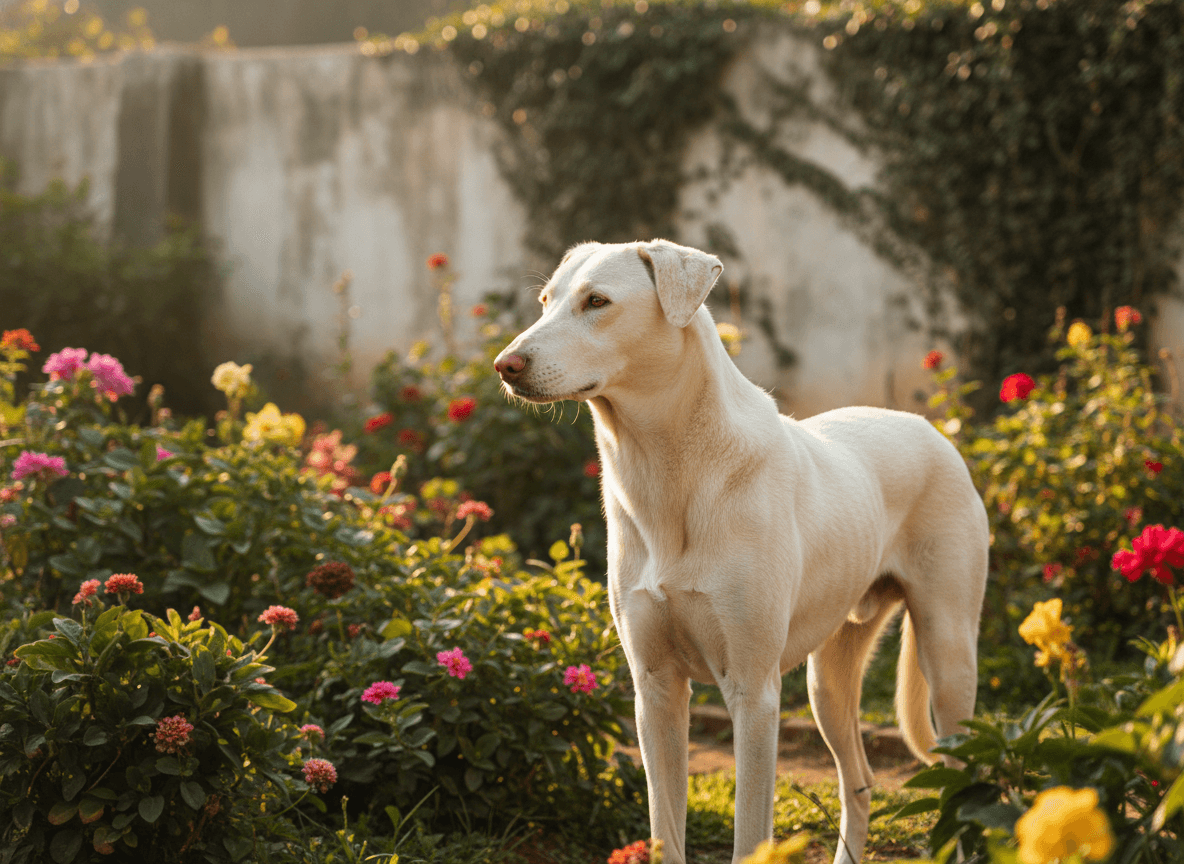
Supplements Every Indian Dog Owner Should Know About
Calcium supplementation is foundational for Indian dogs on homemade diets. Himalaya Himcal Liquid (Rs 120-150 per 200ml) contains calcium gluconate, calcium lactate, and vitamin D3 and is among India's most commonly prescribed canine supplements. It is particularly critical for large-breed puppies, including Labradors and German Shepherds, raised on rice and chicken without added bone or eggshell to prevent rickets and growth plate deformities. Fish oil provides the omega-3 correction that Indian diets consistently fail to deliver. Himalaya Erina EP Coat Supplement (200ml, Rs 180) and Nordic Naturals Omega-3 Pet (90 softgels, Rs 2,800) are both commonly recommended. The standard Indian veterinary dose is 1,000mg combined EPA and DHA per 10kg body weight daily for dogs showing dry coat or atopic dermatitis. Probiotics matter specifically in India because antibiotic use is frequent. Endemic tick-borne diseases, including ehrlichiosis and babesiosis (both common across India), require antibiotic treatment that disrupts gut flora. PetBasics Probiotic Paste (Rs 350-500) and plain curd (2-3 tablespoons daily) both restore gut microbial populations. Post-antibiotic probiotic support for 2-4 weeks is standard Indian veterinary practice. Joint supplements are a high-priority investment for large breeds in India. Labradors and German Shepherds in Indian breeding lines have elevated hip dysplasia rates. Cosequin DS (Rs 1,800-2,200 for 60 tablets) and Flexadin (Rs 900-1,200) are prescribed by orthopedic veterinarians, ideally beginning at one year of age for large breeds showing early signs of joint laxity. Deworming deserves mention as a foundational nutritional intervention rather than just a medical one. Roundworm, hookworm, and tapeworm infestations are extremely common across India, especially in humid states. Heavy worm burden causes malnutrition even on an adequate diet by blocking nutrient absorption entirely. Caniworm or Prazitel at Rs 60-150 per dose, given every 3 months, is the recommended protocol. Multivitamins such as Beaphar (100 tablets, Rs 450-500) and Himalaya PetPlex (Rs 200-350) are also frequently prescribed, with vitamin E (400 IU per day for large breeds) specifically emphasized for dogs in high-pollution cities like Delhi and Mumbai to counter oxidative stress from air particulates. You'll find good options at Dr. Palampalle's Pet Care Clinic in Pratikhsha Nagar, Sion East, Sion, Mumbai — rated 5.0/5 by pet owners. You'll find good options at Delhi dog kennel | puppies for sale in delhi | dog sale in delhi | pet shop near me | poodle puppy | shihzu in Rashid Market, Geeta Colony, Delhi — rated 5.0/5 by pet owners.
You'll find good options like Delhi dog kennel | puppies for sale in delhi | dog sale in delhi | pet shop near me | poodle puppy | shihzu in Rashid Market, Geeta Colony — rated 5.0/5. Check our pet stores in Delhi directory for more choices near you.
You'll find good options like Dr. Palampalle's Pet Care Clinic in Pratikhsha Nagar, Sion East, Sion — rated 5.0/5. Check our pet stores in Mumbai directory for more choices near you.