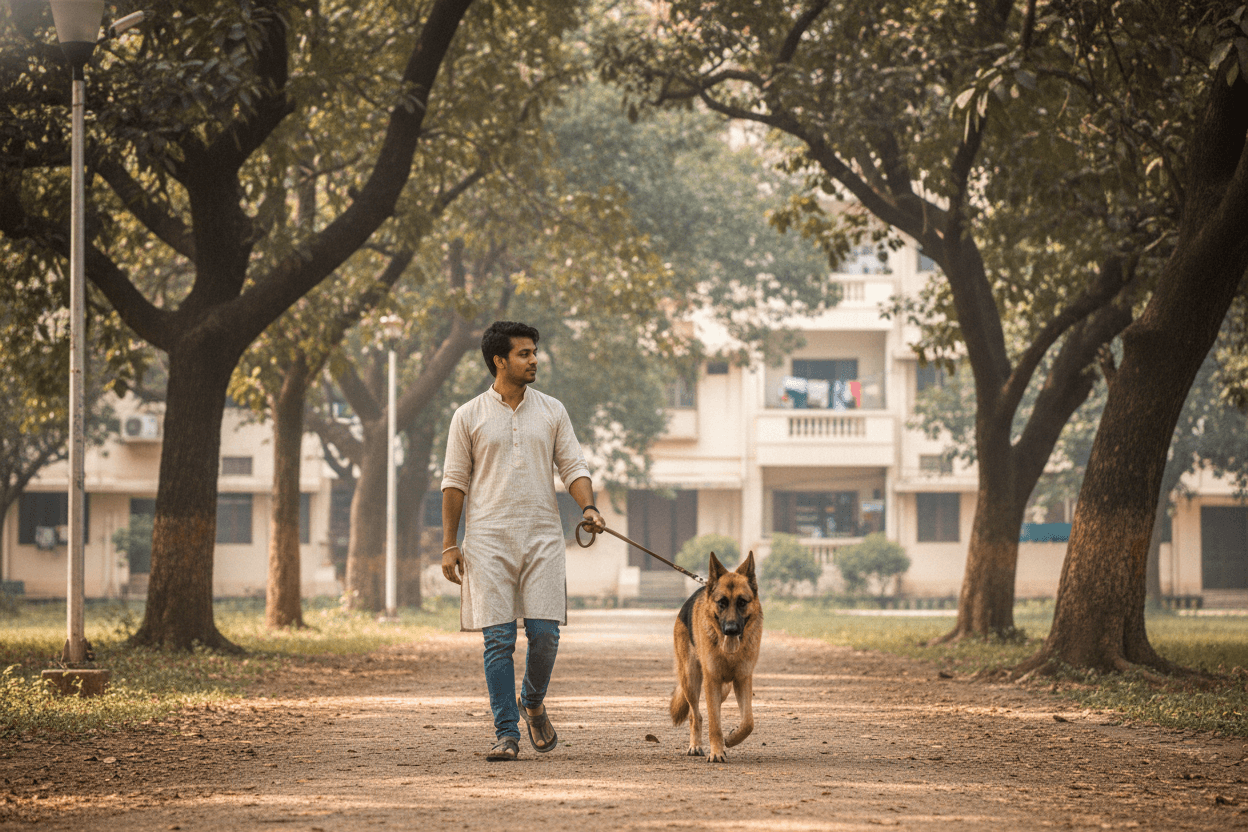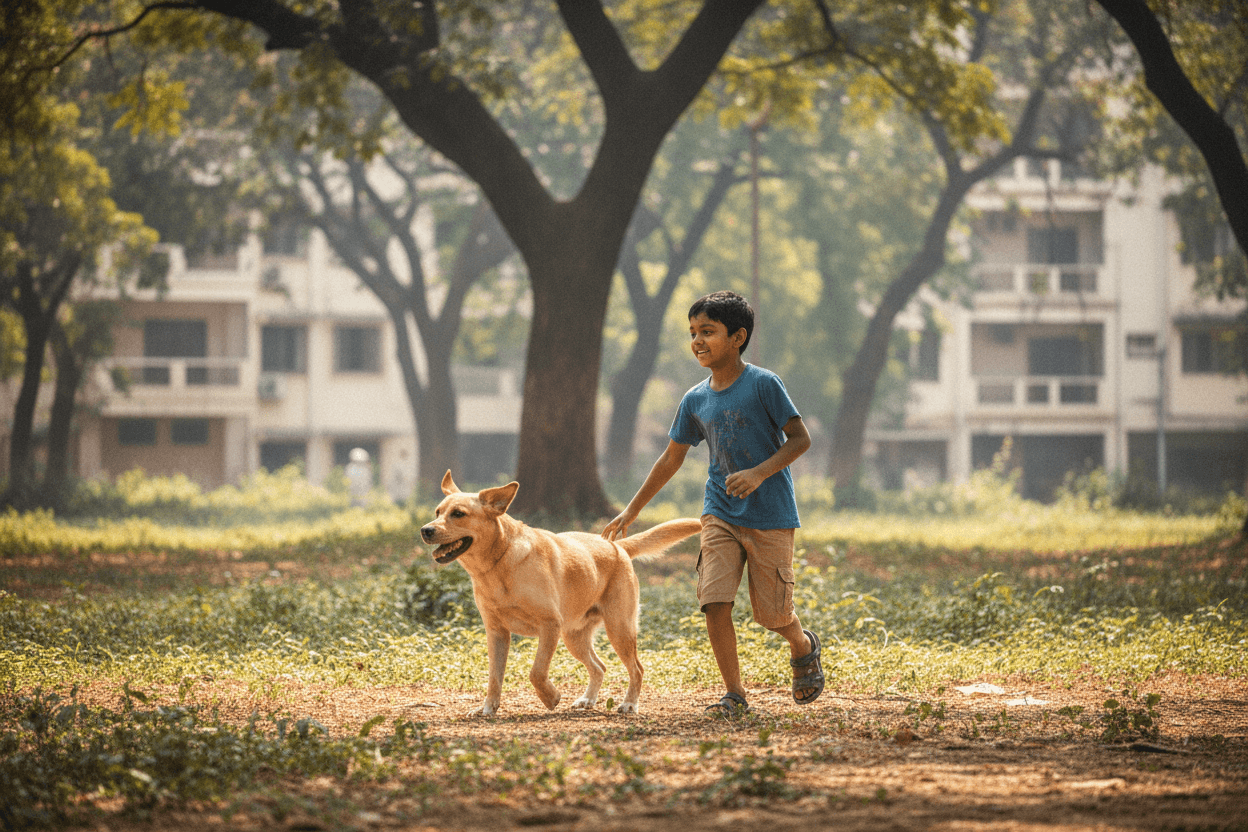
Key Takeaways
- Labrador puppies start at ₹8,000 vs GSD's ₹15,000; first-year ownership costs are 25-30% higher for GSDs in Indian metros.
- Labs handle India's heat and humidity significantly better; GSDs need AC and extra care in South India and coastal cities.
- German Shepherds require 90-120 minutes of vigorous daily exercise; Labs need 60-90 minutes, making Labs far more practical for apartment dwellers.
- Hip dysplasia affects 19% of GSDs vs 12% of Labs per OFA data; GSD owners budget an additional ₹2,000-5,000 annually for hip screenings.
- Labs dominate KCI registrations and are safer with young children; GSDs remain the top choice for home security and working roles.
- Royal Canin GSD formula (12 kg) retails ₹6,200-₹6,800 in Indian metros; the Lab formula runs ₹5,800-₹6,400.
Head-to-Head Snapshot: Key Differences Indian Buyers Must Know
Choosing between a German Shepherd and a Labrador Retriever isn't a coin flip. These two foreign dog breeds land in different places on nearly every metric that matters to Indian dog owners, from purchase price to personality.
On raw intelligence, German Shepherds rank 3rd globally on Stanley Coren's obedience intelligence scale while Labs rank 7th. Both are highly trainable, but GSDs need far more mental stimulation daily or they'll find destructive ways to keep themselves busy. An under-stimulated GSD in a Delhi flat will remodel your furniture faster than you'd expect.
Size looks similar on paper. Adult male GSDs weigh 30-40 kg and stand 60-65 cm, while male Labs weigh 29-36 kg and stand 56-57 cm. The real difference is structural: GSDs have a longer back and angulated hindquarters that directly increase hip dysplasia risk compared to the Lab's more compact build.
The GSD's double coat sheds heavily all year with two major blowouts, a shedding pattern well-documented across veterinary literature. In India, those blowouts align with the March-April and September-October season transitions. Labs shed moderately too, but their water-resistant coat dries much faster after monsoon walks, a practical win for Mumbai and Chennai owners. According to WSAVA Global Nutrition Guidelines, breed-appropriate diet planning should account for coat and skin health across different climatic conditions.
One price quirk worth knowing: black-and-tan GSDs command a 20-40% premium over sable or all-black variants in Indian markets. Coat colour has no bearing on health or temperament, so factor that premium into your decision carefully.
For a direct look at how Indian breeds compare to foreign imports on climate and cost, the regional adaptations differ in ways that affect daily ownership.
For more on independent, see our independent guide.
German Shepherd vs Labrador Retriever: At-a-Glance Comparison for Indian Buyers (2026)
| Factor | German Shepherd | Labrador Retriever |
|---|---|---|
| Intelligence Rank (Coren) | 3rd globally | 7th globally |
| Adult Male Weight | 30-40 kg | 29-36 kg |
| Lifespan | 9-13 years | 10-12 years |
| Hip Dysplasia Rate (OFA) | ~19% | ~12% |
| Puppy Price (metro, KCI) | ₹25,000-₹45,000 | ₹20,000-₹40,000 |
| Monthly Food Cost (adult) | ₹3,500-₹6,000 | ₹2,800-₹5,000 |
| First-Year Ownership Cost | ₹80,000-₹1,50,000 | ₹55,000-₹1,10,000 |
| Heat Tolerance in India | Low to Moderate | Moderate to Good |
| Apartment Suitability | Low | High |
| First-Time Owner Suitability | Low | High |
| Guard Dog Capability | Excellent | Poor |
| Child Friendliness | Good with training | Excellent |
| Obesity Risk | Low to Moderate | High |
| Stranger Aggression Rate (C-BARQ) | ~14% | ~4% |
India Climate Verdict: Which Breed Survives Indian Summers Better?
The climate question is where Indian buyers must be brutally honest with themselves. German Shepherds were developed for Germany's temperate summers averaging 18-25 degrees Celsius. Delhi peaks at 45 degrees. Chennai sits at 38 degrees with 80% humidity for months on end.
Labrador Retrievers perform significantly better in India's hot climate. Their shorter double coat and stockier build allow better heat dissipation. Indian Customs uses Labs at the Chennai and Mumbai international airports for narcotic detection work outdoors in 35-degree-plus conditions regularly. That operational track record is strong evidence of superior tropical tolerance.
For GSDs in India, the geography of your city matters enormously. Punjab's Jalandhar and Ludhiana districts are India's largest GSD breeding hub for good reason: cooler winters and drier air give these dogs the climate they're adapted for. Bengaluru, sitting at 18-30 degrees year-round, is one of the more GSD-compatible South Indian cities. Chennai, Hyderabad, and coastal cities with year-round humidity above 60% create chronic skin problems for GSDs, including hot spots and skin fold dermatitis.
Monsoon season adds another layer of difficulty. Wet GSDs take longer to dry and are more prone to fungal skin infections between coat layers during July-September humidity peaks in cities like Mumbai and Kolkata. A monsoon pet care routine for GSD owners needs to include weekly blow-drying and anti-fungal rinses that Lab owners rarely require.
Know your city's risk level and heat stroke prevention protocol for Indian dogs before bringing a GSD to any city south of Pune.
Both breeds need air conditioning during India's April-June peak. Budget approximately ₹1,500-₹2,500 per month in added electricity costs to keep a dog-safe room at 22-24 degrees for 8 hours daily during summer months. This isn't optional for GSDs in most Indian metros.
Learn more in our detailed space resource.
True Cost of Ownership: Purchase Price and Annual Expenses Across Indian Cities
Purchase price is the smallest part of the financial picture. Indian buyers often fixate on the puppy price while underestimating what comes after.
For GSDs, pet-quality puppies without KCI papers run ₹15,000-₹25,000 in Tier-2 cities and ₹25,000-₹45,000 from reputed breeders in Delhi, Mumbai, and Bengaluru. Working or show bloodlines with Schutzhund-titled sires start at ₹60,000 and can reach ₹1,20,000. KCI registration itself adds ₹2,000-₹5,000 to the price but guarantees documented bloodlines.
Lab puppies cost less to start: ₹8,000-₹18,000 in Tier-2 cities, ₹20,000-₹40,000 from metro breeders. English Show Lab bloodlines from imported sires can reach ₹60,000-₹80,000, but that's a specialist segment most family buyers don't need.
Food costs hit harder for GSDs. Royal Canin German Shepherd Formula, the most commonly prescribed GSD-specific kibble in India, retails at ₹6,200-₹6,800 for a 12 kg bag in metros and is reformulated for joint support and digestive sensitivity. Monthly food for an adult GSD runs ₹3,500-₹6,000. Royal Canin Labrador Retriever Formula with controlled fat content for obesity management retails at ₹5,800-₹6,400 for 12 kg, putting Lab monthly food costs at ₹2,800-₹5,000. Both are widely available at PetZone and PetKart chains.
For a complete breakdown of what Indian pet owners pay at vet clinics, the vet costs guide for India 2026 shows annual vaccinations, deworming, and tick prevention on the standard schedule running ₹3,500-₹6,000 for either breed. GSD owners should additionally budget ₹2,000-₹5,000 per year for elbow and hip X-ray screening given the breed's 19% dysplasia prevalence. OFA-accredited hip X-rays at Indian vet centres cost ₹2,000-₹4,000 per dog.
Grooming adds another layer. A GSD bath, blow-dry, and de-shedding session costs ₹800-₹1,800 per visit in metros. Labs need fewer sessions at ₹500-₹1,200 each, though nail trimming every 4-6 weeks is non-negotiable on India's hard tile and marble floors. De-shedding tools (Furminator equivalents from PetZone or PetKart) retail ₹800-₹2,500.
The bottom line for Year 1 in an Indian metro: GSDs cost ₹80,000-₹1,50,000 all in. Labs come in at ₹55,000-₹1,10,000. That's approximately 25-30% less for the Lab across the critical first year.
You might also find our small breeds apartments small guide helpful.
Tick Prevention Is Non-Negotiable in India: Budget It From Day One
Ehrlichiosis and Babesiosis (tick fever diseases) are endemic across all Indian states. GSDs' dense undercoat makes manual tick detection much harder than on a Lab. Monthly Bravecto by Merck (₹1,200-₹1,600 per large-breed dose, covers 3 months) or NexGard by Boehringer Ingelheim (₹700-₹900 per month) is not an optional expense for either breed. Budget ₹8,400-₹19,200 per year depending on which product you choose. For more on hypoallergenic breeds — prices, grooming, see our hypoallergenic breeds — prices, grooming guide.
Temperament Face-Off: Family Life, Children, and Guard Instincts
Temperament is where these two breeds diverge most sharply, and where Indian family context matters most.
Labs score dramatically better on stranger tolerance. C-BARQ (Canine Behavioral Assessment and Research Questionnaire) data shows stranger-directed aggression in only 4% of Labs versus 14% of GSDs. For Indian homes with frequent guests, domestic help coming and going, and extended family visits on weekends, that gap has real daily consequences.
Children are where Labs truly shine. Their soft mouth, developed through generations of bird retrieving, and natural patience make them tolerant of the rough handling young children dish out. In multi-child Indian households, this isn't just a nice-to-have. Indian veterinary professionals consistently rank Labs among the top three breeds for child safety — a consensus built on direct clinical observation across metro and Tier-2 city practices.
GSDs are a different proposition. The breed retains strong herding and guarding instincts. Without consistent, experienced training, a GSD may show protective aggression toward unfamiliar children or guests. This isn't a character flaw; it's the breed doing exactly what it was built to do. It requires an owner who knows how to channel that drive correctly.
Separation anxiety is another practical concern. In India's nuclear family structure where both parents often work full-time, a GSD left alone for 8-10 hours daily is significantly more likely to develop destructive behaviours than a Lab in the same situation. Separation anxiety in Indian dogs is worth reading before you commit to a GSD — the management strategies are time-intensive and require consistency.
For apartment living, the survey data tells the story. A 2023 DogSpot survey found 68% of apartment-dwelling Indian dog owners chose Labs or Golden Retrievers over GSDs. Noise complaints and space requirements were the top two concerns. Labs can adapt to a 2 or 3 BHK with proper exercise; GSDs generally cannot.
Learn more in our detailed rottweiler doberman — comparison resource.
Health Issues That Hit Indian Owners' Wallets Hardest
Both breeds carry hereditary health risks, but the profile and cost differ meaningfully.
Hip dysplasia is the headline condition for both. Hip dysplasia prevalence data from the Orthopedic Foundation for Animals database shows roughly 19% of German Shepherds and 12% of Labradors are affected, figures that align with preventive health screening protocols outlined in WSAVA Global Guidelines. Surgical correction via Total Hip Replacement at specialist centres in Delhi, Mumbai, or Bengaluru costs ₹80,000-₹1,50,000 per hip. Most Indian families aren't budgeting for that when they bring home a puppy at ₹25,000.
Degenerative Myelopathy (DM), a progressive spinal cord disease, affects GSDs at a significantly higher rate than Labs. There's no cure. Management via physiotherapy and rear-support mobility carts runs ₹15,000-₹40,000 per year in Indian metro areas where specialist vet neurologists are concentrated. It's a slow, expensive condition that Lab owners rarely encounter.
Obesity is the dominant health risk for Labs, and Indian feeding habits make it worse. Research published in Cell Metabolism identified a POMC gene variant in Labs that impairs the brain's satiety signalling, making the breed genetically predisposed to overeating. In India, where many owners add rice, chapati, and table scraps to commercial food, Labs routinely reach 40-50 kg against a healthy range of 29-36 kg. That excess weight accelerates joint disease onset and compounds the hip dysplasia risk significantly.
Good coat management also reduces skin and joint risk. A home grooming routine for Indian dog owners that includes weekly de-shedding prevents the matting and hot spots that plague under-groomed GSDs during South Indian summers. When skin problems do appear, the guide to dog skin diseases common in India covers the anti-fungal protocols and hot spot treatment that GSD owners in coastal cities need routinely.
Bloat (Gastric Dilatation-Volvulus) is the emergency risk GSD owners must know. Deep-chested breeds like GSDs are in the high-risk category; Labs are moderate-risk. GDV surgery in India costs ₹30,000-₹70,000, and survival rates drop sharply if the dog isn't in surgery within 6 hours of onset. Know the signs: unproductive retching, distended abdomen, restlessness after meals.
Both breeds age differently. Lab senior care focuses on weight management and joint support; GSD senior care centres on DM monitoring and spinal health. Our senior dog care guide for Indian conditions outlines the checkup schedule and dietary adjustments that matter most as either breed reaches 7+ years.
For both breeds, tick-borne diseases are the most common serious illness Indian owners actually encounter year to year. Monthly Bravecto or NexGard is cheaper than treating Ehrlichiosis or Babesiosis at any vet clinic in Chennai, Hyderabad, or Mumbai.
You might also find our native breeds guide helpful.
Which Breed Do Indian Security Forces and Working Professionals Choose?
What these deployments reveal is practical wisdom about each breed's real-world strengths.
The Indian Army's Remount and Veterinary Corps (RVC), headquartered in Meerut, uses German Shepherds as its primary patrol and tracking breed. GSDs account for approximately 60% of the Army's operational K9 units, prized for their dual capability in patrol work and article search. State police forces across Maharashtra, Uttar Pradesh, Karnataka, and Tamil Nadu deploy GSDs for criminal tracking and crowd management. The breed's deep bark and alert posture provide a deterrence factor that a friendly Lab simply can't replicate.
Indian Railways Protection Force (RPF) uses trained GSDs at major junctions including Mumbai CST, New Delhi, and Howrah for explosive and contraband detection in luggage. The breed's scent drive and handler-focused intensity make it effective for high-security checkpoint operations.
Labrador Retrievers dominate a different operational space entirely. Indian Customs (CBIC) and the National Disaster Response Force (NDRF) deploy Labs for narcotic and explosive detection at airports and disaster sites. Labs' calmer temperament and reward-driven focus make them more consistent in crowded, high-stimulation environments where a GSD's reactive alertness becomes a liability rather than an asset.
Guide Dogs India and assistance dog organisations in Bengaluru and Chennai train Labradors almost exclusively. The reasoning is direct: lower aggression baseline and higher social tractability in public environments. For roles requiring the dog to stay calm around hundreds of strangers daily, the Lab wins.
India has an estimated 62 million stray dogs according to the Animal Welfare Board of India (AWBI), which means both breeds encounter street dogs on every urban walk. GSDs' higher reactivity toward unfamiliar dogs creates more challenging street encounters than Labs typically face. This is a daily reality for Indian city owners, not a hypothetical scenario.
The split is clean. GSDs for intimidation, patrol, and security roles. Labs for detection, assistance, and crowd-tolerant working environments.
Training Difficulty: Honest Assessment for Indian First-Time Owners
Raw intelligence doesn't equal ease of training. Many Indian buyers get caught on exactly this point.
GSDs rank among the top 3 most trainable breeds but require consistent, experienced handling. Inconsistent training, common among first-time Indian dog owners without professional guidance, often produces reactive and overprotective adults. An under-socialised GSD in an Indian city creates daily leash-aggression incidents with street dogs that a well-socialised Lab handles with far less drama.
A basic 20-session obedience course with a certified trainer in Delhi, Mumbai, or Bengaluru costs ₹8,000-₹20,000. GSDs typically need follow-on advanced obedience or protection sport training (IPO/Schutzhund) for full behavioural satisfaction, adding ₹15,000-₹40,000 annually. Our guide to choosing the right dog trainer in India explains what certifications to look for and which red flags to avoid when hiring in Tier-2 cities where qualified GSD trainers are genuinely scarce.
For Labs, a well-structured puppy training plan for Indian homes is usually sufficient from the first 8 weeks. Their food motivation makes reward-based training effective from the first session, and their lower reactive threshold means a beginner in Bengaluru or Pune can walk a Lab through a busy street market after 4-6 weeks of basic conditioning. With a GSD, that same walk requires months of structured preparation.
Exercise requirements are the other honest conversation Indian buyers need to have before committing. GSDs need 90-120 minutes of vigorous physical exercise daily plus 30 minutes of mental stimulation through nose work or obedience drills. Labs need 60-90 minutes daily. In Indian apartment setups without off-leash park access, meeting a GSD's exercise needs is a serious daily commitment, not a weekend activity.
Labs' adaptability to varied environments makes them a genuinely different ownership experience than GSDs. The WSAVA Global Nutrition Guidelines note that food-motivated breeds require portion discipline and body condition scoring to prevent the obesity that Labs are genetically predisposed to, a protocol worth building into your routine from week one. For an overview of which breeds work best without professional training support, the guide to best dogs for first-time owners in India ranks both breeds against each other on every factor first-time Indian buyers face.
Choosing a Reputable Breeder: What Indian Buyers Often Skip
Most breed comparison conversations stop at price and temperament. They skip the part that determines whether you get a healthy dog or a genetic lottery ticket.
For German Shepherds, insist on OFA or BAER certified sires and dams for hips and elbows before viewing any puppy. A legitimate GSD breeder in India will have the X-ray certifications on hand. Without it, you're rolling the dice on a ₹40,000 puppy with an unknown dysplasia risk. Punjab breeders in Jalandhar and Ludhiana tend to maintain better working dog lineage documentation than Tier-2 city backyard breeders.
For Labradors, ask specifically about weight records for both parents and grandparents. Labs from English Show lines with documented weight histories within the healthy 29-36 kg range give you a much better obesity baseline than pups from unscreened imports. Progressive KCI-registered breeders are beginning to include genetic panel screenings in their documentation; it's worth asking.
KCI registration costs ₹2,000-₹5,000 and is worth verifying: it guarantees documented pedigree, not health. A KCI-registered Lab from an obese parent line is still a high obesity risk.
Common new-owner errors extend beyond the purchase itself. The guide to new pet owner mistakes in India 2026 is worth reading before viewing any litter, as it covers the breeder red flags and first-year decisions that cost Indian dog owners the most.
Red flags for both breeds: puppies sold below ₹8,000 for Labs or ₹15,000 for GSDs, breeders who won't let you visit their facility, and sellers on OLX or Facebook Marketplace who can't produce vaccination records for the litter.
Adoption is also a genuine option. Breed-specific rescue networks for Labradors operate in Bengaluru, Mumbai, Delhi, and Hyderabad through AWBI-registered shelters and Facebook rescue groups. Adoption fees typically run ₹2,000-₹8,000 and include vaccination and deworming. The key benefit is knowing the adult temperament before you commit.
The Final Verdict: GSD or Lab for Your Indian Home?
The data points to a clear split by situation, not a universal winner. Labs are the stronger choice for: Indian nuclear families in apartments across Indian cities (2 or 3 BHK), first-time dog owners anywhere in the country, South Indian cities like Chennai and Hyderabad, households with children under 10, and buyers working with tighter budgets. Labs cost approximately 30% less in Year 1, handle India's heat better, cause fewer incidents with strangers, and are rehomed 2-3 times faster on platforms like DogSpot and OLX if circumstances change. Labrador Retrievers hold the top KCI registration spot most years, and that reflects a market consensus built on direct experience. GSDs are the stronger choice for: independent house owners in North India (Delhi, Punjab, Himachal Pradesh), experienced dog owners who want a dual-purpose family and guard dog, and households willing to invest in professional training, daily structured exercise, and consistent socialisation. The breed's security capability is real and documented by Indian Army, state police, and RPF deployments. No other commonly available breed provides the same deterrence. For Indian buyers who want a loyal family companion with manageable maintenance costs in a typical metro apartment, the Labrador is the cleaner answer. For owners with the space, experience, and security motivation to bring out a GSD's full capability, the investment is worth it. Both are excellent dogs. They're excellent in very different ways, and knowing which way your life runs will tell you which breed belongs in it.
If you're in Mumbai, costs vary significantly by neighbourhood — Ameya Society, Prabhadevi averages ₹89 while Borla, Union Park, Chembur runs around ₹1,044.