Key Takeaways
- Large breeds in India range from ₹5,000 (Indian Pariah) to ₹1,50,000+ (Tibetan Mastiff from registered breeders)
- Monthly food costs for large breeds: ₹4,000–₹9,000 depending on breed size and diet quality
- Only 4 of the 10 breeds below score above 7/10 on heat tolerance — AC is non-negotiable for the rest
- Minimum recommended space: 800 sq ft for most large breeds, though Rajapalayams and Mudhol Hounds need 1,200+ sq ft or yard access
- Indian-origin large breeds (Rajapalayam, Mudhol Hound, Bully Kutta) have 30–40% lower vet bills due to fewer genetic disorders
- Giant breeds (Great Dane, Saint Bernard) have shorter lifespans (7–9 years) — factor this into your 10-year cost projection
10 Large Dog Breeds That Thrive in Indian Conditions
India's combination of 45°C summers, monsoon humidity, and compact urban housing makes breed selection critical for large dogs. A Siberian Husky that works perfectly in Shimla will overheat dangerously in Chennai. This guide ranks 10 large breeds (25 kg+) available from Indian breeders, scored on heat tolerance, space needs, and total cost of ownership. Our large breeds guide covers this in detail.
Prices listed below are 2025–2026 ranges collected from KCI-registered breeders in Delhi, Mumbai, Bangalore, and Chennai. Backyard breeder prices run 40–60% lower but come with higher health risks and no lineage documentation. For more on this topic, see our guide on breeds. You might also find our breeds guide helpful.
Breed Comparison: Prices, Heat Tolerance & Space Needs
This table compares all 10 breeds across the metrics that matter most for Indian households. Heat tolerance is rated 1–10 (10 = handles 45°C without AC). Space requirement assumes indoor living with daily outdoor exercise. Our 10 breeds guide covers this in detail.
| Breed | Weight (kg) | Breeder Price (₹) | Monthly Food (₹) | Heat Tolerance | Min Space (sq ft) |
|---|---|---|---|---|---|
| Rajapalayam | 25–30 | 8,000–15,000 | 3,500–5,000 | 9/10 | 1,200 |
| Mudhol Hound | 22–28 | 5,000–12,000 | 3,000–4,500 | 9/10 | 1,200 |
| Indian Pariah (large) | 20–30 | Free–5,000 | 2,500–4,000 | 10/10 | 800 |
| Bully Kutta | 60–90 | 15,000–40,000 | 6,000–9,000 | 7/10 | 1,500 |
| Labrador Retriever | 29–36 | 15,000–40,000 | 4,000–6,500 | 5/10 | 800 |
| German Shepherd | 30–40 | 20,000–60,000 | 4,500–7,000 | 4/10 | 1,000 |
| Golden Retriever | 30–34 | 15,000–45,000 | 4,000–6,500 | 4/10 | 1,000 |
| Rottweiler | 35–60 | 18,000–50,000 | 5,000–7,500 | 4/10 | 1,000 |
| Great Dane | 50–80 | 20,000–80,000 | 6,000–9,000 | 3/10 | 1,200 |
| Tibetan Mastiff | 45–75 | 60,000–1,50,000 | 6,000–9,000 | 6/10 | 1,500 |
Money Saver
Indian-origin breeds (Rajapalayam, Mudhol Hound, Indian Pariah) cost 50–80% less to buy AND maintain. Their genetic adaptation to Indian heat means fewer vet visits for heat-related illness — saving ₹5,000–₹15,000 per year on average.
Indian-Origin Large Breeds: Built for the Climate
Three Indian breeds deserve priority consideration for anyone wanting a large dog. They have centuries of genetic adaptation to Indian heat, humidity, and diet.
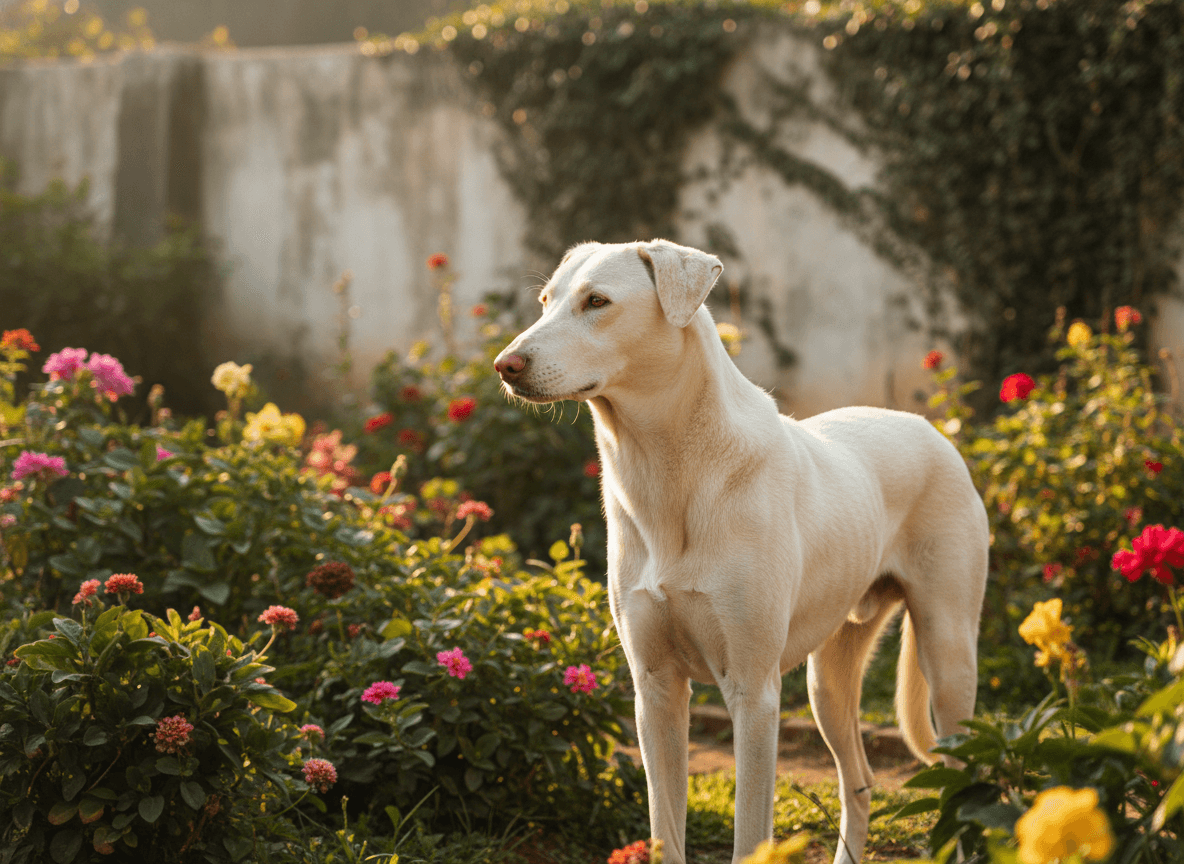
The Rajapalayam, originally bred by the Nayak dynasty in Tamil Nadu for boar hunting, stands 65–75 cm tall with a distinctive milk-white coat. Breeders in Rajapalayam town and Madurai sell pups for ₹8,000–₹15,000. Their single-layer coat and lean build handle 40°C+ temperatures without distress. They need a firm owner — this breed bonds with one person and can be aloof with strangers. Monthly food cost runs ₹3,500–₹5,000 on a diet of rice, chicken, and commercial kibble (Royal Canin Maxi or Pedigree Large Breed).
The Mudhol Hound (also called Caravan Hound) from Karnataka is India's fastest large breed, clocking 60 km/h in short sprints. Breeders around Mudhol and Bagalkot price pups at ₹5,000–₹12,000. Their thin skin and lean frame dissipate heat efficiently, but they absolutely need a yard or twice-daily 45-minute runs. Apartment living causes destructive behavior within weeks.
The Bully Kutta, a Pakistani-Indian breed from Punjab and Sindh, is the largest Indian dog at 60–90 kg. Prices range from ₹15,000–₹40,000 from breeders in Punjab and Rajasthan. They tolerate heat reasonably well (7/10) but need experienced owners — this breed has high guarding instinct and requires early socialization from 8 weeks. Monthly food costs are the highest on this list at ₹6,000–₹9,000 due to sheer body mass.
Popular Imported Large Breeds: What They Actually Cost in India
Labradors and Golden Retrievers dominate India's large-breed market, making up roughly 60% of KCI registrations. But their European genetics create real costs that first-time owners underestimate.
A KCI-registered Labrador from a reputable Delhi or Mumbai breeder costs ₹15,000–₹40,000. The hidden cost is cooling: Labs pant excessively above 35°C, and running AC 8+ hours daily in summer adds ₹2,000–₹4,000 to your monthly electricity bill. Their double coat also sheds heavily during March–May, requiring weekly grooming (₹500–₹800 per professional session or 30 minutes of daily brushing).
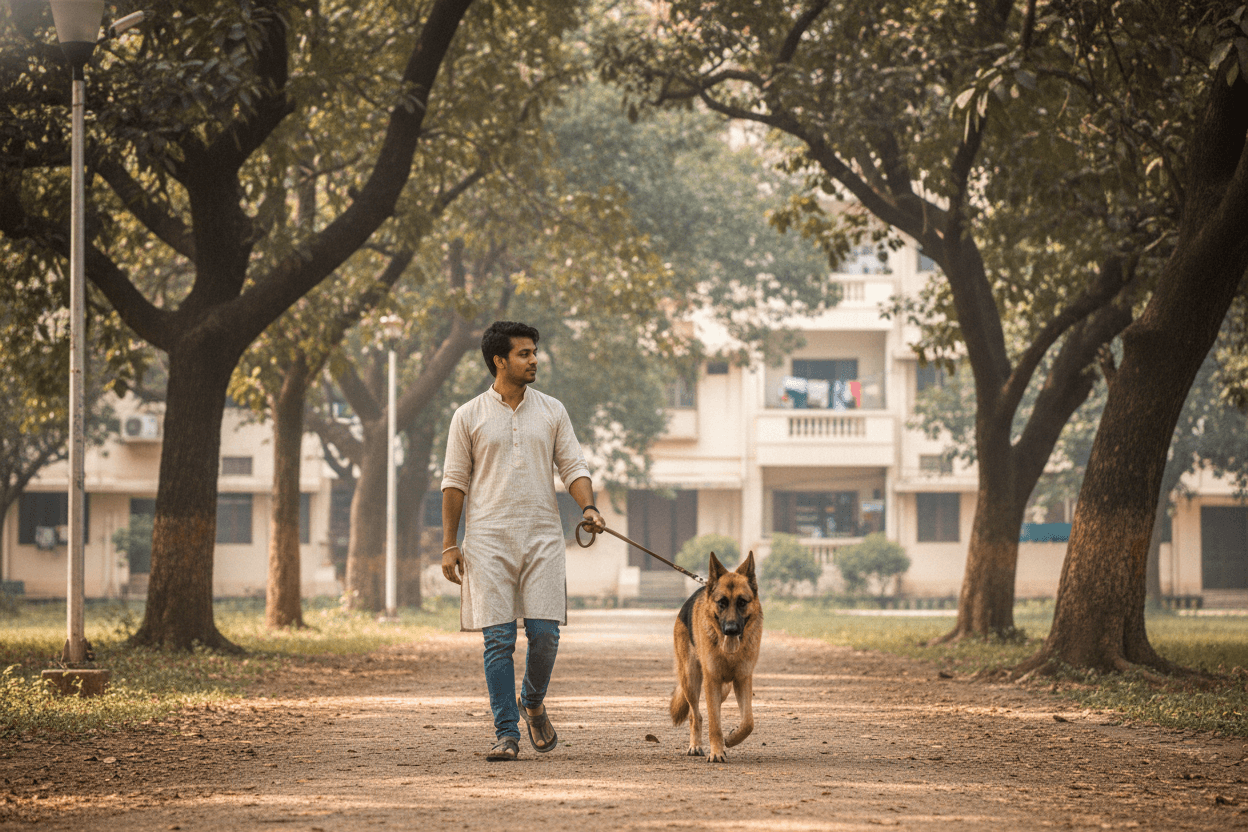
German Shepherds (₹20,000–₹60,000 from breeders in Bangalore, Delhi, and Kolkata) score just 4/10 on heat tolerance. They are prone to hip dysplasia — a condition that costs ₹40,000–₹1,20,000 to treat surgically in Indian metros. Budget ₹5,000 annually for joint supplements (Nutraceutical GCS or Bayer Synoquin) starting from age 3.
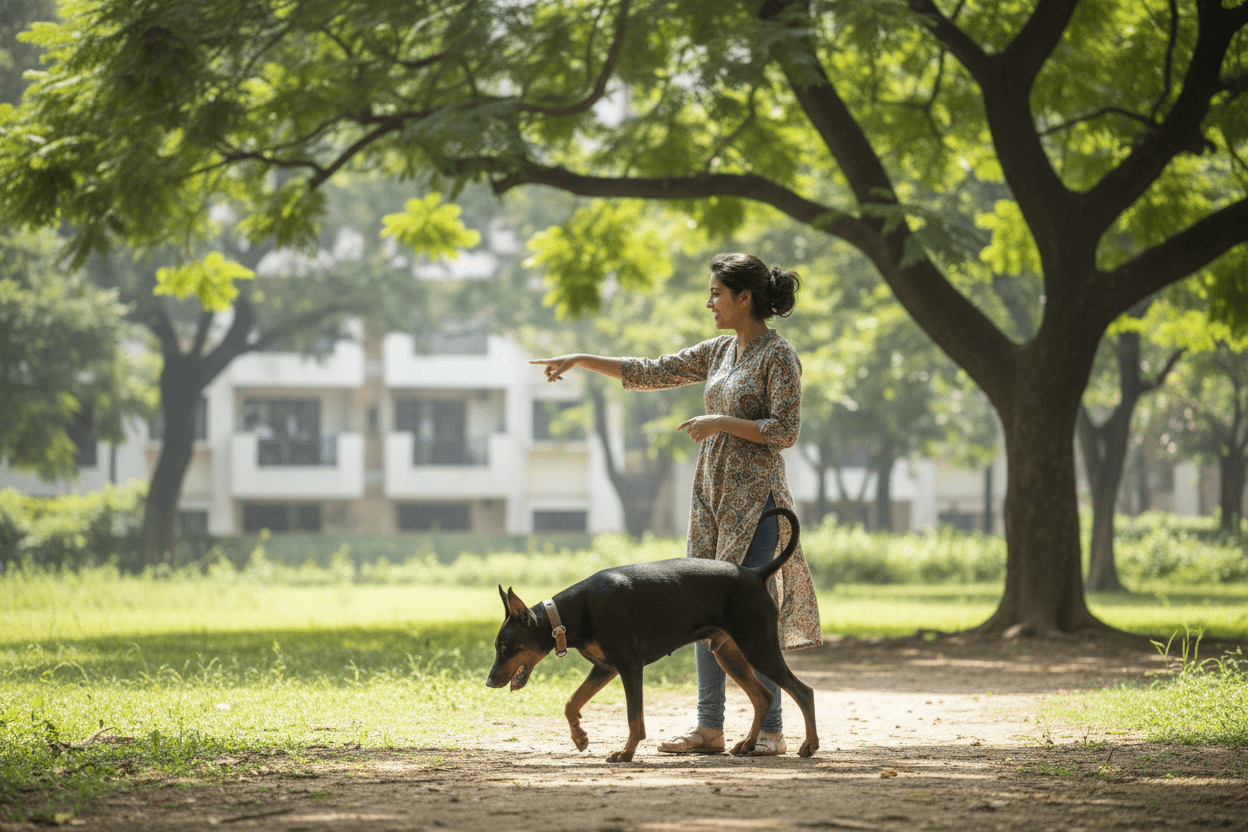
Rottweilers (₹18,000–₹50,000) are powerful guard dogs popular in North India, but they overheat quickly. Their black double coat absorbs heat — summer walks must happen before 6 AM or after 7 PM. They also face breed-specific restrictions in some housing societies in Gurgaon, Noida, and Mumbai, so verify your society bylaws before buying.
Great Danes are India's tallest household breed at 70–85 cm. Breeders in Pune, Delhi, and Bangalore charge ₹20,000–₹80,000. They score just 3/10 on heat tolerance — AC is mandatory, not optional. Their 7–9 year lifespan means a compressed but expensive ownership period: budget ₹6,000–₹9,000 monthly on food alone (Orijen Large Breed or Farmina N&D at 600–800g daily).
The Tibetan Mastiff is the most expensive large breed available in India at ₹60,000–₹1,50,000 from breeders in Himachal Pradesh, Ladakh, and Delhi. They were bred for Himalayan winters and handle cold exceptionally well, but score 6/10 in plains heat. They thrive in hill stations (Shimla, Manali, Ooty) and struggle in cities below 600m elevation without climate control.
Space Requirements for Indian Housing Types
Indian apartments average 600–1,200 sq ft — significantly smaller than Western homes these breeds were sized for. Here is a realistic breakdown of which breeds fit which housing type.
- 1 BHK apartment (400–600 sq ft): No large breed is comfortable. Maximum a large Indian Pariah with 2 daily walks of 45+ minutes each
- 2 BHK apartment (600–900 sq ft): Labrador, Golden Retriever, or Indian Pariah with daily 1-hour exercise. German Shepherds become restless
- 3 BHK apartment (900–1,200 sq ft): Most large breeds work with adequate exercise. Still tight for Bully Kutta, Great Dane, or Tibetan Mastiff
- Independent house with yard (1,200+ sq ft): All breeds fit. Mudhol Hounds and Rajapalayams need at minimum a 200 sq ft enclosed outdoor area
- Farmhouse / rural property: Ideal for Bully Kutta, Tibetan Mastiff, and sighthounds (Mudhol, Rajapalayam) that need running space
DodoDoggy Tip
Housing society breed restrictions are real. Many Gurgaon and Mumbai societies ban Rottweilers, Pit Bulls, and sometimes German Shepherds. Ask your RWA for their pet policy in writing before you commit to a breed.
Heat Tolerance: What the Ratings Actually Mean
Heat tolerance ratings in the table above are based on coat type, body mass, muzzle length, and origin climate. Here is what each range means in practical terms for Indian summers (April–June, 38–47°C in plains).
- 9–10/10 (Rajapalayam, Mudhol Hound, Indian Pariah): Can exercise outdoors until 10 AM and after 5 PM even in May. No AC required, though shade and fresh water are non-negotiable
- 6–7/10 (Bully Kutta, Tibetan Mastiff): Tolerate indoor heat up to 35°C. Need AC or cooler during peak afternoon hours (12–4 PM) in plains cities. Morning walks only in summer
- 4–5/10 (Labrador, German Shepherd, Golden Retriever, Rottweiler): AC rooms needed 6–10 hours daily in summer. Signs of heat stress (heavy panting, drooling, lethargy) appear within 20 minutes of outdoor exposure above 38°C
- 3/10 (Great Dane): Requires 24/7 climate-controlled environment May through September in most Indian cities. Not viable without consistent AC — budget ₹3,000–₹5,000 extra monthly on electricity
Heatstroke kills large dogs faster than small ones due to higher body mass and slower cooling. Emergency vet treatment for heatstroke runs ₹5,000–₹15,000 in Indian metros. Prevention costs nothing: walk early, provide shade, and keep water bowls in every room.
Monthly Cost Breakdown: First Year vs Ongoing
First-year costs are 40–60% higher than subsequent years due to vaccinations, spaying/neutering, and initial supplies. Here is a realistic monthly breakdown for a Labrador in a Mumbai apartment (median case).
| Expense Category | First Year Monthly (₹) | Year 2+ Monthly (₹) |
|---|---|---|
| Premium kibble (12–15 kg/month) | 4,500 | 4,500 |
| Vet visits & vaccinations | 1,500 | 500 |
| Grooming (professional, 2x/month) | 1,200 | 1,200 |
| Flea/tick prevention (Bravecto/Nexgard) | 600 | 600 |
| AC electricity (summer months) | 3,000 | 3,000 |
| Treats & supplements | 800 | 800 |
| Pet insurance (Bajaj/ICICI) | 500 | 500 |
| Total | 12,100 | 11,100 |
For Indian breeds (Rajapalayam, Mudhol Hound), subtract the AC cost and reduce food costs by 20–30%. A Rajapalayam in Chennai costs roughly ₹5,500–₹7,000 per month all-in — nearly half of an imported breed in the same city.
Money Saver
Pet insurance from Bajaj Allianz or ICICI Lombard covers emergency surgeries up to ₹50,000–₹1,00,000 for ₹4,000–₹6,000 annually. One hip dysplasia surgery (₹80,000+) pays for 10 years of premiums.
Picking the Right Breed: Decision Checklist
Use this checklist before committing to a large breed. Each question eliminates options and narrows your shortlist.
- Is your home above 800 sq ft? If no, reconsider a large breed entirely
- Do you have AC that runs 8+ hours daily in summer? If no, choose only 7+/10 heat-tolerant breeds
- Can you commit to 60+ minutes of daily exercise? If no, avoid Mudhol Hounds, German Shepherds, and Rottweilers
- Is your monthly pet budget above ₹8,000? If no, stick to Indian-origin breeds with lower food and vet costs
- Does your housing society allow the breed? Check RWA rules — some societies ban specific breeds
- Do you have experience with dogs? Bully Kutta, Rottweiler, and Tibetan Mastiff are not beginner-friendly
- Will the dog be alone for 8+ hours daily? Large breeds with separation anxiety (Labs, Goldens) will destroy furniture
- Are you prepared for a 7–12 year commitment? Giant breeds live shorter lives but still need consistent care throughout
Where to Buy: Breeders, Adoption & Red Flags
KCI (Kennel Club of India) registration is the minimum standard for purebred purchases. Registered breeders provide health certificates, vaccination records, and lineage documentation. Here is where to find them.
- KCI-registered breeders: Search the KCI breeder directory at kennelclubindia.org. Annual dog shows in Delhi, Mumbai, and Bangalore are good places to meet breeders in person
- Adoption: NGOs like CUPA (Bangalore), WSD (Delhi), and IDA (Chennai) have large mixed-breed dogs available for ₹2,000–₹5,000 adoption fees. Many are Indian Pariah mixes with excellent heat tolerance
- Online platforms: IndiaMART and OLX have listings but zero quality control — buy only after visiting the breeder and seeing the puppy's parents
- Red flags: No vaccination records, willingness to ship puppies under 8 weeks, prices 50%+ below market rate, no option to see the parents
Final Verdict: Best Large Breeds by Situation
After comparing costs, heat tolerance, space needs, and temperament, here are the top picks for common Indian living situations.
- Best overall for Indian conditions: Rajapalayam — heat-proof, low-maintenance, affordable, loyal
- Best for apartments: Labrador Retriever — adaptable temperament, but budget for AC and shedding management
- Best budget option: Indian Pariah Dog (large) — adoption costs near zero, lowest vet bills, highest heat tolerance
- Best guard dog: Rottweiler — powerful deterrent, but check society rules and commit to training
- Best for families with children: Golden Retriever — gentle and patient, though heat management is mandatory
- Best for farmhouses/large properties: Bully Kutta — needs space and experienced handling, unmatched as a property guardian
- Best for hill stations: Tibetan Mastiff — bred for cold, majestic presence, but prohibitively expensive for most budgets
If you're in Delhi, costs vary significantly by neighbourhood — Punjabi Bagh averages ₹550 while Pocket M, Sarita Vihar runs around ₹5,025.