Key Takeaways
- India has 8 recognized native breeds — all evolved for Indian climate without AC dependency
- Indian Pariah Dogs (INDog) are among the world's oldest dog lineages and live 13-16 years on average
- Chippiparai is critically rare — population estimated at ~6,000 by NBAGR — making responsible sourcing essential
- Rajapalayam puppies cost ₹10,000-₹25,000; Indian Pariah Dogs can be adopted free from shelters like PFA and CUPA
- Mudhol Hounds are the only Indian breed actively deployed by the Indian Army for surveillance duties
Why Indian Breeds Are Different From Every Other Option
My friend Kavitha in Bangalore spent ₹45,000 on a Golden Retriever puppy from a breeder in Mysore. Three summers later, her electricity bill runs almost ₹4,000 a month extra just for the dog's AC. Her Retriever gets tick fever every monsoon season. Then there's my neighbour Rajan, whose Indian Pariah Dog Bheem has never been hospitalized in seven years.
That contrast captures something real about native breeds. They evolved in India — on Indian food scraps, in Indian heat, through Indian monsoons. Foreign breeds were shaped by centuries of European winters and selective breeding for appearance rather than survival. When you bring a St. Bernard or a Husky to Chennai in June, you're working against biology.
Indian breeds, by contrast, are naturally single-coated (except Gaddi Kutta), which means vastly less grooming. They handle 40°C+ heat that leaves double-coated foreign breeds panting and distressed. Veterinarian Premlata Choudhary has noted publicly that desi dogs are hardier than most pedigreed dogs people spend significant money on. That's not sentiment — it's the result of thousands of years of natural selection in Indian conditions.
The genetic diversity is another factor worth understanding. Indian Pariah Dogs evolved without inbreeding, so hip dysplasia and inherited joint disorders are rare. German Shepherds, bred through tight genetic bottlenecks, suffer hip dysplasia at rates reported between 18-20%. Knowing this changes how you think about long-term vet bills. For a broader comparison of what owning different breeds actually costs over time, see our breakdown of <a href='/learn/indian-breeds-vs-foreign-breeds'>Indian vs foreign dog breeds</a>.
Indian Pariah Dog (INDog): India's Oldest Breed
The Indian Pariah Dog is not a stray. It's not a mutt. It's one of the oldest dog lineages on earth, with fossilized remains at Mohenjo-daro and Bhimbetka dating back to the Neolithic period. The Kennel Club of India published a formal breed standard in the Indian Kennel Gazette in 2015, and the Primitive and Aboriginal Dog Society has recognized it internationally.
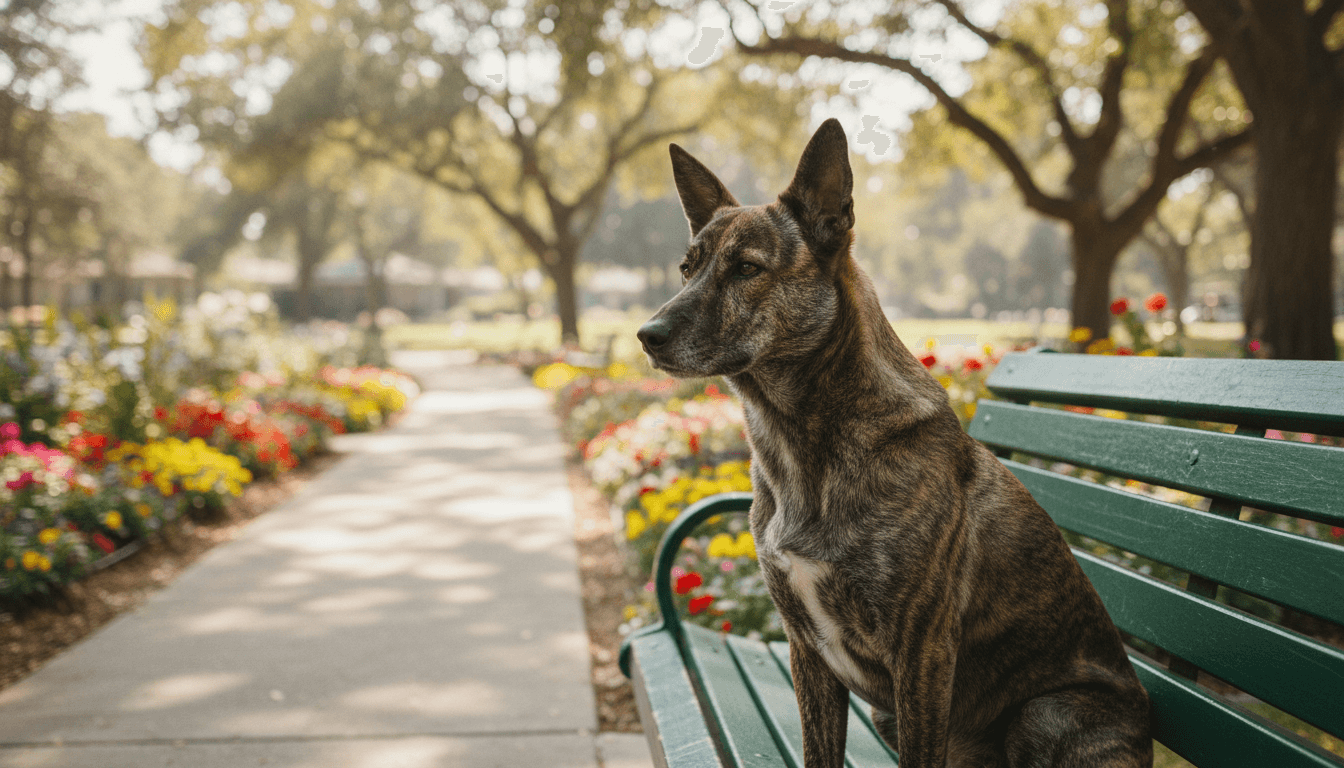
Physically, these dogs are medium-sized — typically 15-25 kg and 46-63 cm at the shoulder. Look for erect pointed ears, a naturally curled or sickle tail, short single-layer coat in fawn, brown, black or brindle, and a wedge-shaped head. Every dog looks slightly different; this is a naturally evolved landrace, not a factory-standardized breed.
Average lifespan is 13-16 years. That's longer than most foreign breeds. Genetic disorders are uncommon since they evolved without the inbreeding that plagues pedigree lines. They handle Indian summers well, adapt to monsoon humidity, and are among the easiest dogs to train — highly alert, eager to please, and responsive to positive reinforcement.
Adoption is easy and free. PFA (People For Animals) branches exist in dozens of cities. CUPA in Bangalore adopts out INDogs regularly. Friendicoes in Delhi has a steady stream of Pariah Dogs available. You'll typically pay ₹0-₹2,000 at adoption, which usually includes initial vaccination. If you're setting up for a new dog, our <a href='/learn/new-pet-checklist-for-indian-homes-complete-first-time-owner-guide-2026'>new pet checklist for Indian homes</a> covers everything to buy before your dog arrives.
One thing new INDog owners miss: these dogs bond closely with their primary person but are slow to trust strangers. Don't take that for aggression. Give them time and space with new people. Early socialization — markets, apartment lobbies, other dogs in the park — makes an enormous difference. For detailed health guidance on this breed specifically, see our <a href='/learn/indian-dog-breeds-native-guide'>Indian Pariah Dog health guide</a>.
Rajapalayam: Tamil Nadu's Ghost Hound
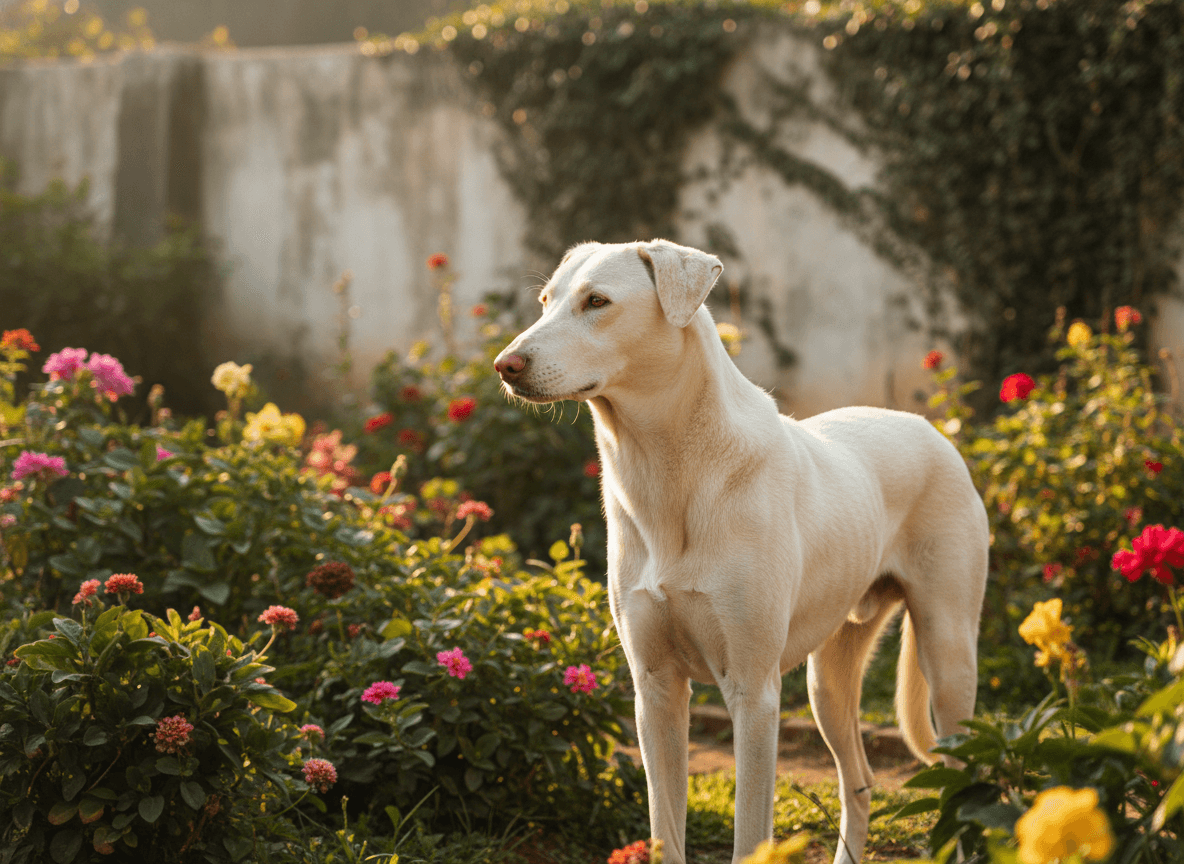
The Rajapalayam is striking — pure milk-white coat, pink nose, standing 65-75 cm tall, weighing 25-35 kg. Named after a town in Virudhunagar district, Tamil Nadu, this breed was historically used to hunt wild boar and guard royal palaces. They're also called the Indian Ghost Hound.
Temperament: fiercely loyal to their family, deeply suspicious of strangers. This is a 'one-man dog' — they bond most intensely with a single person and take time to accept others. They're touch-sensitive with strangers, which makes early socialization non-negotiable. Experienced handlers only, and not ideal for homes with young children who might approach unpredictably.
Known health concerns include a tendency toward deafness (linked to their white coat pigmentation), occasional cataracts, and mange — a manageable mite issue common to many breeds in Indian conditions. They're healthy overall but need space. No apartment will work for a Rajapalayam. They need a yard and daily runs.
Price: ₹10,000-₹25,000 from breeders, higher for show bloodlines. Monthly upkeep runs ₹5,000-₹8,000 covering food, basic vet care, and prevention. Rescue is possible through Tamil Nadu-based animal welfare groups. Lifespan is typically 10-12 years. If you're choosing between this and other breeds suited for the Indian climate, our guide on <a href='/learn/dog-breeds-hot-indian-climate'>best dog breeds for hot Indian climate</a> compares heat tolerance across many options.
Mudhol Hound: The Army Dog of Karnataka
The Mudhol Hound — also called Caravan Hound — comes from Mudhol town in Karnataka's Bagalkot district. Maratha warriors used them for hunting and guarding; they can reportedly hit 60 km/h in a sprint, and their eyesight is said to be roughly double human visual acuity.
Since 2016, the Indian Army's Remount Veterinary Corps has been testing and inducting Mudhol Hounds for surveillance and border protection. Six dogs were initially inducted, and the program expanded as the breed demonstrated strong trainability and endurance in field conditions. It's the only Indian native breed formally recognized by the military.
They stand 64-72 cm tall, weigh 20-28 kg, and live 13-14 years. Temperament is gentle with family, loyal, and easy to train — which makes them a reasonable option for active first-time owners who have yard space. Apartment living won't work. These dogs need daily running, not just walks.
Price range is ₹5,000-₹12,000. They're reasonably available through Karnataka-based breeders. Their short coat needs almost no grooming — a weekly brush is enough. If you're an active family in Bangalore, Hubli, or Dharwad with outdoor space, the Mudhol Hound deserves serious consideration.
Chippiparai: Tamil Nadu's Near-Extinct Sighthound
The Chippiparai may be India's most endangered native breed. According to the ICAR National Bureau of Animal Genetic Resources (NBAGR), the estimated population of purebred Chippiparai stands at approximately 6,000 — concentrated in Thoothukudi, Tirunelveli, Virudhunagar, and Madurai districts of Tamil Nadu. They've vanished from most of their historic range.
Historically bred by royal families in Chippiparai village near Madurai, they were symbols of status among the rulers of Tirunelveli and Madurai. They're sighthounds — lean, fast, with long legs and a streamlined build. Height at wither ranges from 60-76 cm in males. Coat colors vary from fawn to dark brown and black.
They've been successfully trained as police dogs in Tamil Nadu — their intelligence and biddable nature makes training straightforward. They do have high energy and don't do well in small spaces. If you want a Chippiparai, source responsibly: contact Tamil Nadu-based breed clubs or reach out to groups working on conservation. Don't buy from unregistered breeders who may be crossbreeding.
Price is ₹6,000-₹10,000 from reputable sources. Given the small population, health screening of breeding pairs is particularly important. Lifespan is 12-15 years. If you're drawn to sighthounds, our comparison guide on <a href='/learn/dog-breeds-hot-indian-climate'>dogs for hot Indian climates</a> covers how sighthounds handle coastal and semi-arid zones across India.
Kombai, Rampur Greyhound, Bully Kutta, and Gaddi Kutta
These four breeds are less commonly found in homes — they're working, hunting, or guardian breeds that need experienced handlers and significant space. Brief profiles below.
**Kombai** — Originally from Theni district, Tamil Nadu. Medium-large (18-20 kg, 60-65 cm). Records show loyalty to the families of Kannada Vokkaliga zamindars, and Tipu Sultan reportedly used them militarily. Bite force is estimated at 350-400 PSI. They're loyal and surprisingly gentle with children they know, but fiercely territorial toward strangers and unfamiliar dogs. Socialization from puppyhood is essential. Lifespan 10-13 years. Not for apartments or first-time owners.
**Rampur Greyhound** — From northern India, historically bred in the Rampur area of Uttar Pradesh. Powerful sighthound, sleek and muscular. Valued for speed and hunting skill. Intelligent but requires firm, consistent training and lots of outdoor exercise. Best for experienced owners with land. Price ₹10,000-₹18,000.
**Bully Kutta** — The Indian Mastiff, predominantly from Punjab. Massive: 70-90 kg, heavily wrinkled skin (the word 'bohli' means heavily wrinkled in some regional dialects). Dominant personality, requires expert handling. Absolutely not for apartments or inexperienced owners. Price ₹15,000-₹40,000, with upkeep significantly higher than other breeds given their size. If you need a large guardian dog and have the experience, this is a powerful option — but research carefully.
**Gaddi Kutta** — From Himachal Pradesh and Uttarakhand. Used by Gaddi shepherds to protect flocks from snow leopards. Stands up to 86 cm tall, cold-adapted, independent. The only Indian native breed with a thick coat. Completely unsuitable for hot plains — their role is mountain guardianship, not city companionship. Price ₹8,000-₹20,000.
8 Indian Native Breeds at a Glance
| Breed | Size (kg) | Price Range |
|---|---|---|
| Indian Pariah Dog | 15-25 kg | \\u20b90-\\u20b92,000 (adoption) |
| Rajapalayam | 25-35 kg | \\u20b910,000-\\u20b925,000 |
| Mudhol Hound | 20-28 kg | \\u20b95,000-\\u20b912,000 |
| Chippiparai | 14-32 kg | \\u20b96,000-\\u20b910,000 |
| Kombai | 18-20 kg | \\u20b98,000-\\u20b914,000 |
| Rampur Greyhound | 27-30 kg | \\u20b910,000-\\u20b918,000 |
| Bully Kutta | 70-90 kg | \\u20b915,000-\\u20b940,000 |
| Gaddi Kutta | 30-40 kg | \\u20b98,000-\\u20b920,000 |
Which Breed Fits Your Situation?
| Situation | Recommended Breed |
|---|---|
| First-time owner, apartment, Mumbai/Delhi/Bangalore | Indian Pariah Dog |
| Active family, yard space, South India heat | Mudhol Hound or Chippiparai |
| Experienced handler, large property, Tamil Nadu | Rajapalayam or Kombai |
| Hill stations, Himachal or Uttarakhand | Gaddi Kutta |
| Punjab/North India farm or large land | Bully Kutta (experts only) |
Climate Zone Guide: Which Breed for Which Region
India's climate range is extreme — coastal Chennai hits 40°C with 80% humidity in summer, while Manali sees -10°C in January. No single breed thrives everywhere. Here's how the native breeds map to geography.
In coastal and hot-humid zones (Mumbai, Chennai, Kolkata, Kochi), Indian Pariah Dogs, Chippiparai, and Rajapalayam are your best options. All three have single, short coats that handle humidity. The Pariah Dog is especially adaptable — you'll see them thriving in every part of these cities, from Dharavi to Adyar.
The North Indian plains (Delhi, Agra, Lucknow, Chandigarh) get temperature extremes in both directions — 45°C in May, 5°C in January. Indian Pariah Dogs handle this range well. Rampur Greyhounds are historically from this region and are adapted to it. The Bully Kutta also comes from the Punjab plains and manages both heat and mild winters.
Moderate plateau climates like Bangalore, Hyderabad, and Pune are the most forgiving. Every Indian native breed tolerates Bangalore's climate reasonably, but the southern sighthounds (Mudhol, Chippiparai) thrive particularly well. For families considering multiple options across breeds in these cities, see our <a href='/learn/dog-breeds-hot-indian-climate'>top 10 dog breeds for India in 2026</a>.
For hill regions — Shimla, Manali, Mussoorie, Darjeeling — the Gaddi Kutta is the only truly cold-adapted native breed. All other Indian breeds will struggle in sub-zero winters without significant additional care.
Apartment Living With Indian Breeds
Most Indian native breeds are not apartment dogs. This is a hard truth worth stating early, because breeders sometimes undersell how much space a Rajapalayam or Kombai actually needs.
Indian Pariah Dogs are the clear exception. At 15-25 kg with moderate energy levels, they adapt to flats of 800-1000 sq ft with daily 30-45 minute walks. They don't bark excessively, they don't chew through furniture out of boredom (when exercised), and they manage heat without the AC dependency that double-coated breeds require. Our dedicated guide on <a href='/learn/apartment-dog-size-guide-picking-between-small-and-large-bre'>can Indian Pariah Dogs live in apartments</a> covers this in much more detail.
Chippiparai can work in larger apartments (1,200+ sq ft) with access to an open area or terrace, but only if you're committed to daily exercise that goes beyond a slow walk. Sighthounds need to run, not stroll.
All other Indian breeds — Rajapalayam, Kombai, Mudhol Hound, Rampur Greyhound, Bully Kutta, Gaddi Kutta — need independent houses with yards. No amount of daily walks compensates for a Bully Kutta locked in a 2BHK. If you're in a flat and want a larger dog, consider the <a href='/learn/small-dog-breeds-india'>best small dog breeds for Indian homes</a> which includes apartment-optimized options.
Feeding Indian Breeds: What Actually Works
Indian native breeds were shaped by eating what their owners ate — rice, lentils, occasional meat scraps, local vegetables. They're not built for the grain-free high-protein Western kibble marketed aggressively in Indian pet stores. That doesn't mean commercial food is wrong, but homemade options using Indian ingredients are genuinely effective for these breeds.
For a 20 kg Indian Pariah Dog or similar-sized native breed, a basic homemade diet looks like this: 1.5 cups cooked rice (₹200-250/month), 200-250g boiled chicken daily (₹600-800/month), 1 cup mixed vegetables (₹150-200/month), a quarter cup cooked dal (₹50-80/month), eggs 3-4 times a week (₹80-100/month), plus a calcium and multivitamin supplement as recommended by your vet (₹250-300/month). Total monthly food cost comes to roughly ₹1,330-₹1,730.
Avoid onion, garlic, grapes, and chocolate — all toxic for dogs. Avoid excessive salt. If you're switching from commercial food to homemade, do it gradually over 3-4 weeks, mixing proportions slowly. Jumping straight to 100% homemade can cause digestive upset.
Commercial options: Drools, Royal Canin, and Pedigree India are the most common. For medium Indian breeds on commercial food, budget ₹2,000-₹3,500/month depending on brand. Himalaya Pet Wellness products are affordable and widely available in Indian markets for supplements.
Water matters more than most owners realize. Dogs need roughly 40-50 ml per kg body weight per day — more in summer. In Chennai or Mumbai's June heat, a 20 kg dog might need a full liter of fresh water daily. Change the bowl twice a day. Indian summers are hard on dogs; dehydration is a real risk.
Health and Vaccination Schedule for Indian Breeds
Indian native breeds are generally healthy, but they're not immune to everything. Tick-borne diseases are the biggest threat in India — Canine Ehrlichiosis, Babesiosis, and tick fever are common in monsoon season across the country, and all dogs are vulnerable regardless of breed. Monthly anti-tick treatments are worth doing year-round in Mumbai, Kolkata, and Chennai.
Mange (demodetic or sarcoptic mite infestation) is manageable in Indian conditions — it shows up more often in young dogs or those under stress. A vet visit and prescribed treatment sorts it in a few weeks. Don't ignore it; untreated mange spreads.
Basic annual costs for a healthy Indian native breed: routine consultation ₹300-₹800 per visit, annual booster vaccinations (5-in-1 + anti-rabies) ₹600-₹1,200 depending on your city, anti-tick treatment monthly (Bravecto, NexGard, or generic alternatives) ₹300-₹800 per dose. Annual health budget for a healthy native breed: ₹3,000-₹6,000 is realistic. According to the <a href='https://ivri.nic.in' target='_blank' rel='noopener'>Indian Veterinary Research Institute (IVRI)</a>, natural selection in these breeds has reduced the prevalence of inherited disorders — but that doesn't eliminate the need for routine preventive care.
One specific concern for Rajapalayam owners: deafness is linked to the white coat and blue/pink nose pigmentation. Test puppies' hearing before purchase. A reputable breeder will have already done this. The <a href='https://www.wsava.org/guidelines/vaccination-guidelines/' target='_blank' rel='noopener'>WSAVA vaccination guidelines</a> provide internationally recognized vaccination protocols that Indian vets follow for both native and foreign breeds. For the full puppy vaccination schedule used in India, see our <a href='/learn/dog-vaccination-schedule-india'>dog vaccination schedule guide</a>.
Training Indian Native Breeds: What's Different
Indian Pariah Dogs and Mudhol Hounds are notably easy to train — they learn basic commands (sit, stay, come, leave it) within 2-3 weeks of consistent daily sessions. Their working heritage means they respond naturally to clear cues and enjoy having a job to do.
The guardian breeds — Rajapalayam, Kombai, Bully Kutta — require patience and experience. They're intelligent but not eager-to-please in the Labrador sense. They need to trust you before they'll follow your lead consistently. Punishment-based training backfires badly with these breeds. Positive reinforcement only — treats, praise, play.
Sighthounds (Chippiparai, Mudhol, Rampur, Rajapalayam) have a strong prey drive. Off-leash in parks is risky until recall is completely solid. A squirrel can send a Mudhol Hound 400 meters in 20 seconds and out of earshot. Train recall exhaustively before letting them off-leash, and always use long lines in open spaces while building that reliability.
Apartment training specifics: for Indian Pariah Dogs in flats, focus on settling behavior, quiet on command, and elevator/lobby etiquette early. Mumbai apartment buildings often have strict noise rules. Our potty training guide for India covers both indoor and outdoor approaches for different flat sizes.
Training Ease and Suitability by Breed
| Breed | Training Ease | First-Time Owner? |
|---|---|---|
| Indian Pariah Dog | Easiest \\u2014 picks up commands fast | Yes |
| Mudhol Hound | Easy \\u2014 eager and focused | Yes, if active |
| Chippiparai | Moderate \\u2014 independent streak | Moderate |
| Rajapalayam | Moderate \\u2014 trust required first | No |
| Kombai | Moderate \\u2014 needs socialization | No |
| Rampur Greyhound | Moderate \\u2014 needs firm guidance | No |
| Bully Kutta | Difficult \\u2014 dominant by nature | Absolutely not |
| Gaddi Kutta | Difficult \\u2014 independent working dog | No |
Where to Adopt or Buy Indian Native Breeds
Indian Pariah Dogs: your nearest animal shelter. PFA branches operate in 32 cities. CUPA in Bangalore, Friendicoes and Sanjay Gandhi Animal Care Centre in Delhi, World for All in Mumbai — all regularly have INDogs available. Adoption fees are ₹0-₹2,000 and include initial health check and vaccination.
For Rajapalayam and Mudhol Hounds, the Kennel Club of India (KCI) and Indian National Kennel Club (INKC) maintain breeder directories. Verify KCI or INKC registration before paying. A legitimate breeder will show you health clearances for the parents, let you see the puppy with its mother, and not push you to pay a deposit before meeting the litter.
Chippiparai: given the small population (~6,000 per NBAGR data), be especially careful. Contact the Madurai or Virudhunagar district KCI affiliates. Avoid breeders who can't show registration papers. The risk of buying a crossbred Chippiparai from an unverified source is high given how rare purebreds are.
If you're considering health coverage for your new dog, our guide to <a href='/learn/pet-insurance-for-pre-existing-conditions-complete-guide-for-indian-dog-owners'>pet insurance for Indian dog owners</a> explains what Bajaj Allianz, Digit, and other Indian insurers actually cover for native breeds.
Frequently Asked Questions
Which Indian dog breed is best for apartment living?
Are Indian dog breeds good for families with children?
How much does it cost to own an Indian Pariah Dog per month?
How rare is the Chippiparai and where can I find one?
What is the lifespan of Indian native dog breeds?
Can I feed an Indian native breed homemade food?
Which Indian breed was used by the Indian Army?
Should I adopt or buy a native Indian breed?
Final Thoughts
India has eight remarkable native breeds — and most Indian dog owners have never seriously considered any of them. The marketing muscle behind foreign breeds, the aspirational appeal of Labradors and German Shepherds, and decades of pet culture modeled on Western preferences have pushed desi breeds to the margins.
That's changing. The Indian Army deploying Mudhol Hounds, NBAGR documenting endangered native breed populations, urban adopters choosing Indian Pariah Dogs over expensive imports — these are signs of a shift. Native breeds deserve serious consideration because they're genuinely suited to Indian conditions, not because of sentiment.
If you're in an apartment in Mumbai or Hyderabad, adopt a Pariah Dog. If you have a yard in Karnataka and like active dogs, look at the Mudhol Hound. If you're an experienced handler in Tamil Nadu with real space, the Rajapalayam or Kombai will reward patient ownership. Match the breed to your actual life — not your aspirations.
Pro Tip
Before committing to any breed, spend time with one. Volunteer at a local shelter or contact a breed club for a meet. A dog is a 12-15 year commitment — the few hours you spend before deciding are worth it.
If you're in Bengaluru, costs vary significantly by neighbourhood — Raghavendra Colony, Chamrajpet averages ₹300 while DOMALUR, Domlur runs around ₹8,500.