What Nobody Tells You Before Bringing a Dog Home in India
My Labrador, Mango, arrived on a sweltering June afternoon in Pune. I had a bowl, a bag of Drools kibble, and a leash I'd bought from Sakinaka market. What I didn't have: a cooling mat rated for 42°C heat, a stainless steel water bowl that wouldn't breed bacteria in the humidity, or any idea that I needed to register him with Pune Municipal Corporation within 30 days. The first three months cost me around ₹38,000 — nearly double what I'd planned.
Most online checklists you'll find are written for US or UK buyers. They mention crates measured in inches, food brands sold only on Amazon.com, and veterinary costs that make no sense in rupees. This guide is built from the ground up for Indian conditions — the specific brands available in Indian pet stores, the municipal registration steps that vary by city, and the seasonal realities of managing a dog through Delhi's 47°C May, Mumbai's monsoon, or Bangalore's surprisingly cold January nights.
Budget realistically: a first-time setup runs ₹15,000–₹40,000 depending on breed size, city, and quality tier. Monthly recurring costs sit at ₹3,000–₹11,000. I'll break every category down with exact numbers.
Before You Buy Anything: Register Your Dog
Most Indian pet owners skip this step entirely, then get caught when their housing society or local corporation runs a compliance check. Registration is legally required in most major cities under municipal corporation bylaws — and in cities like Mumbai, the BMC charges just ₹75 for new registrations (renewals are ₹50/year). Delhi charges ₹500/year. Lucknow splits fees by breed size: ₹500 for large dogs like German Shepherds, ₹300 for small breeds, ₹200 for Indian Pariah dogs.
To register, you'll typically need: your dog's vaccination certificate (at minimum the first DHPP dose), an address proof, one photograph of the dog, and your own ID. Delhi, Mumbai, and Bangalore all now accept online applications through their respective municipal portals. Do this within the first month — housing societies increasingly check for registration when you renew your lease.
DodoDoggy Tip
Registration costs vary sharply: Mumbai BMC charges ₹75, Delhi MCD charges ₹500, and Lucknow's fees differ by breed size. Check your specific municipal corporation's website — most now have online portals. Source: Supertails Pet Registration Guide
If you're in an apartment, also check your housing society's pet policy. The Animal Welfare Board of India (AWBI) has clarified that housing societies cannot ban pets outright — but they can set reasonable conditions. Getting registered early makes these conversations much easier.
Food and Water: The Foundation of Everything
The single biggest mistake I see new owners make is switching food on day one. Whatever the breeder or shelter was feeding — keep it for at least 10 days. Digestive upset in a puppy during the stress of a new home is miserable for everyone. Transition slowly: 25% new food, 75% old for three days, then 50/50, then 75/25.
Indian Dog Food Brands: What You'll Actually Find in Pet Stores
Drools is the most widely available Indian brand — you'll find it at almost any pet store in tier-1 and tier-2 cities. A 12 kg bag of Drools Focus Adult runs around ₹1,650–₹1,900. Pedigree is cheaper and universally stocked, but veterinarians consistently point out its lower protein content and higher cereal fillers. If your budget allows, Farmina N&D (Italian brand, distributed in India) or Royal Canin offer significantly better ingredient quality.
| Brand | Monthly Cost (Medium Dog) | Available At |
|---|---|---|
| Pedigree Adult (15 kg bag ₹1,550) | ₹1,200–₹1,800 | All cities, online |
| Drools Focus Adult (12 kg ₹1,750) | ₹1,500–₹2,200 | All cities, online |
| Royal Canin Maxi Adult (15 kg ₹5,200) | ₹4,500–₹6,500 | Vet clinics, HUFT, Supertails |
| Farmina N&D (12 kg ₹5,800) | ₹5,000–₹7,000 | HUFT, Supertails, select stores |
For puppies, always choose puppy-specific formulas until 12–18 months depending on breed. A Labrador puppy needs puppy food until at least 15 months. Smaller breeds like a Shih Tzu can switch to adult food at 12 months. The extra protein and calcium in puppy formulas matters for bone development during growth.
Bowls: Why Stainless Steel Is Non-Negotiable in India
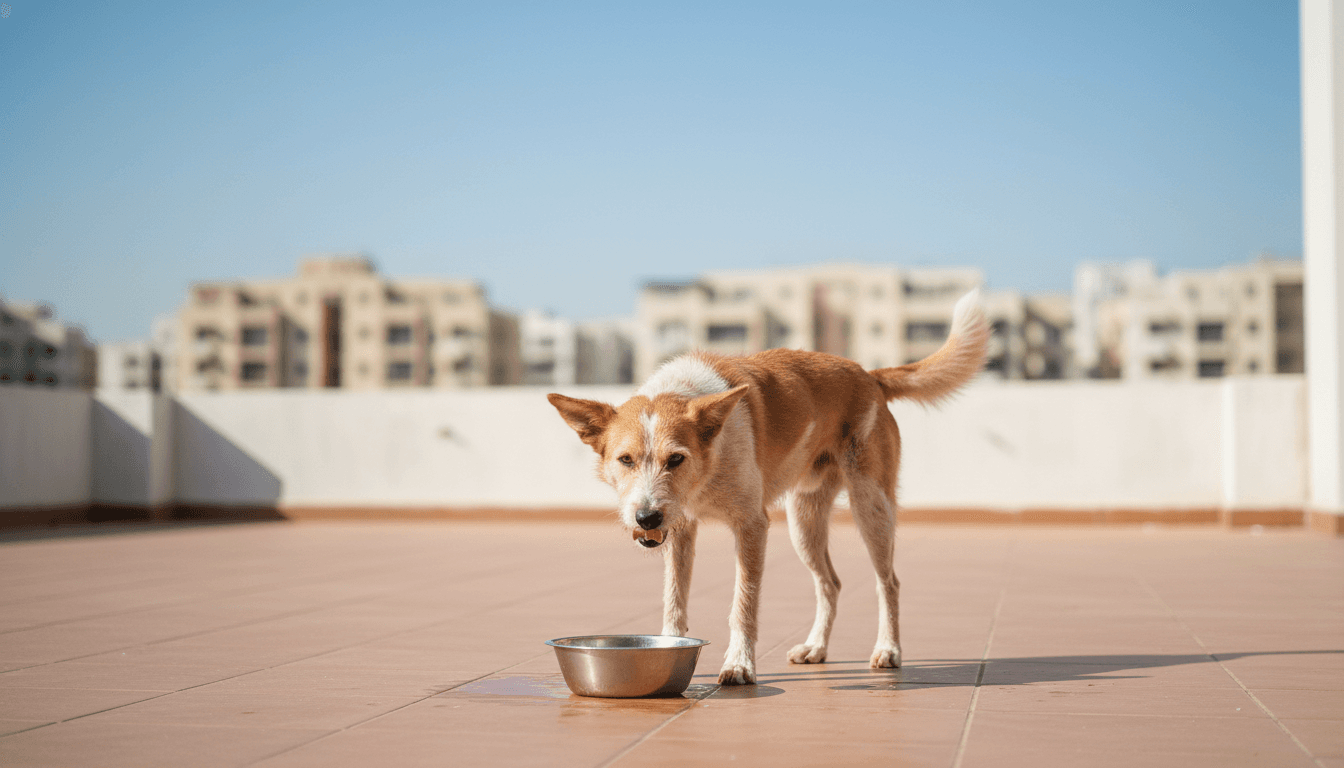
Plastic bowls develop micro-scratches that harbor bacteria — and in Mumbai's June humidity or Chennai's year-round heat, that means a biofilm your dog licks daily. Stainless steel is easier to clean, doesn't warp, and doesn't leach chemicals. Get two food bowls and one dedicated water bowl. Sizes: small breeds (Pug, Beagle) — 500 ml at ₹200–₹400 each; medium breeds (Labrador, Indie) — 1–1.5L at ₹300–₹600; large breeds (German Shepherd, Rottweiler) — 2L+ at ₹400–₹800. Wash daily in monsoon months — bacteria multiply fast in standing water at 30°C+.
Bedding for Indian Climates: Summer vs Monsoon vs Winter
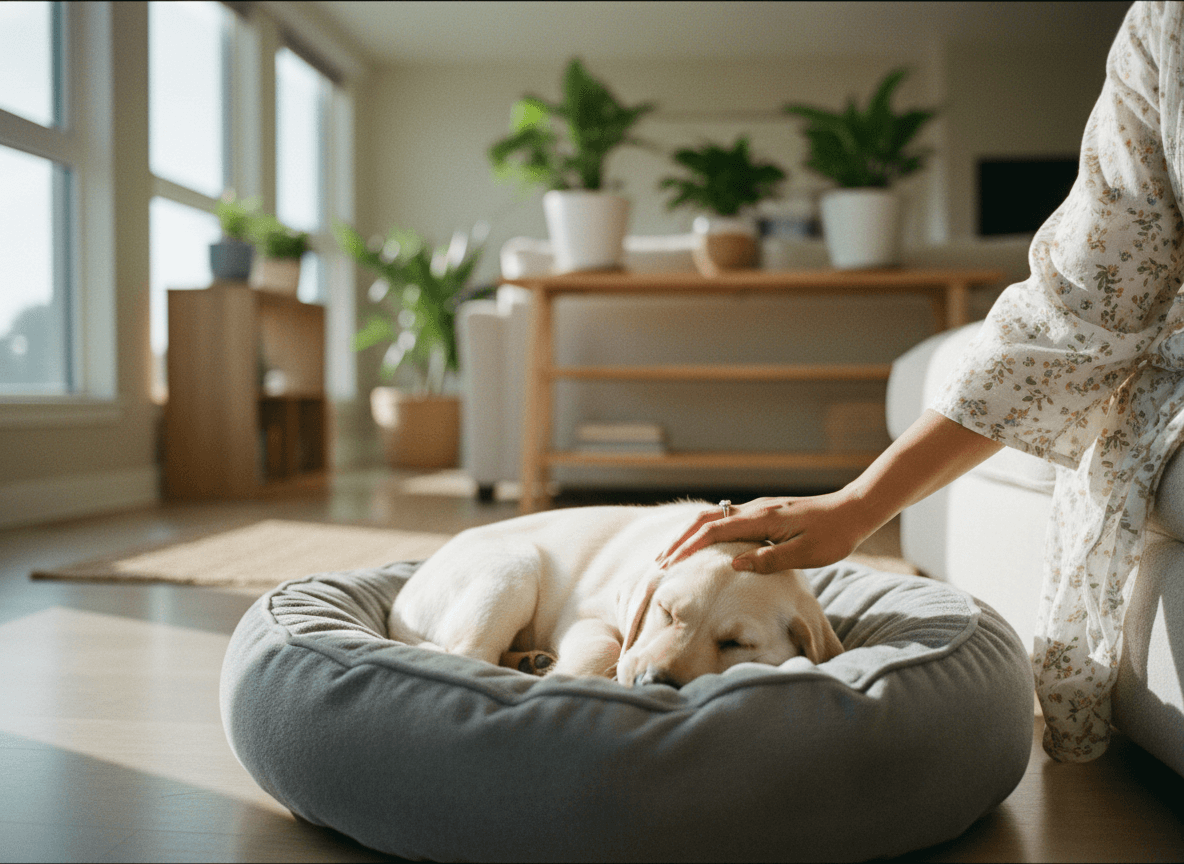
Indian homes don't have a single 'climate.' My Pune apartment goes from 19°C in January nights to 40°C+ in May — and my dog's sleeping setup changed entirely between seasons. Mango slept on a gel cooling mat from March through October, and only moved to a cushion bed in November.
Gel-based cooling mats (₹800–₹3,000) are essential for most of India from March through June. They activate by pressure, need no electricity, and are rated for surface temperatures above 35°C. For Mumbai, Hyderabad, and coastal cities where humidity makes heat worse, they're useful even in September. Raised cot beds (₹1,200–₹3,500) work well during monsoon — they keep dogs off damp floors and improve air circulation under the body.
Orthopedic beds make sense for large breeds from age 5+ or any dog with joint issues. Heads Up For Tails stocks several options at ₹3,000–₹8,000. For puppies under 6 months, a simple washable cushion bed at ₹600–₹1,500 is fine — they'll chew through anything more expensive anyway.
Read also: best dog beds available in India in 2026.
Vaccination Schedule and First Vet Visit
Schedule the first vet visit within 3–5 days of bringing a puppy home. Don't wait for the first scheduled vaccine. A basic health check (₹500–₹1,500) establishes baseline weight, checks for congenital issues, and gives you a chance to discuss the vaccination timeline before anything goes wrong.
Standard Puppy Vaccination Timeline in India
Indian vets generally follow the WSAVA 2024 vaccination guidelines with local adaptations for diseases prevalent in India, particularly Parvovirus (which kills puppies fast in the Indian summer heat) and Leptospirosis (common in monsoon flooding areas).
| Age | Vaccine | Approx Cost |
|---|---|---|
| 6–8 weeks | DHPP (first dose) | ₹800–₹1,500 |
| 10–12 weeks | DHPP (second dose) | ₹800–₹1,500 |
| 14–16 weeks | DHPP (third) + Rabies | ₹1,200–₹2,000 |
| Annual | Boosters (DHPP + Rabies) | ₹1,200–₹2,500/year |
| 6 months | Leptospirosis (monsoon areas) | ₹500–₹900 |
Total first-year vaccination cost: ₹4,000–₹8,000. Cities with year-round tick activity (Kerala, coastal Karnataka, Goa) should also discuss the Ehrlichia canis risk with their vet — it's transmitted by brown dog ticks and can be fatal without early treatment. According to WSAVA vaccination guidelines, the final puppy core vaccine dose should be given at 16 weeks or older to ensure full immunization.
Don't skip deworming. Puppies need it at 2, 4, 6, 8, and 12 weeks, then every 3 months as adults. Each dose runs ₹150–₹400 depending on weight. Street-acquired puppies often carry multiple parasites — fecal examination (₹300–₹700) tells you exactly what you're dealing with.
Tick and Flea Prevention: Year-Round in Most of India
If you're in the US, tick season is spring and fall. In India, ticks don't really have an off-season — they're just more active during monsoon. Mango came home with his first tick after a park visit in February, not July.
Frontline Plus (fipronil-based spot-on) is the most widely available product in India. Pricing at major pet stores: ₹380–₹520 per pipette for small dogs (2–10 kg), ₹650–₹850 for large breeds (20–40 kg). Apply monthly — apply directly to skin at the back of the neck, where the dog can't lick it off. Bravecto chews (3-month duration) are available from vets at ₹1,200–₹2,200 depending on breed size. According to Vetic (a major Indian vet chain), no single product offers 100% tick prevention — layering spot-on treatment with a tick collar during peak monsoon months cuts risk significantly.
Do a tick check after every park or garden walk. Run your fingers through the coat along the neck, ears, between toes, and under the tail — ticks attach in warm, sheltered spots. Remove with a tick twister tool (₹150–₹300), not fingers.
Grooming Supplies for Indian Conditions
Delhi's pollution and Kolkata's humidity create very different grooming demands. Dogs in high-pollution cities need more frequent baths — weekly during October–January in Delhi when AQI routinely hits 300+. Coastal city dogs dealing with salt air and humidity need extra attention to ear moisture.
Your starter grooming kit should cost ₹2,000–₹4,500 and include: a dog-specific shampoo (Himalaya Anti-Tick at ₹350–₹550 for 200ml is widely available and effective for monsoon months), a conditioner for long-haired breeds like Golden Retrievers and Shih Tzus (₹400–₹900), a slicker brush for double-coated breeds, rubber curry brush for short-haired dogs, nail clippers (₹250–₹700 — ask your vet to demonstrate technique the first time), ear cleaning solution (₹250–₹600, especially important for Labradors and Cocker Spaniels whose floppy ears trap moisture), and a dog toothbrush with enzymatic paste (₹300–₹700).
Dental disease affects roughly 80% of Indian dogs by age 3, according to data from Cessna Lifeline Veterinary Hospital in Bangalore. Daily brushing from puppyhood is far cheaper than the ₹3,000–₹8,000 dental cleaning your vet will eventually recommend.
Puppy-Proofing an Indian Home
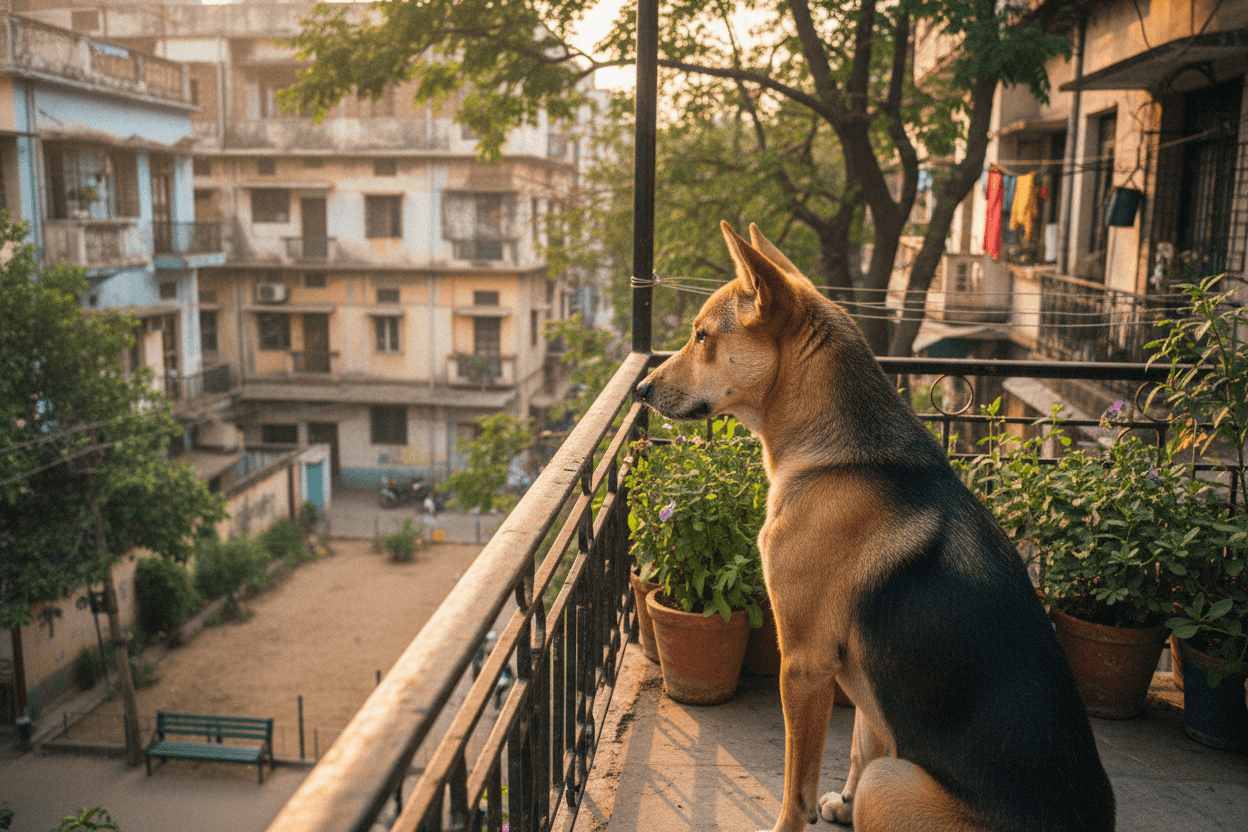
Indian apartments have hazards that Western guides never mention. Open balconies are the biggest one — puppies can fall through railing gaps or attempt to jump after a bird. Balcony safety netting costs ₹2,000–₹8,000 depending on floor area, and it's genuinely life-saving. Don't wait for a scare to install it.
Common Indian household toxins that kill dogs: Lizol, Dettol floor cleaners (toxic if licked directly), common houseplants like money plant and dieffenbachia, the chocolate left on Diwali trays, onions and garlic in kitchen prep areas, and raisins (extremely toxic, causes kidney failure quickly). Read the full list in our dog poisoning prevention guide.
Room-by-Room Safety Checklist
- Balcony: Install safety netting, check railing gaps (puppies slip through 4-inch spaces), remove oleander and hibiscus plants
- Kitchen: Lock low cabinets, store chocolate, onions, grapes, raisins out of reach, use pet-safe mop products
- Living room: Secure electrical cords, remove money plants from floor level, store shoes in closed cupboards
- Bedroom: Childproof electrical outlets, remove small items from floor (phone chargers, earbuds are choking hazards)
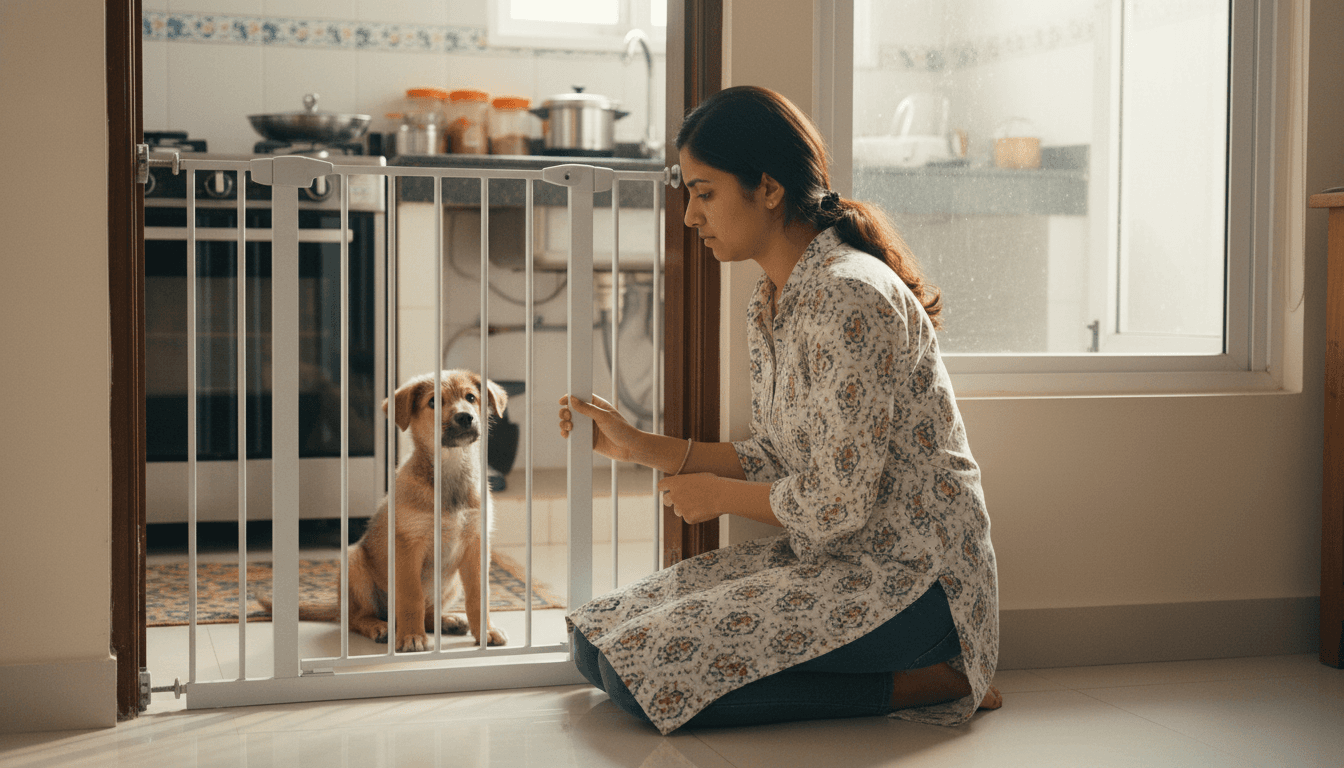
Baby gates (₹1,500–₹3,500) restrict kitchen and balcony access without full puppy-proofing every room. Worth installing before your puppy arrives rather than during the chaos of the first week.
Heat Safety: The Indian Summer Reality
When Pune hit 42°C in April 2025, Mango stopped eating entirely for two days. Dogs can't sweat through skin — they regulate temperature only through panting, which becomes ineffective above 40°C ambient temperature. Dogs with flat faces (Pugs, French Bulldogs) and thick double coats (Huskies, Pomeranians) are at serious risk when temperatures exceed 38°C.
No midday walks from 10 AM to 5 PM during April–June in North India, Rajasthan, and interior Maharashtra. Early morning (6–8 AM) and late evening (7–9 PM) are the windows. Keep fresh water out at all times — I refill Mango's bowl four times a day in summer. Marble and tile floors are your friend: most Indian dogs instinctively seek cool floor spots, which is why they sleep in the bathroom in May.
Cooling vests (₹1,200–₹2,500) help for thick-coated breeds during unavoidable outdoor time. Signs of heat stroke per Cornell University College of Veterinary Medicine: heavy panting, drooling, confusion, red gums, collapsing. It's a veterinary emergency — move the dog to shade, wet the paws and belly with cool (not cold) water, and reach a vet immediately.
Read also: complete guide to traveling with dogs across India.
Complete Budget Breakdown: What to Buy Before Day One
Prices reflect 2026 metro city rates. Tier-2 cities run 15–25% lower. Premium brands add 30–50% to the ranges below.
| Category | Budget Range (₹) |
|---|---|
| Stainless steel bowls (3x) | ₹600–₹1,800 |
| One month's food (medium breed) | ₹1,500–₹6,500 |
| Bed or cooling mat | ₹800–₹3,500 |
| Collar + leash + ID tag | ₹500–₹1,800 |
| Grooming starter kit | ₹2,000–₹4,500 |
| First vet visit + deworming + vaccine | ₹2,000–₹5,000 |
| Tick prevention (3 months) | ₹800–₹2,500 |
| Toys (4–5 items) | ₹600–₹2,000 |
| Potty pads + enzymatic cleaner | ₹700–₹1,800 |
| Balcony netting (if needed) | ₹2,000–₹8,000 |
| Municipal registration fee | ₹75–₹500 |
| TOTAL (without balcony netting) | ₹11,575–₹29,900 |
Warning
The most common budget shortfall: first-time owners forget vet costs. The first 3 months of vaccination alone cost ₹3,000–₹5,500. Build this into your planning before the dog arrives.
Where to Buy in Indian Cities
Local pet markets offer 30–40% savings over retail chains: Goregaon Pet Market and Crawford Market in Mumbai, Palika Bazaar in Delhi, Russell Market in Bangalore, Ritchie Street in Chennai. For online purchases, Heads Up For Tails (HUFT), Supertails, and Petsy offer wide selection and reliable delivery across most pin codes. Amazon India and Flipkart carry Drools, Pedigree, and basic accessories, though specialty items like Farmina or Bravecto are better sourced through vet clinics or dedicated pet stores.
Join your city's pet WhatsApp groups before buying. Mumbai Pet Parents, Delhi Dog Owners, and Bangalore's CUPA supporter groups frequently share discount codes, second-hand crates (barely used when puppies outgrow them at 6 months), and vet recommendations from people who've dealt with the same local conditions you're facing.
You'll find good options like Dr. Palampalle's Pet Care Clinic in Pratikhsha Nagar, Sion East, Sion — rated 5.0/5. Check our pet stores in Mumbai directory for more choices near you.
You'll find good options like Delhi dog kennel | puppies for sale in delhi | dog sale in delhi | pet shop near me | poodle puppy | shihzu in Rashid Market, Geeta Colony — rated 5.0/5. Check our pet stores in Delhi directory for more choices near you.