Key Takeaways
- Flat collars suit calm, leash-trained dogs; harnesses are safer for pullers, brachycephalic breeds, and puppies
- Indian brands like Lana Paws (\u20b9450\u2013\u20b91,200), Heads Up For Tails (\u20b9599\u2013\u20b92,499), and PetSutra (\u20b9350\u2013\u20b9999) offer quality options
- Monsoon months demand quick-dry nylon or neoprene \u2014 avoid cotton and leather between June and September
- Breed matters: Indian Spitz and Dachshunds benefit from harnesses, while Labradors and Indie dogs do well with either
- A collar is still needed for ID tags even if you walk with a harness
How Collars and Harnesses Differ Mechanically
A collar loops around the neck and concentrates leash force on the trachea and cervical spine. A harness distributes that same force across the chest, shoulders, and sometimes the back. This mechanical difference drives every recommendation below \u2014 neck pressure is the single biggest variable determining which option is safer for a given dog.
Collars come in four main types: flat buckle, martingale (limited-slip), head halter, and slip/choke. Harnesses split into back-clip, front-clip (no-pull), and dual-clip designs. Each type addresses a different walking behaviour, from calm heel-walkers to chronic lungers.
When a Collar Is the Better Choice
Collars work best for dogs that already walk on a loose leash without pulling. They are lighter, faster to clip on, and leave less fur matting than harnesses. For quick bathroom breaks in your apartment complex or society, a collar with a snap buckle takes under two seconds to put on \u2014 a real advantage during late-night walks.
- Dogs under 15 kg that do not pull \u2014 Indie puppies after leash training, Shih Tzus, Lhasa Apsos
- Identification only — even harness users need a collar to hold the municipal license tag and rabies tag. Our new puppy checklist recommends ordering ID tags on your first day home.
- Short, controlled walks in gated societies with minimal traffic
- Dogs with skin irritation or hot spots on the chest area where a harness would sit
DodoDoggy Tip
Flat buckle collars are the safest collar type for daily use. Avoid choke chains and prong collars \u2014 veterinary behaviourists in India, including Dr. Sarita Gulavane (BVC, Mumbai), advise against them because they cause pain-based suppression, not actual learning.
When a Harness Is the Better Choice
Harnesses eliminate neck pressure entirely, making them the default recommendation for puppies, brachycephalic (flat-faced) breeds, dogs with collapsing trachea, and any dog that pulls. A 2020 study published in the Journal of Veterinary Behavior found that dogs walked on front-clip harnesses reduced pulling by 54–64% compared to flat collars, without any aversive stimulus. For step-by-step guidance, our puppy training guide for Indian homes covers harness introduction from week one.
- Brachycephalic breeds \u2014 Pugs, French Bulldogs, English Bulldogs \u2014 already have compromised airways; any collar pressure risks respiratory distress
- Small breeds prone to tracheal collapse \u2014 Pomeranians, Yorkshire Terriers, Toy Poodles \u2014 are 5\u20138x more likely to develop this condition
- Pullers of any size \u2014 a front-clip harness redirects forward momentum into a turning motion, discouraging pulling without pain
- Puppies under 6 months \u2014 their developing neck structures are vulnerable to repeated collar jerks
- Older dogs with cervical spondylosis or disc disease \u2014 harnesses reduce spinal load
Breed-Specific Recommendations for Indian Conditions
India has a distinct breed mix shaped by climate, apartment sizes, and import trends. Our guide to Indian dog breeds covers the full native lineage. Below are specific collar/harness recommendations for the breeds most commonly kept across Indian cities.
| Breed | Recommended Gear | Reason |
|---|---|---|
| Indian Pariah / Indie | Flat collar or back-clip harness | Medium build, typically calm walkers once trained. Heat-tolerant coat means minimal harness chafing. |
| Labrador Retriever | Front-clip harness (puppy/adolescent), collar (adult trained) | Labs pull heavily until 18\u201324 months. Once leash-trained, collar is fine. |
| German Shepherd | Dual-clip harness | Strong pullers with deep chests. Dual-clip gives control without neck strain. |
| Pug / French Bulldog | Back-clip harness only | Brachycephalic airway \u2014 never use a collar for leash attachment. |
| Pomeranian | Harness only | Tracheal collapse risk is 5x higher. Collar for ID tags only. |
| Indian Spitz | Back-clip harness preferred | Dense coat hides early signs of neck irritation from collars. |
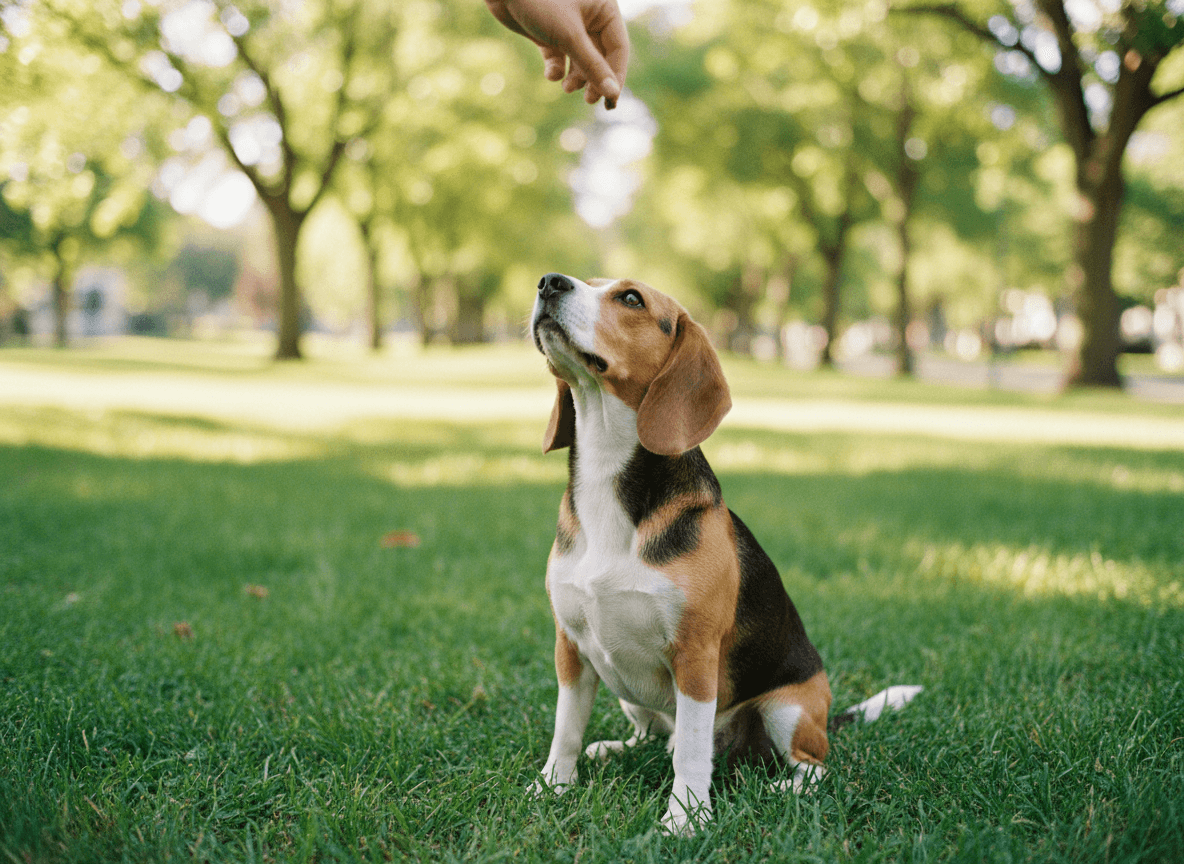
| Beagle | Front-clip harness | Scent-driven lunging is common. Front-clip redirects without neck stress. |
| Dachshund | Harness only | Long spine makes neck strain from collar pressure dangerous. Harness distributes load to chest. |
| Golden Retriever | Front-clip harness, transition to collar after training | Similar to Lab \u2014 strong adolescent pullers that mellow with training. |
| Rottweiler | Dual-clip harness | Powerful breed; collar gives insufficient control and risks tracheal damage. |
Indian Brand and Price Comparison (2026)
Three Indian brands dominate the collar and harness market: Heads Up For Tails (HUFT), Lana Paws, and PetSutra. All three sell on their own websites and on Amazon India. Here is how they compare across product categories.
| Brand | Price Range (INR) | Best For |
|---|---|---|
| Heads Up For Tails (HUFT) | Collars ₹599–₹1,499 · Harnesses ₹899–₹2,499 | Quality-conscious owners, wide XS–XL sizing |
| Lana Paws | Collars ₹450–₹1,200 · Harnesses ₹750–₹1,800 | Printed cotton and quick-dry designs, S–L |
| PetSutra | Collars ₹350–₹999 · Harnesses ₹499–₹1,299 | Budget pick with reflective safety options, XS–XL |
| Ruffwear / Julius-K9 (imported) | Collars ₹2,500–₹5,000 · Harnesses ₹3,500–₹7,500 | Working dogs and heavy pullers over 35 kg |
For most Indian dog Indian pet owners, HUFT and Lana Paws hit the best quality-to-price ratio. PetSutra is a solid budget option \u2014 their reflective nylon harness (\u20b9699) is one of the best-selling dog harnesses on Amazon India. Imported brands like Ruffwear and Julius-K9 are 3\u20135x pricier and only worth it for working dogs, heavy pullers over 35 kg, or adventure/hiking use.
Money Saver
Buy during Amazon Great Indian Festival or Flipkart Big Billion Days \u2014 HUFT and Lana Paws products regularly drop 30\u201340% during these sales. A \u20b92,499 HUFT harness often sells for \u20b91,499 during these events.
Monsoon-Proof Materials: What Survives June to September
India gets 75% of its annual rainfall between June and September. A collar or harness that absorbs water becomes heavy, breeds bacteria, and causes skin infections — especially in humid cities like Mumbai, Kolkata, and Chennai where humidity stays above 85% for weeks. See our complete monsoon dog care guide for a region-wise breakdown of what Indian dogs face during the rainy season. Our pet-proofing home: checklist guide covers this in detail.
| Material | Drying Time | Monsoon Suitability |
|---|---|---|
| Quick-dry nylon | 15–30 min | Excellent — best all-round monsoon choice |
| Neoprene-padded | 30–45 min | Good — water-resistant but slower drying |
| Polyester webbing | 20–40 min | Good — durable, resists mould better than cotton |
| Cotton / canvas | 3–6 hours | Poor — absorbs water, develops odour, promotes fungal infections |
| Leather | 6–12 hours | Poor — cracks with repeated wetting, requires oiling |
| Air-mesh | 10–20 min | Excellent — fastest drying, ideal for Mumbai and Kolkata |
Practical rule: own two sets during monsoon \u2014 one drying at home while the other is in use. A quick-dry nylon collar from Lana Paws (\u20b9450) and a mesh harness from PetSutra (\u20b9599) together cost under \u20b91,100 and cover both needs.
DodoDoggy Tip
After every monsoon walk, rinse the collar or harness under running water to remove mud and street grime, then hang it in a ventilated area \u2014 not inside a closed cupboard. This prevents the bacterial buildup that causes skin rashes around the neck and chest.
Sizing and Fit: Getting It Right
A poorly fitted collar or harness creates the exact problems you are trying to avoid. Too tight causes chafing, restricted breathing, and fur loss. Too loose lets the dog slip out \u2014 a serious danger near Indian roads with high traffic density.
- Collar fit test: slide two fingers between the collar and your dog's neck. If you can fit two fingers flat, the fit is correct. One finger means too tight; three or more means too loose.
- Harness fit test: the chest strap should sit across the sternum, not pressing into the armpits. You should be able to slide a flat hand under any strap without resistance.
- Measure with a soft tape \u2014 not a rigid scale. Wrap around the neck (collar) or the widest part of the ribcage (harness) while the dog is standing.
- Re-measure every 3 months for puppies. Indian Indie puppies grow rapidly between 3\u20138 months and can jump two sizes in that window.
- Weight alone is unreliable for sizing. A 12 kg Beagle and a 12 kg Indie have very different chest circumferences.
Safety Risks: What Can Go Wrong
Collar injuries and harness escapes are preventable, but they happen frequently in India due to incorrect sizing, cheap hardware, and unsupervised use.
- Tracheal collapse: repeated collar pulling in small breeds causes the cartilage rings in the trachea to flatten. Symptoms include a honking cough, gagging, and exercise intolerance — documented in detail by VCA Animal Hospitals. Treatment costs ₹15,000–₹80,000 depending on severity.
- Collar strangulation: dogs left unsupervised with collars can catch them on furniture, crate bars, or fence posts. Remove collars indoors if your dog is unsupervised — this is part of a thorough pet-proofing your home routine.
- Harness escape: a loose harness lets a dog back out during a spook — common during Diwali fireworks season (October–November). Use a harness with a belly strap to prevent this. Keep pet emergency contacts saved before Diwali.
- Skin infections: wet cotton or leather gear left on for hours in monsoon humidity causes bacterial and fungal dermatitis. These can escalate into serious skin diseases in dogs requiring veterinary treatment. Switch to quick-dry materials June through September.
- Chafing and fur loss: harnesses that sit in the armpit area cause friction burns. Step-in harnesses and Y-front designs avoid this by sitting on the sternum instead.
How to Transition from Collar to Harness (or Vice Versa)
Dogs accustomed to one type often resist switching. A gradual transition over 5\u20137 days prevents stress and leash refusal.
- Days 1\u20132: Let the dog sniff and investigate the new gear. Place it near their food bowl so they associate it with positive experiences.
- Day 3: Put the harness (or collar) on indoors for 10\u201315 minutes with treats. Remove it before any sign of stress.
- Days 4\u20135: Wear the new gear indoors for 30\u201360 minutes. Attach a lightweight leash and let it drag supervised.
- Days 6\u20137: Take a short outdoor walk (5\u201310 minutes) with the new gear. Use high-value treats — small pieces of paneer or chicken work well for Indian dogs. Pair treats with the best dog toys in India for even faster positive association.
- After day 7: Gradually increase walk duration. Most dogs fully adjust within 10\u201314 days.
Our Verdict: Collar, Harness, or Both?
The answer for most Indian dog owners is both. Use a flat collar 24/7 for ID tags (municipal license, rabies vaccination tag, and your phone number on a tag \u2014 critical in India where municipal dog catchers cannot distinguish licensed pets from strays). Use a harness for all walks, especially if your dog is under 2 years old, weighs under 10 kg, has a flat face, or pulls on leash.
Once your dog is leash-trained and walks consistently without pulling — typically after 6–12 months of training — you can switch to collar-only walks if the dog is not a brachycephalic breed and has no neck or spinal issues. Many owners find the harness more convenient regardless, since it gives better control in crowded Indian markets, near stray dogs, and around traffic. If you plan on flying with your dog in India, note that most domestic airlines require a harness-and-crate combination, not a collar lead alone.
You'll find good options like Dr. Palampalle's Pet Care Clinic in Pratikhsha Nagar, Sion East, Sion — rated 5.0/5. Check our pet stores in Mumbai directory for more choices near you.
You'll find good options like GV Pets & Clinic in KK Nagar West, Virugambakkam — rated 4.7/5. Check our pet stores in Chennai directory for more choices near you.