Why Leash Training Is Critical in Indian Cities
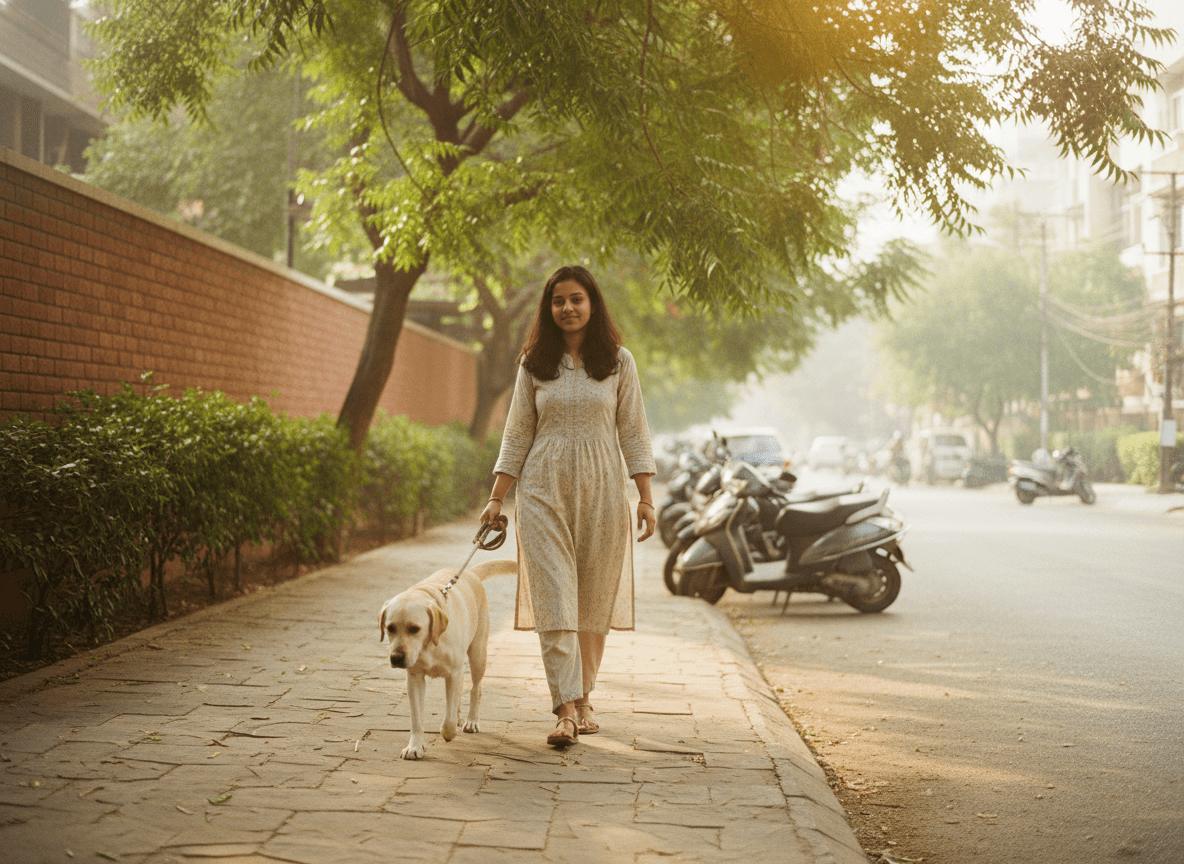
Walking your dog in Indian cities is nothing like the quiet suburbs you see in Western training videos. From crowded bazaars in Old Delhi to monsoon-flooded streets in Mumbai, Indian dogs face obstacles their counterparts elsewhere rarely encounter. Without solid leash manners, a simple morning walk can turn dangerous very quickly.
The Animal Welfare Board of India's 2025 SOP on dog bite prevention, released after over 37 lakh bite incidents were reported in 2024, specifically calls out leash training as a core responsibility for pet owners in public spaces. Delhi alone recorded 35,198 animal bite incidents in the first half of 2025. These aren't just statistics — they represent dogs that weren't under proper control.
Indian street conditions demand skills no generic guide covers. Your dog must stay calm near stray dogs, resist eating street food (a real poisoning risk — see our guide on foods that are toxic to dogs), handle auto-rickshaw horns without lunging, and walk safely on uneven, broken pavements. That's a lot to ask. This guide covers all of it, step by step, with India-specific timelines, costs in INR, and city-specific schedules. For the basic obedience commands your dog should know alongside leash training, that's a separate but connected skill set worth building in parallel.
Leash Training Impact in India
India's Animal Welfare Board of India (AWBI) 2025 SOP on dog bite prevention identifies leash control as one of the primary prevention measures for pet dog bite incidents. Per the legalkart.com guide on Indian pet laws, dog owners in most municipalities are legally required to keep dogs leashed in public — violations can result in fines under local municipal bylaws.
Best Age to Start Leash Training
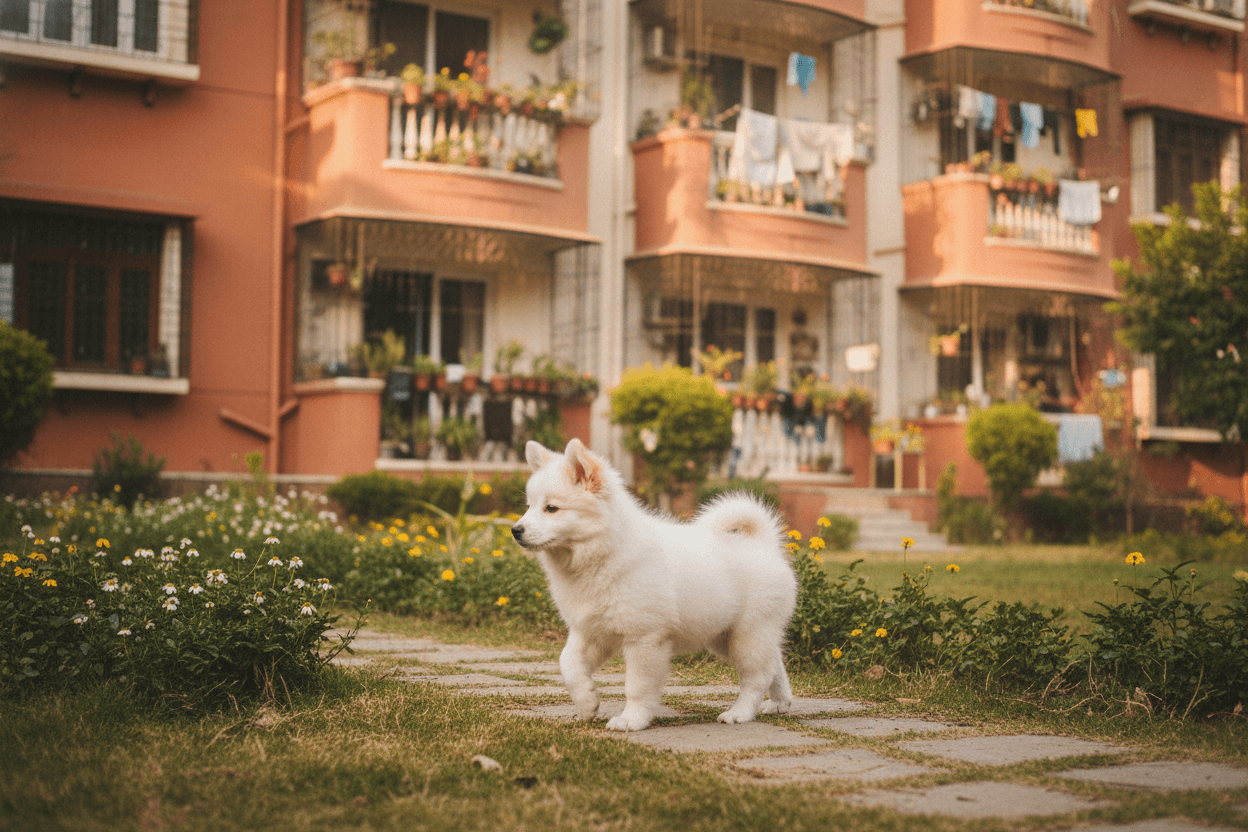
8 to 10 weeks old is the sweet spot — right after your puppy's first vaccinations. Puppies at this age are in their critical socialization window and form associations fast. That said, adult dogs and rescues can absolutely learn leash manners. It just takes more consistency and a bit more patience.
For puppies (8 weeks to 6 months), start with collar and leash familiarization indoors. Sessions should be short — 5 to 7 minutes max — because puppy attention spans are genuinely tiny. Focus on positive associations with the leash rather than perfect walking form. At this stage, avoiding any negative experience with the leash matters more than achieving heel position.
Adult dogs (6 months and above) are a different case. Assess their current leash behaviour first. If they pull constantly, you'll need to undo bad habits before building new ones. Adult training typically moves faster once they grasp what you're asking for, but breaking established pulling patterns requires very firm consistency. Expect 4 to 8 weeks for noticeable improvement, longer for dogs with years of pulling habits baked in.
Indian Pariah Dog Leash Training
Indian Pariahs are highly intelligent but independent. They respond exceptionally well to food-based leash training. Start training after they've bonded with you — usually 2 to 3 weeks post-adoption. Their street-smart nature means they learn faster than many foreign breeds. Most Pariahs master loose-leash walking in 3 to 4 weeks versus 6 to 8 weeks for Labradors. Check our Indian Pariah dog health guide for breed-specific care context.
Equipment Needed for Leash Training in India
For Indian conditions, durability matters. Cheap equipment fails quickly in heat and monsoon moisture — a leash clasp that rusts after two weeks in Mumbai humidity is a safety hazard, not a minor annoyance.
**Collar or Harness**: For puppies and small breeds under 10kg, a flat collar (₹200–₹500) works fine. For medium to large breeds or dogs that already pull, invest in a front-clip harness (₹800–₹2,500). Avoid choke chains and prong collars — these can damage tracheas in India's heat, when dogs are already panting heavily. The AKC's guidance on harnesses versus collars specifically recommends front-clip harnesses for dogs that pull, as they physically redirect the dog back toward you rather than applying pressure to the neck. Our detailed breakdown on collar vs harness for dogs covers this in full.
**Leash**: Go for a 4 to 6 foot fixed-length leash (₹300–₹800). Retractable leashes teach dogs to pull by design — the dog learns tension equals getting farther from you. Nylon leashes handle monsoon moisture far better than leather. Large breeds need a double-layered leash with a padded handle.
**Training Treats**: Small, soft treats your dog can swallow in one second. In India: Drools Crunch Sticks (₹150/200g), Meat Up nuggets (₹120/100g), or homemade boiled chicken bits or paneer cubes. Keep treats smaller than your thumbnail — you'll use 30 to 50 per session, so a large treat means overfeeding your dog.
**Optional**: A treat pouch (₹250–₹500) keeps hands free, reflective gear (₹300–₹600) for early morning or evening walks, and a portable water bottle (₹200–₹400) for hot days.
Leash Training Equipment Cost in India
| Equipment | Price Range (INR) | Notes |
|---|---|---|
| Flat collar | ₹200–₹500 | Puppies and small breeds |
| Front-clip harness | ₹800–₹2,500 | Recommended for medium/large breeds |
| Fixed leash (4–6 ft) | ₹300–₹800 | Nylon for monsoon durability |
| Training treats | ₹120–₹150/100–200g | Drools, Meat Up, or homemade |
Avoid These Leash Training Tools
Do NOT use choke chains, prong collars, or shock collars for basic leash training. According to the San Diego Humane Society's training guidelines, these aversive tools can increase fear and aggression rather than reduce pulling behaviour. Both Mumbai and Bangalore municipalities have proposed restrictions on aversive training equipment under their animal welfare bylaws.
Step 1: Collar and Leash Familiarization (Days 1–3)
This step takes three days and most owners rush it. That's the mistake. Dogs that are uncomfortable with the collar never make clean progress on the rest of the training.
**Day 1 — Collar Introduction**: Let your puppy sniff the collar. Reward calm sniffing with a treat. Put the collar on for 30 seconds while feeding treats continuously, then remove it. Repeat 5 or 6 times throughout the day. By evening, your puppy should tolerate the collar for 5 minutes without pawing.
**Day 2 — Extended Wear**: Put the collar on during meals and play sessions. Gradually extend wear time — 30 minutes, then an hour, then two hours. Check that two fingers fit between collar and neck. Remove at night for the first week.
**Day 3 — Leash Attachment**: Attach the leash and let your dog drag it around indoors under supervision only — never leave an unsupervised dog with a dragging leash. Reward normal movement. Practice picking up the leash and rewarding calm response. By the end of day 3, most dogs stop noticing the leash entirely.
Troubleshooting: Collar Resistance
If your dog freezes or scratches frantically at the collar: use a lighter, softer collar first; apply collar only during high-value activities like meal time; keep sessions to 10 seconds and build up gradually; never force the collar on. Build the positive association before increasing duration.
Step 2: Indoor Leash Walking (Days 4–7)
Master leash walking indoors before you ever step outside. Your living room is the training ground for skills that will protect your dog on busy Indian streets. There are no stray dogs in your hallway, no auto-rickshaws, no street food — which is exactly why you start here.
Hold the leash in one hand and keep 3 to 4 feet of slack — not tight, not dragging. Stand still and wait. The instant your dog looks at you, mark it (say "Yes!" or use a clicker) and give a treat. Repeat 10 to 15 times. You're teaching a single rule: looking at me equals good things.
Once your dog understands check-ins, take one step forward. If they follow and the leash stays loose, mark and treat. If they pull, stop immediately and stand still. Wait for them to look back or return to your side, then mark, treat, and resume. Pulling stops all forward movement. This is the only rule that matters in weeks one and two.
Practice in your hallway, living room, and different rooms. Add turns — when you change direction, say your dog's name, mark when they follow, and treat. Aim for 5-minute indoor walks by day 7, with your dog checking in on you at least every 20 to 30 seconds unprompted.
Step 3: Outdoor Introduction — Low Distraction Areas First
The jump from indoors to outdoors is huge. New smells, sounds, and sights are genuinely overwhelming for a dog that's been training in a quiet apartment. Expect regression.
Choose your first outdoor spot carefully. Ideal locations: your building's parking area at 6 AM, a quiet lane with minimal traffic, or a gated community park during off-hours. Avoid main roads, markets, and areas with stray dogs for the first 2 to 3 weeks.
Step outside and immediately expect your dog to revert to puppy mode — pulling, jumping, not responding to cues. This is normal. Use high-value treats: chicken, paneer, not regular kibble. Walk for just 5 minutes, focusing only on moments of loose leash. Mark and reward any check-ins heavily.
Build outdoor exposure progressively. Week 1: 5-minute sessions in quiet areas only. Week 2: 10 minutes with minor distractions. Week 3: 15 minutes in moderate activity areas. Week 4: 20 minutes on busier streets. Don't rush this — skipping steps creates setbacks that take weeks to undo.
Monsoon Season Leash Training
Mumbai and Bangalore trainers report significantly slower leash training progress during monsoon (June–September) due to irregular schedules and dogs developing negative associations with wet walks. Strategy: train indoors more, use covered parking areas, and dry your dog's paws thoroughly after walks to prevent fungal infections. Our monsoon pet care guide covers this in depth.
Step 4: Managing Pulling Behaviour
Pulling is the number one leash training challenge. In Indian cities where dogs encounter stray dogs, food on the street, and constant stimulation, the urge to pull is even stronger. Here's how to address it without aversive tools.
**The Stop-and-Go Method**: The instant you feel tension on the leash, stop walking and stand completely still. Don't yank back, don't say anything, just stop. Wait for your dog to look back or create slack. The moment the leash relaxes, mark and move forward. Repeat every single time. According to the UC Davis School of Veterinary Medicine loose leash walking guide, this method works consistently because it removes the reward (forward movement) that pulling has been accidentally providing.
**The Reverse Direction Method**: When your dog pulls, silently turn and walk the opposite direction. They learn: pulling takes me away from where I want to go. This works particularly well for dogs pulling toward specific targets — other dogs, food, people. Combine it with Stop-and-Go for faster results.
**Front-Clip Harness Support**: If your dog is a strong puller over 20kg, a front-clip harness physically turns them back toward you when they pull. This isn't a training shortcut — you still need Stop-and-Go — but it prevents shoulder strain and gives better control around stray dogs.
Real Example: Labrador in Pune
One Pune owner's 2-year-old Labrador pulled so hard it caused a fall and minor shoulder injury twice. Using front-clip harness combined with Stop-and-Go and roughly 50 treats per walk: Week 1 meant stopping 40 times in a 10-minute session. By week 4, that dropped to 8 stops. Week 6: loose-leash walking for 80% of the walk. Total equipment cost: ₹1,200 harness plus ₹800 in treats over two months. No trainer fees needed.
Step 5: Handling Distractions — Stray Dogs, Traffic, Street Food
Indian street walks come with distractions no generic Western guide addresses. Your dog needs to handle all three of these without you losing control of the leash.
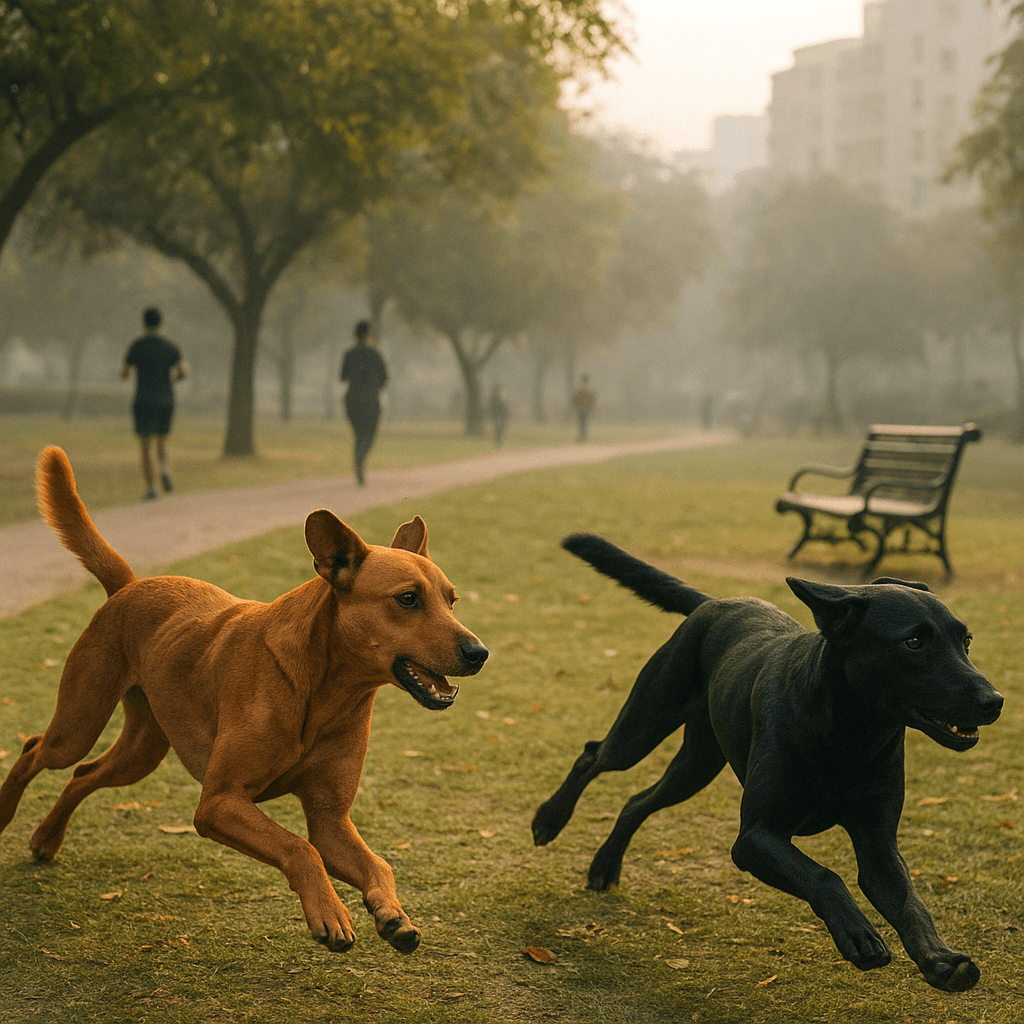
**Stray Dog Encounters**: This is the biggest challenge. Create distance first — cross the street the moment you spot strays ahead. If your dog lunges or barks, stop walking, redirect attention with a treat or toy, wait for calm, then proceed. Never let your leashed dog interact with strays — unequal restraint (one dog leashed, one not) creates conflict. Practice the Look at That technique: reward your dog for looking at the stray dog calmly, then reward again for looking back at you. This builds tolerance gradually rather than trying to suppress the reaction entirely.
**Traffic and Horns**: Start 50 metres from roads and gradually decrease distance over weeks. When a loud vehicle passes, immediately mark and reward any calm behaviour. For noise-sensitive dogs, play traffic sounds at home during meals — this desensitises them to the noise without the stress of being on a leash near actual traffic.
**Street Food and Garbage**: The biggest impulse-control test in India. When your dog moves toward street food, firmly say "No," create distance, then mark and heavily reward when they look away from it. Carry high-value treats on every walk to compete with street food temptation. Practice "leave it" at home with a treat on the floor before testing it on actual street food. Understanding your dog's body language signals helps you spot the pre-lunge tension before it becomes a full lunge.
Stray Dog Safety Protocol
If a stray dog approaches aggressively: place yourself between stray and your dog; do NOT run; command your dog to sit; stand still and avoid eye contact with stray; back away slowly once the stray loses interest. Keep pepper spray (₹150) in your pocket as a last resort for worst-case scenarios.
Training Schedule for Indian Climate
Heat, humidity, and monsoons require adapting your training schedule to the actual conditions. Walking at the wrong time in an Indian summer is a genuine health risk for your dog.
**Summer (March–June)**: Walk before 7 AM and after 8 PM only. Morning walks are prime training time — dogs have more energy, streets are quieter. Avoid 10 AM to 6 PM completely. Pavement temperatures in Delhi and Mumbai can reach 60°C-plus during afternoon hours — hot enough to cause paw pad burns within minutes. Always carry water. For detailed summer safety protocols, see our dog heat stroke prevention guide.
**Monsoon (June–September)**: Short, frequent sessions work better than long ones. If heavy rain, train indoors or in covered parking. Use a waterproof leash. Dry your dog's paws thoroughly after every walk to prevent fungal infections — this is a common problem across coastal cities like Mumbai, Chennai, and Kochi during peak monsoon months.
**Winter (October–February)**: Best training weather across most of India. Walk at 7 to 8 AM and 5 to 6 PM. This is when you make the fastest progress. Extend walks to 40 to 60 minutes for high-energy breeds. Focus on advanced skills: heel position, automatic sits at curbs, loose-leash walking in crowded markets.
Common Mistakes Indian Dog Owners Make
These are the patterns that slow down training more than any other factor. Most are easily fixed once you know to look for them.
**Mistake 1: Starting with retractable leashes** — These teach pulling by design. The dog learns tension on the leash equals getting farther from you. Switch to a fixed 6-foot leash. Save the retractable for beach trips after training is complete, if at all.
**Mistake 2: Inconsistent rules** — If you allow pulling when you're running late but not at other times, your dog gets confused. They think pulling works half the time, so they try it all the time. Be consistent on every single walk, every single time, even when you're in a hurry.
**Mistake 3: Walking too long too soon** — A 3-month-old puppy can't handle a 30-minute walk. Follow the 5 minutes per month of age rule: 3-month puppy means 15-minute walks maximum. Overexercising young dogs causes joint problems that show up years later.
**Mistake 4: Under-rewarding** — Indian owners often under-reward in the early stages. Use 30 to 50 treats per training walk in the first month. You're building new habits — this requires heavy reinforcement early, then you taper off once the behaviour is solid.
From Bangalore's Training Community
The most common mistake seen with Bangalore dog owners is starting outdoor walks the day after bringing a puppy home. The puppy hasn't bonded, doesn't know its name, and hasn't completed vaccinations. Spend 2 weeks bonding indoors, complete vaccinations, then start outdoor leash training. Rushing this step sets back training by weeks.
When to Hire a Professional Trainer
Most dogs can be leash-trained by their owners using this guide. Some situations do need professional help to prevent injury or long-term behavioural problems developing.
Hire a trainer if: your dog shows aggression toward people or dogs on leash (lunging, snarling), has injured you while pulling, is over 30kg and you cannot physically control them, or shows extreme fear responses (refusing to walk, panic panting). These issues need professional assessment before the behaviour becomes entrenched.
Trainer costs in major Indian cities: Mumbai ₹3,000–₹5,000 for a 4-week basic leash training course (8 sessions). Bangalore ₹2,500–₹4,500 for 4 weeks. Delhi ₹3,500–₹6,000 for 4 weeks. Pune and Chennai ₹2,000–₹4,000 for 4 weeks. Prices are for at-home sessions. Our guide on choosing a dog trainer in India covers what qualifications to look for and which red flags to avoid.
A good trainer uses positive reinforcement methods — treats, praise, clickers. They'll never use choke chains or prong collars, will show you their own leash-trained dogs, offer a trial session, and hold certifications from bodies like APDT or CCPDT. Always ask for client references.
DIY vs Professional Trainer Costs
DIY Leash Training: Equipment ₹1,500 + Treats ₹1,000/month × 2 months = ₹3,500 total. Time: 30 to 60 minutes daily for 8 weeks. Professional Trainer: ₹4,000 (4 weeks) + Equipment ₹1,500 + Treats ₹500 = ₹6,000 total. Time: 15 to 30 minutes daily between sessions. Savings: ₹2,500 with DIY, but professionals resolve aggression and fear cases that owners genuinely cannot.
Advanced Leash Skills for Indian Environments
Once your dog walks reliably on a loose leash, these advanced skills make city walks substantially safer. None of these require a trainer — they're extensions of the same reward-based approach you've already been using.
**Automatic Sits at Curbs**: Teach your dog to sit automatically when you reach a road edge. This prevents darting into traffic — a major cause of dog injuries in Indian cities. Method: stop at every curb, say "Sit," reward when they sit. After 2 weeks of consistent repetitions, most dogs start sitting before you ask. This skill alone prevents a significant number of road accidents.
**Wait at Gates and Doors**: Your dog should wait calmly when you open building gates or car doors, not bolt out. This prevents escapes — a serious risk in Indian urban areas where stray dogs and traffic are immediate dangers outside. Practice with doors 20 times daily: open slightly, if dog moves forward, close the door. Repeat until they hold position without being told. If your dog has separation anxiety, bolting at exits can be a related symptom worth addressing directly.
**Heel Position**: Your dog walks precisely next to your left leg, shoulder aligned with your thigh. This is the skill you need in crowded Mumbai markets or narrow Delhi lanes. Hold a treat at your hip, walk, and reward when your dog matches your pace in the right position. Takes 6 to 8 weeks to become reliable under distraction. Training this skill alongside your puppy's foundational training programme makes the process significantly faster.
**Emergency Recall on Leash**: If the leash breaks or slips from your hand, your dog must return immediately when called. Practice this by dropping the leash in a safe enclosed space, calling your dog, and heavily rewarding returns. This is not a hypothetical skill — leash hardware fails, clasps break, and hands get sweaty in Mumbai humidity.
Real Success: German Shepherd in Delhi
One Delhi owner's 3-year-old German Shepherd was a nightmare on leash — pulled so hard that only a young family member could walk him. After 8 weeks using Stop-and-Go combined with a front-clip harness and 40 treats per walk: the owner can now walk the dog solo, the dog stops automatically at curbs, and ignores stray dogs approximately 90% of the time.