Key Takeaways
- Start with safety commands (Come, Stay, Leave It) before convenience commands — in Indian cities these three can literally save your dog's life
- Pick one language for commands and stick to it. Every family member uses the same word, every time — the dog responds to consistency, not the language itself
- Train during cool hours (6-7 AM or after 7 PM) and keep sessions to 10-15 minutes — a hot, panting dog won't focus on anything, least of all your instructions
- Indie dogs (Indian Pariah Dogs) are intelligent and respond well to reward-based methods — their independent streak is often misread as stubbornness when it's actually selective cooperation
- A 2021 study in PLOS One found that reward-only trained dogs showed measurably lower stress hormones and better long-term behaviour outcomes than those trained with aversive methods
The Real Stakes of Dog Training on Indian Streets
My Labrador Bruno bolted after a stray dog pack near a fish market in Bengaluru. He was off-leash, I panicked, and the 'Come' command I'd been teaching him for three weeks got its first real test. He turned around and came back. That moment is why I'm writing this guide.
Indian streets are genuinely chaotic training environments. Auto-rickshaws backfire, vendors shout, kites swoop at food scraps, and stray dog packs can appear without warning around any corner. A dog that doesn't respond reliably to basic commands is a safety risk — to itself, to you, and to the people around it.
The Animal Welfare Board of India (AWBI), the statutory body under the Prevention of Cruelty to Animals Act 1960, explicitly encourages training methods that avoid causing pain or distress to dogs. Positive reinforcement aligns with that position and also produces dogs that actually want to listen — not dogs that comply out of fear.
Why Reward-Based Training Works — The Research Behind It
The American Veterinary Society of Animal Behavior (AVSAB) recommends exclusively reward-based methods for all dog training — a position shared by the WSAVA and every major veterinary association worldwide. This isn't philosophical preference; it's based on documented outcomes.
A 2021 study published in PLOS One by Vieira de Castro et al. compared 92 companion dogs across reward-based and aversive training schools. Dogs trained exclusively with rewards showed significantly lower cortisol levels after training sessions and performed better in cognitive bias tasks. Dogs from high-aversive schools showed more stress behaviours, higher cortisol spikes, and were measurably more 'pessimistic' in follow-up assessments.
For practical training at home in an Indian apartment — where you're working without a formal trainer and relying entirely on your dog's willingness to cooperate — reward-based methods are the only approach that makes sense. You need a dog that wants to work with you, not one that's anxiously trying to avoid a correction.
The 7 Commands Every Indian Dog Needs
Professional trainers at PawSpace, which operates across Bangalore and Hyderabad, consistently recommend these seven commands as the core obedience set. I've ranked them by safety priority rather than ease of teaching — because teaching Sit first is convenient, but teaching Come and Leave It first is actually more important.
Step-by-Step: Teaching Each Command
Each command below follows the same basic structure: lure the behaviour, mark it the instant it happens, reward immediately. The marking can be a clicker, a short verbal 'Yes!', or a sharp tongue click — whatever you pick, be consistent.
Teaching Sit
Hold a small treat near your dog's nose — I use boiled chicken pieces, which run about ₹50-70 for a week's worth of training treats. Slowly arc your hand up and back over their head. Their nose follows, their rear goes down automatically. The instant their bottom touches the floor, say 'Sit' (or 'Baitho') and give the treat.
Don't say the command before the behaviour happens. You're labelling the action they're already doing. Once they understand what the word means, you can start cueing them before the motion. Most dogs start offering the sit voluntarily within 3-4 sessions — they figure out that this specific posture produces treats.
In Chennai or Mumbai summers, I keep training sessions to exactly 10 minutes maximum. A dog that's panting from heat isn't in a state to learn — its brain is occupied with thermoregulation, not obedience. Early morning, before the temperature climbs past 28°C, is when you'll get the most focus.
Teaching Come (Recall)
Start this one indoors, or in a quiet outdoor area — not immediately on a busy Bengaluru street. Crouch down, say 'Aao' or 'Come' in an excited tone (not commanding), and pat your chest or thighs. When your dog reaches you, reward immediately and make a big fuss. You want them to think coming to you is the best thing that ever happened to them.
The single biggest mistake people make with recall: calling the dog to come and then doing something the dog dislikes — bathing, trimming nails, ending playtime. If 'Come' predicts bad experiences, your dog will stop responding to it. Always make arriving at you worth their while.
Build difficulty gradually. Start in one room, then across the flat, then in the building corridor, then in your compound, and eventually on a long leash outdoors. Don't attempt off-leash recall on open streets until you have 9 out of 10 successful responses in mildly distracting environments. Indian street traffic is not a training ground for a dog that's still at 60% reliability.
Teaching Leave It
Indian streets are full of things your dog should not eat: chicken bones, street food scraps, rat poison left by municipal corporations, discarded medications. 'Leave It' is the command that prevents a vet emergency.
Put a treat in your closed fist. Let your dog sniff and paw at your hand. The moment they back off even slightly, say 'Chhod do' and reward from your other hand (not from the fist — the point is they don't get that specific item). Repeat until backing away becomes automatic when you present a closed fist. Then work up to items on the floor, and eventually objects you encounter on walks.
Teaching Stay
Ask for a Sit first. Hold your palm flat toward your dog's face and say 'Ruko'. Take one step back. If they stay, step back toward them and reward before they move. Don't call them to you for the reward — walk back to them. This teaches the stay ends when you return, not when you call them.
Increase distance and duration in small steps. A common error is increasing both at the same time — your dog can handle longer stays at close distance, or short stays at greater distance, but not both simultaneously during early training. In apartment buildings, a reliable Stay is what keeps your dog from bolting through the front door every time delivery comes.
Teaching Down
Get your dog into a Sit. Hold a treat at their nose and slowly lower your hand straight down toward the floor, then drag it slightly away from them along the ground. Their elbows should hit the floor as they follow the treat. Say 'Neeche' the moment they're fully down. Reward immediately. Our food india: buying brand guide covers this in detail.
Down is harder to teach than Sit because lying down is a more vulnerable posture — it requires a degree of trust. Some dogs resist it initially, especially anxious rescues. Don't push or physically place them down; let them figure it out with the lure. During Diwali or Holi when firecrackers go off, a reliable Down command helps you settle a startled dog quickly.
Teaching Heel
Heel is the last command to teach for a reason — it requires sustained attention and impulse control that younger dogs simply don't have. Start by rewarding your dog for walking at your left side (traditionally). Keep treats at your hip level and reward every few steps for correct position. Build the habit before adding the verbal cue.
On narrow Mumbai footpaths or Kolkata lanes crowded with pedestrians, a dog that heels reliably on cue is a practical necessity, not just an obedience exercise. A medium or large dog pulling on a crowded street is a risk to everyone nearby.
Teaching Drop It
Let your dog hold a toy or low-value item. Present a high-value treat near their nose and say 'De do'. Most dogs will drop the held item to eat the treat. Reward immediately. Practice this with increasingly appealing items as the command becomes reliable.
Never try to pry things from your dog's mouth when they don't know Drop It — this teaches them to swallow quickly rather than release. The trade-up approach (give me that, get something better) is much more reliable and much less likely to cause a bite.
Best Training Treats for Indian Conditions
Treats need to be small (pea-sized), high-value (smells good to the dog), and quick to eat. You want the dog focused back on you within two seconds, not chewing for thirty. Here's what works well in Indian kitchens without breaking your budget:
One important note for Indian climate: boiled chicken and paneer spoil quickly in summer heat. Carry treats in a small insulated pouch, keep refrigerated between sessions, and never use treats that have been sitting out in 35°C+ weather for hours. A stomach upset mid-training derails weeks of progress.

Training in Multilingual Households
Most Indian homes operate in two or three languages simultaneously. One parent uses Hindi, another uses English, a grandparent uses Tamil or Marathi — and then they're puzzled when the dog seems confused. The dog isn't confused about language; it's confused because the same action is being labelled differently every time.
The solution is a family meeting before you start training. Pick one word per command and put it on a printed list on the refrigerator. The specific language doesn't matter — dogs respond to the sound pattern, not its linguistic origin. What matters is that every person in the household uses the exact same word, in the same tone, every time.
Training Indie Dogs and Indian Breeds
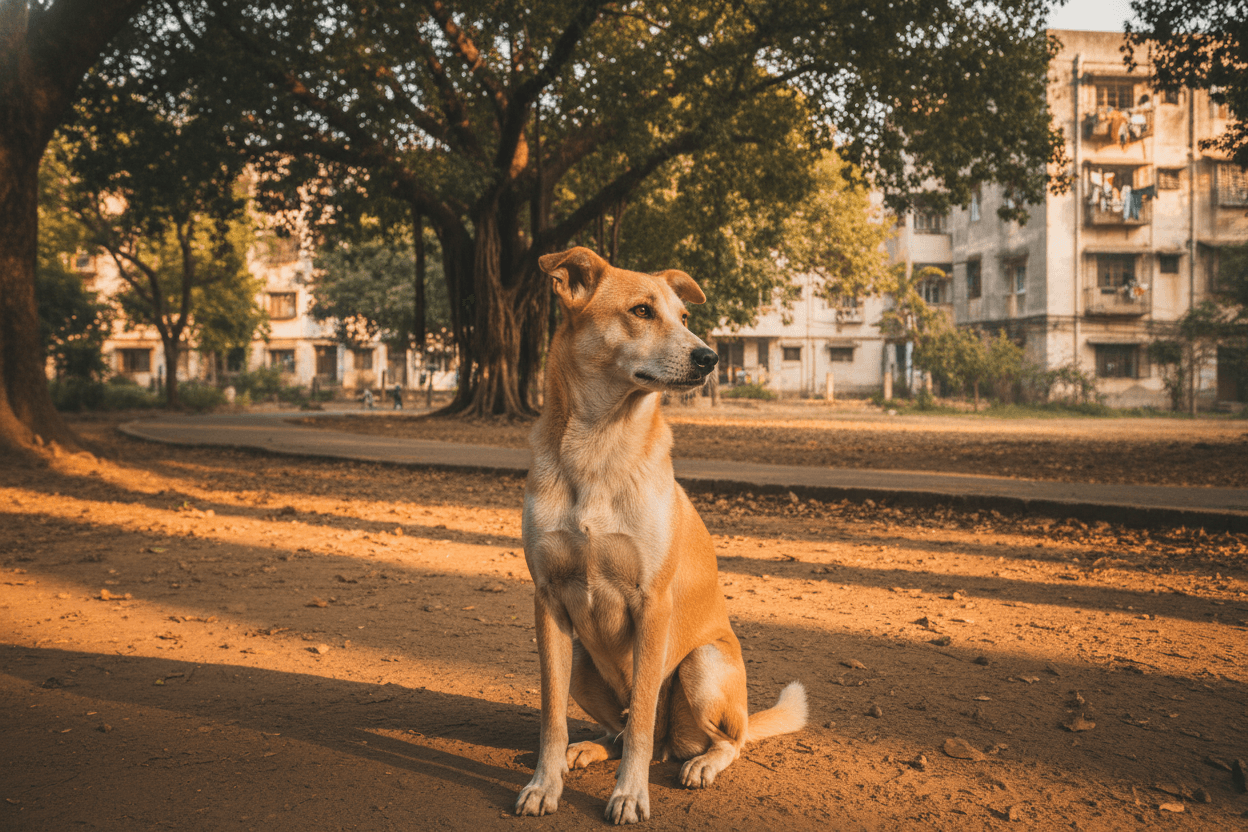
Indian Pariah Dogs (Indie dogs) have a reputation for being difficult to train, which isn't really accurate. They're independent thinkers who need a reason to comply that makes sense to them. An Indie dog won't repeat an action mindlessly — they'll try it a few times, decide if it's worth their effort, and either buy in or not.
According to Captain Zack's training guide for Indie dogs, these dogs respond exceptionally well to positive reinforcement because of their high food motivation and intelligence. The approach that works: short sessions, high-value treats, and letting them figure out what earns the reward rather than physically guiding them through motions.
Rajapalayams and Mudhol Hounds are sighthounds — they're built to chase things. Their prey drive is strong, which makes early recall training especially important. Off-leash time in open areas should wait until recall is 9/10 reliable in distracting environments. These aren't dogs you can retrieve once they've spotted something worth chasing.
Realistic Training Timelines
The timelines below reflect typical outcomes for consistent daily training. Individual dogs vary based on age, breed, prior experience, and how consistently the household maintains the training rules. These are approximate ranges, not guarantees.
A command counts as 'mastered' when your dog responds correctly 8 out of 10 times in a mildly distracting environment, not just at home with no competing stimuli. A dog that sits perfectly in your quiet apartment but ignores you outside hasn't actually learned the command in any way that matters.
When to Hire a Professional Trainer in India
Most basic commands can be taught at home without professional help. But there are situations where a professional trainer is worth the cost.
Professional home trainers in India typically charge between ₹2,000-3,000 per session for in-home visits, according to listings on Superprof and community forums. Monthly packages range from ₹5,000-20,000 depending on the city and trainer's experience. Cities like Mumbai and Bangalore tend to be at the higher end; smaller cities have lower rates. Services like PawSpace offer certified trainers in Bangalore and Hyderabad with structured packages.
Hire a professional when: your dog is showing aggression toward people or other dogs, recall has completely broken down and you've tried multiple approaches, fear or anxiety is interfering with training, or you have a breed with specific working instincts you're trying to channel.
Apartment Training: Specific Challenges for Indian Homes
Training in a 2BHK flat in Delhi or a one-bedroom in Hyderabad is genuinely different from training in a house with a garden. Space constraints mean you can't create distance easily, neighbours complain about noise, and the lift lobby is often the first 'public' training environment your dog encounters.
For apartment dogs, the most important commands to master before going outside are Stay (prevents door-bolting) and Heel (manages behaviour in lifts, corridors, parking areas). The Stay command at the front door is the single most useful thing you can teach a dog that lives in an apartment building — it means you can open the door, receive a package, or speak to a neighbour without your dog escaping.
Noise sensitivity from Diwali firecrackers or Holi celebrations is a separate issue from training, but a dog that knows Down and Stay has more coping tools during high-stress events. These commands give them something to do that has a predictable outcome, which helps anxious dogs settle.
If you're in Bengaluru, costs vary significantly by neighbourhood — Raghavendra Colony, Chamrajpet averages ₹300 while DOMALUR, Domlur runs around ₹8,500.