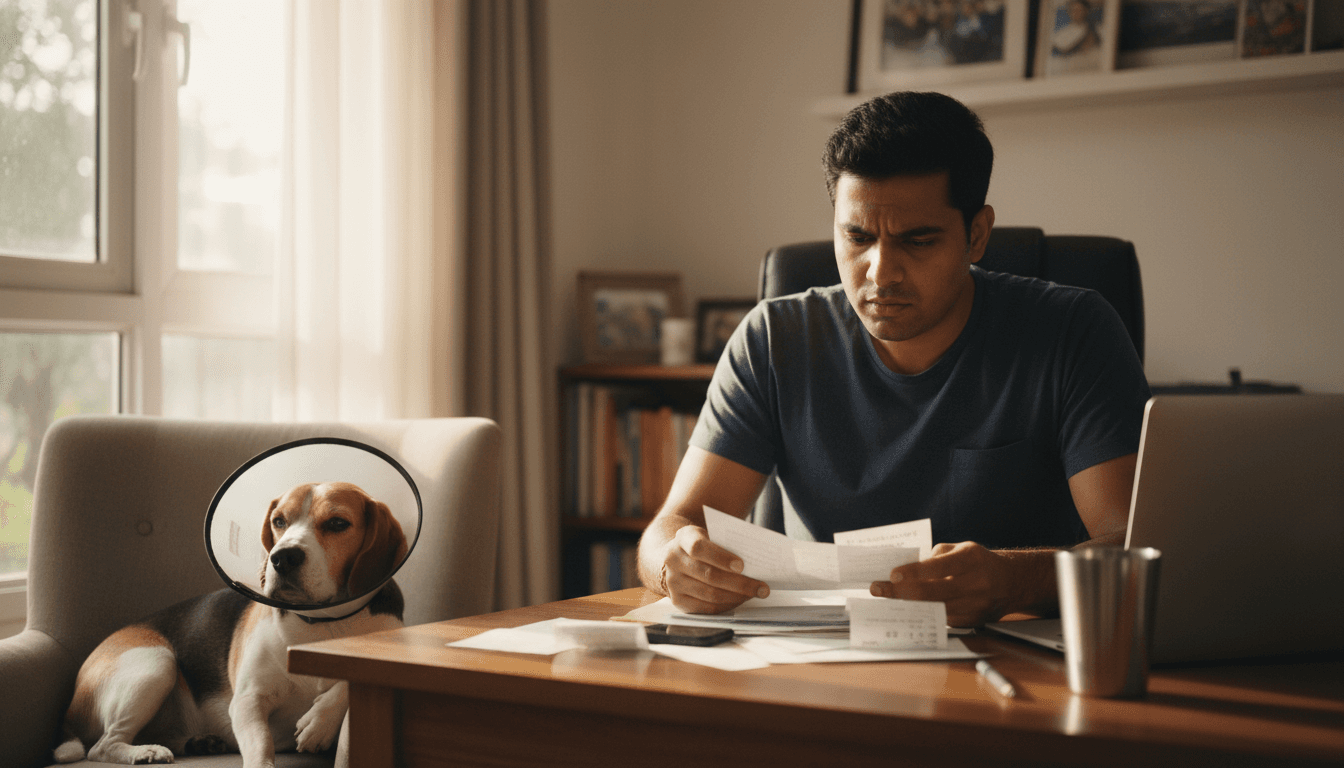
Key Takeaways
- Fear-based aggression is behind 60–70% of cases — it's the most common type, and most responsive to counter-conditioning
- Punishing a growl is one of the worst things you can do — dogs who lose their growl are 3x more likely to bite without warning
- Professional trainers in India charge Rs.5,000–Rs.8,000 for initial consultations and Rs.10,000–Rs.25,000 for full programs depending on city
- Indian summer heat (40°C+) raises irritability and shortens your dog's threshold — schedule all outdoor training before 7 AM or after 7 PM
- Street dog rescues often show food guarding as a survival instinct — a 'trade-up' protocol over 6–8 weeks usually produces clear improvement
- Owner compliance is the single biggest predictor of success — a 2024 veterinary review found 44% of owners don't follow protocols consistently
- India's Prevention of Cruelty to Animals Act makes you legally liable for your dog's bites — management tools aren't optional during training
Quick Stats

Understanding the 7 Types of Dog Aggression
Aggression is not one thing. There are at least seven distinct types, each with different causes and different solutions. Getting the type right before you start training is the difference between real progress and months of wasted effort.
According to the ASPCA's aggression overview, the most common categories are fear-based, territorial, protective, possessive (resource guarding), redirected, pain-induced, and frustration-based. Fear is the root cause in 60–70% of all cases, and the key insight is that territorial aggression usually starts as fear too — dogs become more confident offensively only after weeks or months of practice.
| Aggression Type | Typical Trigger | India Context |
|---|---|---|
| Fear-based | Perceived threat, no escape route | Crowded housing compounds, mandatory leashing, unfamiliar visitors |
| Territorial | Stranger entering property | Shared elevators, apartment gates, common play areas |
| Protective | Perceived threat to family member | Children in multi-family homes, grandparents walking dogs |
| Resource guarding | Approach to food, toys, or sleeping spots | Especially common in street dog rescues — survival instinct |
| Redirected | Frustration displaced onto nearby target | Leash reactivity during narrow lane walks, balcony reactivity |
| Pain-induced | Physical discomfort or injury | Monsoon joint flare-ups, summer heat stress, dental pain |
| Frustration-based | Can't reach desired stimulus | Dogs kept on terraces or balconies, insufficient off-leash time |
Why does the type matter so much? Because treating territorial aggression with the same protocol as pain-induced aggression will fail. A dog biting because they're guarding food needs counter-conditioning around the bowl. A dog biting because of a dental abscess needs a vet, not a trainer. Spend 30 minutes figuring out the type first — it saves months.
DodoDoggy Tip
Keep a simple log for two weeks: write down every incident with date, time, trigger, and what happened right before. Patterns almost always emerge. You'll likely find the same 2–3 triggers behind 80% of incidents — and those are what your training protocol needs to target. For dogs with multi-dog household tension, our potty training guide for Indian apartments also covers routine-setting that reduces competition stress.
Reading the Warning Signs: Your 2–5 Second Window
Dogs don't bite out of nowhere. They communicate discomfort through body language well before an incident — the problem is that most Indian dog owners miss early signals because nobody taught them what to look for. A first-bite incident happens after dozens of ignored warnings.
The warning ladder runs from subtle to obvious. At the quiet end: turning head away, yawning when not tired, excessive lip licking. Then comes freezing — going completely still, which owners often misread as calm. Then the active warnings: low growling, snarling, showing teeth. Then the lunge. Understanding this ladder is also foundational for puppy training, since catching reactive habits early is far easier than retraining an adult dog.
Warning
Never punish a growl. A dog who has been punished for growling will skip the warning next time and go straight to the bite. The growl is your dog communicating distress — it's the most valuable signal in the chain. Respect it by removing the trigger, not by correcting the dog.
Two signals worth special attention: 'whale eye' (dog turns their head but keeps eyes fixed, showing whites) and the hard freeze with raised hackles and rigid tail. When you see both together, the dog is at high stress and close to threshold. Move the situation immediately rather than waiting to see what happens.
For a deeper dive into reading your dog's signals in different contexts, our dog body language guide for Indian owners covers the full range of calming signals, stress signals, and play signals you'll encounter in daily life. And if your dog shows aggression mainly when left alone, our crate vs free-roaming comparison explores how confinement type affects anxiety and reactivity in Indian home environments.
Counter-Conditioning and Desensitization: How the Science Actually Works
Counter-conditioning and desensitization are the two techniques with the strongest evidence base for aggression reduction. They're not just buzzwords — a systematic review published in Applied Animal Behaviour Science (2024) found counter-conditioning interventions effective for reducing aggression toward dogs and unfamiliar people.
Here's what they actually mean. Desensitization means exposing your dog to the trigger at a level below their reaction threshold — far enough away, quiet enough, slow enough that they notice it but don't react. Counter-conditioning means pairing that sub-threshold exposure with something the dog loves, so the emotional association changes from 'threat' to 'good things happen here.'
Expert Insight
The threshold concept is everything. If your dog reacts, you went too close too fast. Back up until the dog can see the trigger without responding, and work from there. Every successful non-reactive moment builds the new association. Every reactive incident reinforces the old one.
A practical example from a Mumbai flat: a Labrador with aggression toward the building security guard. Week one, the guard stayed 20 meters away and tossed paneer cubes on the ground — the dog ate them without reacting. Week two, 15 meters, same paneer. Week five, the guard could hand treats directly. The dog now wags when he sees the uniform. Total time: six weeks, three 10-minute sessions per week.
What kills these protocols is pushing too fast. The VCA Animal Hospitals guide to desensitization is explicit: exposure at or above threshold undoes the work. One bad session can reset two weeks of progress. Slow is fast.
Quick Fact
Owner compliance is the single biggest predictor of outcome. A 2024 veterinary study found 44% of owners were non-compliant with training programs — missing sessions, rushing exposure, or inconsistently applying protocols at home. Before investing in professional training, honestly assess whether your household can maintain a daily 10–15 minute routine for 3–6 months.
Multi-generational Indian households add real complexity here. Everyone — grandparents, visiting relatives, domestic help — needs to follow the same rules. If your mother-in-law feeds your dog from the table while you're training 'leave it,' you're working against yourself. A family meeting to explain the protocol, including why it matters and what each person should do, is worth an hour of your time upfront.
For foundational commands that support behavior modification work, our basic dog training commands guide covers 'sit,' 'stay,' 'leave it,' and 'place' — the four most useful obedience tools during aggression rehabilitation.
India-Specific Challenges: Heat, Street Dogs, and Housing Societies
Indian conditions create training challenges that Western guides simply don't address. Three stand out.
Heat is the biggest invisible factor. During April–June across North India, Rajasthan, and the Deccan, temperatures hit 42–44°C. At those temperatures, dogs are physiologically stressed — core temperature rises, cortisol increases, and the threshold for reactive behavior drops. Any aggression you're working on will appear worse in summer, not because your training failed, but because the conditions changed. Schedule every outdoor session before 7 AM or after 7:30 PM. Bring water. Cut sessions from 20 minutes to 10. Even Chennai and Mumbai, which don't hit those temperatures, get hot enough by 9 AM that outdoor training becomes counterproductive.
Seasonal Tip
Monsoon substitution: when outdoor sessions aren't possible in July–August, switch entirely to indoor impulse control work. 'Wait' before meals, 'leave it' with treats on the floor, 'settle' on a mat with distractions — these exercises directly transfer to outdoor reactivity management and take less than 15 minutes daily in a small apartment.
Street dog rescues require a different mindset entirely. Food guarding in a rescue dog isn't a character flaw — it's documented survival behavior. According to Best Friends Animal Society, perceived scarcity is the core driver of resource guarding, and the rehabilitation goal is convincing the dog that food is always coming and humans near the bowl mean more food, not less.
The trade-up protocol works well: place a few pieces of kibble in the bowl, let the dog start eating, then add a high-value treat (egg yolk, paneer). Repeat five times per meal. The dog learns that your approach to the bowl always improves the situation. Most Indian Pariah rescues show noticeable improvement within 4–6 weeks of consistent practice. Expect some regression during high-stress periods like Diwali or when strangers visit.
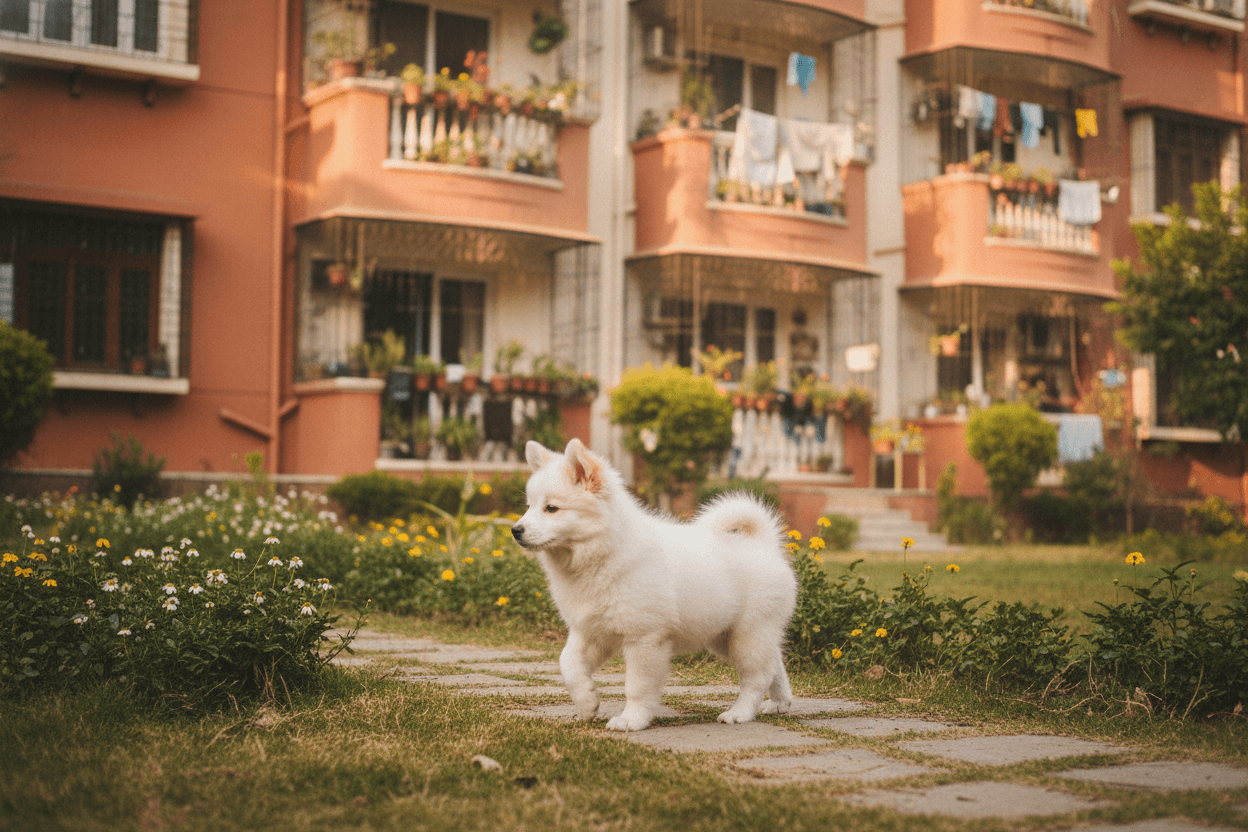
Housing society dynamics need proactive management. Talk to neighbors on adjacent floors before an incident happens — not after. Ask them not to approach your dog without your permission, even to say hello. If there's a society meeting, mention you're working with a trainer. Many RWAs (Resident Welfare Associations) in Pune, Bangalore, and Hyderabad have started forming pet owner groups that coordinate socialization sessions in the common lawn, which can be a genuinely useful controlled environment for exposure work.
Safety First
India's Prevention of Cruelty to Animals Act (1960) and municipal dog bylaws make the owner legally liable for bites. Indian courts have held that owners must exercise 'reasonable care and supervision.' Using a basket muzzle in crowded areas during training isn't just good practice — it's your legal protection.
Professional Trainers in India: Costs, Certifications, and Red Flags
For moderate to severe aggression — bite history, multi-trigger cases, or anything where you feel unsafe — professional help makes a significant difference. The challenge in India is separating genuinely qualified practitioners from those who learned from a weekend course or YouTube.
Three certifications worth specifically looking for: CPDT-KA (Certified Professional Dog Trainer – Knowledge Assessed), KPA CTP (Karen Pryor Academy Certified Training Partner), and IAABC (International Association of Animal Behavior Consultants). India has roughly 50–75 trainers with these international credentials, concentrated in metro cities. According to trainer directory data, Mumbai, Delhi, Bangalore, Pune, and Chennai each have 3–5 practitioners with these credentials.
| City | Initial Consultation | Full Program (8–12 sessions) |
|---|---|---|
| Mumbai | Rs.5,000–Rs.8,000 | Rs.15,000–Rs.25,000 |
| Delhi NCR | Rs.4,000–Rs.7,000 | Rs.12,000–Rs.22,000 |
| Bangalore | Rs.4,500–Rs.7,500 | Rs.14,000–Rs.24,000 |
| Pune | Rs.3,500–Rs.6,000 | Rs.10,000–Rs.18,000 |
| Chennai | Rs.3,000–Rs.6,000 | Rs.10,000–Rs.18,000 |
| Tier-2 cities | Rs.2,000–Rs.4,000 | Rs.5,000–Rs.15,000 |
Platforms like PawSpace (Bangalore) and Kuddle (multi-city) list certified trainers with transparent pricing. Average hourly rate across India is Rs.2,546 according to Superprof's 2025 platform data, with Bangalore trainers starting from Rs.800/hour. Online programs have become a legitimate option for mild-to-moderate cases at Rs.2,000–Rs.5,000 for full structured courses with video feedback.
Warning
Walk away immediately from any trainer who uses choke chains, prong collars, e-collars, or talks about 'dominance' and 'alpha rolls.' These methods increase cortisol and fear — the exact drivers of most aggression. Also avoid anyone promising to 'fix' aggression in 2 weeks. Meaningful behavior change takes months.
Green flags: the trainer asks detailed questions about your dog's history and medical status before proposing anything. They teach you protocols to practice at home rather than just working with the dog themselves. They suggest a vet check to rule out pain-induced aggression before starting. They give you realistic timelines. Our choosing a dog trainer guide has a full checklist of questions to ask before booking.
If you're seeing reactive behavior that's worsening or your dog has a bite history, a veterinary behaviorist (not just a trainer) is the appropriate step. They can also assess whether anti-anxiety medication would help — SSRIs are used in veterinary practice for fear-based aggression cases and can meaningfully improve training outcomes.
Management Tools: Muzzles, Gates, and Equipment
Management tools prevent incidents while training is ongoing. They're not permanent — they're the safety net that lets you work on behavior without risking harm. The biggest mistake is treating them as admission of failure and avoiding them.
| Tool | Purpose | Price Range |
|---|---|---|
| Basket muzzle | Safety during high-risk situations — vet visits, crowded walks | Rs.800–Rs.2,500 (Baskerville, Trixie on Amazon.in) |
| Baby/pet gate | Separation management during feeding or visitor arrivals | Rs.1,500–Rs.4,000 (Baybee, R for Rabbit) |
| 6-foot leash | Control during training sessions and public walks | Rs.300–Rs.1,200 (Heads Up For Tails, Petsy) |
| Long line (15–20 ft) | Controlled outdoor practice with distance | Rs.500–Rs.1,500 (Heads Up For Tails) |
| Crate (appropriately sized) | Safe space management during visitor arrivals | Rs.3,000–Rs.8,000 (Emily Pets, Savic) |
Basket muzzles specifically allow panting and drinking — non-negotiable in Indian heat. Fabric muzzles (the ones that hold the mouth shut) are dangerous during summer and should only be used for minutes at a time in a vet's office. Always condition your dog to accept the muzzle positively over 1–2 weeks before you need to use it in a stressful situation. Put treats inside the muzzle, let the dog put their nose in voluntarily, and gradually build duration.
DodoDoggy Tip
Retractable leashes are dangerous with reactive dogs. A lunge on a retractable can snap the mechanism or lock at the wrong moment. Use a standard 6-foot nylon or leather leash for all aggression-related training walks.
For dogs needing a safe retreat space during training periods, introducing a crate positively can be genuinely helpful. Our crate training guide for India covers the full conditioning process, including how to build a positive crate association for an adult dog.
Realistic Timelines by Severity
Behavior change is slow. Anyone who tells you otherwise is selling something.
- Mild reactivity (barking at strangers, leash lunging at occasional triggers): 4–8 weeks of consistent counter-conditioning, 2–3 sessions daily
- Moderate aggression (regular incidents, multiple triggers, no bite history): 3–4 months with professional guidance plus daily home practice
- Severe aggression (bite history, multi-trigger, escalating intensity): 6–12 months of ongoing behavior modification — expect management to be a permanent feature
- Street dog rescue integration (food guarding, wariness, territorial behavior): 3–6 months for baseline stability, though individual variation is wide
Progress is not linear. You'll have weeks of clear improvement followed by a bad day that feels like a reset. It usually isn't — it's a rough patch. The overall trend over six weeks matters more than any individual incident. Tracking incidents in writing helps you see the trend rather than reacting to the last bad day.
First-Time Owner
If you're managing a new rescue and feel overwhelmed by the behavior, our separation anxiety guide covers overlap between anxiety and aggression — they often co-occur in rescues, and addressing both simultaneously speeds outcomes.
For dogs who need more consistent day-to-day obedience training alongside behavior modification, building a structured routine around basic commands reduces frustration-based incidents significantly. A dog who understands 'sit,' 'stay,' and 'place' has more tools for self-regulation.
Treat Choices for Indian Households
Counter-conditioning requires high-value treats — something the dog actively works for. What counts as high-value varies by dog, but for most Indian households, these work well.
- Paneer cubes (5mm pieces) — vegetarian, high-protein, dogs love them
- Boiled egg white pieces — cheap, high-value, easy to prep in bulk
- Small pieces of Amul cheese — widely available, very motivating
- Banana slices frozen overnight — especially useful in summer as they're cooling
- Peanut butter smear on a lick mat — slows the dog down, useful for threshold work
Cut everything into 5mm cubes. You need to be able to give 20–30 treats per session without the dog getting full. Commercial training treats from brands like Pedigree India, Drools, and Heads Up For Tails are fine for lower-value reinforcement during calm training, but for actual aggression counter-conditioning you want the highest-value food your dog responds to. For a full breakdown of Indian dog food options and which brands work best for training, see our best dog food India guide.
Your Starting Action Plan
Here's what to do in the first two weeks before you spend any money on training.
- Start the incident log: date, time, trigger, severity, what led up to it
- Get a vet check to rule out pain-induced aggression — especially if onset was sudden
- Order a basket muzzle and begin conditioning your dog to accept it positively
- Buy or borrow baby gates to create separation zones in your home
- Identify your dog's top 2–3 triggers from the incident log
- Read the body language guide so you can recognize warning signals before incidents escalate
- Contact 2–3 certified trainers for initial consultations — ask about their counter-conditioning experience specifically
DodoDoggy Tip
Get the vet check before the trainer. Pain-induced aggression is genuinely common — dental disease, hip dysplasia in Labs and German Shepherds, tick fever causing joint pain — and training won't fix what a vet needs to treat. A 10-minute consultation at a clinic like Cessna Lifeline (Bangalore) or DCC Animal Hospital (Delhi) could save you months of misdirected effort.
For further reading on all the supporting skills: leash training for walk control, recall training for off-leash safety, and stopping excessive barking if reactivity includes significant barking. These are interconnected — progress on one tends to help the others.
If you're in Bengaluru, costs vary significantly by neighbourhood — Raghavendra Colony, Chamrajpet averages ₹300 while DOMALUR, Domlur runs around ₹8,500.