Key Takeaways
- Basic recall takes 4–8 weeks; add 2–3 months for reliable response around street dogs in Indian cities
- Boiled chicken (₹70–90/kg) and paneer (₹80–100/200g) outperform imported treats for high-distraction training
- Train during 6–8 AM or after 7 PM in summer; shift 70% indoors during monsoon (June–September)
- A separate emergency recall command — practiced weekly with your best treats — is non-negotiable for India's streets
- Multi-generational households need one agreed command word posted on the fridge; inconsistency is the top recall-killer
Why Recall Training Is Different in India
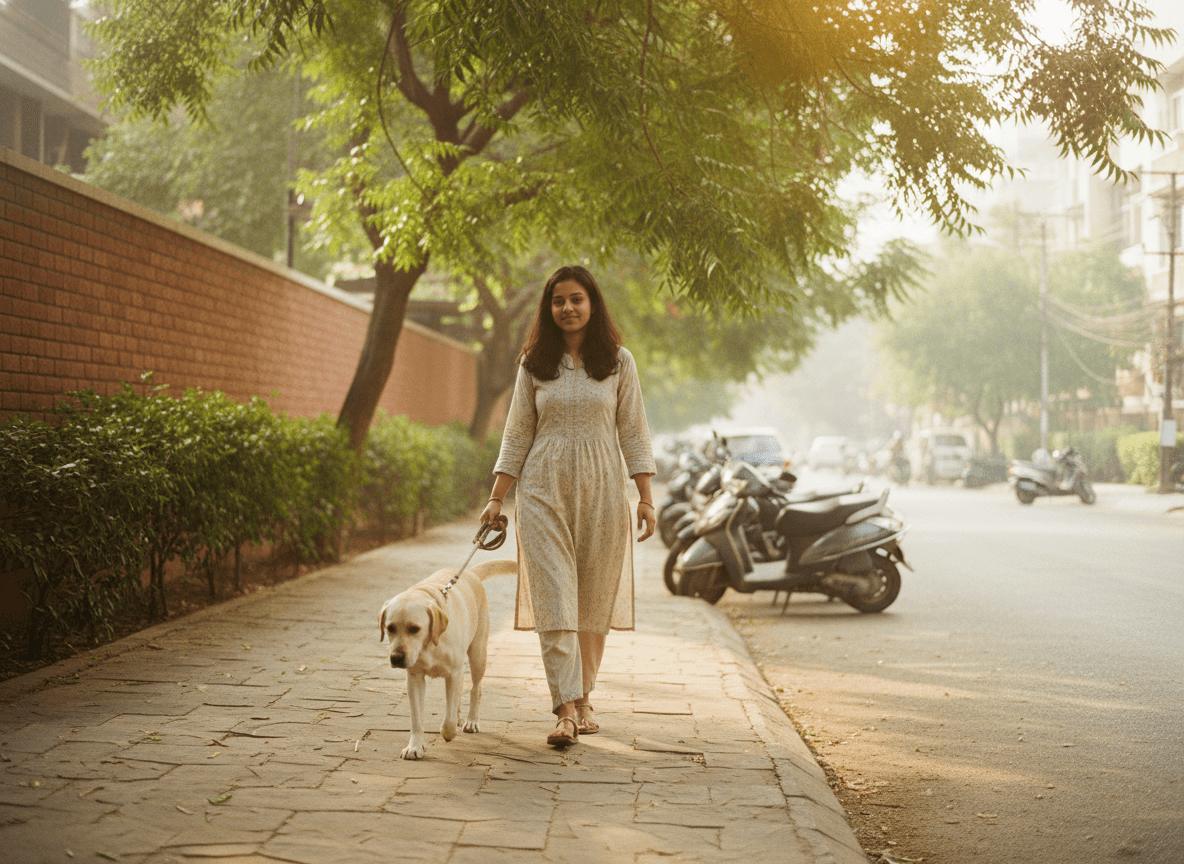
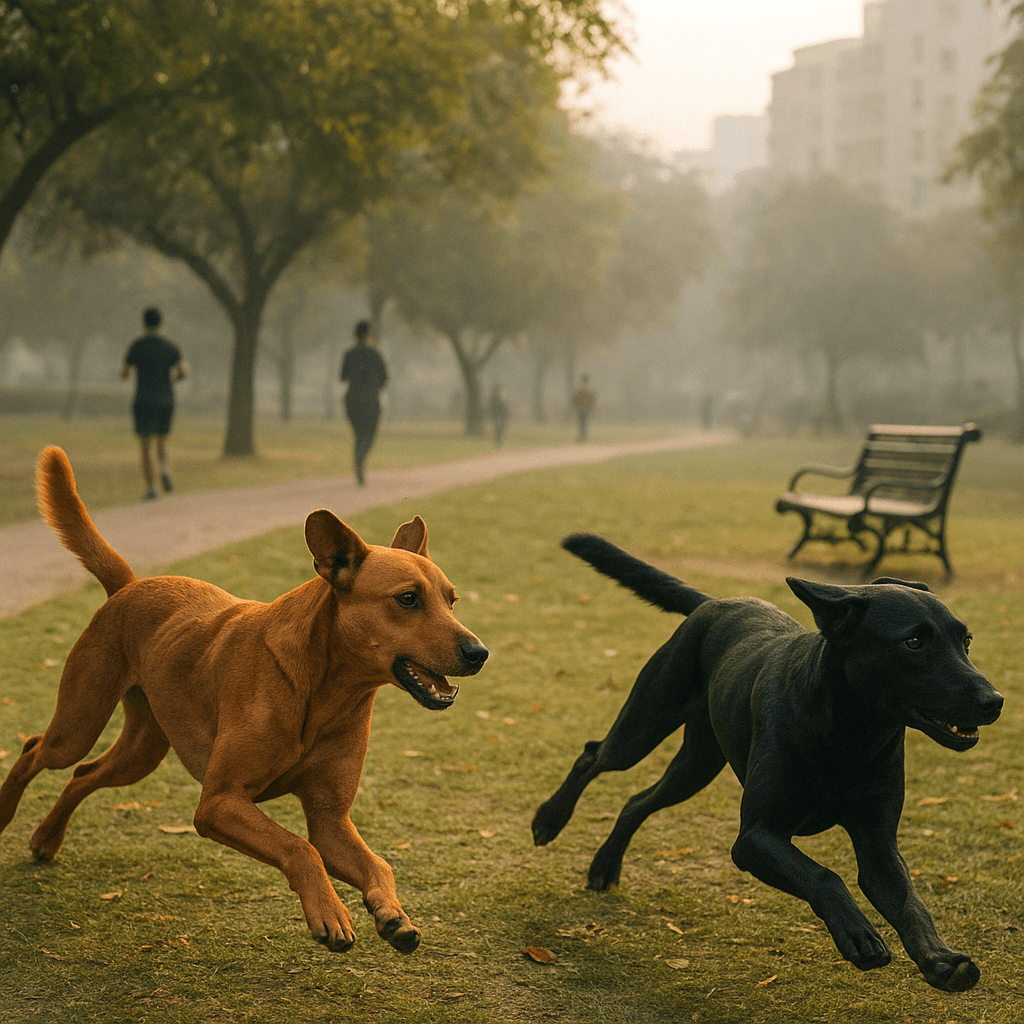
India has roughly 60 million free-roaming street dogs, according to a 2024 analysis published in The Conversation. Walk your dog in any Indian city and you'll see what that number means on the ground: street dogs sleeping under cars, running across intersections, guarding chai stalls. Your dog will notice them before you do.
The AWBI's November 2025 SOP on dog bite prevention specifically highlighted leash control and recall as owner responsibilities for reducing the 37 lakh dog bite incidents recorded by India's National Centre for Disease Control in 2024. That's the regulatory context. The practical reality is that a dog without reliable recall is a liability in Chennai traffic, a Delhi winter morning with zero visibility fog, and a Bengaluru park with community-fed street dogs posted at every corner.
Standard recall guides assume a park with few distractions. Indian streets are a different problem. This guide addresses that specifically.
Understanding Recall Before You Start
Recall is the trained response to return to you immediately when called, regardless of what's competing for your dog's attention. The psychology is straightforward: you need coming to you to be the most rewarding thing available in that moment. Research published by PMC on dog training methods (2021) found positive reinforcement produced faster learning and fewer undesirable side effects than mixed or aversive methods.
Breed matters. Indian Pariah dogs — desi dogs, Indie dogs — evolved over millennia to survive independently. According to veterinarian Dr. Premlata Choudhary, cited by Our World of Dogs, 'desi dogs are much more intelligent and hardy than most pedigreed dogs.' That intelligence cuts both ways: they learn quickly, but they also think independently. A Labrador bred to retrieve and return will often find recall intuitive. A desi mix will test whether returning to you is actually worth it every single time.
Set honest expectations before you start. Four to six weeks for reliable indoor recall. Another six to eight weeks in low-distraction outdoor spaces. If your goal is street-dog-proof recall in Mumbai's Bandra or Hyderabad's Jubilee Hills, add another two to three months of desensitization work. Rushing stages is the single biggest reason Indian dog owners end up frustrated — the dog comes perfectly in the flat and completely ignores them at the park.
One more thing: pick a dedicated recall word and stick to it. Don't use your dog's name as the recall command — names get diluted through constant casual use. I use 'Here!' in a sharp upbeat tone. Some trainers recommend words from regional languages your household uses naturally. Whatever you choose, every person who interacts with the dog must use the same word.
Stage-by-Stage Training Plan for Indian Conditions
This five-stage approach builds distraction-tolerance progressively. Don't skip stages. Every stage has a pass threshold: nine correct responses out of ten attempts before moving forward.
| Stage | Environment | Target Distance |
|---|---|---|
| 1 — Indoor Foundation | Living room, bedroom, zero distractions | 1–2 metres |
| 2 — Controlled Outdoor | Terrace, building compound | 3–10 metres |
| 3 — Low-Distraction Park | Early morning park, before 7 AM | Up to 30 metres |
| 4 — Moderate Distractions | Evening park, people and leashed dogs nearby | 10–20 metres, high rewards |
| 5 — High Distraction | Street dogs visible, traffic noise, crowds | Separate emergency recall protocol |
Stage 1 takes three to five days for most dogs. Work in your living room. Call from two metres with your recall word, reward the instant your dog touches your hand or sits at your feet. Ten to fifteen repetitions per session, twice daily. No distractions at all — not even the TV.
Stage 2 moves to your terrace or building compound. You're adding mild distractions: birds, street sounds filtering up, the interesting smells outside. Keep a long lead on at first. If your dog misses three recalls in a row, drop back to Stage 1 for that session.
Stage 3 is where the real work starts. Use early morning parks — before 7 AM, when street dogs are less active and foot traffic is minimal. A 15–20 foot long line gives your dog freedom without allowing a full escape. This is also where climate timing becomes serious.
In Chennai and other south Indian cities, March through June temperatures hit 40°C+ by 10 AM. Training in heat impairs both your dog's ability to concentrate and physical safety. Early morning slots — 6–7:30 AM — are non-negotiable from March onwards. After 7 PM works too, once the pavement cools. You can check if the pavement is safe by pressing the back of your hand on it for seven seconds — if it's too hot for your hand, it's too hot for your dog's paws.
Stages 4 and 5 require patience. Stage 4 typically takes four to six weeks. This is where you're competing with children playing, food vendors, other dogs. Reward generously and often — three to four recalls per walk minimum, always with treats, not just praise.
Treat Selection and Budget for Indian Dog Owners
High-value treats make the difference between a dog that trots over and a dog that sprints. Research on reinforcer effectiveness in dogs, published in Applied Animal Behaviour Science, found that both quantity and quality of rewards significantly affect training speed. The good news: you don't need imported treats.
My treat hierarchy from lowest to highest value:
| Treat | Approximate Cost | Best For |
|---|---|---|
| Regular kibble | What you already have | Indoor Stage 1 only |
| Pedigree Tasty Bites | ₹110–150 per pack | Low-distraction outdoor |
| Scrambled egg pieces | ₹5–8 per egg | Moderate distractions |
| Boiled chicken breast cubes | ₹70–90 per kg | High distractions, Stage 3–4 |
| Paneer cubes | ₹80–100 per 200g | High distractions, vegetarian households |
| Freeze-dried chicken liver (Dogsee Chew) | ₹300–450 per pack | Emergency recall only |
Boiled chicken breast is my standard choice. Cut it into pea-sized pieces — you want tiny rewards you can deliver rapidly without filling your dog up. A 500g chicken breast yields enough for three to four training sessions. Store in an airtight container in the fridge, and prepare fresh batches every two days. Chennai humidity spoils homemade treats fast.
Vegetarian households have good options. Paneer works brilliantly and several desi dogs I know are just as motivated by it as by chicken. My neighbor in Koramangala, Bengaluru, uses paneer exclusively for her Indie's recall sessions — the dog comes flying. Sweet potato (boiled and cooled) is medium-value at best, fine for Stage 1 and 2.
Keep a small insulated bag during summer training. During power cuts or for early morning park sessions, a bag with an ice pack keeps chicken fresh for two to three hours. Total monthly training treat cost for one dog: roughly ₹350–500 using homemade treats.
Training Recall Around Street Dogs
This section is the most India-specific part of recall training, and the part most international guides skip entirely. Over 60 million free-roaming dogs live in India's cities and towns. Your dog will encounter them constantly. And street dog encounters are the most common reason trained recall fails in public.
The core principle is desensitization: gradual, controlled exposure to street dogs at increasing proximity, always below your dog's reaction threshold. According to DCC Animal Hospital's pet care blog on Indian Pariah dogs, street dogs are territorial and protective by nature — not randomly aggressive. Understanding that distinction changes how you approach the training.
Here's the eight-week desensitization protocol I use:
| Week | Distance from Street Dogs | Focus |
|---|---|---|
| 1–2 | 30+ metres | Dog notices street dogs, looks back at you → reward |
| 3–4 | 20–25 metres | Recall parallel to street dogs, not toward them |
| 5–6 | 15–20 metres with calm dogs | Regular recall with highest-value treats |
| 7–8 | Variable | Emergency recall practice — separate command |
Never practice recall when street dogs are showing stiff posture, raised hackles, or direct staring. In those moments, just create distance calmly — don't attempt a recall drill. You're not training your dog to override fear or aggression response; you're training them to return during neutral or mild distraction situations.
Body language reading is part of the skill. For a detailed breakdown of what street dog signals mean, see our dog body language guide.
Community dynamics matter in many Indian neighbourhoods. In Mylapore, Chennai and in Delhi's Lajpat Nagar, the street dogs are community dogs — residents feed and protect them. Never let your dog harass or chase them, even playfully. Build respect for the territory they consider theirs and you'll have fewer confrontational encounters.
Monsoon and Summer Recall Training Adaptations
India's climate breaks training routines in two distinct ways: summer heat cuts safe outdoor training windows to early morning only, and monsoon rains (June–September in most of India) eliminate outdoor training almost entirely for weeks at a time.
During heavy monsoon, shift roughly 70% of training indoors. It doesn't mean pausing recall work — it means adapting it. Indoor recall options that genuinely work:
- Long hallway recalls between two family members — dogs get distance and speed practice without going outside
- Room-to-room recall with closed intermediate doors — adds a searching element that builds enthusiasm
- Balcony recalls if you have covered space — partial outdoor context helps bridge back to outdoor training later
- Hide-and-seek in the flat — disappear into a room, call your recall word, reward when found
Even during monsoon, maintain the five-stage progression indoors. Start easy (same room, 2 metres) and build toward harder challenges across the flat. This keeps the neural pathway active so outdoor recall doesn't regress when the rains end.
Summer in north Indian cities is a different challenge. Delhi hits 45°C+ in May and June. Mumbai's pre-monsoon humidity in April makes even 35°C feel brutal. Training windows narrow to 6–7:30 AM. I've found five-minute daily sessions in summer maintain recall far better than skipping training for weeks, even if the sessions feel too short to be useful.
My cousin in Bengaluru has it easiest — year-round moderate weather between 15–33°C means outdoor training is possible almost any morning. If you're in Hyderabad, the November–February window is your best training period. Use it to build the foundation that carries through summer.
Whistle Training: Why It Works in Indian Cities
A standard voice recall command reaches maybe 30–40 metres in a quiet park. In a noisy Indian street — autorickshaws, horns, a temple speaker — your voice is gone. A whistle carries 200+ metres through traffic noise and remains consistent regardless of how stressed or worried you are when you use it.
According to Acme Whistles, whose 210.5 and 211.5 models are widely used by professional trainers worldwide, the consistency of a mechanical whistle pitch is the key advantage — your voice changes when you're anxious, and dogs pick up on that tonal variation. The whistle doesn't.
The Acme 211.5 is available in India through Heads Up For Tails and Amazon.in for approximately ₹400–600. It's weather-resistant and produces a fixed pitch every time. Train it exactly like voice recall: start indoors, three to four short blasts as your signal, reward immediately on return. Run whistle and voice training in parallel for two to three weeks, then start phasing out voice for distance situations.
Always keep a voice backup for close quarters. If you're at a Diwali mela with your dog and lose your whistle in a crowd, you need the voice command still functional. The two-command system — whistle for distance, voice for close range — gives you redundancy.
The Emergency Recall: India's Non-Negotiable Protocol
Emergency recall is separate from everyday recall. It's a distinct signal — different word, sharper tone, or a specific whistle pattern — that means one thing: drop everything and sprint back to me right now. You practice it only once per week, always with your absolute best treats, and you never use it for routine calls.
The rarity and consistent pairing with exceptional rewards is what makes emergency recall reliable. If you use it every day, it becomes just another recall command. Reserve it for genuine emergencies: a street dog charging, your dog heading toward traffic, a situation that doesn't allow you time to build up through your regular cue.
Practice protocol: once weekly, in a low-distraction environment, using freeze-dried liver or fresh chicken breast. Give the emergency signal, your dog sprints back, you deliver five to six high-value treats in a row with huge verbal enthusiasm. That jackpot reward is what keeps the response sharp. The AWBI's November 2025 SOP on bite prevention identified leash control and recall reliability as owner responsibilities — this is the most practical implementation of that.
For a broader approach to managing your dog safely in public, see our dog obedience training guide.
Multi-Generational Household Recall: The Indian Family Challenge
Joint families are common across India. A dog in a typical Indian home might be interacted with by grandparents, parents, children, and domestic help — all using different tones, different words, and different treat policies. Dogs learn very quickly that recall is optional depending on who's calling.
The fix takes ten minutes. Get everyone in one room, explain the one recall word, demonstrate the correct response and reward sequence. Post the word on the refrigerator. Print it on a small card near the main door if needed.
Grandparents are often the weak link — not through any fault, but because well-meaning over-treating teaches the dog that grandma gives treats without requiring any specific behaviour. Have a gentle conversation about treat quantity, or give grandma a specific treat role in training (like being the reward-giver in long-hallway recall sessions).
Consistency across five or six household members matters more than any single person's perfect technique. One consistent chain beats one perfect link surrounded by inconsistency every time. For broader consistency strategies across household members, see our puppy training guide for Indian homes.
Troubleshooting Common Recall Failures
The most common failure: your dog comes perfectly at home but ignores you at the park. This is a stage-progression error, not stubbornness. You advanced to the park before achieving 9/10 reliability in lower-distraction environments. Drop back to Stage 3 conditions — early morning, minimal foot traffic — and rebuild with higher-value treats.
Recall regression happens after breaks. Common Indian triggers: calling your dog for baths or nail trims, ending fun play sessions with the recall command, or a frightening incident at your usual training spot. Recovery means returning to Stage 1 with highest-value treats and zero pressure. The neural pathway exists — you're recharging it, not rebuilding from scratch. Most dogs recover faster the second time.
The slow saunter problem is a quality issue. If your dog walks over instead of sprinting, the reward isn't beating the distraction. Upgrade your treat, increase your enthusiasm, and run a few sessions where you practice the game element — restrained recall where someone holds the dog while you run away calling excitedly before they release. The chase-instinct firing makes the return feel thrilling.
For apartment-specific training strategies, see our dog obedience training at home guide.
Recall Games That Build Speed and Enthusiasm
Drills build reliability. Games build the speed and enthusiasm that drills alone can't produce.
Restrained recall is the most effective. A partner holds your dog while you run away, calling excitedly. When released, the dog chases you. The prey-chase instinct fires and recall becomes a hunt, not an obligation. Works beautifully in building compounds and terraces where you have short sprint distance.
Party recall is perfect for joint families. Four people spread across different rooms, each with treats. Call the dog in sequence, each person rewards generously. The dog tears through the house and every family member gets actively involved in training. Ten minutes of this is exhausting for the dog and builds enthusiasm across all callers simultaneously.
Hide-and-seek adds a problem-solving layer. Disappear behind a tree in the park or into another room in the flat, then call your recall word. Your dog has to actively locate you, which makes the reunion more rewarding than a routine command. Use this once you have solid Stage 2 reliability — don't try it as a recall-training method with a dog that's still learning what the command means.
For more training activities and commands, see our basic dog training commands guide.
If you're in Chennai, costs vary significantly by neighbourhood — Aranganathan Nagar, Virugambakkam averages ₹120 while Kakkanji Colony, Perambur runs around ₹10,200.