Key Takeaways
- Start training from Day 1 at home — the socialization window between 8-16 weeks is biological and closes permanently, per AVMA research
- Indian apartments demand a two-stage potty system: balcony pads first, then outdoor walks once bladder control develops
- Brief domestic help and all family members before the puppy arrives — inconsistency between family members is the single biggest cause of slow progress
- Schedule outdoor sessions before 8am or after 6pm from March through June — mid-day heat above 38°C risks heatstroke, especially in Pugs and Shih Tzus
- Start Diwali desensitization 6 weeks before the festival — not 2 days before — using recorded cracker sounds at mealtime
- Group puppy classes cost ₹3,000-₹8,000 for 8 sessions in metros; private trainers charge ₹500-₹2,500 per session
The First 72 Hours: Setting the Foundation Before Bad Habits Form
My neighbor brought home a Golden Retriever pup in Pune last May and let the whole building come meet it on day one. Six months later, that dog barked at every doorbell, jumped on every visitor, and pulled like a freight train on leash. The mistakes weren't made at six months. They were made in the first 72 hours when rules didn't exist yet.
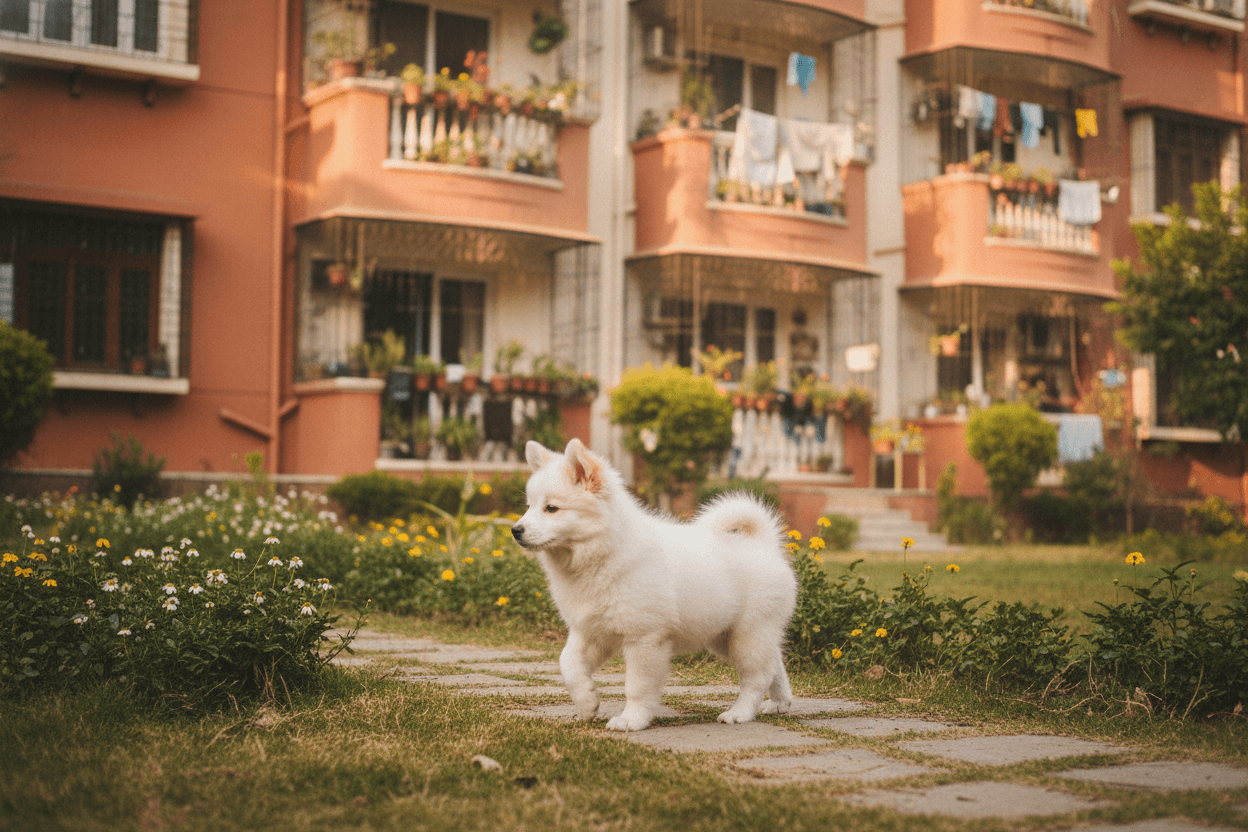
Designate one area as the puppy's home base before it arrives. In most Indian flats, a quiet bedroom corner or a cordoned-off section of the living room works well. Set up a crate or pen with bedding that has the breeder's scent. For the first three days, limit visitors to immediate household members only — no neighbors, no extended relatives, no domestic workers beyond the regular help who'll be present daily.
Write house rules down and share them with everyone. Sounds excessive? It isn't. The most common early training failure in Indian homes isn't a difficult puppy — it's the grandmother who lets the pup on the sofa 'just once,' or the driver who feeds it dal from the kitchen. One written list on the fridge prevents months of confusion. Key rules to decide before Day 1:
- Is the puppy allowed on sofas or beds — yes or no? There's no wrong answer, but pick one and stick to it
- Who feeds it, at what times, and what goes into the bowl — table scraps cause nutritional and behavioral problems
- Which rooms are off-limits — establish this before the puppy explores, not after
- What word does each family member use for the same commands — 'sit' and 'baitho' cannot both be the sit command
DodoDoggy Tip
Brief your domestic help specifically. Maids who silently clean up accidents without telling you are unknowingly teaching the puppy that accidents have zero consequences. Ask them to note the time and location of any accidents on a sticky note on the fridge. That data is genuinely useful for adjusting your supervision schedule.
The Science Behind the 8-16 Week Window (and Why Missing It Costs You Years)
Between 8 and 16 weeks, a puppy's brain files new experiences as 'normal' rather than 'threatening.' This isn't a training opinion — it's neurological. Research published in PMC (National Library of Medicine) found that puppies prohibited from exploring unfamiliar environments until after 14 weeks of age lose social flexibility permanently and often become fearful adults. The window doesn't partially close. It closes.
In Indian urban contexts, this matters enormously. Your puppy will spend its life around auto-rickshaws, street dogs barking through compound walls, Diwali firecrackers, wedding processions, vegetable vendors with loudspeakers, and domestic workers arriving at irregular hours. A puppy that isn't systematically exposed to all of this before 16 weeks will fear it forever.
There's also a first fear period between 8-10 weeks, identified by VCA Animal Hospitals. Anything that frightens a puppy during this window can become a permanent fear trigger without extensive desensitization work. Time your initial socialization experiences carefully — positive, brief, food-paired, and never overwhelming.
5 Commands in Order: What to Teach and When
Teach commands in this sequence. Each one builds on the last, and jumping ahead creates gaps that show up badly later.
| Command | Age to Start | Key Training Note |
|---|---|---|
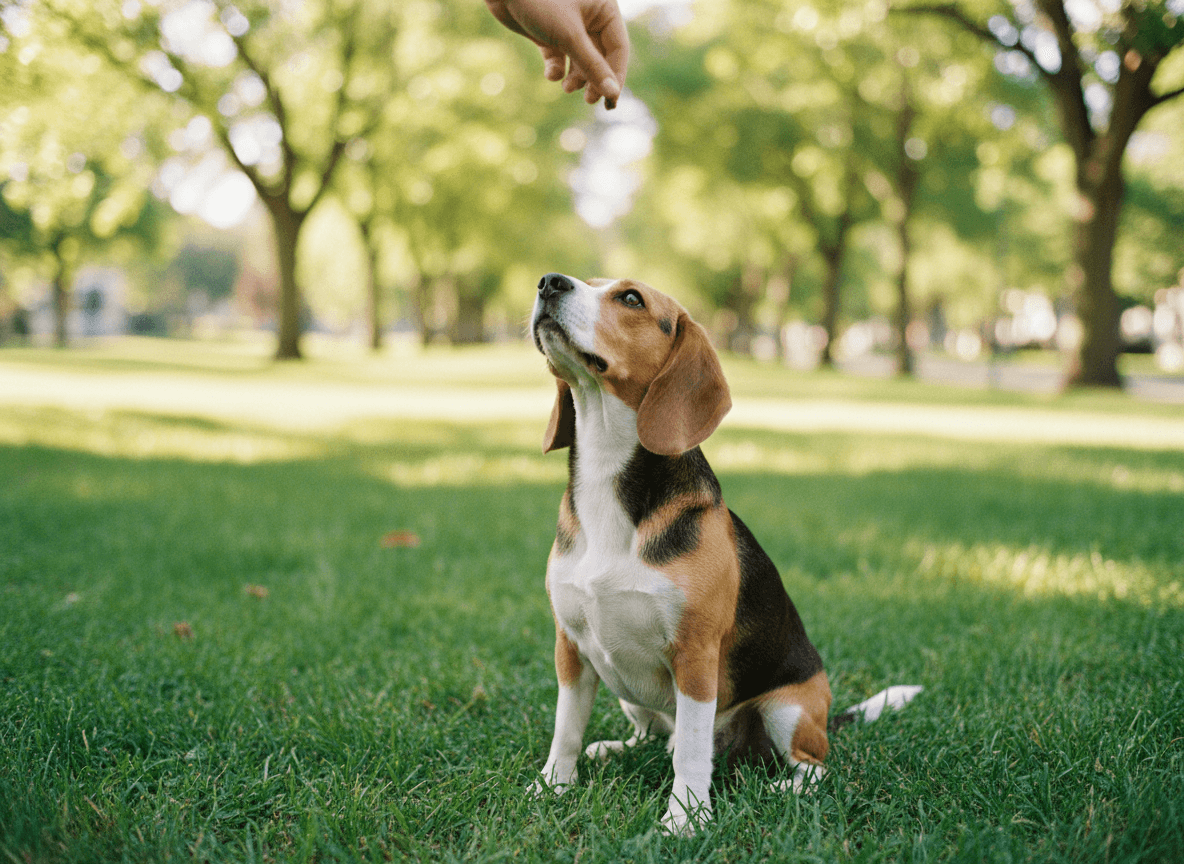
| Sit | 8 weeks | Lure with treat above nose, mark 'yes!' the moment bottom touches ground |
| Come (recall) | 8-9 weeks | Never call puppy to scold — one punishment poisons the recall cue permanently |
| Stay | 10-12 weeks | Build duration before distance. One second then reward, then two seconds, then five |
| Leave it | 10-12 weeks | Critical on Indian streets — chicken bones, garbage, and toxic plants everywhere |
| Down | 12-14 weeks | Harder for puppies; don't rush. Reward any downward movement at first |
Two 5-minute sessions per day outperform one 20-minute session every time. Train before meals, not after — a puppy that just ate has zero motivation. Mark the exact behavior with 'yes!' within one second of it happening, then deliver the treat. That one-second window is what creates the association. Missing it by three seconds teaches the puppy nothing useful.
High-value treats matter. Drools Absolute Bites or home-cooked chicken breast (roughly ₹60/100g boiled from any local market) work better than kibble for training. Save the best treats for the hardest commands and new environments. For basic sit repetitions at home, regular kibble is fine.
DodoDoggy Tip
Always end each session on a success. Before stopping, ask for something the puppy already knows reliably — sit, usually — and reward it. Puppies that consistently end sessions on success build positive associations with training itself, which makes every future session easier to start.
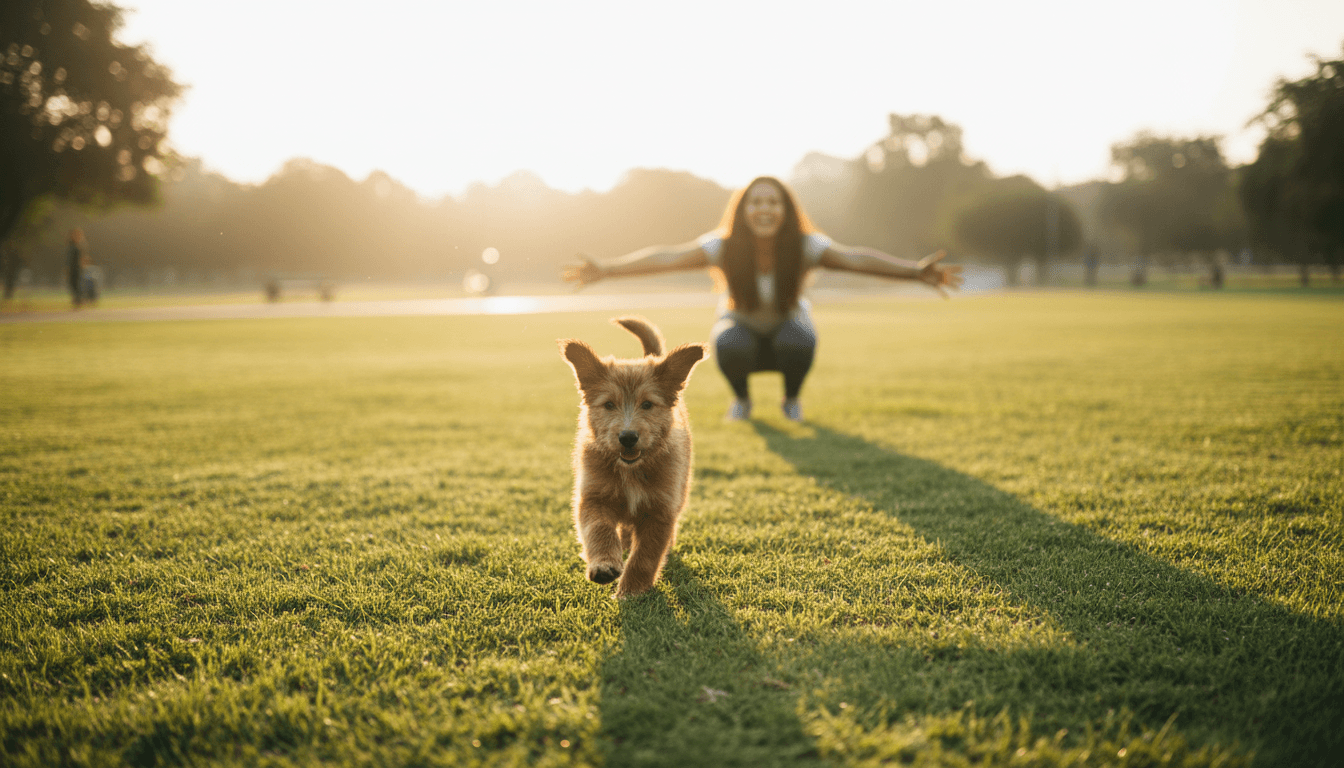
Potty Training in Indian Flats: The Two-Stage System
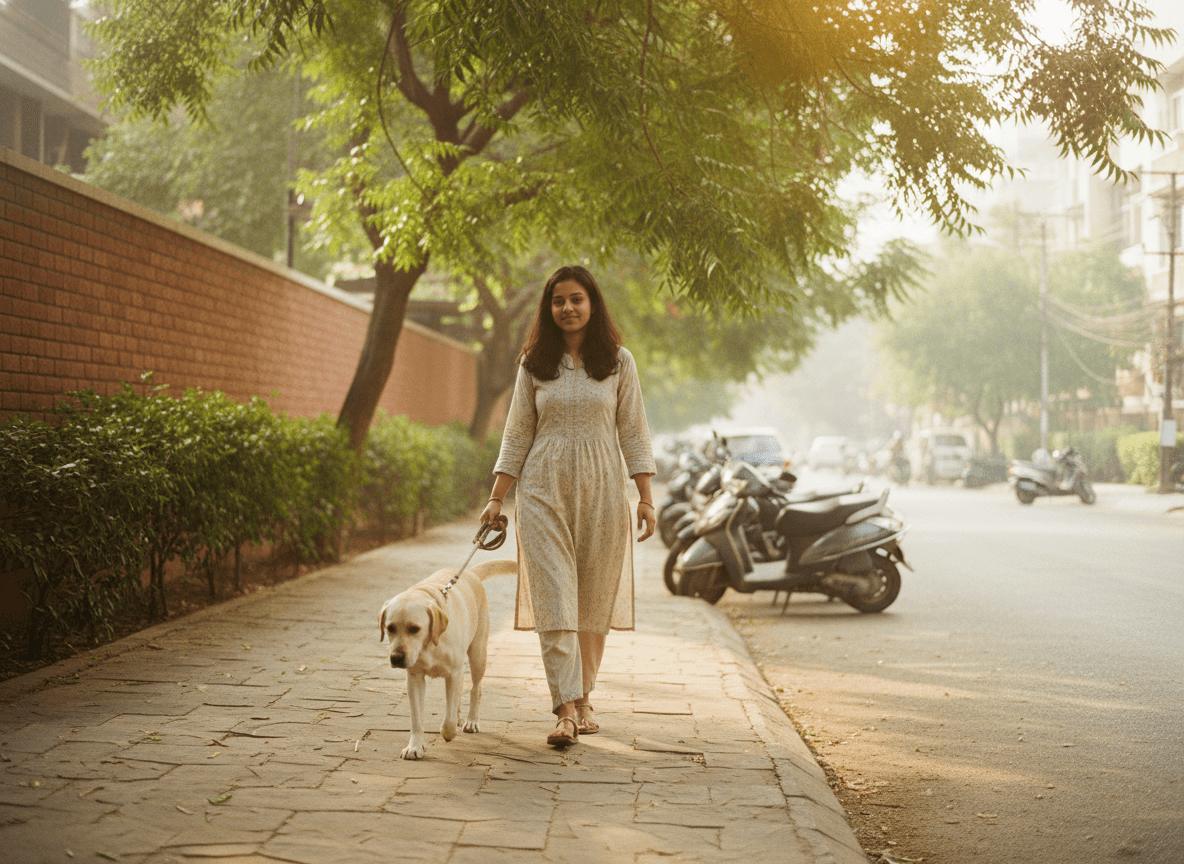
Standard potty training advice assumes a garden. Most Indian dog owners live in apartments with elevator rides between the flat and the street. A 10-week-old puppy cannot hold its bladder through a 4-minute elevator descent. Trying to train only outdoor elimination at this age leads to accidents in the lift, panic from the owner, and a confused puppy. For high-rise apartment protocols covering elevator and crate schedules, see the apartment house training guide.
The two-stage method works reliably. Stage one: train the puppy to use grass-type pads on the balcony. Brands like Paw Pads (available on Amazon India, roughly ₹350-₹600 for a pack of 30) have a grass scent that attracts puppies naturally. Take the puppy to the balcony pad immediately after every sleep, every meal, and every play session. Stage two: once the puppy is 14-16 weeks and has better bladder control, shift the pad toward the front door, then phase it out in favor of outdoor walks.
Monsoon complicates this significantly. From June through September, many owners skip outdoor sessions to avoid getting soaked — and puppies regress. A covered balcony station with a waterproof grass pad keeps the routine intact through the rainy season. For detailed steps specific to Mumbai high-rises and Chennai independent houses, our complete house training guide for Indian homes covers both layouts in full.
- Take puppy to pad every 2 hours during the day for the first 4 weeks — set a phone alarm if needed
- Fix meal times: free-feeding makes potty schedules completely unpredictable
- Confine to a pen when unsupervised — accidents happen in under 90 seconds when puppies roam freely
- Use enzymatic cleaner (Pee Away or similar, roughly ₹280-₹450 at Heads Up For Tails) to remove scent markers
- Never punish accidents — the puppy cannot connect the punishment to the act if more than 2 seconds have passed
Indie Dog Training: What's Different
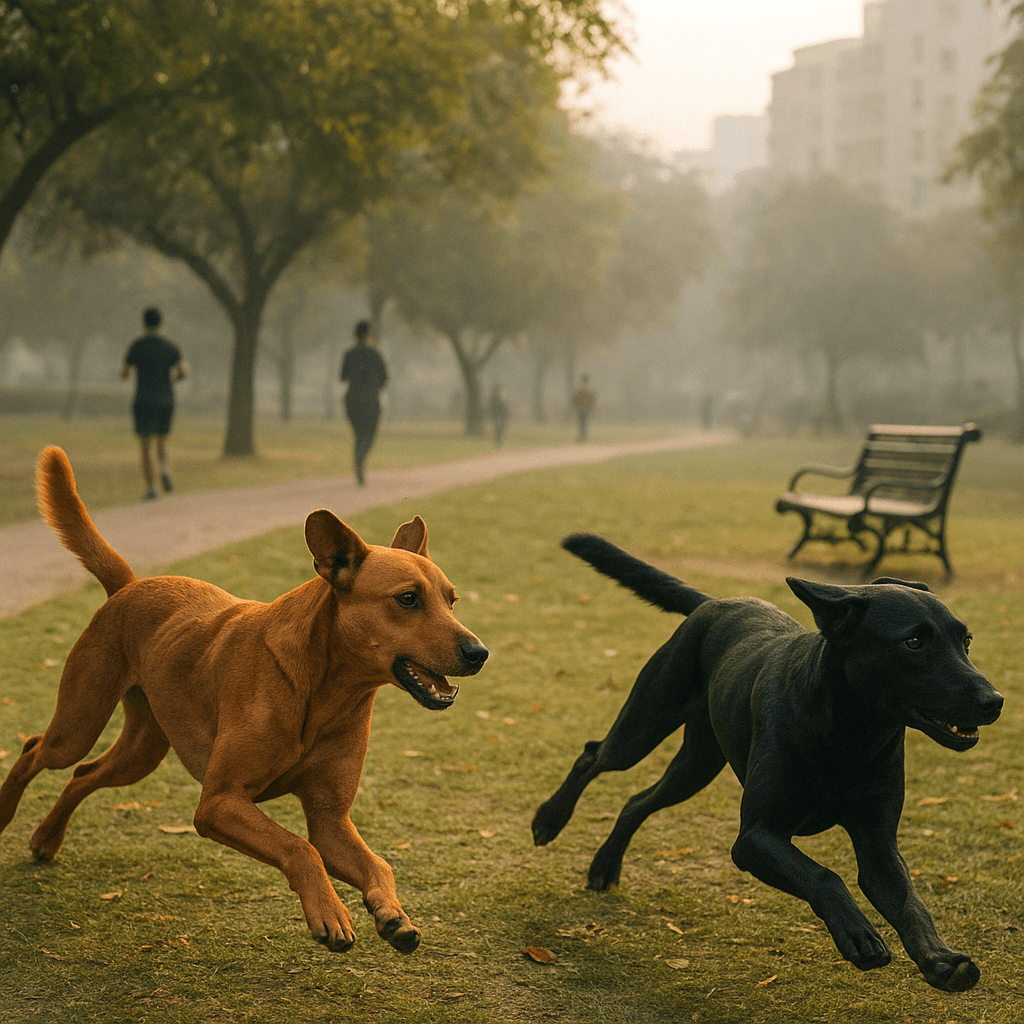
A lot of Indian puppy owners adopt Indie (Indian pariah) dogs, and they're often surprised when standard breed training advice doesn't quite fit. Indie puppies are sharp, food-motivated, and fast learners — but they're also independent thinkers that bore quickly with repetitive drilling.
Keep sessions shorter than you would with a Labrador: 3-4 minutes maximum per session, three times daily. Vary the rewards more frequently — chicken one session, Royal Canin treats the next, playtime the next. Indie dogs that aren't challenged mentally start problem-solving on their own, which usually means finding creative ways to open cabinets and raid the kitchen.
Indie puppies also house-train faster than most foreign breeds in Indian conditions. They've been observing human routines from generations of coexistence. My experience with street-rescued Indie pups in Chennai is that they typically achieve reliable indoor house training in 10-14 days versus 3-4 weeks for a Labrador puppy from a breeder. The secret is consistency, not repetition.
Bite Inhibition, Barking, Jumping: Fixing the Big Four Early
These four behaviors are completely normal puppy behavior. The mistake is treating them as personality problems rather than training opportunities. All four are hardest to address after 6 months — which is exactly when most owners decide to 'finally deal with it.'
Bite inhibition is the most urgent. When a puppy bites too hard during play, make a sharp 'ow' and immediately withdraw your hand and end play for 30 seconds. Do this consistently for 2 weeks and most puppies soften their bite noticeably. Puppies that learn bite inhibition before 16 weeks rarely cause serious bites as adults — and in Indian homes where children, elderly relatives, and domestic staff all interact with the dog regularly, this matters enormously.
For apartment owners specifically: neighbor complaints about barking are the leading reason dogs are surrendered in Indian cities. Treat barking as a Day 1 priority, not a 'we'll deal with it later' problem. Doorbell barking, boredom barking, and separation barking each need different approaches — our complete guide to stopping excessive barking covers all three patterns with step-by-step solutions.
- Jumping: turn completely away the moment paws leave the ground, give attention only when four paws are on the floor — instruct every visitor to do the same
- Chewing: provide 4 appropriate chew options (Kongs, Nylabone, bully sticks, rope toys) and puppy-proof by removing cables, shoes, and low furniture legs
- Night whining: place a worn T-shirt from your body in the crate; a ticking clock nearby mimics heartbeat and significantly reduces first-week anxiety
Seasonal Training Calendar: Summer, Monsoon, Winter
India's climate extremes aren't a minor inconvenience for dog training — they define the entire training schedule for half the year.
From March through June, outdoor training before 8am and after 6pm is non-negotiable. Temperatures in Delhi, Chennai, and Hyderabad regularly hit 42-44°C by mid-morning. Flat-faced breeds (Pugs, French Bulldogs, Shih Tzus, Lhasa Apsos) are at serious heatstroke risk in temperatures above 30°C. Signs of heat stress: excessive panting, drooling, reluctance to walk, confusion. If you see any of these, move inside immediately, offer water, and place a wet towel on the paws and belly.
Monsoon regression is the most common training setback I see in Indian puppy owners. The pup was making great progress on outdoor walks, then July hits and the owner skips three outdoor sessions in a row to avoid the rain. The puppy goes back to using the living room floor. A covered balcony station prevents this entirely. For dogs in Chennai or Mumbai where monsoon is especially intense, a waterproof grass mat (roughly ₹700-₹1,200 on Amazon India) on the balcony is one of the best investments you'll make.
| Season | Outdoor Session Window |
|---|---|
| Summer (Mar-Jun) | 5:30-7:30am and 6:30-8:00pm only |
| Monsoon (Jun-Sep) | Whenever it's not actively raining; covered balcony backup |
| Post-monsoon (Oct-Nov) | Flexible — good Diwali desensitization window |
| Winter (Dec-Feb) | Best training season; longer outdoor sessions, most alert and responsive |
For crate training during monsoon and summer months, the indoor routine becomes particularly important since outdoor exercise time shrinks. Puzzle feeders, sniff work, and indoor recall games replace some of the physical exercise to keep the puppy mentally stimulated.
What Puppy Training Actually Costs in Indian Cities
Professional training data from Superprof India shows average hourly rates around ₹2,546, though what you actually pay depends heavily on city, trainer experience, and whether it's group or private.
| Training Option | Cost Range |
|---|---|
| Group puppy class (8 sessions, metro) | ₹3,000 - ₹8,000 |
| Group puppy class (tier-2 cities) | ₹1,500 - ₹4,000 |
| Private trainer, per session | ₹500 - ₹2,500 |
| Full obedience program (12 weeks, group) | ₹8,000 - ₹20,000 |
| Training treats (Drools/Royal Canin), per month | ₹400 - ₹900 |
| Clicker (Amazon India or Heads Up For Tails) | ₹150 - ₹350 |
Group puppy classes provide something home training can't: controlled dog-dog socialization with supervision. For basic obedience, daily owner-led sessions are equally effective as professional training and far cheaper. Professional trainers add the most value for specific behavior problems — aggression, separation anxiety, resource guarding — after the foundation is already in place.
When choosing a trainer, ask directly about their methods. The Animal Welfare Board of India has explicitly flagged choke chains, pinch collars, and electric collars as tools that cause unnecessary pain. Any trainer who still uses them in 2026 is behind the science and behind the law. Our guide to choosing the right dog trainer in India has a full list of questions to ask before you pay a deposit.
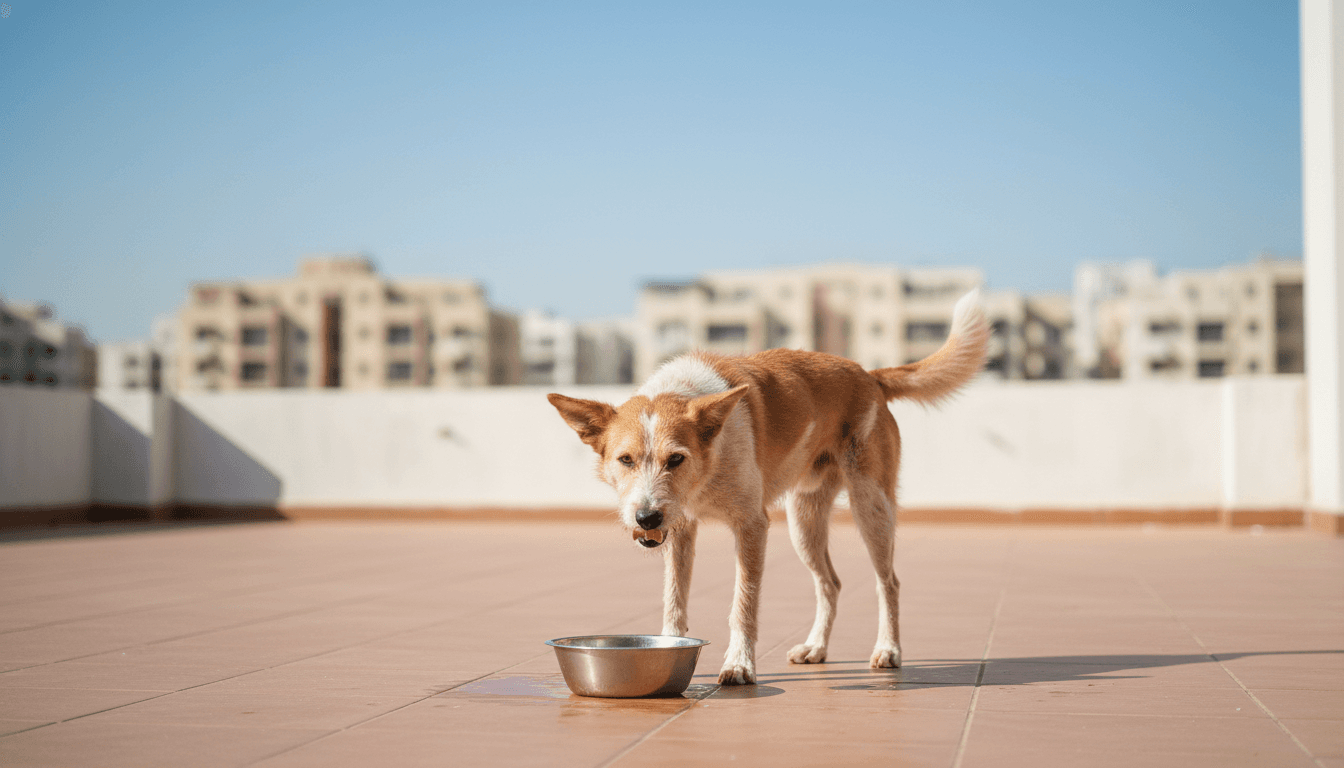
Your 6-Month Training Roadmap
Ten minutes of daily training in the first six months is worth more than six months of weekly classes with an inconsistent owner at home. Here's what to focus on, week by week.
| Timeframe | Priority Focus |
|---|---|
| Weeks 1-2 at home | House rules, crate introduction, potty routine, first vet visit |
| Weeks 3-4 (10-12 weeks) | Sit, come (recall), socialization experiences daily, bite inhibition |
| Weeks 5-8 (12-14 weeks) | Stay, leave it, down, leash introduction indoors |
| Weeks 9-12 (14-16 weeks) | Vaccinations complete — full outdoor socialization, first group class if available |
| Months 4-6 | Distance/duration on stay, loose-leash walking, impulse control games |
Track progress weekly against your own puppy's baseline. Progress is not linear — expect good weeks followed by apparent regression, especially during the second fear period around 5-6 months. This is normal developmental behavior, not training failure. Maintain the routine without adding new challenges during regression phases.
The basic training commands guide for Indian owners covers what comes after the puppy phase — heel, place, and impulse control. And once your dog is reliably trained at home, leash training for Indian streets deals specifically with the challenge of loose-leash walking past street dogs, food stalls, and heavy traffic.
If you're in Mumbai, costs vary significantly by neighbourhood — Ameya Society, Prabhadevi averages ₹89 while Borla, Union Park, Chembur runs around ₹1,044.