Key Takeaways
- Drools Adult guarantees 21-23% crude protein (BIS IS 13301 certified) using chicken meal and meat and bone meal. It's adequate for healthy adult dogs but no published digestibility or amino acid data exists.
- BIS IS 13301 requires only proximate analysis. AAFCO mandates amino acid verification across 9 nutrients and 26-week feeding trials. That regulatory gap matters more than most Indian pet owners realise.
- Daily cost for a 30kg Labrador: Rs 45-52 on Drools Adult vs Rs 170-200 on Royal Canin Labrador Adult. Annual gap: Rs 44,000-54,000.
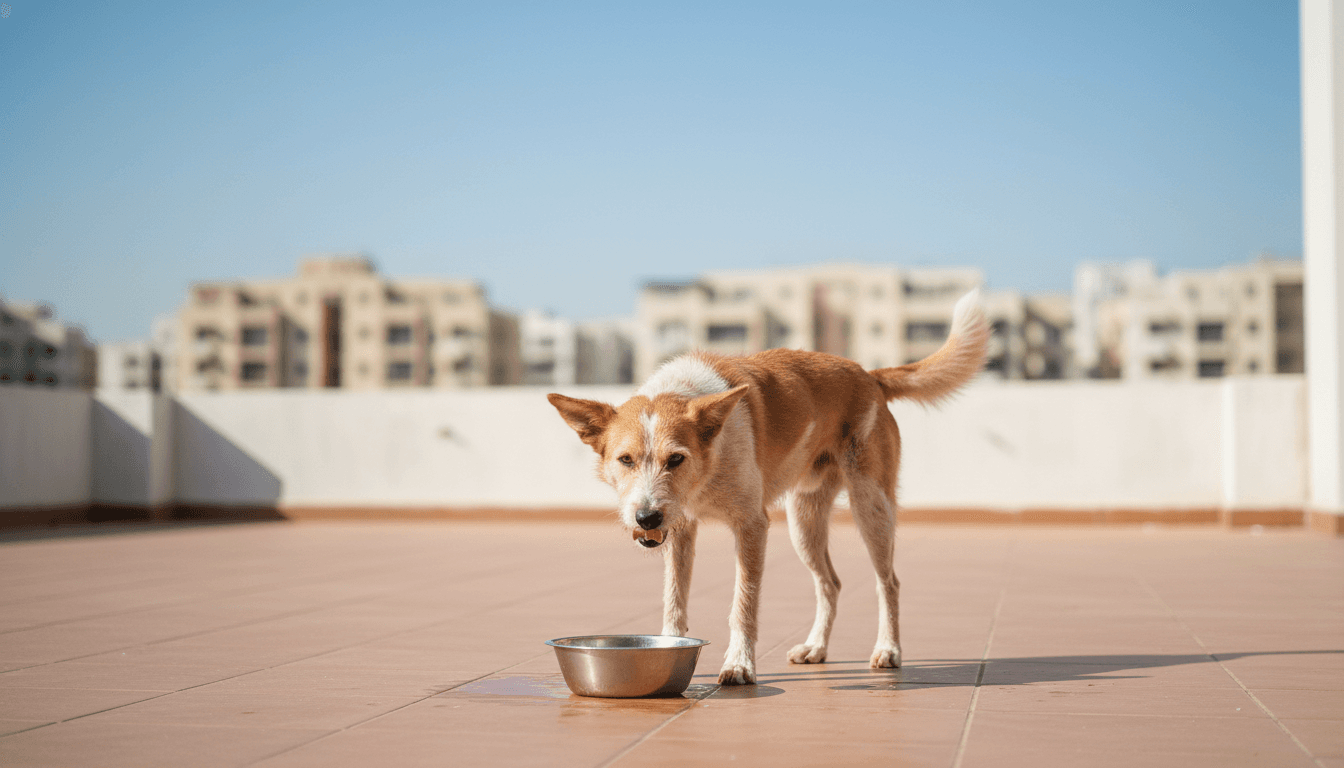
- Drools reaches Indian retail shelves in 30-45 days from production. Imported premium brands spend 75-150 days in transit and warehousing, often in non-temperature-controlled conditions during 35-42 degree Celsius summers.
- Drools is not appropriate for dogs with CKD, confirmed food allergies, giant breed puppies, or active working dogs requiring protein above 28% dry matter.
- A Rs 300-500 vet consultation plus a Rs 800-1,500 blood panel objectively determines whether your specific dog is thriving. This is more useful than any brand switch made without clinical data.
The Ingredient Decoder: What Chicken Meal, Meat and Bone Meal, and Maize on a Drools Bag Actually Deliver to Your Dog's Cells
The first ingredient on a Drools Adult bag is 'chicken meal.' Chicken meal is dehydrated, rendered chicken containing approximately 65% crude protein by weight, roughly three times the protein density of fresh chicken. The process combines whole carcass rendering: beak, feet, viscera, and muscle meat together. Under AAFCO standards, the species must be declared and 'meal' signals a rendered dry product. Under BIS IS 13301, the part composition within chicken meal doesn't need to be disclosed to Indian consumers.
Listed second or third by weight in Drools' standard adult line is 'meat and bone meal' (MBM), a generic non-species-specific protein source where animal origin is not disclosed on the label. AAFCO prohibits this unlabeled form, requiring at minimum 'poultry by-product meal' or 'pork by-product meal' to identify the species. BIS IS 13301 permits non-specific MBM without restriction. According to research published in the Journal of Animal Science, MBM rendered at high temperatures can lose 20-40% of lysine bioavailability while still meeting crude protein minimums on proximate analysis. That 21% protein figure on the Drools label may overstate the biologically usable protein your dog actually absorbs.
Maize (corn) rounds out the top three ingredients by weight in the standard adult line. The widely-repeated 'dogs can't digest corn' claim doesn't hold up: corn starch digestibility in dogs measures approximately 87%, and dogs produce sufficient pancreatic amylase to handle cooked corn starch at normal inclusion rates. The practical concern is different. Corn is the most common food allergen in dogs after chicken, which means Drools' top two ingredients are simultaneously the two most common canine food allergens.
Drools Focus, the premium sub-line, removes unspecified MBM entirely. Named proteins, specifically chicken meal and salmon meal, replace it, raising crude protein to 28-32%. Focus retails at Rs 2,200-2,800 for 6kg in India. That price narrows the gap with Royal Canin Medium Adult considerably, which changes the economic case for Drools depending on which product line is actually being evaluated.
One genuinely positive formulation decision across Drools' standard range: synthetic taurine supplementation. Taurine deficiency links to dilated cardiomyopathy (DCM), and the FDA's 2018-2020 DCM investigation elevated taurine as a marker of responsible formulation. Several Indian budget brands skip it entirely. Drools doesn't, and that proactive decision predates widespread industry awareness of the issue.
For more on apartments india — breeds ranked, see our apartments india — breeds ranked guide.
The Certification Gap: BIS IS 13301 vs AAFCO and Why India's Pet Food Standard Allows What Western Labs Would Flag
India's BIS IS 13301 and AAFCO share the same crude protein floor (18% minimum DM for adult dogs) but diverge sharply in what they require beyond that. AAFCO mandates compliance via one of two pathways: a 26-week controlled feeding trial with a minimum of 8 dogs following published AAFCO protocols, or a complete nutrient profile analysis verifying 37 essential nutrients including 9 amino acids (arginine, histidine, leucine, lysine, methionine-cystine, phenylalanine-tyrosine, threonine, tryptophan, and valine). According to BIS IS 13301, the Indian standard requires only proximate analysis, covering crude protein, fat, fiber, and moisture. No amino acid verification. No feeding trial.
FSSAI's 2020 regulations classify pet food under Schedule II, but oversight sits in a regulatory gap between agriculture and food safety ministries. All Indian pet food recalls are voluntary. There is no mandatory recall mechanism comparable to the US FDA's authority under the 2011 Food Safety Modernization Act. Drools has issued no major public recalls as of 2025, but the structural absence of mandatory reporting means adverse events are underreported industry-wide.
The WSAVA Global Nutrition Guidelines recommend asking any pet food manufacturer five specific questions before selecting their food: Does the brand employ a board-certified veterinary nutritionist? Have its foods undergone AAFCO or FEDIAF feeding trials? Does it publish digestibility data? Is manufacturing in-house or outsourced? Does it conduct post-market surveillance? Drools has not publicly answered questions 2 or 3, the two WSAVA considers most critical for verifying nutritional adequacy claims.
A food can meet BIS IS 13301's protein floor entirely from plant proteins, soybean meal or corn gluten, with sub-optimal amino acid profiles for dogs, without violating any Indian regulation. AAFCO's minimum of 0.43% lysine DM and 0.43% methionine-cystine DM cannot be reliably met from corn gluten alone at 18% total crude protein. BIS IS 13301 creates no mechanism to catch this deficiency.
India's pet food market was valued at approximately Rs 3,500-4,500 crore in 2024, growing at 20-25% annually. Yet India has fewer than 50 board-certified veterinary nutritionists compared to 700+ in the United States, for a comparable dog population. In Mumbai, Delhi, and Bangalore, most generalist vets lack access to specialist nutritional guidance, making ingredient label literacy more consequential for Indian pet owners than in markets with mature veterinary nutrition infrastructure.
For more on emergency contacts resources — directory, see our emergency contacts resources — directory guide.
Learn more in our detailed royal canin resource.
Drools vs competing brands available in India: daily cost, protein guarantee, and quality evidence for a 30kg adult Labrador Retriever. Drools Focus cost extrapolated from Rs 367-467/kg at 300-350g/day feeding volume. — Min Crude Protein, Taurine Supplemented
| Brand | Min Crude Protein | Taurine Supplemented |
|---|---|---|
| Drools Adult (standard) | 21-23% | Yes |
| Drools Focus (premium) | 28-32% | Yes |
| Pedigree Adult | 18-21% | No |
| Royal Canin Labrador Adult | ~26% | Yes |
| Hill's Science Diet Adult | ~25% | Yes |
Drools vs competing brands available in India: daily cost, protein guarantee, and quality evidence for a 30kg adult Labrador Retriever. Drools Focus cost extrapolated from Rs 367-467/kg at 300-350g/day feeding volume. — Standard, Daily Cost (30kg dog)
| Brand | Standard | Daily Cost (30kg dog) |
|---|---|---|
| Drools Adult (standard) | BIS IS 13301 | Rs 45-52 |
| Drools Focus (premium) | BIS IS 13301 | Rs 110-163 |
| Pedigree Adult | BIS IS 13301 | Rs 38-48 |
| Royal Canin Labrador Adult | AAFCO compliant | Rs 170-200 |
| Hill's Science Diet Adult | AAFCO compliant | Rs 180-220 |
Drools vs competing brands available in India: daily cost, protein guarantee, and quality evidence for a 30kg adult Labrador Retriever. Drools Focus cost extrapolated from Rs 367-467/kg at 300-350g/day feeding volume. — Feeding Trial Published
| Brand | Feeding Trial Published | |
|---|---|---|
| Drools Adult (standard) | No | |
| Drools Focus (premium) | No | |
| Pedigree Adult | No | |
| Royal Canin Labrador Adult | Yes | |
| Hill's Science Diet Adult | Yes (70+ years) |
The Rs 45 Per Day vs Rs 175 Per Day Equation: How to Calculate Drools' Real Cost Against What You Are Actually Buying
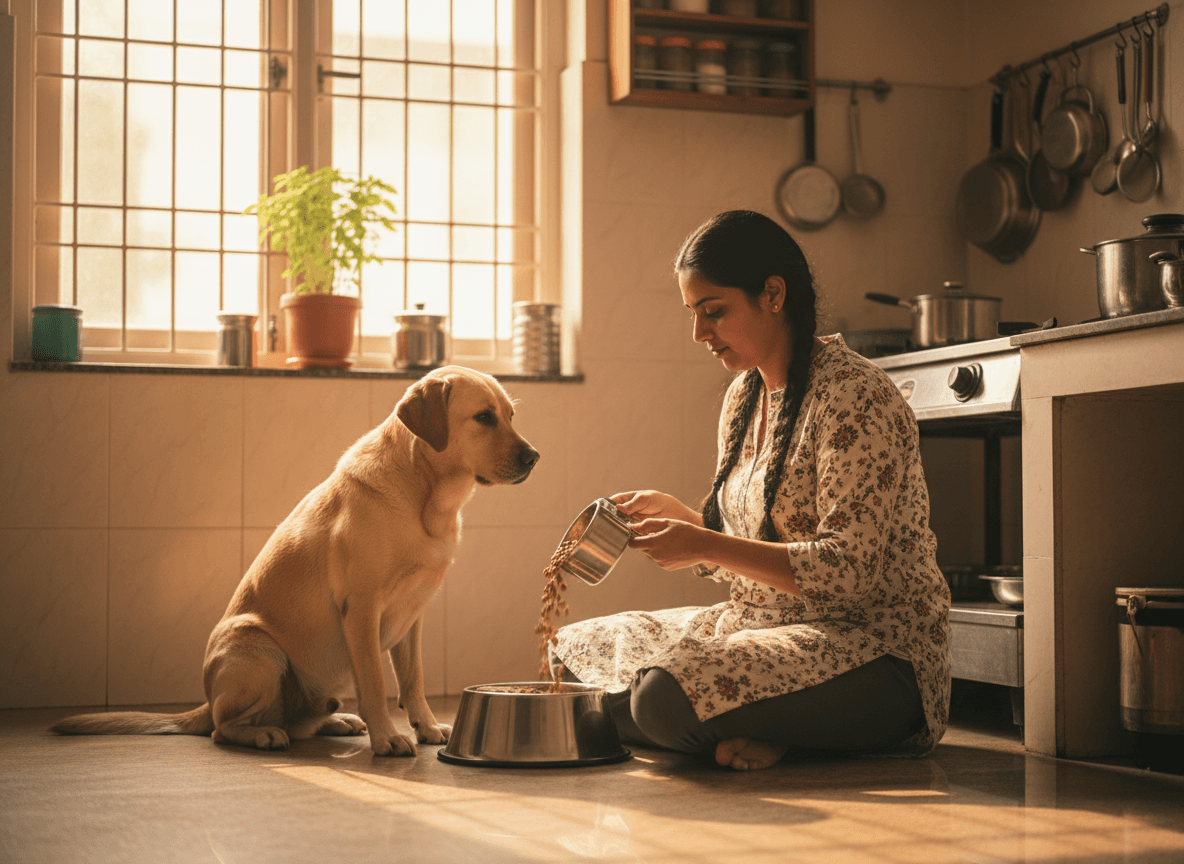
A 30kg Labrador Retriever needs approximately 300-350g of Drools Adult per day per the brand's own feeding chart. At Rs 1,800 for a 12kg bag (Rs 150 per kg), daily food cost runs Rs 45-52. The same dog on Royal Canin Labrador Adult 15kg (Rs 8,500-9,500, approximately Rs 567-633 per kg) costs Rs 170-200 per day. Annual savings on Drools: Rs 44,000-54,000, enough to fund three to four complete veterinary wellness checkups including a full blood panel, fecal parasite test, and annual vaccines at any Indian clinic.
Comparing per-100-kcal cost narrows the picture further. Drools Adult runs Rs 7-9 per 100 kcal; Royal Canin Medium Adult costs Rs 28-35. Adjusting for digestibility narrows the gap again. Royal Canin's published digestibility runs 85-88%; corn-heavy budget foods estimate 75-82%. The real premium for equivalent delivered nutrition is closer to 2.5x, not the 4x implied by the bag price alone. That's still a significant premium for households already managing annual vet bills.
Drools Focus at Rs 367-467 per kg feeds a 15kg Indie dog approximately 180g per day at Rs 66-84 per day. Royal Canin Medium Adult for that same dog costs approximately Rs 60-75 per day at India retail prices. At this size, Focus offers no meaningful cost advantage over Royal Canin while providing less documented quality assurance. The economics of Drools work most strongly for the standard adult line on large-breed dogs, not the premium Focus line on medium breeds.
India's customs structure adds 30% basic duty plus 5% GST on imported pet food, inflating foreign brands by 35-40% over source-country pricing. Royal Canin Medium Adult retails in France at approximately Rs 3,700-4,200 for 15kg but costs Rs 8,500-9,500 in India, a 110-120% markup. A portion of what Indian pet owners pay for imported food is customs policy, not ingredient quality.
At the budget tier, Pedigree Adult 3kg sells for Rs 450-530, nearly identical to Drools Adult 3kg at Rs 500-600. Drools' guaranteed crude protein of 21-23% measurably exceeds Pedigree Adult's 18-21% at comparable prices, with taurine supplementation added. For budget-constrained households choosing between the two at similar prices on Amazon or Flipkart, Drools is the technically stronger option.
For more on traveling india, see our traveling india guide.
For more on get new puppy — checklist, see our get new puppy — checklist guide.
Learn more in our detailed health resource.
The Highest-ROI Move Before You Switch Brands
Don't switch dog food brands based on marketing or online debates. A Rs 300-500 vet consultation for a body condition score assessment, plus a Rs 150-300 fecal test and Rs 800-1,500 basic blood panel at any Indian city clinic, will objectively tell you whether your dog's current diet is adequate. A dog scoring 4-5 out of 9 on body condition, with normal albumin levels and no GI symptoms, is being fed adequately regardless of which brand is in the bowl. For more on flying india, see our flying india guide. For more on keep husky chennai? realistic, see our keep husky chennai? realistic-guide) guide.
The Clinical Map: Exact Breeds, Life Stages, and Conditions Where Drools Is Not Enough
Dogs with confirmed or suspected food allergies, presenting as chronic otitis externa, recurrent paw licking, skin infections, or chronic GI upset, require elimination diet trials using a truly novel protein and carbohydrate source not previously encountered. Since chicken and corn are Drools' primary ingredients, and these are the two most common canine food allergens, Drools is contraindicated during any food allergy diagnostic workup. High-allergy-risk breeds disproportionately common in Indian urban populations include Labrador Retrievers, Golden Retrievers, Cocker Spaniels, and Boxers, all heavily concentrated in Mumbai, Delhi NCR, and Bangalore.
Chronic kidney disease (CKD) requires phosphorus restriction, typically below 0.4-0.5% dry matter for IRIS Stage 2+ disease, because phosphorus retention is the primary dietary driver of CKD progression. Drools' standard adult formula contains meat and bone meal, which is inherently high in phosphorus (bone mineral is approximately 20% phosphorus by dry weight). Drools does not publish its phosphorus content on product labels or its website. Hill's Prescription k/d remains the clinical standard for CKD phosphorus restriction at Indian veterinary hospitals, and Drools has no equivalent therapeutic offering.
Giant breed puppies, including Great Dane, Saint Bernard, Cane Corso, and Tibetan Mastiff, require calcium:phosphorus ratios strictly within 1.2:1 to 2.0:1 and calcium not exceeding 3.0% dry matter to prevent developmental orthopedic disease (DOD) including hypertrophic osteodystrophy, osteochondrosis dissecans, and hip dysplasia. Drools Puppy formula does not publish its calcium percentage or Ca:P ratio. As giant breed ownership grows among affluent urban households in Indian cities, this undisclosed data is a clinically meaningful gap that warrants a conversation with a veterinary nutritionist before use.
Dogs in sustained high-activity work, including police dogs, IPO/Schutzhund competitors, and agility dogs from the growing Bangalore and Delhi NCR dog sport communities, require protein above 28-30% dry matter and fat above 15-20% during active training phases. Drools' standard adult line at 21% protein and 10% fat falls below these thresholds. Focus at 28-32% protein meets the protein requirement, but its fat content of 12-15% may still be insufficient for extreme endurance demands.
Senior dogs (7 years and older for medium breeds, 5 years for giant breeds) benefit from three specific nutritional adjustments: controlled phosphorus for renal protection, supplemental EPA/DHA for cognitive and joint support, and increased digestible protein to counter sarcopenia. Drools doesn't offer a dedicated senior formula with published phosphorus restriction or omega-3 supplementation targets. Pet owners whose dogs are entering senior years on the standard adult formula are likely underserving the nutritional needs of an aging dog.
For more on neuter india? benefits costs, see our neuter india? benefits costs guide.
For more on beds 2026 — buying size, see our beds 2026 — buying size guide.
The Honest Verdict: What 4.2 Stars on Amazon India and Zero Published Feeding Trials Together Actually Confirm
Drools holds 4.1-4.3 stars across tens of thousands of verified Amazon India purchases, a meaningful real-world signal. Negative reviews cluster around three patterns: loose stools in dogs switched abruptly from table scraps (a transition management issue, not a formula defect), packaging seal failures allowing moisture ingress (a manufacturing quality control issue), and occasional batch-to-batch variation in colour and smell (a supply consistency issue). None of these point to systemic nutritional inadequacy in otherwise healthy dogs. Drools has not published peer-reviewed feeding trial data, digestibility coefficients, or amino acid bioavailability studies as of 2025. Hill's Science Diet has 70+ years of peer-reviewed research behind its formulas. Royal Canin publishes breed-specific digestibility studies. Even mid-tier brands like Arden Grange publish crude digestibility data. The absence of published science means Drools' nutritional adequacy claims rest entirely on BIS certification and aggregate consumer experience, two data sources that cannot detect subclinical deficiencies developing over months or years. For the most common Indian use case, a healthy adult Indie dog or robust breed (Labrador, German Shepherd, Beagle) with no known health conditions, fed Drools Adult with a proper 14-day transition (old-to-new ratios of 7:1, then 3:1, then 1:1, then 0:1) at appropriate daily volumes, the majority of dogs will maintain healthy coat condition, firm stools, and stable body weight. This satisfies the 'adequate for a healthy adult dog' threshold. It doesn't constitute optimal nutrition, and that distinction becomes clinically meaningful only under disease conditions, breed-specific vulnerabilities, or performance demands. Drools is most defensible for: healthy adult Indie dogs with no diagnosed allergies or organ disease; multi-dog households where feeding premium food to three or more large dogs is cost-prohibitive (annual savings of Rs 1,20,000-1,80,000 for three large dogs); dogs transitioning off table scraps where any balanced commercial food is a net nutritional improvement; and rescue operations and shelters with fixed budgets. It's least defensible for puppies of giant breeds, dogs with diagnosed CKD or food allergies, and senior dogs requiring age-specific nutritional modifications. The single highest-ROI action for any Drools user questioning food adequacy is not an immediate brand switch. A Rs 300-500 veterinary consultation for a body condition score assessment, plus a Rs 150-300 fecal test and Rs 800-1,500 basic blood panel available at most Indian city clinics, will objectively determine whether the current food is adequate for that specific dog's metabolism. A dog scoring 4-5 out of 9 on body condition, with normal albumin and no GI symptoms, is being fed adequately regardless of the brand. For more on choose store india — owners, see our choose store india — owners guide. You'll find good options at Delhi dog kennel | puppies for sale in delhi | dog sale in delhi | pet shop near me | poodle puppy | shihzu in Rashid Market, Geeta Colony, Delhi — rated 5.0/5 by pet owners. You'll find good options at Heads Up For Tails Pet Store - Orion Mall, Bengaluru in West, Malleshwaram, Bengaluru — rated 5.0/5 by pet owners.
You'll find good options like Delhi dog kennel | puppies for sale in delhi | dog sale in delhi | pet shop near me | poodle puppy | shihzu in Rashid Market, Geeta Colony — rated 5.0/5. Check our pet stores in Delhi directory for more choices near you.
You'll find good options like Heads Up For Tails Pet Store - Orion Mall, Bengaluru in West, Malleshwaram — rated 5.0/5. Check our pet stores in Bengaluru directory for more choices near you.

Frequently Asked Questions
What does 'chicken meal' in Drools actually mean for my dog's protein quality?
Is BIS IS 13301 certification enough to trust that Drools is nutritionally complete for my dog?
How do I calculate whether Drools is actually saving me money compared to Royal Canin?
Does Drools' Indian manufacturing give it any real advantage over imported premium brands?