Key Takeaways
- India's 30% basic customs duty on imported pet food (HSN 23091000) makes Royal Canin 40–50% more expensive than equivalent Western market prices — this is structural, not retailer markup
- Royal Canin Veterinary Diet is clinically justified for dogs with kidney disease, urinary crystals, or severe allergies; the consumer range requires more scrutiny of its value proposition
- Indian Pariah Dogs have no dedicated Royal Canin formula and often do equally well on balanced homemade food at less than half the monthly cost
- Online platforms like Supertails and Amazon India typically offer 8–15% savings over offline pet stores, with city-wise pricing varying significantly across India
- A 50/50 blend of Royal Canin and veterinary-supervised homemade food is the pragmatic middle path for cost-conscious Indian dog owners
Introduction
Is Royal Canin worth the price for Indian dogs? That's the question every pet parent eventually faces — usually at 11pm, staring at a ₹7,500 bag of kibble on Amazon and wondering if they're being sold a very expensive story. The honest answer depends heavily on your dog's breed, health status, and the city you live in. It's not a clean yes or no.
India's 30% basic customs duty on imported pet food under HSN 23091000 changes the math entirely. Per eximguru.com's Indian Customs Tariff database, the same Royal Canin bag that costs the equivalent of ₹4,000 in France lands at ₹7,500–₹8,500 on Indian shelves. That's not a retailer markup. That's structural. Understanding why Royal Canin costs what it does here is the first step to deciding whether it's actually worth it for your specific dog.
I've spoken with pet parents from Delhi to Hyderabad, from Labrador owners in Bengaluru to INDog rescuers in Chennai. The answer is rarely the same twice. So let's break it down honestly — by pricing, by breed, by health condition, and by what Indian vets are actually saying in 2026.
Why Royal Canin Costs So Much More in India
The single biggest driver? India's 30% basic customs duty on imported pet food. That alone adds a significant premium before the product even reaches a distributor. But it's more complicated than just one tariff.
Royal Canin operates one manufacturing facility in India — in Hyderabad. Basic size-range SKUs like Medium Adult are increasingly made domestically. But the premium lines — breed-specific formulas, Veterinary Diet products — are still imported from France or the Netherlands. The import duty hits hardest precisely where the price is already highest.
Then there's currency. The INR/EUR exchange rate fluctuates annually, and Royal Canin's Indian pricing doesn't update monthly — it resets in batches. The lag means you're often paying for last quarter's exchange rate, not today's. Between 2021 and 2024, according to India's pet food market research compiled by Mordor Intelligence, the premium pet food segment grew over 20% annually — while imported brands absorbed significant rupee depreciation costs that compounded into retail price increases of 15–20% over that period.
The Hyderabad plant has reduced import dependency for standard size-range SKUs. But the breed-specific and prescription lines that Indian pet parents most often want remain imported goods. That price gap versus Western markets is structural — and it's unlikely to close without significant expansion of domestic manufacturing capacity. If you're comparing food options for a new dog, the homemade vs commercial dog food guide breaks down the real cost difference across feeding approaches.
You might also find our comparison guide helpful.
Royal Canin Prices Across Indian Cities in 2026
Not all Indian cities pay the same price — and the variance is more significant than most pet parents realize. Hyderabad and Bengaluru consistently come out cheaper than Delhi and Mumbai. The Hyderabad manufacturing plant shortens distribution chains for domestically produced SKUs, and Bengaluru's proximity to major logistics hubs helps compress offline margins too.
Online is almost always the smarter buy. Amazon India and Supertails typically run 8–15% below standalone pet stores — which translates to ₹600–₹1,200 savings on a single 15kg bag. Over a year of consistent purchases, that's ₹7,000–₹14,000 back in your pocket. It's genuinely worth setting up an auto-delivery subscription on Supertails for the loyalty discount on top of the base discount.
The Tier-2 availability problem is real, especially for the Veterinary Diet range. Royal Canin's prescription line is rarely stocked at general pet stores in cities like Indore, Coimbatore, or Nagpur. Most owners in these cities rely on online delivery with a 2–5 day window. Keep at least a two-week buffer stock if you're on a Veterinary Diet formula and not in a metro.
Learn more in our detailed breeds resource.

Is Royal Canin the Right Fit for Your Dog's Breed?
This is where Royal Canin's value proposition gets genuinely interesting — and genuinely frustrating, depending on which dog you have.
Royal Canin's breed-specific formulas are real science, not just clever packaging. The Labrador Retriever formula includes L-carnitine for weight management — and if you've owned a Lab in India, you already know that weight management is a constant battle. They'll eat until they physically can't. The German Shepherd formula contains a specific prebiotic fiber blend (beet pulp and FOS) shown to improve fecal quality and digestive health. The kibble shapes are engineered for each breed's jaw structure to encourage proper chewing rather than gulping.
But — and this is a significant but — Royal Canin has zero formula specifically designed for the Indian Pariah Dog (INDog). India's most genetically distinct and numerically dominant dog breed is completely absent from their breed-specific lineup. INDog owners typically get pointed toward a medium-breed adult formula as the closest workaround. It's not harmful, but it's an imprecise nutritional match for a breed with 15,000 years of distinct evolutionary adaptation on the subcontinent.
There's also a climate factor that doesn't get nearly enough attention. Royal Canin's dry kibble formulations were developed for temperate European conditions. If you've been thinking about which dog breeds handle India's heat best, the same climate logic applies to how you store and use their food. Opened bags in Indian summer — 40°C+ across north India and the Deccan plateau — accelerate fat oxidation significantly faster than the packaging guidelines account for. Not a problem if you're finishing the bag within 3–4 weeks. A real concern if a large household is stretching a 15kg bag over 6–8 weeks.
For new owners still weighing which breed suits Indian conditions, the Indian vs foreign dog breeds comparison covers adaptability, cost, and climate fit across popular choices.
Royal Canin vs. Homemade Dog Food for Indian Households
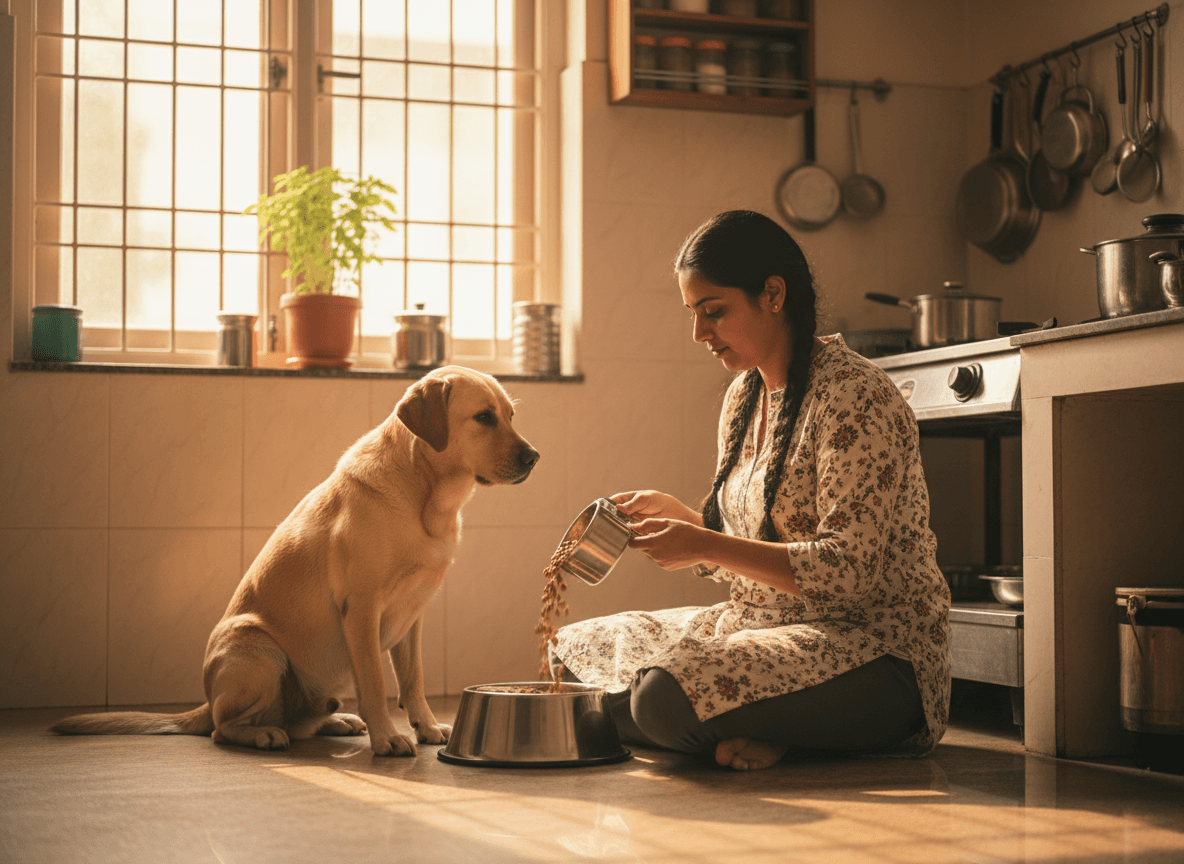
Here's what pet food marketing really doesn't want you thinking too hard about: homemade dog food, done properly, is nutritionally competitive with Royal Canin at roughly half the monthly cost.
The math for a 25kg dog is straightforward. Rice + chicken + seasonal vegetables + a veterinary calcium-vitamin supplement runs ₹3,000–₹5,000 per month. Royal Canin for the same dog is ₹7,000–₹9,000. The gap is real. And it compounds over a 12–15 year dog lifetime into a number that makes you sit down for a moment.
The caveat — and this matters enormously — is 'done properly.' The WSAVA Global Nutrition Guidelines explicitly state that homemade diets formulated without veterinary nutritionist input consistently show nutritional inadequacies, with calcium deficiency among the most common problems in well-intentioned homemade-only households. Your vet gets the final say on the exact supplementation protocol. Our are dog vitamins necessary in India guide covers what supplements most Indian vet nutritionists actually recommend.
Monsoon is where Royal Canin earns real points over homemade prep. At 85–95% humidity in coastal cities — Mumbai, Chennai, Kochi — homemade food spoils within hours if left in the bowl. Royal Canin's sealed packaging maintains integrity significantly longer in storage. Even opened bags, kept in an airtight container in a cool spot, hold for 3–4 weeks without the spoilage risk that homemade food carries at peak humidity. The monsoon pet care guide for India has practical storage tips for the rainy season.
Veterinary consensus is shifting. Balanced homemade food plus a quality veterinary supplement is increasingly the recommendation for young, healthy dogs with no diagnosed conditions. That's a meaningful shift from a decade ago, when branded kibble was the default answer to almost every nutrition question.
Learn more in our detailed owner resource.
Royal Canin Veterinary Diet vs. Regular Consumer Range
This is the most important distinction that gets completely lost in Indian pet owner discussions — on forums, in WhatsApp groups, on Reddit. I want to be direct about it.
Royal Canin Veterinary Diet and Royal Canin's regular consumer range are not the same product category. Not even close.
The Veterinary Diet line — Renal, Hepatic, Urinary S/O, Gastrointestinal — requires a prescription in India. These are clinically validated therapeutic formulas for dogs with specific diagnosed conditions. The International Renal Interest Society (IRIS) guidelines, the globally recognized standard for managing chronic kidney disease in dogs, specifically recommend phosphorus-restricted commercial renal diets starting from CKD Stage 2 — and Royal Canin Renal is among the most widely cited and stocked options in Indian veterinary clinics. For a dog with chronic kidney disease, the Renal formula isn't a lifestyle upgrade. It's a medical intervention. See the IRIS staging guidelines on iris-kidney.com for the clinical basis.
The regular consumer range — breed-specific, size-specific, life-stage formulas — is a different conversation entirely. It's good food. It meets FEDIAF and AAFCO standards. But healthy dogs eating it don't have the same clinical evidence base justifying the premium spend.
The price gap reinforces this separation. Veterinary Diet runs 30–40% more expensive than equivalent consumer SKUs per kilogram. Royal Canin Renal dry food sits at ₹650–₹750 per kg — and it's often the only clinically validated renal diet stocked in Indian veterinary clinics, including in Tier-2 cities. In that narrow clinical context, it's genuinely irreplaceable. If you're managing a dog with kidney or urinary issues, the vet costs guide for India in 2026 will help you budget the full treatment picture.
You might also find our neuter dog? benefits, costs, guide helpful.

When Royal Canin Is Worth It — And When It Is Not
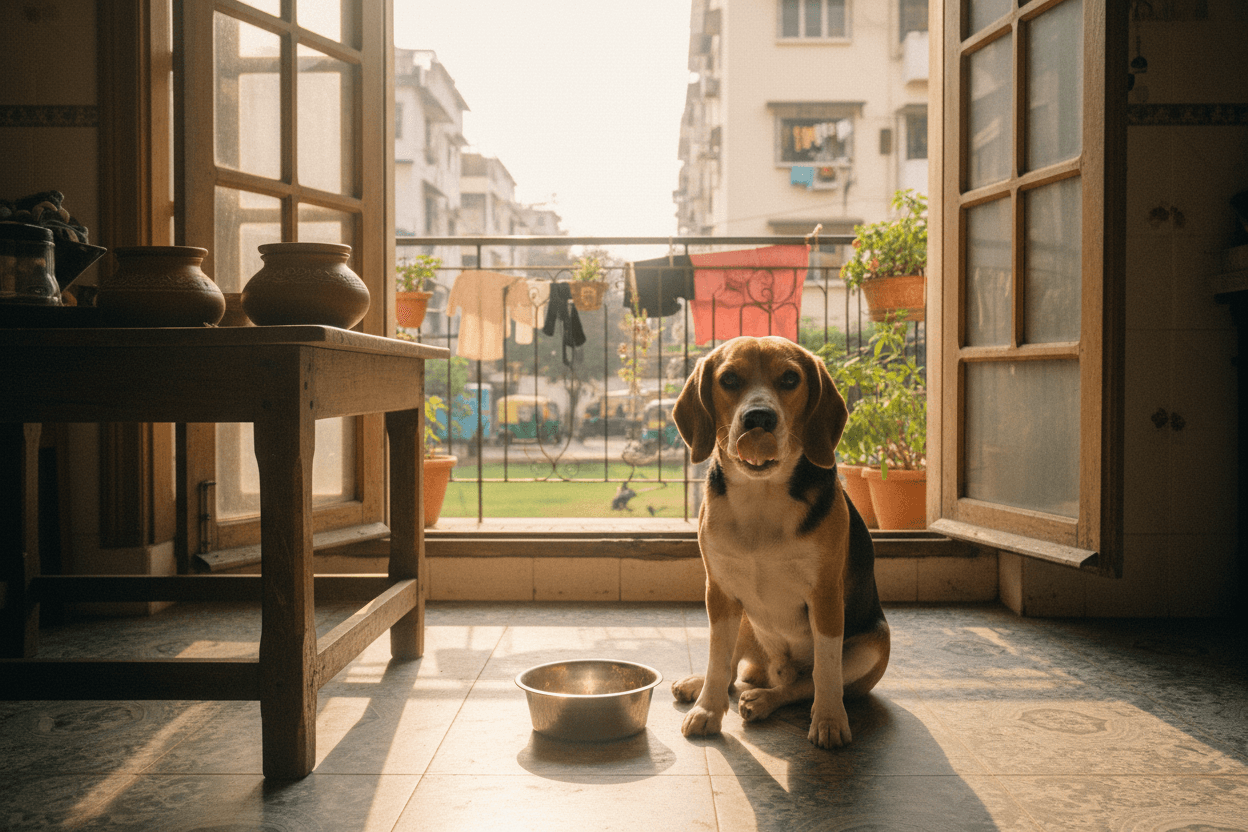
Worth it or not? The answer splits cleanly once you ask the right questions about your specific dog rather than treating it as a general lifestyle brand decision. For dogs with diagnosed conditions requiring Veterinary Diet, the answer is yes without qualification. For popular breeds like Labradors, German Shepherds, and Beagles — where breed-specific formulas address real clinical needs like joint health, weight control, and digestive support — the premium is justifiable for owners who can sustain the spend. For busy urban households in Delhi or Mumbai where consistent, palatable, high-quality food matters more than cost optimization, Royal Canin is a reasonable and defensible choice. For healthy INDogs thriving on balanced homemade food? Probably not worth it. For multi-dog households where ₹8,000+ per dog per month simply isn't sustainable? Definitely not. Budget pressure that leads to inconsistent feeding is far more harmful to a dog's health than switching to a quality mid-tier alternative. If you're exploring Drools as a lower-cost Indian-made alternative, the honest India review of Drools is worth reading before you switch. The middle path is genuinely underrated. A 50/50 blend — Royal Canin kibble with homemade rice and chicken — reduces monthly spend by roughly 40% while maintaining palatability and nutritional baseline. Indian vets I've spoken with are broadly supportive for healthy adult dogs with no specific conditions. For more on wet food vs dry food for dogs, that comparison article covers mixing strategies in more detail. Premium alternatives worth shortlisting: Farmina N&D and Arden Grange run 15–25% cheaper per kg than Royal Canin with genuinely strong ingredient profiles. For budget-conscious owners of healthy adult dogs, Pedigree Pro Adult is widely recommended by Indian veterinarians as nutritionally adequate at approximately 60% lower monthly cost.
You'll find good options like Akshaya Pet Clinic in Tulasi Nagar, Aditya Nagar, Kukatpally — rated 4.8/5. Check our pet stores in Hyderabad directory for more choices near you.
You'll find good options like Dr. Palampalle's Pet Care Clinic in Pratikhsha Nagar, Sion East, Sion — rated 5.0/5. Check our pet stores in Mumbai directory for more choices near you.