Key Takeaways
- Chicken protein — not grain — causes 60-70% of confirmed food allergies in Indian dogs, yet it's the base ingredient in Pedigree, Drools, and most sub-Rs 500/kg kibble
- An 8-12 week strict elimination diet using novel protein (duck, rabbit, or fish) is the only reliable diagnostic; IgE blood panels cost Rs 3,500-8,000 but produce frequent false results
- Hypoallergenic kibble runs Rs 1,200-3,750/kg in India: Royal Canin Hypoallergenic HP at Rs 5,800-7,500 for 2 kg vs Farmina N&D Quinoa Skin & Coat at Rs 3,500-4,200 for 2.5 kg
- Total diagnosis-to-management cost for a medium dog: Rs 20,000-60,000 over 3-6 months, including 3-4 vet visits and specialty food
- Home-cooked elimination diets (boiled duck + sweet potato) cut food costs 40-60% but require veterinary nutritional balancing
- Year-round itching with no seasonal variation is the single strongest indicator separating food allergy from atopic dermatitis
Skin Signs That Point to Food Rather Than Environment
Food allergies in dogs don't look like human allergies. No sneezing, no watery eyes. The immune response targets the skin and gut instead. The pattern is specific: non-seasonal itching concentrated around paws, groin, armpits, and ear canals.
The distinction from environmental allergy (atopy) matters because treatment is completely different. Atopy responds to antihistamines, Apoquel (oclacitinib), or Cytopoint injections. Food allergy responds only to removing the trigger protein. Three signs that push diagnosis toward food allergy over atopy:
- Symptoms persist identically through Delhi's dry winter and Mumbai's humid monsoon — no seasonal fluctuation
- Recurring ear infections with thick brown-yellow discharge and a yeast smell, cycling every 4-8 weeks despite treatment
- Concurrent digestive problems: soft stools, intermittent vomiting 1-3 hours post-meal, excessive flatulence
- Antihistamines and short steroid courses provide only partial or temporary relief
- Onset at any age, but most commonly between 1-5 years, after months or years of eating the same protein
Vet Alert
Apoquel (Rs 120-180 per tablet) and Cytopoint injections (Rs 3,500-6,500 per dose) manage itch symptoms but do not treat the underlying food allergy. If symptoms return fully within days of stopping medication, pursue an elimination diet rather than indefinite immunosuppression.
Protein Triggers in Indian Dog Food: Brand-by-Brand Breakdown
The grain-free trend is misleading for allergy diagnosis. Peer-reviewed veterinary studies (Mueller, Olivry et al., BMC Veterinary Research 2016) consistently rank animal proteins — not grains — as the primary triggers. In the Indian market, chicken dominates budget and mid-range kibble, making it both the most fed and most reactive protein.
| Brand | Primary Protein | Price (Rs/kg) | Allergy Risk |
|---|---|---|---|
| Pedigree Adult (Chicken & Veg) | Chicken | 220-280 | High — chicken is #1 trigger |
| Drools Optimum Performance | Chicken | 280-350 | High — chicken-based |
| Purina Supercoat | Chicken | 300-380 | High — chicken-based |
| Royal Canin Maxi Adult | Chicken + pork protein | 650-750 | Moderate — mixed proteins |
| Farmina N&D Lamb & Blueberry | Lamb | 1,400-1,600 | Lower — novel protein for most dogs |
| Orijen Original | Mixed (chicken, turkey, fish) | 2,200-2,800 | Variable — multiple proteins |
| Acana Singles (Lamb & Apple) | Single protein lamb | 1,800-2,200 | Lower — limited ingredient |
Indian home cooking adds another layer. Ghee (clarified butter), paneer scraps, curd (dahi), and boiled egg mixed into kibble are deeply embedded feeding habits. Each introduces a separate potential allergen. Dairy protein allergy is the third most common trigger after chicken and beef in dogs seen at Indian veterinary dermatology practices.
- Chicken: triggers 60-70% of confirmed cases, present in 80%+ of kibble sold under Rs 400/kg in India
- Beef: second most common, found in imported premium foods and homemade meat-rice diets
- Dairy (casein/whey): third most common, introduced via ghee, paneer, milk, and curd additions
- Wheat gluten: genuine sensitivity exists but affects fewer than 10% of food-allergic dogs
- Soy protein isolate: used as a cheap protein extender in several Indian economy brands
- Egg: problematic mainly in dogs fed daily boiled egg as a coat supplement
Running an Elimination Diet: 12-Week Protocol with Indian Food Options
The elimination diet is not a treatment — it's a diagnostic tool. The principle: feed a single protein your dog has never eaten before, for long enough that existing inflammation fully resolves. Only then can you test individual proteins to identify the specific trigger.
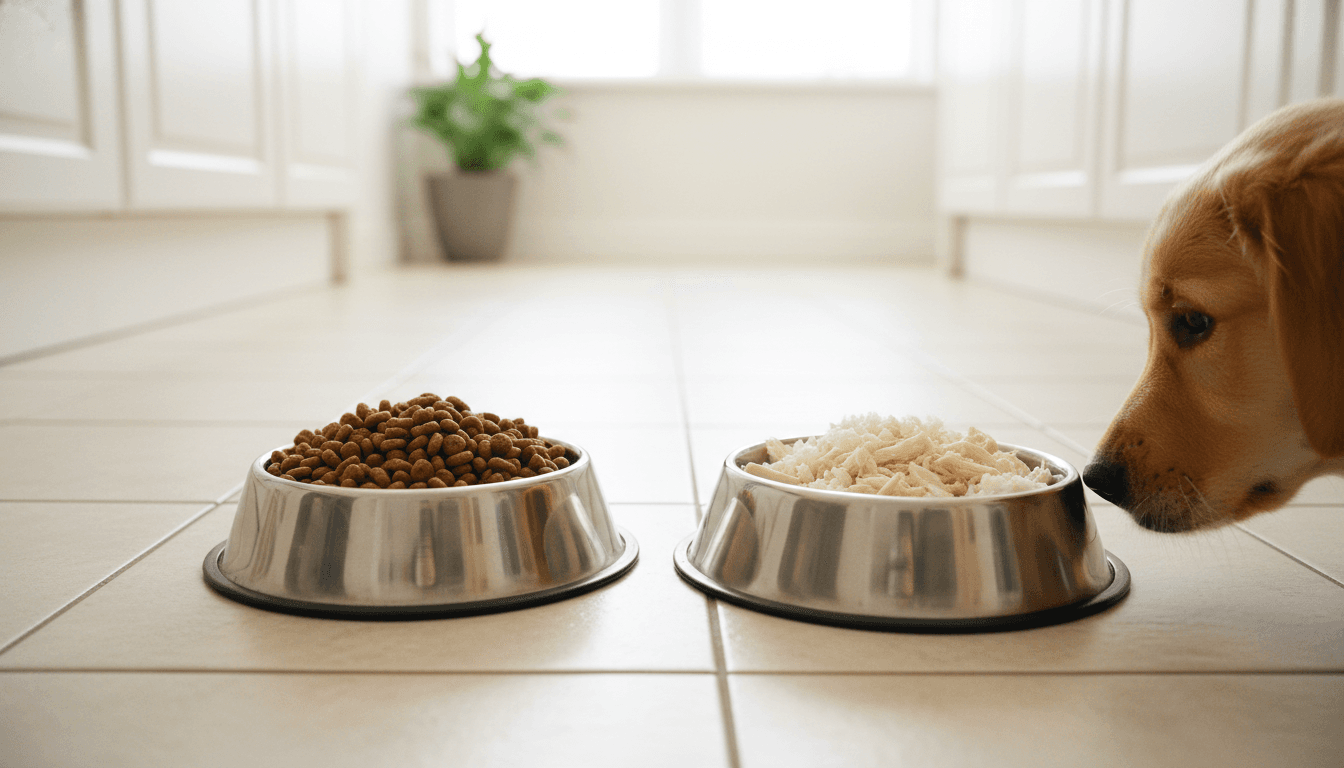
Two approaches work. Commercial hydrolyzed protein foods use enzymatically broken-down proteins too small for immune recognition. Novel protein foods use an intact protein the dog hasn't encountered. Both must be fed exclusively — zero treats, table food, or flavored supplements outside the diet.
| Option | Type | Price | Where to Buy |
|---|---|---|---|
| Royal Canin Hypoallergenic HP | Hydrolyzed soy protein | Rs 5,800-7,500 / 2 kg | Prescription via vet; Amazon (with prescription) |
| Hills z/d Ultra | Hydrolyzed chicken liver | Rs 5,500-7,000 / 3.6 kg | Prescription via vet |
| Farmina N&D Quinoa Skin & Coat (Duck) | Novel protein + functional | Rs 3,500-4,200 / 2.5 kg | Amazon, PetKart, Supertails |
| Royal Canin Sensitivity Control | Duck + tapioca | Rs 2,800-3,200 / 1.5 kg | Amazon, pet shops |
| Acana Singles Lamb & Apple | Limited ingredient lamb | Rs 4,500-5,500 / 2 kg | Amazon, specialty pet stores |
| Home-cooked: boiled duck + sweet potato | Novel protein DIY | Rs 3,000-5,000/month (medium dog) | Local meat shops + grocery |
- Weeks 1-2: Transition over 3-4 days. Digestive symptoms (loose stools, vomiting) typically improve first
- Weeks 3-6: Gradual reduction in skin redness and itch frequency. Ear infections stop recurring
- Weeks 8-12: Full assessment window. If no improvement by week 12, food allergy is unlikely
- Week 13+: Challenge phase — reintroduce the suspected protein (e.g., chicken). Symptom return within 1-14 days confirms allergy
- Identification: Test one new protein every 2 weeks to map all triggers
DodoDoggy Tip
The single most common reason elimination diets fail in Indian households: family members feeding table scraps. Dal with ghee, roti pieces, a bit of chicken curry — any of these can contain the allergen and invalidate weeks of progress. Brief everyone in the household before starting, including domestic help and children.
Vet Allergy Testing Costs Across Indian Cities
Allergy diagnosis is a multi-visit process spanning 3-6 months. Costs vary significantly between general practice vets and veterinary dermatology specialists, and between metros and tier-2 cities.
| Service | General Vet | Dermatology Specialist |
|---|---|---|
| Initial consultation | Rs 300-800 | Rs 800-2,500 |
| Skin scraping + cytology | Rs 500-1,200 | Rs 800-1,500 |
| IgE blood allergy panel | Rs 3,500-6,000 | Rs 5,000-8,000 |
| Intradermal skin test (environmental) | Not available | Rs 4,000-7,000 |
| Follow-up visits (3-4 over 3 months) | Rs 900-3,200 | Rs 2,400-10,000 |
| Prescription hypoallergenic food (3 months, medium dog) | Rs 15,000-25,000 | Rs 15,000-25,000 |
| Total diagnostic journey | Rs 20,000-35,000 | Rs 28,000-60,000 |
Veterinary dermatology specialists in Indian metros: Cessna Lifeline Veterinary Hospital (Bangalore), DCC Animal Hospital and Max Vets (Delhi NCR), Bombay Veterinary College outpatient clinic (Mumbai), Madras Veterinary College dermatology unit (Chennai). A specialist costs more per visit but typically identifies the trigger 2-3 visits faster than general practice trial-and-error. Our royal canin hill's science guide covers this in detail. Our royal canin orijen food: guide covers this in detail.
Money Saver
Skip the IgE blood panel (Rs 3,500-8,000). Veterinary dermatology literature consistently shows these tests produce unreliable results for food allergens in dogs. Spend that budget on high-quality elimination diet food instead — it's both the diagnostic tool and the treatment.
Hypoallergenic Food Brands: India Price Comparison 2026
Once the trigger protein is confirmed, long-term management means permanent avoidance. Monthly food costs rise from Rs 1,500-2,500 for standard chicken-based kibble to Rs 5,000-12,000 for hypoallergenic options. The gap narrows if home-cooking is an option.
| Product | Protein Source | Pack Size | Price (Rs) | Monthly Cost (15 kg dog) |
|---|---|---|---|---|
| Royal Canin Sensitivity Control | Duck + tapioca | 1.5 kg | 2,800-3,200 | Rs 5,600-6,400 |
| Royal Canin Hypoallergenic HP | Hydrolyzed soy | 2 kg | 5,800-7,500 | Rs 8,700-11,250 |
| Hills z/d Ultra Allergen-Free | Hydrolyzed chicken liver | 3.6 kg | 5,500-7,000 | Rs 4,600-5,800 |
| Farmina N&D Quinoa Skin & Coat (Duck) | Duck + quinoa | 2.5 kg | 3,500-4,200 | Rs 4,200-5,040 |
| Acana Singles Lamb & Apple | Lamb (single protein) | 2 kg | 4,500-5,500 | Rs 6,750-8,250 |
| Hills Sensitive Stomach (Salmon) | Salmon + rice | 4 kg | 4,500-5,500 | Rs 3,375-4,125 |
| Home-cooked duck + sweet potato | Duck | N/A | N/A | Rs 3,000-5,000 |
Availability note: Royal Canin Hypoallergenic HP and Hills z/d are prescription diets — your vet must authorize the purchase. Both are stocked at DCC Animal Hospital pharmacy (Delhi), Cessna Lifeline pharmacy (Bangalore), and available on Amazon India with vet prescription upload. Non-prescription options like Farmina N&D Quinoa and Acana Singles are available at Supertails, Heads Up For Tails, and Amazon without restriction.
For a broader comparison of food types and feeding approaches, see our guide on homemade vs commercial dog food. If you're feeding a puppy with suspected allergies, our puppy food buying guide covers limited-ingredient puppy formulas available in India.
Climate-Specific Complications: Monsoon Yeast and Summer Flares
India's climate doesn't cause food allergies but dramatically worsens the secondary infections that ride on top of them. A chicken-allergic dog with compromised skin barrier faces different threats across India's three distinct seasons.
- Summer (March-June): temperatures above 35°C increase transepidermal water loss from already-inflamed skin. Bacterial pyoderma from scratching worsens rapidly. Cool damp compresses on affected areas twice daily provide relief. Medicated baths with chlorhexidine (Rs 350-600 per bottle) every 5-7 days help control secondary infection
- Monsoon (July-September): 80-95% humidity creates ideal conditions for Malassezia yeast overgrowth, particularly in ear canals and skin folds. Weekly ear cleaning with a veterinary drying solution (Rs 200-400) is non-negotiable for allergy-prone dogs. Dry ears and paws thoroughly after every outdoor walk
- Winter (October-February): dry air in northern India worsens skin barrier dysfunction. Omega-3 supplementation via fish oil (Rs 300-800/month) measurably improves skin hydration. Coconut oil applied topically to dry patches helps, but avoid feeding it — it introduces a new fat source during elimination diets
DodoDoggy Tip
During an elimination diet, stop all homemade additions completely. Dal with ghee, roti pieces, boiled egg, curd mixed into kibble — these are deeply ingrained Indian feeding habits, but each one introduces a potential allergen that can invalidate weeks of dietary restriction. Even flavored veterinary supplements must be checked for hidden chicken or beef protein.
When to Suspect Food Allergy vs Other Conditions
Not every itchy dog has a food allergy. Before committing to a 12-week elimination diet, rule out simpler causes with your vet. This differential diagnosis checklist helps focus the investigation.
| Condition | Key Distinguishing Feature | Typical Cost to Diagnose |
|---|---|---|
| Food allergy | Year-round, non-seasonal, concurrent GI signs | Rs 20,000-60,000 (elimination diet) |
| Atopic dermatitis (environmental) | Seasonal pattern, responds to Apoquel/Cytopoint | Rs 4,000-7,000 (intradermal test) |
| Flea allergy dermatitis | Intense itching at tail base, visible fleas/flea dirt | Rs 300-500 (clinical exam) |
| Sarcoptic mange | Intense itch, crusty ear margins, spreads to humans | Rs 500-1,500 (skin scraping) |
| Bacterial pyoderma | Pustules, collarettes, responds to antibiotics alone | Rs 500-1,200 (cytology) |
| Contact dermatitis | Itch limited to belly/paws contacting irritant | Rs 300-800 (clinical exam + history) |
Long-Term Management and Cost Planning
Food allergy in dogs is permanent. There's no cure, no immunotherapy equivalent, and no outgrowing it. Management is lifelong avoidance of the identified trigger protein. The financial commitment is real but predictable once diagnosis is complete.
- Annual food cost increase: Rs 36,000-96,000 above standard kibble for a medium dog (15 kg) on commercial hypoallergenic food
- Home-cooked alternative: Rs 18,000-36,000 annual increase, but requires veterinary nutritional guidance (one-time consultation Rs 1,500-3,000)
- Ongoing supplements: fish oil omega-3 (Rs 300-800/month), veterinary probiotics for gut health (Rs 400-700/month)
- Reduced vet visits: once stabilized, allergy-related vet costs typically drop from Rs 12,000-25,000/year (undiagnosed) to Rs 3,000-6,000/year (managed)
- Treat alternatives: single-protein freeze-dried treats from Dogsee Chew (Rs 250-450) or single-ingredient dehydrated options from Goofy Tails (Rs 200-350)
The counterintuitive savings: undiagnosed food allergies are more expensive than managed ones. Repeated vet visits for recurring ear infections (Rs 800-2,000 each), courses of antibiotics (Rs 500-1,500), Apoquel prescriptions (Rs 120-180/tablet daily), and medicated shampoos add up to Rs 15,000-30,000 annually without ever addressing the cause.
You'll find good options like Delhi dog kennel | puppies for sale in delhi | dog sale in delhi | pet shop near me | poodle puppy | shihzu in Rashid Market, Geeta Colony — rated 5.0/5. Check our pet stores in Delhi directory for more choices near you.
You'll find good options like Heads Up For Tails Pet Store - Orion Mall, Bengaluru in West, Malleshwaram — rated 5.0/5. Check our pet stores in Bengaluru directory for more choices near you.