What Diwali Does to Your Dog
Every October or November, emergency rooms at clinics like Cessna Lifeline Veterinary Hospital in Bangalore and Max Vets in Delhi fill up with dogs that bolted through open doors, singed their paws on hot ash, or swallowed mithai meant for guests. The five-day festival that Diwali has become — with firecrackers going off from 6 PM until past midnight — is genuinely the most dangerous period of the year for pet dogs in India.
Dogs hear frequencies up to 65,000 Hz, roughly four times the upper limit for humans. India's Central Pollution Control Board (CPCB) sets a legal ceiling of 125 dB for firecrackers at 4 metres, but field tests by Down to Earth found the majority of crackers sold in Maharashtra regularly exceed that limit. At 125 dB or above, the sound causes genuine physical pain in a dog's ears. Many dogs develop lasting noise phobia that shows up every time it rains or a truck backfires, long after Diwali is over.
Signs Your Dog Is Struggling — Not Just Startled
There is a difference between a dog being briefly startled and a dog in genuine distress. Startled dogs recover within seconds. A dog in noise-related distress shows a cluster of signs that persist for minutes or hours.
Watch for: trembling or shaking even when the room is warm, excessive panting without exercise, pacing and inability to settle, drooling more than usual, hiding behind toilets or under beds, trying to claw or dig through doors, or sudden loss of bladder control. Some dogs become clingy and shadow you; others become snappy and want to be left alone. Both are stress responses.
A sign that's easy to miss is yawning repeatedly when firecrackers are distant. Dogs yawn when stressed, and this can be the earliest warning that your dog is heading toward panic rather than just mild discomfort. If you catch it early enough, moving them to a quieter room and playing white noise at that point is far more effective than waiting until they're trembling.
Setting Up a Safe Room: What Actually Works
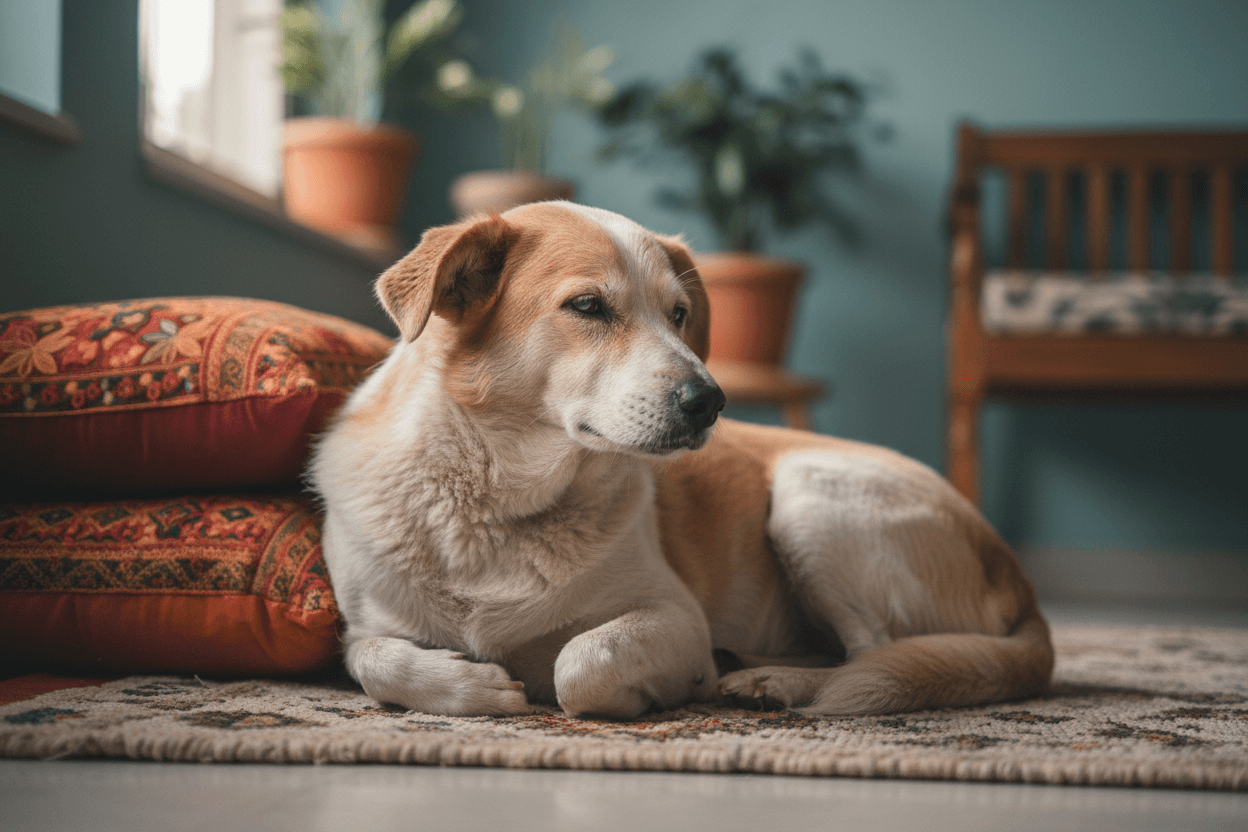
The concept of a 'safe room' gets tossed around a lot, but the setup matters more than people realise. An interior bathroom often works better than a bedroom because it has fewer windows and thicker walls. The key is to establish the room as a positive place well before Diwali week — ideally two to three weeks ahead. Feed your dog meals there, leave their favourite toy or chew there, and let them sleep there voluntarily a few times before the first cracker goes off.
On Diwali night itself, draw the curtains, lay a familiar blanket over the dog's crate or bed, and run a fan or portable white noise machine at around 65 dB. The fan sound won't cancel out a Lakshmi bomb at close range, but it takes the edge off distant crackers and stops sudden silences-before-a-bang from spiking your dog's alertness. If your building has a generator that runs on festival nights, that ambient hum actually helps.
DodoDoggy Tip
Put an old T-shirt you've worn in the safe room. Your scent genuinely calms dogs — it's not just folk wisdom. Researchers at the University of Lincoln found dog heart rates and cortisol levels drop measurably in the presence of owner scent.
Calming Products Available in India: Costs and Honest Assessments
The Indian pet market has expanded significantly over the last five years. Here's what's genuinely available and what it costs.
| Product | Approximate INR Cost | Honest Assessment |
|---|---|---|
| Adaptil Diffuser (Virbac India) | ₹1,800–₹2,500 for starter kit | Works well for mild anxiety. Needs 3–4 weeks to build full effect — not a last-minute fix. |
| ThunderShirt (available via Amazon India, Heads Up For Tails) | ₹2,200–₹3,500 | Effective for around 60–80% of dogs. Fit matters — too loose and it does nothing. |
| Himalaya Anxocare Tablet (Indian brand) | ₹140–₹200 for 60 tablets | Herbal formulation. Mild effect. Safe to try without prescription but rarely enough for severe cases. |
| Vet-prescribed Trazodone (generic) | ₹80–₹150 per dose | Requires prescription. Needs trial 2–3 weeks before Diwali to check response and adjust dosage. |
| Vet-prescribed Gabapentin (generic) | ₹20–₹60 per dose | Often combined with Trazodone for severe phobia. Also requires prescription and advance trial. |
One thing worth saying plainly: Adaptil and ThunderShirts rarely work on their own for dogs with moderate or severe noise phobia. According to guidelines published by WSAVA (World Small Animal Veterinary Association), pheromone diffusers and pressure wraps work best as adjuncts to behaviour modification, not standalone solutions. If your dog loses bladder control during firecrackers, it's past the point where a ThunderShirt alone will do much.
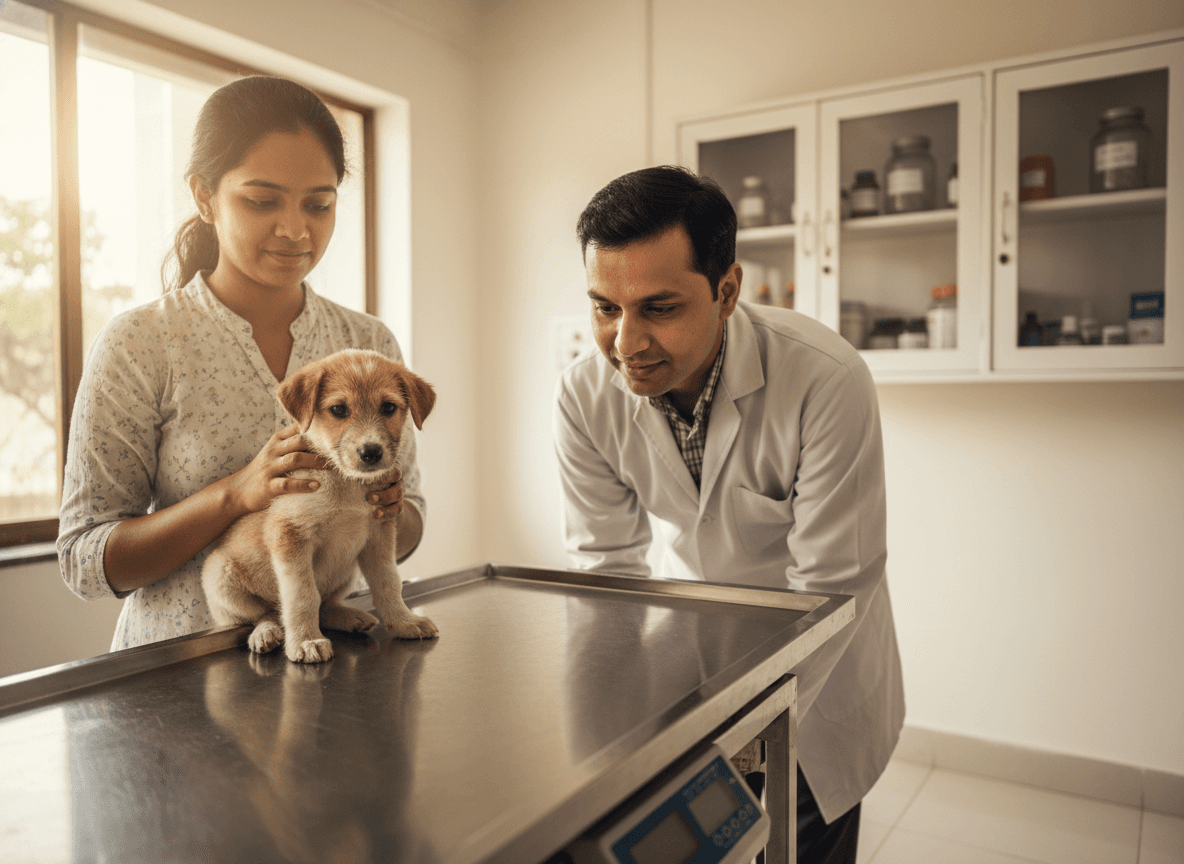
Talk to your vet at least three weeks before Diwali. Medication like Trazodone needs a test dose to check your specific dog's response — some dogs get drowsy, some get paradoxically agitated. You don't want to discover this the night of Diwali.
Noise Desensitisation: The Only Long-Term Solution
Desensitisation is the only approach that actually reduces noise phobia over time rather than just managing it. The process is straightforward but requires patience over 6–8 weeks before Diwali. You play recordings of firecracker sounds at a volume so low your dog barely notices — below the threshold that triggers any stress response. You pair this with treats, play, or meals. Over weeks, you very gradually increase the volume.
YouTube has several playlists specifically of Indian firecracker sounds for this purpose. Start at the lowest possible volume on a phone speaker across the room. If your dog sniffs the air, looks around, and goes back to eating — you're at the right volume. If the dog stops eating or turns toward the sound anxiously, you've gone too loud.
This won't make Diwali completely stress-free for most dogs, particularly those with established phobia. But a dog that has gone through 6 weeks of systematic desensitisation recovers from each burst far faster and doesn't hit the panic threshold as easily.
The Walk Schedule Problem
In most Indian cities, peak firecracker activity runs from 7 PM to midnight during Diwali. In Bangalore and Mumbai, where apartment buildings have terrace celebrations and street bursting runs late, it can extend to 1 AM. This blows up the standard twice-a-day walk schedule entirely.
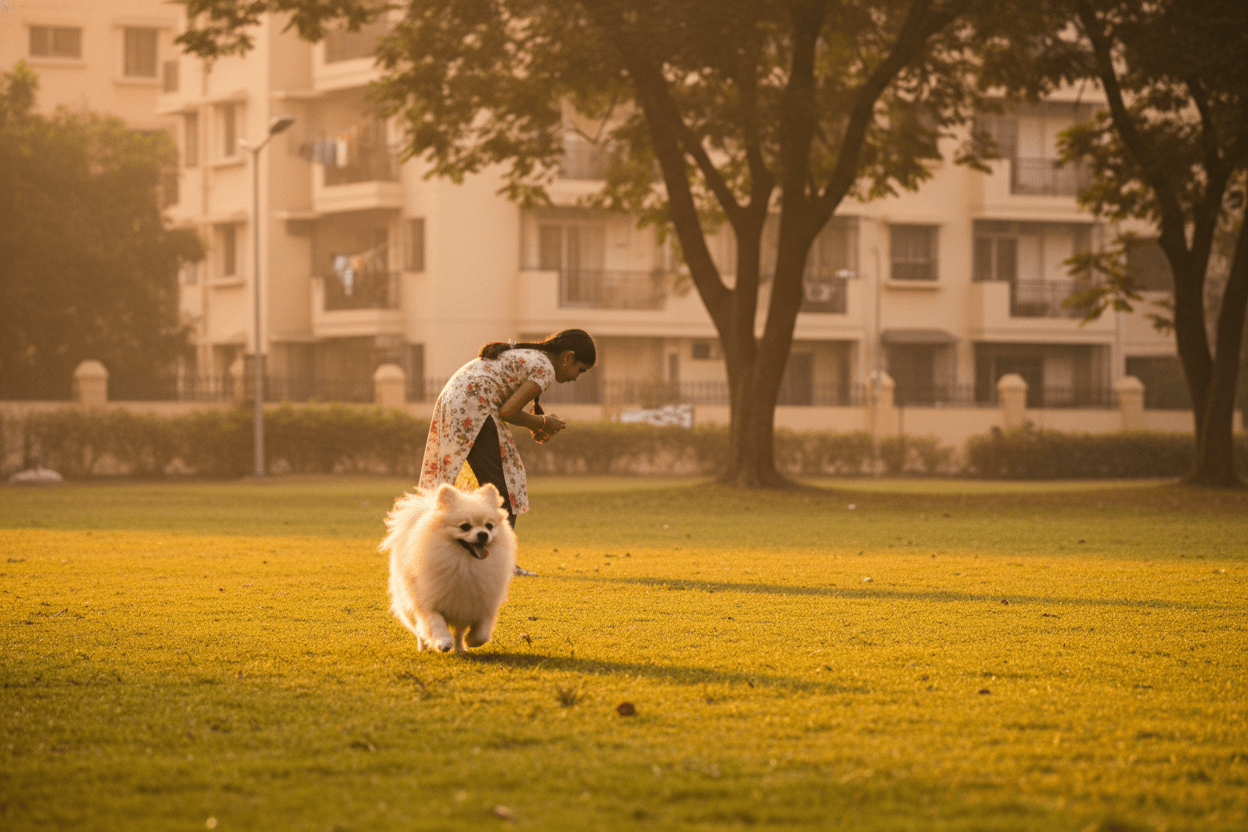
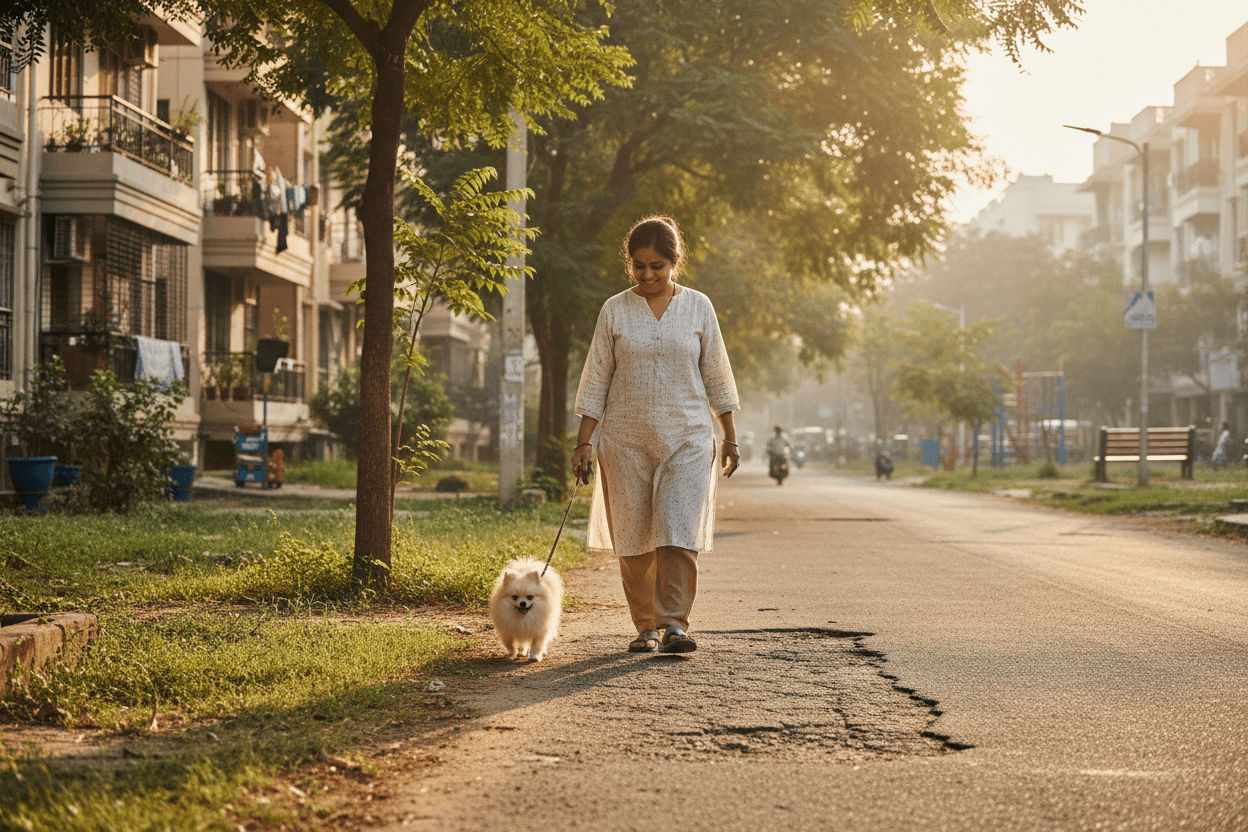
The practical solution is to front-load exercise. Walk at 5:30–6 AM (before the morning session of crackers some people do) and again at 5 PM before the evening rush begins. A tired dog with a full bladder handled copes considerably better than an under-exercised dog that is also desperate to go out. Use a harness instead of a collar during Diwali walks — a panicked dog can back out of a collar instantly. Some owners double-leash: one leash on the harness, one on the collar as a backup. It looks excessive until your dog bolts at a sudden bang.
Keep ID tags current. If your dog uses a microchip — and if they're not chipped yet, talk to your vet about it, the procedure takes five minutes and costs around ₹500–₹800 at most Indian clinics — make sure your contact details are updated in the registry. Bangalore's Cessna Lifeline and Mumbai's Bombay Veterinary College both see a spike in lost dog presentations in the week following Diwali.
Diwali Sweet Toxins: What's Actually in Those Mithai Boxes
Guests bring sweets. Kids feed dogs. This is how Diwali poisonings happen. The dangerous ingredients aren't always obvious.
Raisins in dry fruit barfi or kheer cause rapid kidney failure in dogs — there's no safe dose. Xylitol, increasingly common in so-called 'sugar-free' or 'diabetic-friendly' mithai, triggers a violent blood sugar crash within 30 minutes of ingestion, followed by potential liver failure. Chocolate in fusion desserts (chocolate barfi, dark chocolate coating on cashew ladoo) contains theobromine, which dogs can't metabolise. Even a small quantity of dark chocolate — 10 grams can harm a 5 kg dog — can cause vomiting, heart arrhythmia, and seizures.
The safest rule: keep all mithai boxes in rooms your dog can't access and brief every guest before they interact with your dog. A gentle sign on the sweet boxes — 'Please don't feed the dog' — sounds embarrassing until you're in an emergency vet at 11 PM.
Vet Alert
If your dog eats raisins, xylitol-containing sweets, or chocolate during Diwali, don't wait for symptoms. Call your vet or an emergency clinic immediately. Raisin toxicity and xylitol poisoning both progress rapidly and treatment is far more effective when started before symptoms appear.
Burn Hazards and Chemical Exposure
Outdoor hazards on Diwali night and the morning after are underestimated. Unexploded crackers are tempting objects — dogs sniff everything, and many will pick them up. Hot ash from spent sparklers and diyas stays warm for hours. Firecracker residue contains potassium nitrate, sulfur, and charcoal compounds that cause chemical burns on paw pads when dogs walk through ash-covered streets.
The morning after Diwali is when paw pad injuries typically present at clinics. Check your dog's paws after any outdoor time during the five-day period. Rinse with plain water if pads look red or they're licking excessively. A tube of Himalaya's Liv.52 Pet paw balm (around ₹120 at most pet stores) is worth having. If a pad looks blistered or your dog is refusing to put weight on a foot, that needs a vet visit — paw burns get infected quickly.
Emergency Situations: When to Go to the Vet
Most Diwali dog problems can be managed at home. But some situations need immediate veterinary attention.
Go to an emergency vet if: your dog is seizing (stiff limbs, uncontrolled shaking that doesn't stop within 30 seconds), ingested raisins or xylitol, has visible burns on skin or paws, has been missing for more than four hours (heat exposure, road traffic, firecracker proximity), or has collapsed and won't respond to your voice.
Emergency consultation at most Indian private clinics runs ₹600–₹1,200 at night. Hospitalisation for poisoning treatment typically costs ₹3,000–₹8,000 per day depending on the city. Bangalore's Cessna Lifeline Veterinary Hospital (080-2563-6996) and Delhi's DCC Animal Hospital (011-4606-1555) both have 24-hour emergency lines. Save your local emergency vet number in your phone before Diwali week starts — finding it at midnight under stress is its own disaster.
Safety First
Programme your nearest 24-hour vet's number into your phone before Diwali. Cessna Lifeline Bangalore: 080-2563-6996. DCC Animal Hospital Delhi: 011-4606-1555. In Mumbai, the Bombay SPCA ambulance number is 022-4077-7900.
The Week After Diwali: Recovery
Dogs don't always bounce back immediately when the crackers stop. Some dogs remain on edge for several days after Diwali ends, reacting to distant sounds — motorbikes, pressure cookers, the neighbour's television — that they ignored before. This is called sensitisation, and it can become a longer-term problem if not managed.
For the first week after Diwali, give your dog extra rest and predictable routines. Avoid introducing new situations, stressful environments like markets, or unfamiliar guests. If your dog seems shut down — refusing play, avoiding you, not interested in food they normally love — that's worth a call to your vet. A brief follow-up on calming medication during recovery can prevent minor post-Diwali stress from cementing into chronic noise phobia.
Check paw pads carefully on the first street walk after Diwali. Chemical residue from spent firecrackers washes into storm drains slowly in cities like Chennai and Kolkata where monsoon run-off is already a factor. Wipe paws with a damp cloth after outdoor time for the first few days.
Diwali Preparation Timeline
| When | What to Do |
|---|---|
| 8 weeks before | Start noise desensitisation sessions with firecracker sound recordings |
| 4 weeks before | Order calming products (Adaptil diffuser, ThunderShirt) — they need time to work |
| 3 weeks before | Vet consultation if your dog has moderate or severe noise phobia — medication trial needed |
| 1 week before | Set up and establish the safe room. Check ID tags and microchip registration. |
| 2 days before | Shift feeding schedule. Store all guest mithai out of dog's reach. Save emergency vet number. |
| Diwali night | Front-load exercise. Start safe room routine before 7 PM. Stay with your dog. |
| Morning after | Check paw pads. Watch for delayed stress symptoms. Quiet, predictable day. |