Key Takeaways
- The Kennel Club of India (KCI) officially recognizes 14 indigenous dog breeds, from the Mudhol Hound of Karnataka to the Bakharwal Dog of Jammu and Kashmir.
- The Indian Army inducted Mudhol Hounds in 2017 at RVCC Meerut at one-third the annual cost of imported Belgian Malinois.
- Indigenous breeds cost INR 3,000-30,000 with monthly maintenance of INR 1,500-4,000 versus INR 10,000+ for popular foreign breeds.
- Several breeds including Bakharwal, Rajapalayam, Jonangi, and Chippiparai face near-extinction due to urban preference for foreign breeds since the 1990s.
- NBAGR in Karnal, Haryana is conducting DNA profiling of 17 indigenous Indian dog breeds for national genetic conservation.
Complete List of Recognized Indigenous Indian Dog Breeds
The Kennel Club of India (KCI), founded in 1941 and headquartered in Chennai, officially recognizes 14 indigenous Indian dog breeds: Mudhol Hound (Caravan Hound), Indian Spitz, Rajapalayam, Chippiparai, Kanni, Combai, Bakharwal Dog, Gaddi Kutta, Rampur Greyhound, Pandikona, Jonangi, Banjara Hound, Himalayan Sheepdog, and Indian Mastiff (Bully Kutta). Beyond these registered breeds, India has approximately 17 documented indigenous breeds adapted to extreme climates ranging from the Himalayas (Bakharwal, Gaddi Kutta) to the Deccan Plateau (Mudhol Hound) to coastal tropics (Jonangi, Rajapalayam). The FCI has not yet granted full recognition to most Indian breeds, limiting their international show participation.
The NBAGR (National Bureau of Animal Genetic Resources) in Karnal, Haryana, an ICAR institute, has documented all 17 indigenous breeds in its AnGR database and is conducting DNA profiling of key breeds including Mudhol Hound, Rajapalayam, Chippiparai, Kanni, Combai, and Bakharwal for genetic conservation. This government-backed scientific effort represents the most systematic attempt to preserve India's canine heritage before populations fall below viable levels.
A key milestone for national recognition came in January 2005, when India Post issued a commemorative stamp set featuring four indigenous breeds: Rajapalayam, Rampur Greyhound, Mudhol Hound, and Himalayan Sheepdog. Several additional breeds not yet formally KCI-registered include the Tangkhul Hui (Nagaland), Kumaon Mastiff (Uttarakhand), Vikhan Sheepdog (Himachal Pradesh), and the Vanjari Hound from Maharashtra. Recognition gaps at the KCI level mean these breeds receive no formal protection or breeding program support.
Southern Indian Breeds: Rajapalayam, Chippiparai, Kanni, and Combai
Tamil Nadu is home to four of India's most historically significant sighthound breeds, all facing varying degrees of threat in 2026. The Rajapalayam, originating from Rajapalayam town in Virudhunagar district, served as a war dog for the Polygar chieftains during the Carnatic Wars against the British in the 18th century. Almost entirely white with a pink nose and pinkish skin, the breed's purebred population has dwindled to fewer than a few hundred individuals. The Indian Army has deployed Rajapalayam dogs for guarding the Kashmir border, and purebred puppies sell for INR 5,000-15,000 from breeders primarily in Madurai and Tirunelveli districts.
The Chippiparai was historically bred by the royal family of Chippiparai near Madurai for hunting wild boar, deer, and hare. One of the fastest indigenous breeds with a close resemblance to the Kanni, it is classified as endangered by KCI. Breeders are concentrated around Madurai, Dindigul, and Tiruchirappalli, with prices ranging INR 5,000-12,000. The Tamil Nadu Indigenous Dog Breeders' Association (TIDBA), based in Madurai, maintains a registry of verified Chippiparai, Kombai, and Kanni breeders and is the key contact point for buyers seeking authentic Tamil Nadu indigenous breeds.
The Kanni (meaning pure or maiden in Tamil) follows an unusual cultural tradition: it is never sold but gifted to a groom by the bride's family as a symbol of trust. This practice has made formal breeding registration and commercial acquisition nearly impossible through conventional channels, and the breed does not appear in standard pet markets.
From the Kombai region of Tamil Nadu, the Combai served historically as a pack hunting dog against bear, bison, and deer. Distinguished by a black mask and a ridge of hair along its back similar to the Rhodesian Ridgeback, Combai puppies sell for INR 3,000-8,000 from breeders in Theni, Madurai, and Coimbatore. All four Tamil Nadu breeds function safely at 35-45 degrees Celsius without cooling systems, with their short single-layer coats and lean body mass providing natural thermoregulation that no foreign breed can match in these conditions.
For more on labrador golden retriever, see our labrador golden retriever guide.
Mudhol Hound: The Indian Army's Indigenous Working Breed
The Mudhol Hound originates from the Mudhol taluk of Bagalkot district, Karnataka. The Maharaja of Mudhol gifted a pair to King George V of England in 1912, giving the breed its first international exposure. Standing 68-72 cm and weighing 22-28 kg, it reaches speeds of 60-65 km/h and comes in two coat varieties: smooth and the feathered Pashmi variant with feathered ears and tail. Across the Deccan Plateau, the breed is also known as the Caravan Hound.
In 2017, the Indian Army's Remount Veterinary Corps Centre (RVCC) at Meerut inducted Mudhol Hounds into its dog unit for the first time, selecting them for speed, endurance, and significantly lower maintenance costs compared to imported Belgian Malinois. The official Press Information Bureau release confirms that the Army acquisition cost for a trained Mudhol Hound is INR 15,000-30,000, against INR 80,000-1,50,000 for a trained Belgian Malinois. Both the Indian Navy and BSF have also trialed the breed for border surveillance on the Indo-Pakistan border.
The Karnataka state government has operated a dedicated Mudhol Hound breeding center in Mudhol, Bagalkot district since 2013 under the Department of Animal Husbandry, producing over 100 registered puppies for military and civilian use. Private breeders in Karnataka and adjacent Maharashtra districts offer puppies at INR 5,000-15,000, with monthly maintenance costs of INR 1,500-2,500. Lifespan is 10-12 years with minimal hereditary health issues, with significantly fewer joint and cardiac problems than imported breeds commonly deployed in comparable working roles.
Himalayan and Northern Indian Breeds: Bakharwal, Gaddi, and Rampur Greyhound
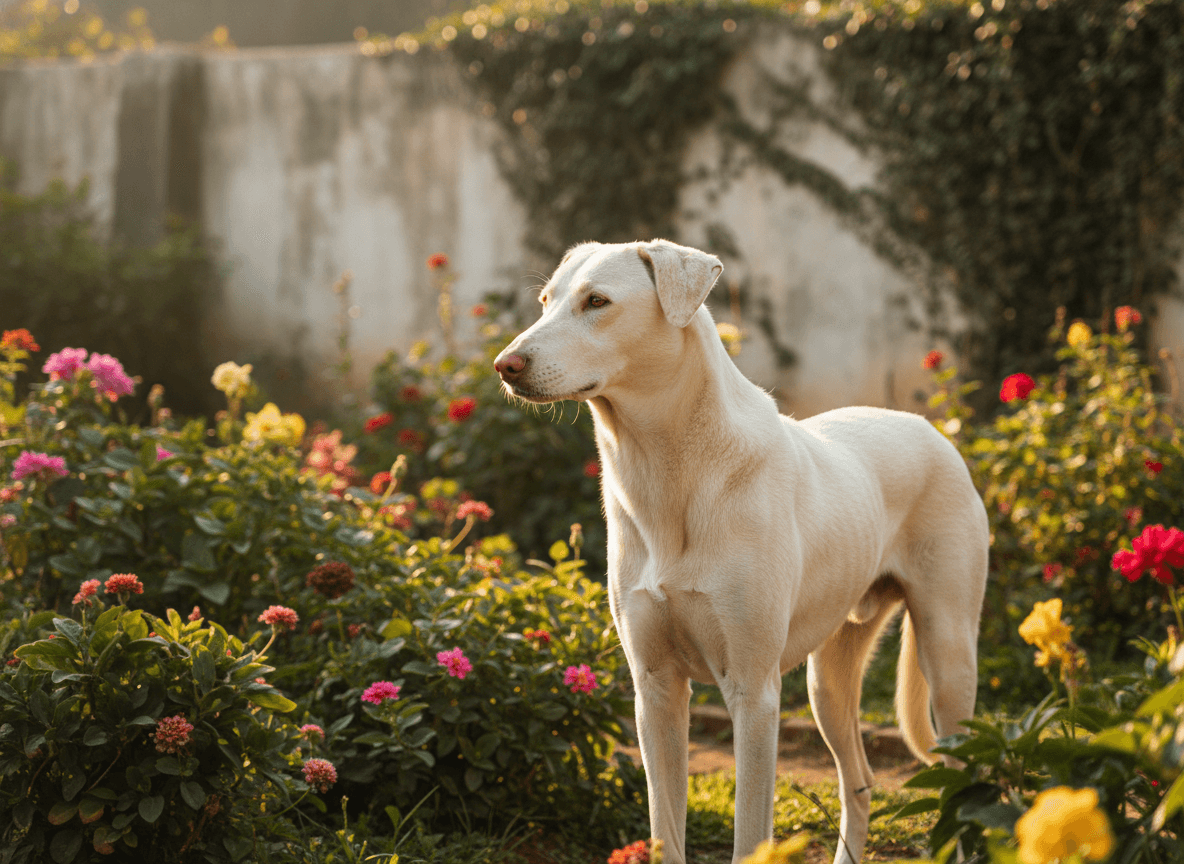
Northern India's indigenous breeds reflect the harsh terrain and nomadic culture of the region. The Bakharwal Dog was developed by the Bakarwal and Gujjar nomadic tribes of the Pir Panjal range in Jammu and Kashmir, protecting sheep and goat herds from wolves, leopards, and bears at altitudes above 3,000 meters for centuries. The Wildlife Trust of India estimates fewer than a few hundred purebred specimens remain, and the Government of J&K has declared it an endangered breed. Puppy prices range INR 10,000-30,000 in Srinagar, Jammu, and Udhampur markets, though no formal breeder associations exist to assist remote buyers.
Weighing 35-45 kg and standing 60-75 cm, the Gaddi Kutta (Himachali Gaddi) is a large mastiff used by Gaddi shepherds in Himachal Pradesh and Uttarakhand. Known for confronting snow leopards and bears when protecting flocks, the breed carries exceptional protective instincts developed across centuries of high-altitude shepherding. Gaddi puppies are available in Himachal Pradesh for INR 8,000-20,000 from shepherd community breeders.
The Rampur Greyhound has an aristocratic origin: developed in the 18th century by the Nawabs of Rampur (Uttar Pradesh) by crossing Afghan Hounds with English Greyhounds, it was the preferred hunting dog of Indian nobility for jackals, deer, and wild boar. The breed nearly went extinct after the abolition of privy purses in 1971. The Himalayan Sheepdog (Bhotia), found across Uttarakhand and Sikkim border regions, stands 56-66 cm, weighs 23-41 kg, and carries a thick double coat adapted for subzero temperatures. It was one of four breeds on India Post's 2005 commemorative stamp set, the only national-level recognition of indigenous dogs prior to the Army's 2017 Mudhol Hound adoption.
Eastern and Andhra Pradesh Breeds: Pandikona, Jonangi, and Tangkhul Hui
Eastern India's indigenous breeds are among the least documented and most endangered in the country. The Pandikona is a primitive semi-feral dog from Kurnool district, Andhra Pradesh, named after Pandikona village in the Nallamala forest region. Comparable to the Dingo or Basenji in its primitive characteristics, it remains largely self-sufficient and is rarely kept as a conventional household pet.
Native to the coastal areas of Andhra Pradesh around Pulicat Lake and the Krishna-Godavari delta, the Jonangi served fishermen and herded ducks for centuries. Uniquely among dogs, the Jonangi yodels rather than barks, and its extremely short single-layer coat is adapted to coastal heat. As documented on the Jonangi breed page, the population has declined catastrophically as mechanized fishing and changing duck-herding practices eliminated its primary working role. Andhra Pradesh's Animal Husbandry Department has formally noted its near-extinct status in official records.
The Tangkhul Hui from Ukhrul district, Manipur, associated with the Tangkhul Naga tribe, is one of the least documented Indian breeds and is not yet KCI-registered. NBAGR has flagged the Jonangi, Pandikona, and Tangkhul Hui in its AnGR database as requiring urgent genetic conservation measures due to critically low population counts across all three breeds. Without active intervention, these breeds face permanent loss within a generation.
Indian Spitz: The Most Accessible Indigenous Indian Breed
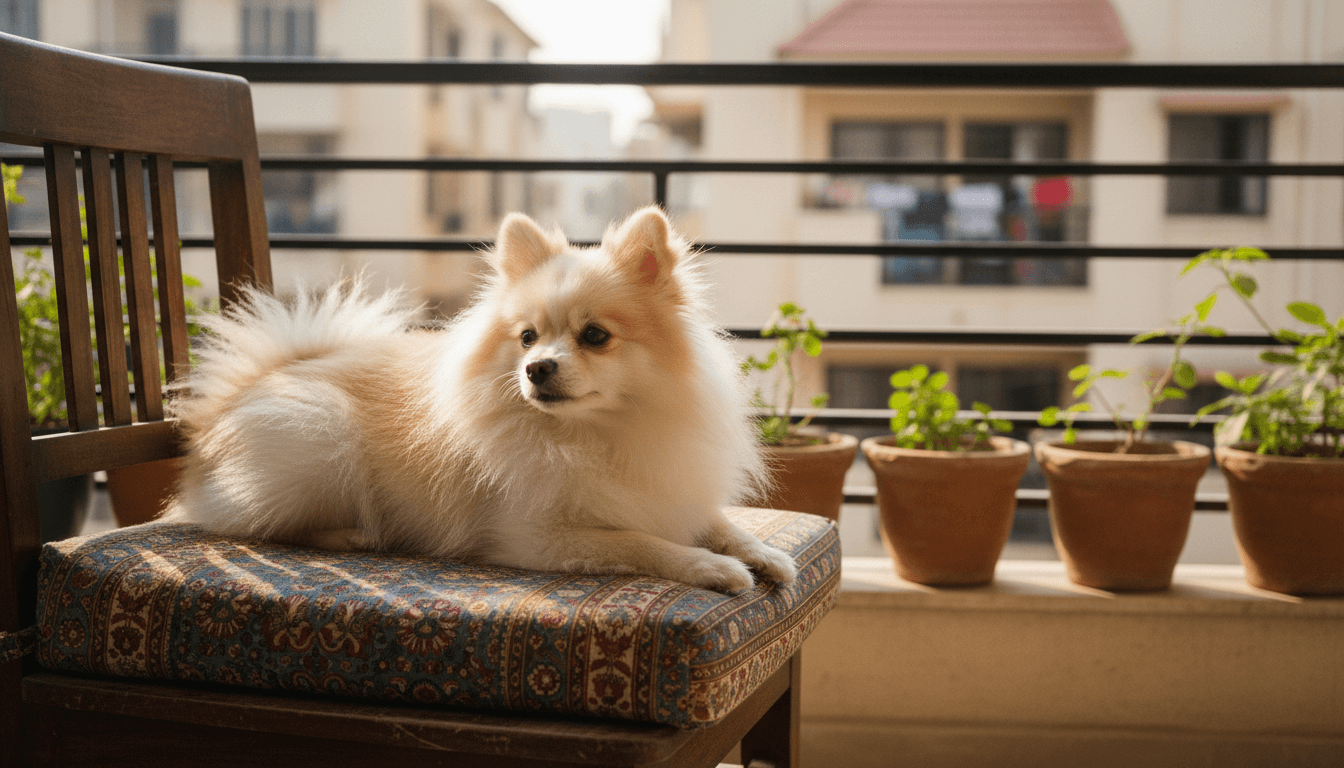
The Indian Spitz has a distinctive origin: it was developed during the British Raj by selectively breeding imported German Spitz dogs to thrive in India's tropical climate. Through the 1980s and 1990s, before economic liberalization opened imports of foreign breeds, it was the most popular pet dog across Indian cities. Mass recognition came when a Spitz named Tuffy played a central role in the 1994 Bollywood blockbuster Hum Aapke Hain Koun, driving adoption to peak levels nationwide.
Two size varieties exist: the Greater Indian Spitz (35-45 cm, 12-20 kg) and the Lesser Indian Spitz (22-25 cm, 5-7 kg). Prices range INR 4,000-8,000 from KCI-registered breeders across Mumbai, Delhi, Bengaluru, Chennai, and Kolkata, making it significantly cheaper than Pomeranians (INR 20,000-80,000). Monthly maintenance costs are INR 1,500-3,000, compared to INR 5,000-10,000 for Pomeranians or Samoyeds, and the breed rarely requires professional grooming.
Buyer awareness is critical when purchasing this breed: unscrupulous breeders in Indian cities frequently mislabel Indian Spitz as Pomeranians. A genuine Indian Spitz has a longer muzzle and slightly larger build. The KCI maintains a breed standard to differentiate the two, and working with a KCI-registered breeder is the safest path to an authentic animal. Low incidence of the respiratory and joint conditions common in imported small breeds makes the Indian Spitz one of the most cost-effective dog ownership decisions for Indian urban households.
Conservation Status and Government Revival Efforts
Tamil Nadu's Department of Animal Husbandry operates a conservation breeding program for Rajapalayam, Chippiparai, Kanni, and Combai at its livestock farm in Saidapet, Chennai, registered under the state's indigenous breed conservation scheme. This facility functions as the primary government source for authentic Tamil Nadu sighthound breeds, offering buyers a verified alternative to private breeders of uncertain pedigree.
KCI's Indigenous Breeds Promotion Committee runs breed-specific shows in Chennai, Bengaluru, and Hyderabad, providing breeders of recognized indigenous breeds a competitive platform. Despite these efforts, KCI data shows imported breeds (Labrador, German Shepherd, Golden Retriever) account for over 70% of all KCI registrations, while indigenous breeds collectively represent under 15% combined. Preference for foreign breeds among Indian urban consumers since the 1990s remains the primary driver of indigenous breed decline across the country.
NBGAR's DNA profiling program in Karnal represents the most current active conservation effort, working to document genetic baselines before some populations drop below viable thresholds for recovery. The Mudhol Hound remains the first and only Indian dog breed officially inducted into the Indian Army (2017), with RVCC, Meerut aiming to reduce dependence on imported breeds. India Post's 2005 stamp set featuring four indigenous breeds was the only Government of India recognition at national scale prior to that Army induction.
Health and Climate Advantages of Indigenous vs Foreign Breeds
Indigenous Indian sighthound breeds have natural heat tolerance built through thousands of years of natural selection. Short single-layer coats, lean body mass, and efficient thermoregulation allow safe function at 35-45 degrees Celsius without cooling systems, unlike Husky, Saint Bernard, or Chow Chow breeds that require air conditioning during Indian summers. KCI health surveys show Labrador Retrievers have a 25-30% hip dysplasia incidence in India, while Mudhol Hound and Indian Spitz show under 5% incidence of the same condition. Annual veterinary costs for indigenous breeds average INR 3,000-8,000 in routine care, versus INR 10,000-25,000 for imported breeds prone to large-breed joint disease.
The Combai and Mudhol Hound have natural resistance to tick-borne diseases such as Ehrlichiosis and Babesiosis, endemic across peninsular India, attributed to centuries of natural selection in tick-endemic regions. Golden Retrievers and Labradors show much higher susceptibility under identical Indian conditions. Brachycephalic foreign breeds (Pug, French Bulldog, Shih Tzu) sold extensively in Indian cities suffer BOAS (Brachycephalic Obstructive Airway Syndrome) complications exacerbated by Indian heat. All Indian indigenous breeds have normal muzzle length and face no respiratory compromise in India's climate, making them structurally better suited to every part of the subcontinent without medical intervention.
2026 Price and Availability Guide for KCI-Recognized Indigenous Indian Dog Breeds — State of Origin, Puppy Price (INR)
| Breed | State of Origin | Puppy Price (INR) |
|---|---|---|
| Combai | Tamil Nadu | 3,000-8,000 |
| Indian Spitz | Pan-India | 4,000-8,000 |
| Chippiparai | Tamil Nadu | 5,000-12,000 |
| Mudhol Hound | Karnataka | 5,000-15,000 |
| Rajapalayam | Tamil Nadu | 5,000-15,000 |
| Gaddi Kutta | Himachal Pradesh | 8,000-20,000 |
| Bakharwal Dog | Jammu and Kashmir | 10,000-30,000 |
2026 Price and Availability Guide for KCI-Recognized Indigenous Indian Dog Breeds — Monthly Cost (INR), Where to Source
| Breed | Monthly Cost (INR) | Where to Source |
|---|---|---|
| Combai | 1,500-2,500 | Theni, Madurai, Coimbatore breeders |
| Indian Spitz | 1,500-3,000 | KCI-registered breeders pan-India |
| Chippiparai | 1,500-2,500 | TIDBA registry, Madurai |
| Mudhol Hound | 1,500-2,500 | Karnataka Govt. Centre, Bagalkot |
| Rajapalayam | 2,000-3,000 | TN Govt. nucleus, Virudhunagar |
| Gaddi Kutta | 2,000-3,500 | HP shepherd community breeders |
| Bakharwal Dog | 2,000-4,000 | Bakarwal tribal breeders, J&K only |
Price Guide and Where to Find Authentic Indian Breeds in 2026
Sourcing an authentic Indian breed requires working through verified channels rather than general pet markets where mislabeling is common. The Indian Spitz at INR 4,000-8,000 from KCI-registered breeders is the most accessible option, available across Mumbai, Delhi, Bengaluru, Chennai, and Kolkata. Mudhol Hounds (INR 5,000-15,000) are best sourced from the Karnataka Government Breeding Center in Mudhol, Bagalkot district, which has produced over 100 registered puppies since 2013, or from private registered breeders across Karnataka and adjacent Maharashtra.
For Tamil Nadu breeds, the Tamil Nadu Indigenous Dog Breeders' Association (TIDBA), based in Madurai, maintains a verified registry of Chippiparai, Kombai, and Kanni breeders. The Rajapalayam (INR 5,000-15,000) is mainly available in Virudhunagar, Madurai, and Tirunelveli districts, with the Tamil Nadu Government Animal Husbandry Department's Saidapet facility maintaining an active breeding nucleus. Combai puppies (INR 3,000-8,000) are more accessible through breeders in Theni, Madurai, and Coimbatore, with KCI recognition for Tamil Nadu and Karnataka breeders providing an additional verification layer.
Northern breeds require travel to source regions. The Bakharwal Dog (INR 10,000-30,000) is available only from Bakarwal community breeders in J&K (Srinagar, Jammu, Udhampur), with no formal associations to assist remote buyers. The Gaddi Kutta (INR 8,000-20,000) is sourced from Himachal Pradesh shepherd communities with limited reach outside the state. For any breed, request the KCI registration numbers of the sire and dam and verify them at kci.org.in before completing any payment.
Verified Sources for Authentic Tamil Nadu Breeds
The Tamil Nadu Indigenous Dog Breeders' Association (TIDBA), based in Madurai, maintains a registry of verified Chippiparai, Kombai, and Kanni breeders and is the primary contact point for buyers seeking authentic breeds from Tamil Nadu. For Mudhol Hounds, the Karnataka Government Breeding Center in Mudhol, Bagalkot district has been producing KCI-registered puppies since 2013 under the Department of Animal Husbandry. Always request the sire and dam KCI registration numbers and verify them directly at kci.org.in before making any payment to avoid mislabeled or cross-bred animals. For more on pariah live apartments? flat, see our pariah live apartments? flat guide.
Frequently Asked Questions
How many indigenous dog breeds does India officially recognize?
The Kennel Club of India (KCI), founded in 1941 and headquartered in Chennai, officially recognizes 14 indigenous dog breeds: Mudhol Hound, Indian Spitz, Rajapalayam, Chippiparai, Kanni, Combai, Bakharwal Dog, Gaddi Kutta, Rampur Greyhound, Pandikona, Jonangi, Banjara Hound, Himalayan Sheepdog, and Indian Mastiff (Bully Kutta). NBAGR in Karnal has additionally documented 17 indigenous breeds in its AnGR database, including several not yet KCI-registered, such as the Tangkhul Hui from Manipur, the Kumaon Mastiff from Uttarakhand, and the Vikhan Sheepdog from Himachal Pradesh.
Which Indian dog breed did the Army adopt and why was it chosen?
The Indian Army inducted Mudhol Hounds at the Remount Veterinary Corps Centre (RVCC) in Meerut in 2017, making it the first indigenous Indian breed in the Army's dog unit. Selection criteria were speed (60-65 km/h), endurance, acute senses suited for border surveillance, and dramatically lower cost. Army acquisition cost for a trained Mudhol Hound is INR 15,000-30,000, compared to INR 80,000-1,50,000 for a trained Belgian Malinois. Monthly maintenance costs are INR 1,500-2,500 versus INR 5,000 or more for imported breeds. The Karnataka Government Breeding Center in Mudhol, Bagalkot has supplied registered puppies to the Army since 2013.
Why is the Kanni breed so difficult to find and purchase?
The Kanni (meaning pure in Tamil) is traditionally never sold but gifted to a groom by the bride's family as a symbol of trust, a cultural practice rooted in communities around Madurai and Virudhunagar in Tamil Nadu. This norm has prevented commercial breeding operations from forming around the breed, meaning Kanni dogs simply do not appear in conventional pet markets or on online sale platforms. Authentic Kanni dogs are only accessible through direct relationships with traditional breeders in Tamil Nadu, and the Tamil Nadu Indigenous Dog Breeders' Association (TIDBA) in Madurai is the best starting point for buyers seeking one through proper cultural channels.
Are Indian indigenous breeds healthier than foreign breeds for owners in India?
The health data strongly favors indigenous breeds for Indian conditions. KCI health surveys show Labrador Retrievers have a 25-30% hip dysplasia incidence in India, while Mudhol Hound and Indian Spitz show under 5% incidence. Annual veterinary costs for indigenous breeds average INR 3,000-8,000 versus INR 10,000-25,000 for imported breeds prone to large-breed joint disease. The Combai and Mudhol Hound have natural resistance to tick-borne diseases like Ehrlichiosis and Babesiosis that are endemic across peninsular India. Additionally, brachycephalic foreign breeds such as Pug, French Bulldog, and Shih Tzu suffer serious BOAS complications in India's heat, while all indigenous breeds have normal muzzle length and face no respiratory compromise whatsoever.