Key Takeaways
- Labrador Retriever has been the most KCI-registered breed in India for over a decade, priced INR 8,000-40,000 across cities, and is the default recommendation from Indian vets for first-time owners due to forgiving temperament and easy trainability.
- Indigenous breeds (Mudhol Hound, Rajapalayam, Chippiparai) tolerate temperatures up to 45C, cost INR 5,000-15,000, and have the lowest annual health costs of any option on this list, yet 78% of first-time Indian buyers have never heard of them.
- Brachycephalic breeds like Pug face respiratory distress above 32C: Cessna Lifeline Veterinary Hospital in Bangalore reports a 40% spike in heat-stress cases for Pugs during April to June, and annual Pug health costs often exceed INR 30,000.
- Over 65% of urban Indian dog owners live in apartments under 1,200 sq ft, making apartment suitability a non-negotiable ranking criterion for this guide.
- Annual ownership costs range from INR 10,000-18,000 for Indian Spitz to INR 63,500+ for Labrador on Royal Canin kibble; pet insurance from Bajaj Allianz or Digit Insurance starts at INR 3,000 per year but excludes breed-specific hereditary conditions.
How We Ranked: India-Specific Criteria That Matter
Six criteria shaped this ranking, all calibrated for Indian conditions rather than international benchmarks. Heat tolerance sits at the top of the list: summer temperatures in Delhi reach 45 degrees Celsius, Chennai sustains 40 degrees, and Mumbai holds at 38 degrees for months at a time. Northern double-coated breeds like Siberian Husky and Saint Bernard cannot safely live in these conditions and were removed from consideration entirely, regardless of their global popularity.
Apartment suitability is the second key criterion because over 65% of urban Indian dog owners live in flats under 1,200 sq ft in cities like Mumbai, Bangalore, and Hyderabad. Breeds requiring large yards or high daily mileage simply do not match Indian urban reality. Vet familiarity across cities was the third factor: according to the Kennel Club of India, Labrador Retriever, German Shepherd, and Beagle have the highest veterinary familiarity in tier-1 and tier-2 cities, which directly reduces the risk of misdiagnosis for common health issues.
Monthly food cost came fourth. Large breeds like Great Dane or Rottweiler require INR 6,000-10,000 per month in commercial kibble, while small-medium breeds like Beagle or Indian Spitz cost INR 1,500-3,000 per month, a critical budget difference for Indian middle-class families. KCI registration volume served as a proxy for breeder network availability and bloodline health-testing standards. Temperament suitability for multigenerational households completed the six criteria, since most Indian families live with elders and children together, making non-aggressive, patient breeds a practical necessity rather than a preference.
For more on breeds, see our breeds guide.
Top 10 Dog Breeds for India 2026: The Complete Rankings
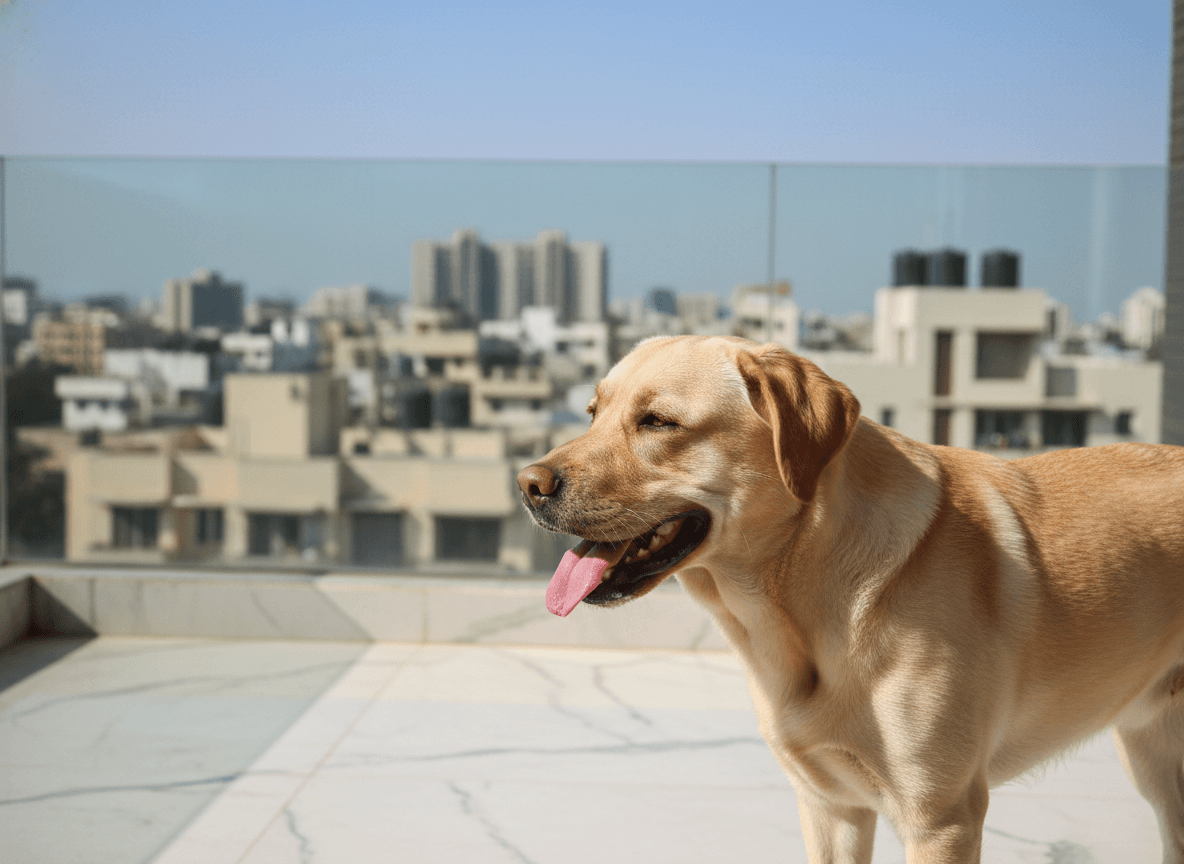
Labrador Retriever claims the top spot as the most KCI-registered breed in India for over a decade. Short single coats allow reasonable heat management in all Indian cities including Chennai and Hyderabad, and virtually no aggression incidents are reported in Indian family settings. Prices range from INR 8,000-40,000, with KCI-registered pedigree pups commanding 2-3x the price of non-pedigree animals.
At Rank 2, Indian Spitz is the most heat-tolerant small-medium breed available in India, descended from German Spitz introduced during the British colonial era and subsequently acclimatized to the subcontinent over generations. Prices range from INR 4,000-10,000; the breed thrives on home-cooked Indian food, and total first-year cost stays under INR 25,000. Its estimated population runs into millions, particularly across tier-2 and rural India.
Beagle earns third position as the top apartment dog for Indian cities on multiple Indian pet portals. Compact at 8-11 kg, food costs run INR 1,500-2,500 per month, and prices range from INR 15,000-35,000. One caveat: Beagles have a tendency to howl that triggers neighbor complaints in Mumbai and Pune apartments, so training investment is essential for apartment owners.
Popular across North India including Delhi, Chandigarh, and Lucknow, the Golden Retriever ranks fourth. North India hosts the largest Golden Retriever breeder network in the country, keeping prices more competitive than South India. Pet-quality pups range from INR 15,000-60,000; show or imported bloodline pups reach INR 80,000-1,50,000.
German Shepherd holds Rank 5 as the most popular working and guard dog in India, widely deployed by the Indian Army, BSF, and CRPF. Heat tolerance is moderate: the double coat becomes a liability in coastal humid cities like Chennai and Kochi. German Shepherds perform best in North and Central India, with prices ranging from INR 15,000-60,000.
Shih Tzu secures sixth position as the top-ranked small companion breed in Indian metros, most popular in Mumbai, Pune, and Bangalore apartments. Low exercise needs suit the Indian apartment lifestyle. Prices range from INR 20,000-60,000, with show-quality champion lineage animals reaching INR 80,000-1,20,000 in metro cities.
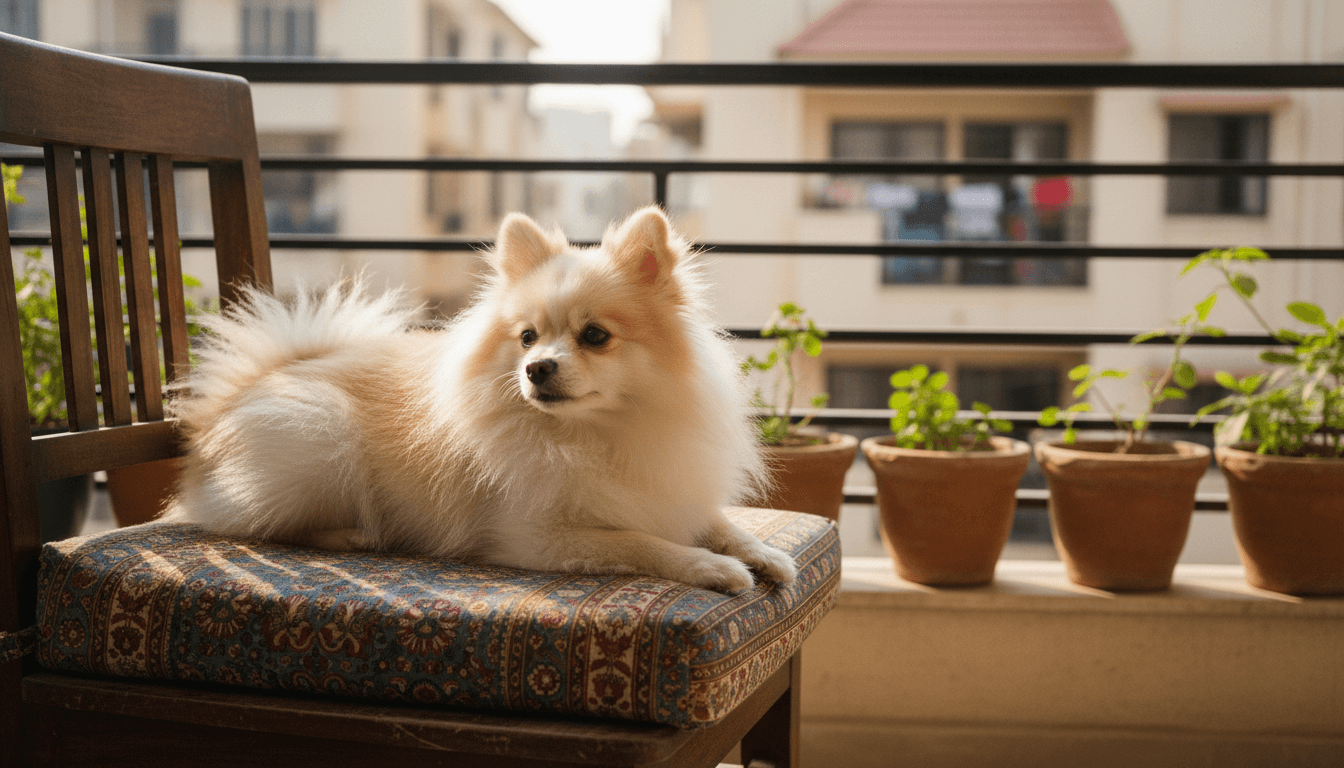
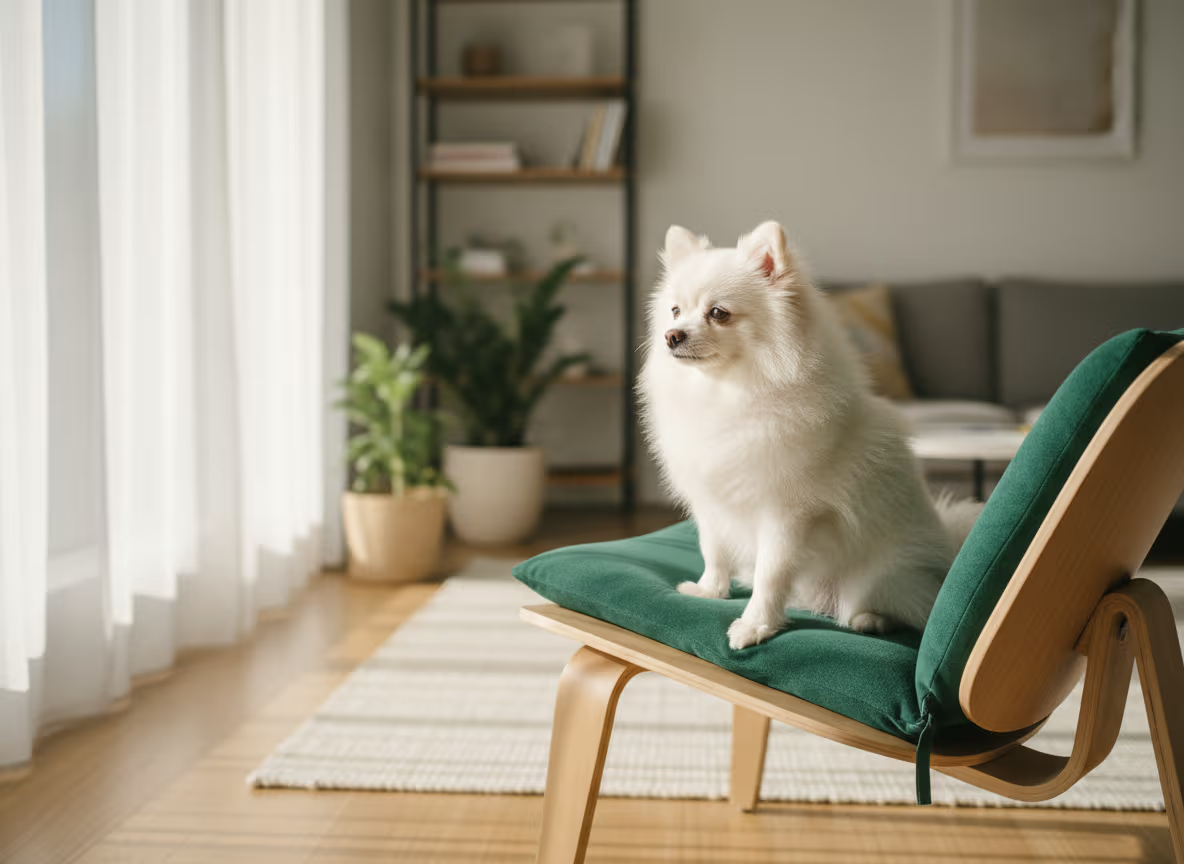
Pomeranian rounds out seventh place as one of the most affordable pedigree breeds in India at INR 5,000-15,000. Extremely popular in tier-2 cities like Jaipur, Surat, Nagpur, and Indore, their adaptability to Indian home environments and small size make them practical for tight household budgets.
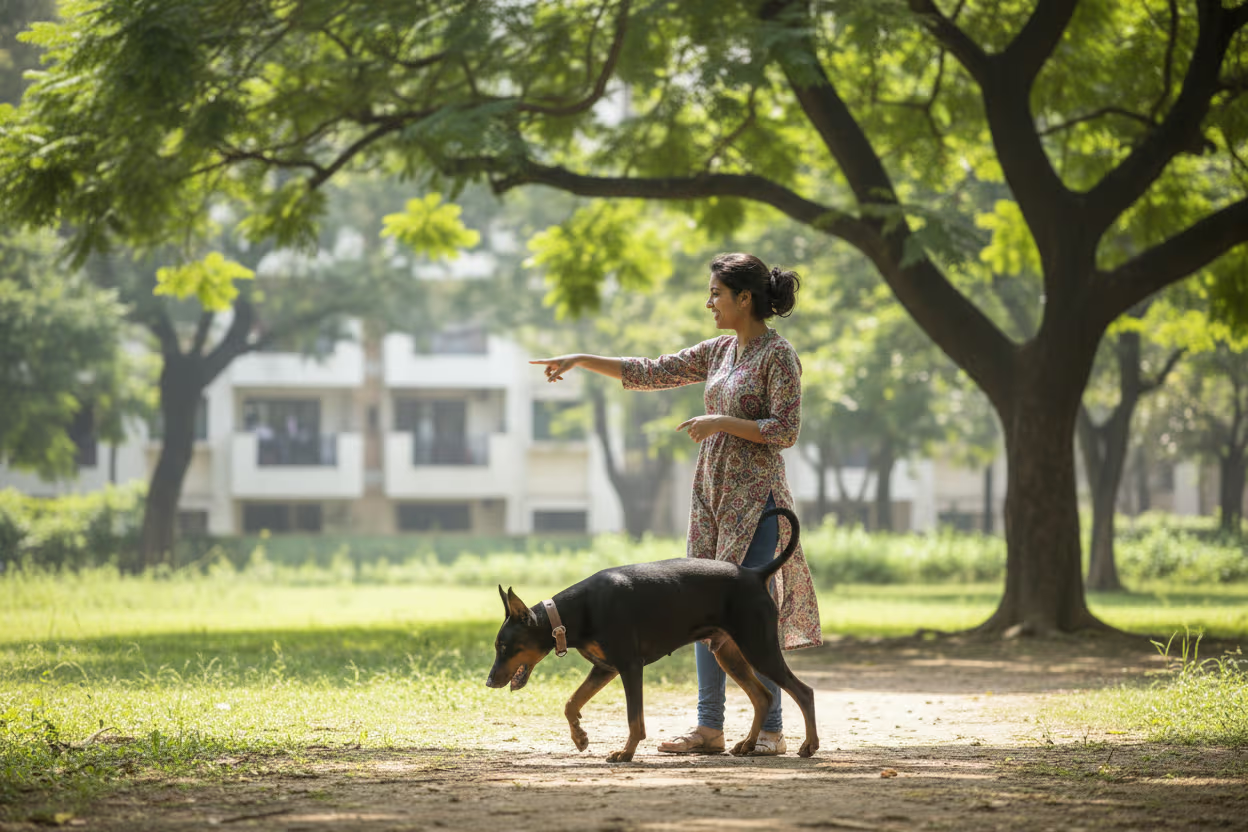
For owners of independent houses requiring security, Doberman Pinscher at Rank 8 is the most popular choice in India. The short single coat handles Indian heat significantly better than the German Shepherd's double coat, making the Doberman more suitable for South India. Widely available from breeders in Maharashtra, Karnataka, and Tamil Nadu at INR 15,000-40,000.
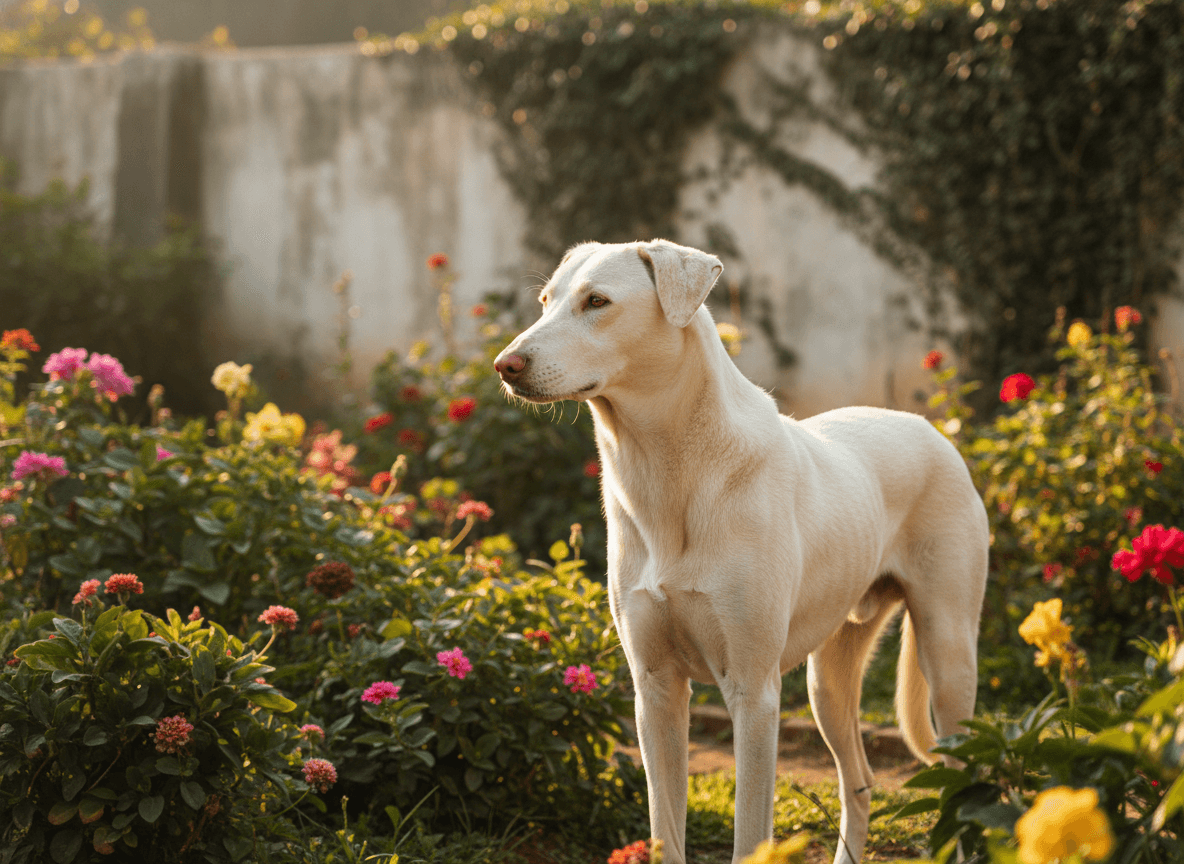
Rajapalayam takes ninth position as the premier indigenous breed for South Indian conditions, bred in Tamil Nadu for centuries. Associated with the Nayakar dynasty of the Vijayanagara Empire, the Indian Veterinary Research Institute (IVRI) recognizes it as one of six officially documented indigenous Indian dog breeds. Pure white, loyal to one owner, and an excellent guard dog for independent houses at INR 5,000-15,000.
Closing the top 10, the Mudhol Hound is a Karnataka-origin sighthound adopted by the Indian Army for border patrol starting in 2017 as part of a DRDO-backed program, with dogs deployed at sensitive areas in Rajasthan and Punjab. Extreme heat tolerance, low maintenance, and food costs as low as INR 500-1,000 per month on home-cooked food make it the best-value indigenous option at INR 5,000-12,000.
Top 10 Dog Breeds for India 2026: Key Metrics at a Glance — Rank, Heat Tolerance
| Breed | Rank | Heat Tolerance |
|---|---|---|
| Labrador Retriever | 1 | Good |
| Indian Spitz | 2 | Excellent |
| Beagle | 3 | Good |
| Golden Retriever | 4 | Moderate |
| German Shepherd | 5 | Moderate |
| Shih Tzu | 6 | Poor |
| Pomeranian | 7 | Moderate |
| Doberman Pinscher | 8 | Good |
| Rajapalayam | 9 | Excellent |
| Mudhol Hound | 10 | Excellent |
Top 10 Dog Breeds for India 2026: Key Metrics at a Glance — Apartment Fit, Price Range (INR)
| Breed | Apartment Fit | Price Range (INR) |
|---|---|---|
| Labrador Retriever | Yes | 8,000 - 40,000 |
| Indian Spitz | Yes | 4,000 - 10,000 |
| Beagle | Yes (with training) | 15,000 - 35,000 |
| Golden Retriever | Yes (with exercise) | 15,000 - 60,000 |
| German Shepherd | No | 15,000 - 60,000 |
| Shih Tzu | Yes | 20,000 - 60,000 |
| Pomeranian | Yes | 5,000 - 15,000 |
| Doberman Pinscher | No | 15,000 - 40,000 |
| Rajapalayam | No | 5,000 - 15,000 |
| Mudhol Hound | No | 5,000 - 12,000 |
Top 10 Dog Breeds for India 2026: Key Metrics at a Glance — Best For
| Breed | Best For | |
|---|---|---|
| Labrador Retriever | Families, first-time owners | |
| Indian Spitz | Budget buyers, tier-2 cities | |
| Beagle | Urban apartment dwellers | |
| Golden Retriever | North India families | |
| German Shepherd | Independent houses, security | |
| Shih Tzu | Metro apartments, companions | |
| Pomeranian | Tier-2 cities, small homes | |
| Doberman Pinscher | South India guard dog | |
| Rajapalayam | South Indian bungalows | |
| Mudhol Hound | Rural and semi-urban properties |
Heat Tolerance Rankings: Which Breeds Survive Indian Summers
Indigenous breeds top the heat tolerance chart by a significant margin. Mudhol Hound, Rajapalayam, Chippiparai, and Indian Spitz have all evolved on the Indian subcontinent and comfortably tolerate temperatures up to 45 degrees Celsius. Their short, single-layer coats and lean physiques allow efficient heat dissipation, a biological advantage that no imported breed can replicate.
Labrador Retriever and Beagle fall into the 'good' heat tolerance category. Both breeds manage well across Indian conditions with access to shade and fresh water, though they need cool resting areas when temperatures exceed 38 degrees Celsius. Labradors are comfortable in all Indian cities, including Chennai and Hyderabad. German Shepherd and Doberman sit in the 'moderate' range: both need air-conditioned indoor time during peak heat hours from 12 PM to 4 PM, and the German Shepherd's double coat becomes a particular liability in coastal humid cities like Mumbai and Kochi.
Brachycephalic breeds face the most serious risks in Indian summers. Pugs and Shih Tzus have flat faces that cause respiratory distress above 32 degrees Celsius. Cessna Lifeline Veterinary Hospital in Bangalore reports a 40% spike in heat-stress cases among Pugs during April to June compared to other months. Siberian Husky, Alaskan Malamute, Saint Bernard, and Chow Chow sit at the very bottom of the tolerance scale: despite growing social-media-driven demand for Huskies in India, these northern breeds require 24-hour air conditioning, adding significant electricity costs on top of already high ownership expenses.
Managing Heat for Non-Indigenous Breeds
Keep any non-indigenous breed indoors between 12 PM and 4 PM during Indian summers. Use ceramic or metal water bowls since plastic retains heat, provide a cooling mat for breeds with moderate heat tolerance, and ensure constant shade access outdoors. Brachycephalic breeds like Pug and Shih Tzu need air conditioning running whenever outdoor temperatures exceed 32 degrees Celsius. Short-coated breeds like Labrador and Doberman are also easier to check daily for ticks, which cause Canine Ehrlichiosis (tick fever) across India, reducing this costly health risk on top of the heat management benefits.
Price Guide: What Each Top Breed Costs Across Indian Cities
Labrador puppy prices vary by city and pedigree status. Delhi ranges INR 12,000-40,000; Mumbai commands the highest prices at INR 15,000-45,000; Bangalore is INR 10,000-35,000; Hyderabad is INR 10,000-35,000; Kolkata is more affordable at INR 8,000-25,000; and Chennai is the most affordable metro at INR 8,000-30,000. KCI-registered pedigree Labradors command 2-3x the non-pedigree price in every city, making breeder verification a critical step before purchase.
German Shepherd pups in Delhi reach INR 18,000-60,000, the highest price in India due to working-dog demand, while show-quality animals with imported bloodlines can reach INR 1,00,000-2,00,000 from top kennels. Golden Retriever prices reflect North India's larger breeder network: pet-quality pups range INR 15,000-60,000, and show or imported bloodline pups reach INR 80,000-1,50,000. Delhi and Punjab breeders offer more competitive rates than their South Indian counterparts for this breed.
Indian Spitz and Pomeranian are the most affordable pedigree options in the country, at INR 4,000-10,000 and INR 5,000-15,000 respectively. These are among the only pedigree breeds truly accessible to middle-class families in tier-2 and tier-3 Indian cities. Shih Tzu commands a premium over similarly sized Pomeranians at INR 20,000-60,000, partly due to perceived luxury status among urban buyers. Indigenous breeds from registered breeders in Tamil Nadu and Karnataka (Rajapalayam, Mudhol Hound, Chippiparai) cost INR 5,000-15,000, with government-subsidized breeding programs in both states making them even more accessible than the listed prices suggest.
Apartment vs Independent House: Which Breeds Fit Indian Living
For apartments under 1,200 sq ft, the best-matched breeds in India are Shih Tzu, Beagle, Indian Spitz, Pomeranian, and Lhasa Apso. Their low-to-moderate exercise needs are met by two daily walks of 20-30 minutes. Most Indian apartment societies in Mumbai, Bangalore, and Pune accept these breeds without informal resistance, though the Animal Welfare Board of India (AWBI) guidelines prohibit any Resident Welfare Association from banning a pet owner from keeping a dog based on breed, offering legal protection when needed.
Labrador Retriever is manageable in Indian apartments when given two walks per day totaling 45-60 minutes. Shedding is the main practical challenge, but Indian apartment buildings with tiled floors handle this well. Over 50% of urban Indian Labrador owners reportedly live in apartments according to community surveys on Indian dog owner forums. Noise suitability also matters: Labrador and Golden Retriever have low nuisance-barking rates, while Beagles have a tendency to howl that triggers society complaints in cities like Mumbai and Pune.
German Shepherd, Doberman, Rottweiler, and Great Dane require independent houses with garden or yard access, needing at least 200-400 sq ft of outdoor space in addition to indoor living area. Many Indian housing societies explicitly prohibit large-breed working dogs, and their exercise needs cannot realistically be met in typical apartment settings. Mudhol Hound and Rajapalayam, despite being indigenous breeds perfectly adapted to India's climate, are not apartment-suitable: their high prey drive and energy demands require at least 1-2 hours of outdoor running daily, making them ideal for independent bungalows in semi-urban or rural South Indian settings.
Health Costs in India: Vet Bills, Food, and Annual Expenses by Breed
Annual Labrador ownership costs in India break down as follows: food on premium kibble like Royal Canin runs INR 24,000-48,000 per year (INR 2,000-4,000 per month); vaccinations cost INR 2,500-4,000; an annual vet checkup runs INR 1,000-2,500; deworming and flea control adds INR 2,000-3,000; grooming runs INR 3,000-6,000. Total annual spend lands at approximately INR 32,500-63,500, making it a mid-range ownership cost across all breeds on this list.
Pug ownership runs significantly higher due to brachycephalic health problems. BOAS (Brachycephalic Obstructive Airway Syndrome) surgery costs INR 25,000-60,000 at specialist clinics in metro cities. Eye conditions common in Pugs, such as entropion and corneal ulcers, add INR 5,000-20,000 per episode. Annual health spend for Pugs often exceeds INR 30,000, versus INR 10,000-15,000 for a Labrador on basic care.
German Shepherd hip dysplasia treatment at specialty centers like Cessna Lifeline (Bangalore) or Friendicoes (Delhi) costs INR 50,000-1,20,000 per hip for surgery, or INR 15,000-30,000 per year for medical management and physiotherapy. Tick fever affects all breeds across India: Bravecto, NexGard, and Frontline cost INR 600-1,800 per dose every one to three months, and treatment for tick fever at Indian vet clinics runs INR 3,000-12,000 per episode. Short-coated breeds like Labrador and Doberman are considerably easier to check daily for ticks versus long-coated Shih Tzu or Golden Retriever.
Indian Spitz and Mudhol Hound have the lowest annual health costs on this list: approximately INR 10,000-18,000 per year covering food, vaccines, and basic vet care. Home-cooked food consisting of rice, dal, vegetables, and egg is nutritionally adequate for both breeds, reducing monthly food costs to INR 500-1,000. Pet insurance from Bajaj Allianz, New India Assurance, or Digit Insurance is available at INR 3,000-8,000 per year for coverage of INR 15,000-50,000, though most policies exclude breed-specific hereditary diseases, limiting actual utility for high-risk breeds like Pug or German Shepherd.
Indigenous Indian Breeds: The Overlooked Alternative
IVRI and the National Bureau of Animal Genetic Resources (NBAGR) officially recognize six indigenous dog breeds of India: Mudhol Hound (Karnataka), Rajapalayam (Tamil Nadu), Chippiparai (Tamil Nadu), Kanni (Tamil Nadu), Kombai (Tamil Nadu), and Rampur Hound (Uttar Pradesh). All six are recognized by the Kennel Club of India. Despite this, a 2023 survey by the dogsindia.com community found that 78% of first-time Indian dog buyers had never heard of Mudhol Hound or Chippiparai before researching dog ownership.
The Rajapalayam is one of the oldest dog breeds originating in India, associated with the Nayakar dynasty of the Vijayanagara Empire. Historically used to hunt wild boar and protect properties across Tamil Nadu, the breed received a commemorative stamp from India Post in 2005. The Mudhol Hound gained national attention when the Indian Army inducted six Mudhol Hounds for border patrol duty starting in 2017, deployed at sensitive areas in Rajasthan and Punjab as part of a DRDO-backed program to promote indigenous breeds.
The price advantage of indigenous breeds is substantial: Mudhol Hound, Rajapalayam, and Chippiparai are priced INR 5,000-15,000, roughly 3-5x cheaper than equivalent foreign breeds of similar build and energy level. Government breeding programs in Karnataka and Tamil Nadu make them even more accessible than market prices suggest. Social media accounts dedicated to indigenous Indian breeds grew 300% between 2020 and 2024, slowly shifting buyer awareness away from social-media-viral imported breeds that struggle in Indian climate conditions.
First-Time Owner Rankings: Easiest Breeds for Indian Families
Labrador Retriever tops the first-time owner list by consensus among Indian vets. The breed ranks 7th in Stanley Coren's dog intelligence rankings and tolerates the training inconsistencies that characterize new owners. Virtually no aggression incidents are reported in Indian family settings, making it the safest choice for households with young children, elders, and frequent guests.
Golden Retriever ranks second, rated the most child-friendly breed by Indian pediatric veterinary consultants. Extremely patient with young children and tolerant of the rough play common in Indian households with toddlers, it carries equally forgiving temperament to the Labrador with slightly more grooming maintenance.
Shih Tzu takes the top spot for first-time apartment owners in Indian metros. Vets at Cessna Lifeline (Bangalore) and Bombay Veterinary College (Mumbai) consistently recommend it for first-time owners in high-density urban settings. Low exercise needs, non-aggressive temperament, and strong adaptability to Indian apartment life are its core advantages. For budget-conscious first-time owners, Indian Spitz offers the best value: total first-year cost (purchase, setup, food, vet) stays under INR 25,000, versus INR 60,000-80,000 for Labrador or Golden Retriever on premium food.
Breeds not suitable for first-time Indian owners include German Shepherd, Doberman, and Rottweiler. Confident, experienced handling is required for all three. Indian animal welfare organizations report that Dobermans and Rottweilers account for a disproportionate share of rehoming cases in India, often because first-time owners underestimated training requirements. Beagle, despite its compact size and friendly temperament, is also stubborn and scent-driven, making it harder to train than Labrador or Golden Retriever, with howling a top complaint from apartment owners in Mumbai and Pune.
For more on pariah live apartments? flat, see our pariah live apartments? flat guide.
Frequently Asked Questions
What criteria were used to rank dog breeds specifically for India?
Six India-specific criteria determined these rankings: heat tolerance (critical given Delhi's 45C and Chennai's 40C summers), apartment suitability (65%+ of urban owners live in flats under 1,200 sq ft), vet familiarity across cities, monthly food cost (Beagle at INR 1,500-2,500 per month versus Great Dane at INR 6,000-10,000), KCI registration volume as a measure of breeder network quality, and temperament suitability for multigenerational households with elders and young children living together. Northern double-coated breeds like Siberian Husky were excluded entirely on heat tolerance grounds, regardless of their global popularity or demand on Indian social media.
Which dog breeds handle Indian summers the best?
Indigenous breeds lead the heat tolerance chart. Mudhol Hound, Rajapalayam, Chippiparai, and Indian Spitz have evolved on the Indian subcontinent and comfortably tolerate temperatures up to 45 degrees Celsius due to their short single-layer coats and lean physiques. Labrador Retriever and Beagle manage well with short single coats given shade and fresh water access. German Shepherd and Doberman manage with air-conditioned indoor time during 12 PM to 4 PM peak heat hours. Brachycephalic breeds (Pug, Shih Tzu) face respiratory distress above 32C. Siberian Husky, Alaskan Malamute, Saint Bernard, and Chow Chow are not recommended for Indian conditions regardless of cooling arrangements.
What does a Labrador Retriever puppy cost across Indian cities in 2026?
Labrador puppy prices vary significantly by city and pedigree status. Delhi ranges INR 12,000-40,000; Mumbai commands the highest prices at INR 15,000-45,000; Bangalore is INR 10,000-35,000; Hyderabad is INR 10,000-35,000; Kolkata is more affordable at INR 8,000-25,000; and Chennai is the most affordable metro at INR 8,000-30,000. KCI-registered pedigree pups command 2-3x the price of non-pedigree pups in every city. For a family on a budget, Chennai or Kolkata breeders offer the most competitive pricing for equivalent quality, with Mumbai and Delhi commanding a 20-30% premium over other cities.
Can I keep a German Shepherd in a Mumbai apartment?
German Shepherd ownership in a Mumbai apartment is strongly discouraged for several practical reasons. The breed requires significant daily exercise (at least 2 hours of vigorous activity), and many Mumbai housing societies informally restrict large-breed dogs despite AWBI guidelines protecting owner rights. Mumbai's high coastal humidity additionally stresses the double coat, requiring more frequent air conditioning and professional grooming than in drier cities. German Shepherds perform best in independent houses in North or Central India where space and climate align with breed needs. For security-focused owners in a Mumbai apartment, Doberman Pinscher with its single short coat and smaller space footprint is a considerably more practical alternative at a similar price range.