
Key Takeaways
- An 8-week-old puppy holds its bladder for 60 to 90 minutes; elevator waits of 3 to 7 minutes mean you must start outdoor trips before urgency strikes
- Crate sizing is non-negotiable: the puppy stands, turns, and lies down but has no extra room to use a corner as a toilet
- Wire crates with dividers cost Rs 1,500 to Rs 3,500 on Amazon.in from brands like Savic, Trixie, and All4Pets
- The AWBI advisory and the 2021 Bombay High Court ruling both confirm that housing societies cannot legally ban pet dogs
- Establish your balcony elimination zone before monsoon onset; Mumbai and Chennai can see 72 to 96 hours of continuous rain
- Indian Pariah Dogs train in 10 to 14 weeks; Dachshunds and Beagles often need 18 to 24 weeks in apartment conditions
Why Western House Training Guides Fail in Indian Apartments
Most house training guides assume your puppy can slip out a back door and onto grass within 30 seconds. That's not Mumbai. That's not a 14th-floor flat in Bengaluru or a gated society in Pune where the elevator takes 5 minutes to arrive. The overwhelming majority of Western guides are written for ground-floor access or fenced-yard conditions that apply to fewer than 5% of urban apartment dwellers in Indian metros.\n\nThe bladder maths tell the story. An 8-week-old puppy holds its bladder for approximately 60 to 90 minutes, according to the American Kennel Club's house training guidelines. A typical Indian high-rise exit takes 10 to 15 minutes from cue to outdoor surface. That timeline requires proactive scheduling, not reactive responses to accidents already in progress.\n\nIndian apartments almost universally feature marble, granite, or vitrified tile flooring. Accidents spread rapidly and silently on these surfaces, expanding the scent-marked zone before you notice. Puppies that skid on wet marble after an accident develop anxiety about rushing to the exit, which reinforces indoor elimination behavior. The DogSpot India community, India's largest dog owner forum, lists marble floor accidents among the three most frequently reported challenges for urban Indian puppy owners.\n\nThere's a vaccination gap too. Until a puppy completes its 16-week vaccination course, vets advise keeping it off lobby floors and elevator floors to prevent parvovirus and distemper exposure. For apartments on floors 5 and above, this means physically carrying the puppy for the first 8 weeks of outdoor trips. India's urban pet dog population has grown roughly 12% annually since 2019, creating a large first-time owner cohort that urgently needs guidance adapted to vertical living, not Western backyard protocols repackaged for cities the authors have never seen. Pair this guide with our crate training guide for India once you understand why the standard approach fails here.
Crate Training: The Non-Negotiable Foundation for Indian Apartment Puppies
Crate training works because it uses a puppy's natural instinct to avoid soiling its sleeping space. The sizing rule is absolute: the puppy must be able to stand up without hunching, turn in a full circle, and lie down flat. Nothing more. A crate that is even slightly too large allows the puppy to treat one corner as a toilet, which defeats the entire exercise.\n\nThe ASPCA's crate training guidelines publish specific daytime maximums: 8 to 10 weeks equals 30 to 60 minutes; 11 to 14 weeks equals 1 to 3 hours; 15 to 16 weeks equals 3 to 4 hours. Exceeding these limits forces the puppy to soil the crate, destroying training progress and teaching the puppy that crate elimination is normal. The underlying bladder rule from AKC guidelines is simple: one hour per month of age, plus one. A 2-month puppy holds about 2 hours; a 3-month puppy holds about 3 hours.\n\nFor Indian apartments, crate placement matters far more than most guides acknowledge. Position the crate in the bedroom, not a spare room. This lets you hear the puppy's nighttime whimper (its signal for a toilet trip) and reduces separation anxiety that could complicate training. VCA Animal Hospitals' guidance on crate placement confirms that proximity to the owner significantly reduces nighttime stress vocalizations, which means better sleep for everyone and faster behavioral consolidation.\n\nWire crates with divider panels are the most cost-effective choice for Indian apartment setups. Brands like Savic, Trixie, and All4Pets sell wire crates for Rs 1,500 to Rs 3,500 on Amazon.in and Flipkart. Airline-approved plastic crates run Rs 4,000 to Rs 8,000. The divider lets you start with a small interior space and expand it as the puppy grows, saving you from buying multiple crates. Never use the crate as punishment; feed all meals inside it with the door open for the first 3 to 5 days before ever closing the door. If you're struggling with consistent training, a professional dog trainer in India can help establish the routine faster.
Maximum safe daytime crating duration by puppy age (ASPCA guidelines) with India-context trip frequency — Max Daytime Crate Time, Approx. Bladder Hold
| Puppy Age | Max Daytime Crate Time | Approx. Bladder Hold |
|---|---|---|
| 8 to 10 weeks | 30 to 60 minutes | 1 to 1.5 hours |
| 11 to 14 weeks | 1 to 3 hours | 2 to 3 hours |
| 15 to 16 weeks | 3 to 4 hours | 3 to 4 hours |
| 4 to 6 months | 4 hours (daytime max) | 4 to 5 hours |
| 6 months and older | Up to 6 hours | 5 to 7 hours |
Maximum safe daytime crating duration by puppy age (ASPCA guidelines) with India-context trip frequency — Outdoor Trips Per Day
| Puppy Age | Outdoor Trips Per Day |
|---|---|
| 8 to 10 weeks | 8 to 10 trips |
| 11 to 14 weeks | 6 to 8 trips |
| 15 to 16 weeks | 5 to 6 trips |
| 4 to 6 months | 4 to 5 trips |
| 6 months and older | 3 to 4 trips |
Setting Up Your Indian Apartment as a Training Environment
Enzymatic cleaners are mandatory from day one. Common Indian household products like Lizol, Domex, and Dettol don't fully break down urine proteins. The residual scent acts as a location marker that draws the puppy back to the same spot repeatedly. Enzymatic options like Beaphar Stain and Odor Remover and Mr. Paws (Rs 400 to Rs 800, available at HUFT and Amazon.in) neutralize the odor at the molecular level. The Humane Society of the United States specifically notes that ammonia-based household cleaners mimic urine scent and reinforce elimination at the same spot.\n\nConfine the puppy to one room initially. Indian kitchens are often the best choice: easy-to-clean tile floors, a direct sight line to the balcony, and natural gate points. Baby gates from Luvlap, Baby Forest, and Chicco cost Rs 1,200 to Rs 2,500 at Amazon.in and FirstCry. Exercise pens (X-pens) run Rs 2,000 to Rs 4,500 from Heads Up For Tails stores in Mumbai, Delhi, Bengaluru, Pune, and Hyderabad.\n\nAnti-slip rubber runners along the route from crate to front door solve two problems simultaneously in marble-floored apartments. They prevent skidding injuries and give the puppy a tactile path it can follow confidently at speed when urgency strikes, cutting mid-route accidents significantly.\n\nYour balcony needs a proper elimination setup too. An artificial grass patch with a drainage tray (Rs 1,200 to Rs 2,500 from HUFT or Amazon.in) in a corner serves as the emergency zone during the pre-vaccination period and on monsoon days, while establishing an outdoor feel that transfers to real outdoor elimination later. Start leash and collar habituation inside the apartment 3 to 5 days before the first outdoor trip. Puppies that meet a leash for the first time in a stressful lobby associate leash with anxiety, complicating every future outdoor toilet attempt. A good week-by-week puppy training schedule helps you layer leash work alongside toilet training without overwhelming your pup.
For more on aggression training india — methods,, see our aggression training india — methods, guide.
Pre-Vaccination Carrying Protocol (Weeks 8 to 16)
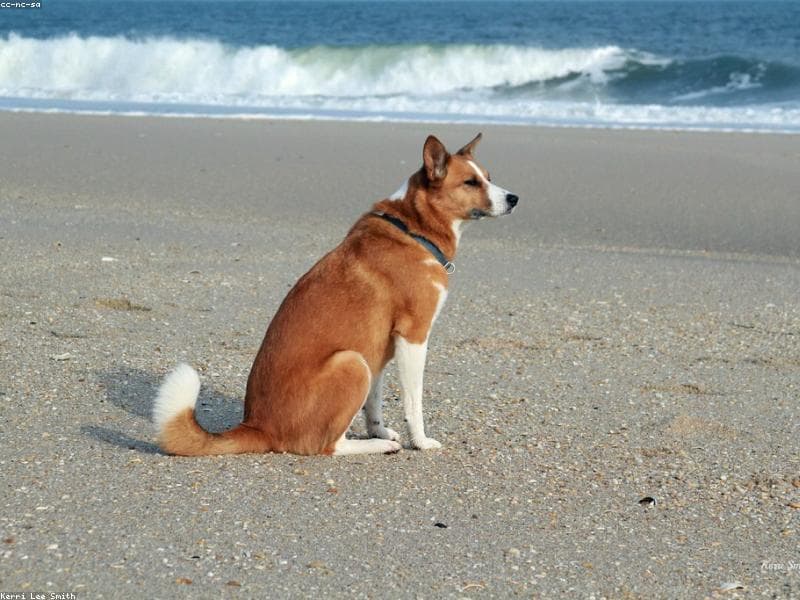
Carry your puppy in arms or a sling carrier through the elevator and lobby to prevent parvovirus exposure off lobby floors. Set the puppy down only at the designated outdoor elimination spot in the society garden, away from high-traffic areas. Never allow contact with stray dogs, standing water, or unknown dog waste during this period. This physical requirement is exactly why establishing a balcony elimination zone as a backup is critical for high-rise apartment owners from day one. During this period, also review your puppy food choices for India since consistent nutrition affects how predictably your puppy eliminates.
The High-Rise Puppy Protocol: Elevator, Staircase, and Society Garden Training
Start with a "wait" cue at the apartment door in week 1. Leash clipped, puppy sits, you open the door, puppy stays until you release. This 10-second pause lets the elevator arrive and prevents the puppy from rushing into the corridor and eliminating from excitement before you reach the lift. Practice this indoors before any outdoor trip begins.\n\nElevator desensitization takes 5 to 7 days and cannot be skipped. Day 1: approach the elevator, give a treat, return to the apartment. Day 2: enter the elevator with the door open, treat, step back out. Day 3: ride one floor with a treat. Extend by one floor each subsequent day. Puppies rushed into elevator rides without this preparation develop travel anxiety that causes them to hold through the entire outdoor trip and then eliminate the moment they re-enter the apartment, the exact opposite of what you're training for.\n\nIdentify the approved elimination area in the society garden on day 1 and use the same spot every single time. Scent marking from previous trips acts as an elimination cue, shortening the outdoor trip duration significantly once the habit is established. Carry waste bags and clean up immediately; this is the single most effective way to maintain positive relations with neighbors and security guards during the house training period.\n\nKeep the staircase in your toolkit as a backup option. If the elevator is occupied and the puppy is signaling urgency, take the stairs to the floor below, buying 2 to 3 extra minutes for the elevator to arrive. A leash hook near the staircase door makes this faster. Never let a slow elevator create a lobby accident; that scent-marked indoor location becomes very difficult to retrain against once established.
Night Training Milestones: Surviving the First 16 Weeks Without a Yard
Nighttime bladder control develops faster than daytime control because antidiuretic hormone production increases during sleep, but this only becomes reliable at 3 to 4 months. Practical milestones: at 8 weeks, the puppy needs 1 to 2 midnight trips (holds 3 to 4 hours); at 12 weeks, one midnight trip (5 to 6 hours); by 16 weeks, most puppies sleep through an 8-hour night. Shih Tzus and Pugs often run 1 to 2 weeks behind these benchmarks.\n\nEach Indian apartment night trip requires the full protocol: leash on, carry the puppy pre-vaccination through the lobby, elevator down, designated spot, elevator back. Set an alarm 3 to 4 hours after the puppy's last evening elimination rather than waiting for whimpering. A proactive trip prevents the crate-soiling accident that resets training progress.\n\nRemove the water bowl 2 hours before bedtime to reduce night-trip frequency. In Indian summer months (April through June), reduce this buffer to 1.5 hours and ensure adequate hydration earlier in the evening. In Delhi NCR and other hot-climate cities, heat dehydration followed by compensatory late-night drinking is a common pattern that drives additional midnight accidents.\n\nIndian families with domestic help (bai, didi, or kaka) can use an early 5 to 6 AM trip to extend the owner's sleep window significantly. Brief the helper on the complete protocol on day 1: leash, carry if pre-vaccination, designated spot only, treat reward on return. Training a secondary handler in week 1 prevents the broken routine that causes regression when the helper begins the role weeks later.
RWA Rules, Society Conflicts, and Your Legal Rights as a Pet Owner in India
The Animal Welfare Board of India (AWBI), the statutory body under MoEFCC, issued a formal advisory stating that Resident Welfare Associations and housing society committees cannot restrict or ban residents from keeping domestic pet animals. The advisory references Section 11 of the Prevention of Cruelty to Animals Act, 1960, and frames pet ownership as an aspect of the right to life under Article 21 of the Constitution.\n\nThe Bombay High Court reinforced this in 2021, upholding a pet owner's right to keep a dog in a cooperative housing society despite a committee ban. The court held that a blanket pet prohibition violates the AWBI advisory and the PCA Act. This ruling is binding in Maharashtra and has been cited in multiple subsequent disputes across the state.\n\nDespite legal protections, many societies maintain unofficial restrictions through social pressure, notice boards, and verbal warnings from security guards. Document any written notice from the society and respond in writing citing the AWBI circular. If the society denies amenity access like garden or elevator use to you as a pet owner, escalate to the District Magistrate or Consumer Court.\n\nSocieties CAN legally require: dogs on leash in common areas, waste pickup by owners, and restricted access to pools and children's play areas. Societies CANNOT legally ban: keeping a pet in your apartment, using the elevator, or accessing the society garden with your pet. Introducing yourself to the committee in week 1 and demonstrating clean, responsible ownership from the start is the most practical way to prevent formal objections during the noisier training months ahead. Once house training is solid, you'll also need to decide whether crate confinement or free-roaming works better for your society lifestyle.
Indian Climate Challenges: Training Through Monsoon, Peak Summer, and Festival Season
India's monsoon runs approximately 120 days across the subcontinent (June through September). Mumbai receives around 2,200mm of annual rainfall, much of it concentrated in this window. Many puppies categorically refuse to step on wet ground, causing acute training regression. An established balcony elimination zone before monsoon onset is not optional; it's the difference between surviving the season with training intact or starting over in October.\n\nUse the 7-second hand test before summer walks: press the back of your hand on the outdoor surface. If it's uncomfortable for you, it causes pain to your puppy's paw pads. In Delhi, Rajasthan, and central Indian cities, asphalt and concrete surfaces regularly hit 55 to 60°C in May and June. Safe walk windows during peak summer: before 8 AM and after 7 PM only.\n\nDiwali (October to November) disrupts puppy house training more than any other event in India. Firecracker noise triggers acute noise phobia, and many dogs refuse outdoor trips for 3 to 7 days around the festival. Establish the balcony elimination zone 2 to 3 weeks before Diwali and reward its use heavily so it's a conditioned habit before the noise starts.\n\nPost-monsoon outdoor surfaces carry leptospira-carrying soil and parvovirus concentrations — the Merck Veterinary Manual notes parvo can remain infective in the environment for months to years — that persist in wet soil well past contamination. For puppies under 16 weeks, restrict outdoor elimination to dry, elevated grass patches and avoid waterlogged society garden areas from July through October. Construction noise in expanding metros like Bengaluru and Hyderabad adds another stressor; bring high-value treats on every outdoor trip during active construction periods and pair the noise with treat delivery to build a positive association.
Breed-Specific House Training Timelines for Indian Apartment Breeds
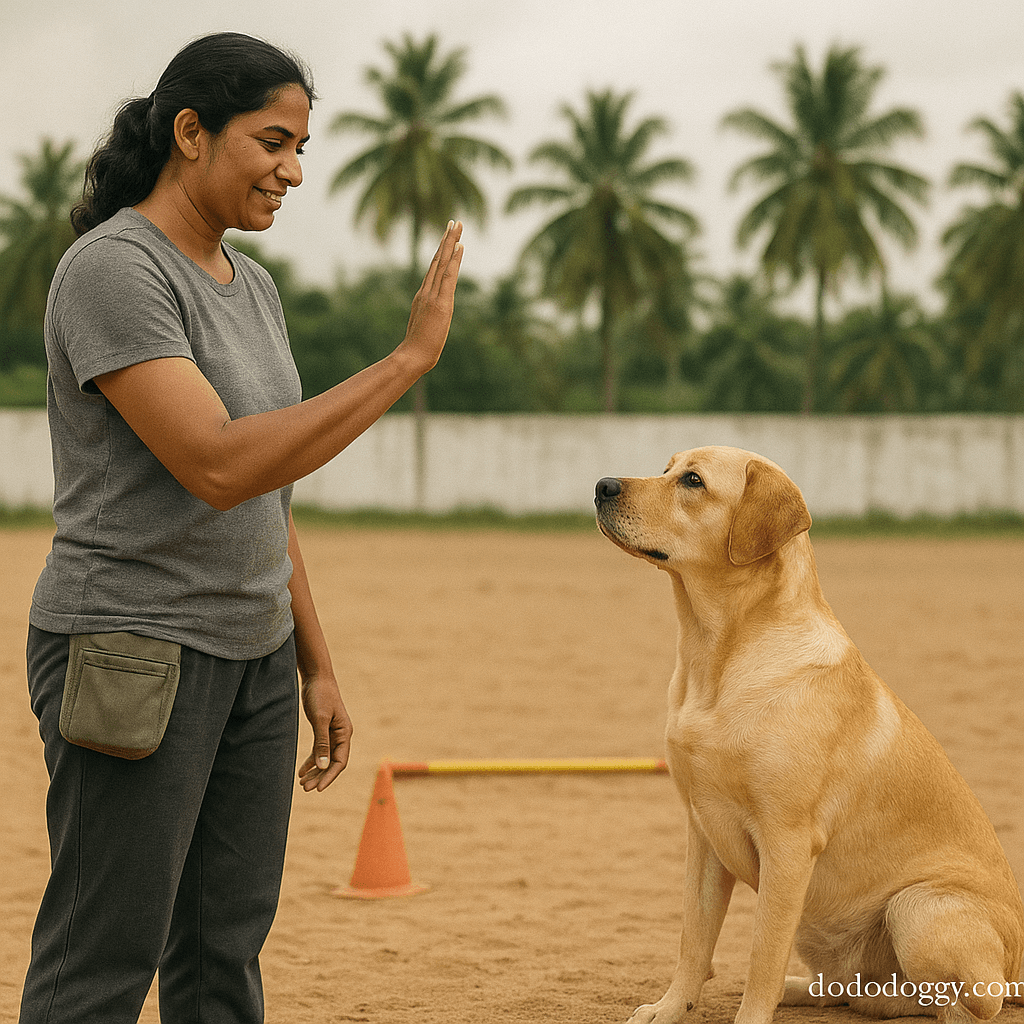
House training timelines vary significantly by breed, and in Indian high-rise conditions where every outdoor trip requires 10 to 15 minutes of logistics effort, that variation has real consequences. Indian Pariah Dogs (INDogs) are the fastest to train: typically reliable in 10 to 14 weeks. Domestically adapted to Indian conditions for approximately 4,500 years, INDogs tolerate elevator rides, construction noise, and monsoon disruption with minimal setback. If you adopted an Indie, you picked the most naturally suited breed for apartment training.\n\nLabrador Retrievers, India's most popular apartment breed, are food-motivated and eager to please. Most achieve reliable house training by 12 to 16 weeks of training with a consistent crate and schedule. Their energy level means they need 2 to 3 active outdoor trips per day on top of toilet trips, which is worth planning for in a high-rise schedule.\n\nBeagles are the most common house training failure case in Indian apartments. Scent-driven and highly distractible outdoors, they follow a smell trail rather than eliminate, return indoors, then eliminate in the "safe" apartment. Take them to the same spot every time to build strong location-scent association and add 10 minutes to every outdoor trip to allow sniffing before expecting elimination. Plan for 16 to 20 weeks.\n\nShih Tzus and Pugs have tiny bladder capacity requiring outdoor trips every 45 to 60 minutes at 8 weeks, nearly double the frequency of a same-age Labrador. For high-rise apartments, the logistics mean the balcony is the primary toilet location for the first 8 to 10 weeks, with outdoor trips added gradually as bladder control develops.
Breed-specific house training timelines and strategies for Indian apartment conditions — Training Timeline, Key Challenge in Indian Apartments
| Breed | Training Timeline | Key Challenge in Indian Apartments |
|---|---|---|
| Indian Pariah Dog (INDog) | 10 to 14 weeks | Minimal; high stress tolerance to urban environments |
| Labrador Retriever | 12 to 16 weeks | High energy; needs active exercise separate from toilet trips |
| Beagle | 16 to 20 weeks | Scent distraction causes outdoor trip failure; eliminates inside instead |
| Shih Tzu and Pug | 16 to 20 weeks | Trip required every 45 to 60 minutes at 8 weeks; logistics-intensive |
| Dachshund | 18 to 24 weeks | Cold marble floors cause reluctance to move quickly; stubborn streak |
Breed-specific house training timelines and strategies for Indian apartment conditions — Adaptation Strategy
| Breed | Adaptation Strategy |
|---|---|
| Indian Pariah Dog (INDog) | Standard crate and schedule protocol works well |
| Labrador Retriever | 2 to 3 active outdoor trips per day plus toilet trips |
| Beagle | Same outdoor spot every trip; add 10 minutes per trip for sniffing |
| Shih Tzu and Pug | Balcony elimination zone as primary toilet for first 8 to 10 weeks |
| Dachshund | Warm rug path from crate to door; never use punishment |
Emergency Indoor Solutions: Puppy Pads, Artificial Grass, and Transitioning to Outdoors
Puppy pads available in India: Beaphar Puppy Training Pads cost Rs 499 for 30 pads at HUFT, PetsWorld, and Amazon.in. All4Pets disposable pads run Rs 399 for 30 pads. The Savic Puppy Trainer tray-and-pad system (Belgian brand, available on Amazon.in) costs Rs 850 for the tray plus 10 pads; the tray holds the pad in place and prevents the puppy from shredding it. Scented pads that mimic grass odor outperform unscented options because they more convincingly replicate the outdoor elimination cue.\n\nArtificial grass patches with drainage trays (Rs 1,200 to Rs 2,500 from HUFT or Amazon.in) are the better balcony choice over flat puppy pads. Puppies trained on grass texture transfer to outdoor grass elimination far more readily than pad-trained puppies. This single factor has the biggest practical impact on a clean indoor-to-outdoor transition at 4 to 5 months.\n\nThe most common mistake in Indian apartments: failing to build a deliberate transition plan. Puppies allowed to use pads or balcony grass indefinitely develop a strong indoor elimination preference that's very hard to break after 6 months. Start the transition at exactly 4 months; reduce indoor options one session at a time while increasing outdoor trip frequency and reward value.\n\nFor dogs under 5 kg (Shih Tzu, Toy Poodle, Chihuahua), litter box training is a viable permanent solution in Indian high-rise apartments where outdoor trips are genuinely difficult. The Ferplast Genico dog litter tray (Italian brand, Rs 2,200 to Rs 3,500 in India) uses synthetic grass or wood pellet litter. Build a monsoon contingency kit: 30 or more puppy pads, one bottle of enzymatic cleaner, and a waterproof cover for the balcony grass patch. During heavy Mumbai or Chennai monsoons, you can face 72 to 96 hours of continuous downpour where outdoor trips are genuinely dangerous.
House Training Troubleshooting: Problems Unique to Indian Apartment Living
Elevator phobia can masquerade as house training failure. If a puppy eliminates outdoors successfully for 2 weeks and then starts having indoor accidents with no other change, suspect that an elevator or lobby encounter (a delivery person, a neighbor's dog, a loud vehicle) has created anxiety. The puppy now holds its bladder outdoors to return home faster. Restart elevator desensitization at day 1 of the protocol while using the balcony as a temporary relief outlet.\n\nStray dog encounters in society gardens cause house training regression in 30 to 40% of young puppies, according to the DogSpot India community. A confrontation creates a negative association with the designated elimination spot; the puppy sniffs urgently, refuses to squat, then eliminates inside. Temporarily relocate the outdoor spot to a different garden area, or ask security to clear strays from the garden during toilet windows.\n\nMarble floor accidents spread rapidly and silently, expanding the scent-marked zone before you notice. A UV blacklight reveals dried urine invisible to the naked eye on light marble; UV flashlights cost Rs 200 to Rs 500 on Amazon.in. Use enzymatic cleaner on every UV-identified spot, not just the visibly wet area.\n\nNew household arrivals trigger house training regression in 60 to 70% of dogs. In Indian joint family or multi-generational apartments, relatives arriving for a newborn cause the same disruption as the baby itself: broken routine and reduced owner attention are the primary drivers. Dogs prone to separation anxiety are especially vulnerable to regression during these transitions. Return to hourly supervised toilet trips for 2 weeks, heavy reward reinforcement, and re-establish the crate schedule fully. Over-punishing accidents is the leading cause of prolonged training failure in Indian apartments; the American Veterinary Society of Animal Behavior's position statement on punishment confirms that punishment more than 2 seconds after an accident has zero corrective effect and pushes the puppy to hide elimination behavior in corners and under furniture.
Frequently Asked Questions
Why don't Western house training guides work for Indian apartment dogs?
Western guides assume ground-floor access or a fenced yard reachable within 30 seconds of a puppy's cue. In Indian high-rises across Mumbai, Pune, and Bengaluru, getting outside involves leashing, carrying the puppy pre-vaccination, waiting 3 to 7 minutes for an elevator, and crossing a lobby before reaching any outdoor surface. An 8-week-old puppy holds its bladder for roughly 60 to 90 minutes. That 10 to 15 minute exit process means timing must be proactive, not reactive. Western guides also never address marble flooring, vaccination-period logistics, RWA restrictions, or monsoon-season training alternatives that every Indian apartment owner genuinely needs.
What size crate should I buy for my Indian apartment puppy?
The crate should let your puppy stand without hunching, turn in a full circle, and lie down flat. That is the maximum. Any larger and the puppy will use a far corner as a bathroom, defeating crate training entirely. For Indian apartments, a wire crate with a divider panel (Rs 1,500 to Rs 3,500 from brands like Savic, Trixie, or All4Pets on Amazon.in or Flipkart) is the most cost-effective option. The divider lets you reduce interior space for a small puppy and expand it as the dog grows, saving you from buying multiple crates across the entire training period.
What should I set up on my balcony for puppy toilet training?
An artificial grass patch with a drainage tray is the best balcony setup for Indian apartment puppies. These cost Rs 1,200 to Rs 2,500 at Heads Up For Tails stores in Mumbai, Delhi, Bengaluru, Pune, and Hyderabad, or on Amazon.in. Artificial grass texture transfers to outdoor grass elimination more readily than flat puppy pads do, making the eventual outdoor transition much smoother. Add a waterproof cover as part of your monsoon contingency kit so the setup remains usable during the 72 to 96 hours of continuous rain that Mumbai and Chennai face during peak monsoon. Clean the tray with enzymatic cleaner every 2 to 3 days to prevent scent buildup in the wrong locations.
How do I introduce my puppy to the elevator without causing anxiety?
Take 5 to 7 days for elevator desensitization before using it for any toilet trips. Day 1: walk to the elevator, give a treat, return to the apartment. Day 2: enter the elevator with the doors open, give a treat, step back out. Day 3: ride one floor, treat, return. Extend the ride by one floor each subsequent day. Puppies rushed into elevator rides without this preparation develop travel anxiety that causes them to hold their bladder through the entire outdoor trip and then eliminate the moment they re-enter the apartment. Run this desensitization protocol during week 1, before the first toilet trip ever happens, so the elevator is already a neutral familiar space when it counts.