Key Takeaways
- Tail position, ear angle, and eye shape each carry specific emotional meaning — missing these costs you early warning of aggression or fear
- Circling, licking, head tilting, and zoomies all have evolutionary explanations rooted in survival instinct
- Diwali fireworks and Mumbai monsoon thunder are the two biggest anxiety triggers for Indian urban dogs
- Indian Pariah Dogs show distinctly lower separation anxiety and noise sensitivity than Western breeds like Labs and Goldens
- Barking, destructive chewing, and resource guarding respond well to consistent positive reinforcement, with results visible in 3-6 weeks
- A behavioral consultation at a metro vet clinic costs Rs 2,000-5,000 — worth it when anxiety disrupts sleep or causes self-harm
Why Getting This Right Matters More in India
My Labrador Bruno once snapped at my cousin visiting from Pune. Total shock — Bruno had never done anything like that in four years. When I replayed the incident in my head, I realized I'd completely missed the warning signs he'd been giving for twenty minutes: stiff tail, whites of his eyes showing, weight shifting back. I didn't know what I was looking at.
Indian households throw some genuinely unusual behavioral challenges at dogs. Firecrackers from Diwali through New Year, two separate monsoon seasons depending on which coast you're on, joint family setups where ten different people give different commands, household staff your dog sees as low-status humans. None of these feature in the British dog training manuals that dominate Indian bookshops.
This guide is about learning the actual language dogs use. Body language, stress signals, behavioral quirks, breed differences, and what to do when things go wrong — all grounded in what actually happens in Indian homes.
Reading Dog Body Language: The Signals That Actually Matter
Research published by the American Kennel Club estimates that 93% of dog communication is non-verbal. Yet most Indian dog owners focus almost entirely on vocalizations — bark pitch, whine frequency — while ignoring the continuous body language broadcast happening right in front of them.
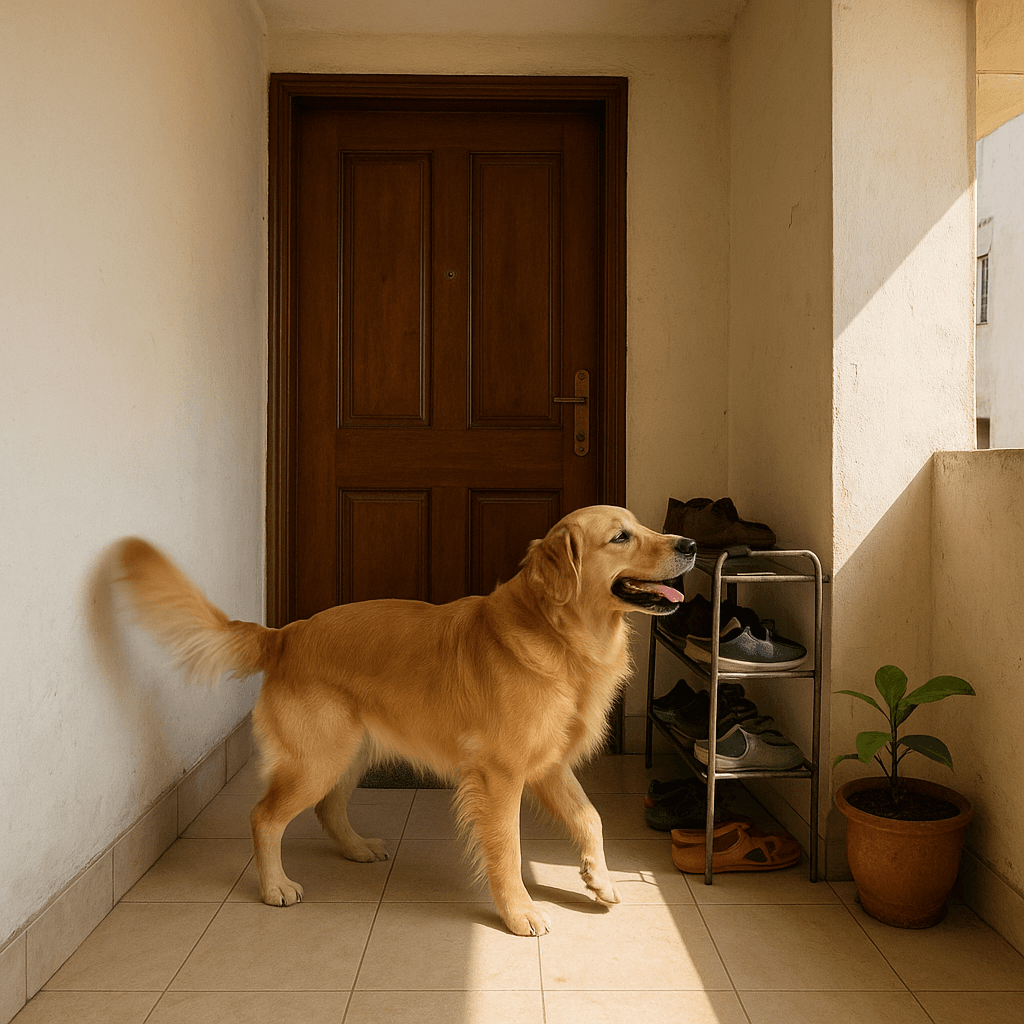
Start with the tail. High and stiff means alert, possibly escalating to aggressive — Bruno does this every time the Amazon delivery guy rings. A relaxed wag, where the entire rear end moves, is genuine happiness. Tucked tail is fear or submission. There's also the directional wag that many owners miss entirely: studies show right-biased wagging indicates positive emotion while left-biased signals anxiety or uncertainty.
Ears are emotional antennae. Forward and pricked means active interest — Kuttie, my INDog, looks like she's wearing satellite dishes when she hears something interesting. Ears pinned flat against the head is fear or appeasement, the same signal you'll see on any dog getting into a vet car. Relaxed ears hanging naturally means comfortable and unstimulated.
Eyes carry the richest information. Soft eyes with a relaxed face signal affection and trust. Hard, unblinking stares with tense facial muscles are a threat or challenge — don't misread this as your dog being "focused." The most important eye signal to know: whale eye, where the whites of the eye become visible at the corners. That's stress, discomfort, or a dog pushed past their comfort zone. I saw it on Bruno for twenty minutes before he snapped.
One thing that trips up Indian dog owners specifically: heat panting versus stress panting. In Chennai from May through July, temperatures stay above 38°C and dogs pant constantly. But heat panting looks different from stress panting. Heat panting is rapid, shallow, tongue fully extended, and the dog is otherwise relaxed. Stress panting is slower, often paired with a closed or partially closed mouth in between breaths, and comes with other tense body signals. If your dog is panting but also has pinned ears and whale eye, that's not heat.
Body Language Quick Reference: Signal → Meaning → Context
| Signal | What It Means | Common Indian Trigger |
|---|---|---|
| Tail high and rigid | Alert, potentially aggressive | Delivery staff, meter readers |
| Tail right-biased wag | Positive emotion | Owner returning home |
| Tail tucked under belly | Fear or submission | Thunder, Diwali crackers, scolding |
| Ears forward and pricked | Active focus or interest | Food packet sounds, squirrels |
| Ears flat against head | Fear or appeasement | Vet clinic, aggressive dogs |
| Soft eyes, relaxed face | Trust, affection | Cuddling, play sessions |
| Whale eye (whites visible) | Stress, discomfort | Being hugged, cornered |
| Rapid shallow panting, relaxed body | Heat thermoregulation | Summer afternoons 35°C+ |
| Slower panting with tense signals | Anxiety or pain | Fireworks, car rides, crowds |
| Teeth bared, muzzle wrinkled | Aggression warning | Resource guarding, territory |
Pro Tip
During Indian summer (April-June), dogs pant heavily during peak hours (11am-4pm). This is thermoregulation, not distress. Look at the full picture: if the tail is loose, ears are natural, and the dog settles easily in shade with water, they're just hot. Combine panting with whale eye or tucked tail and you're looking at genuine anxiety.
Why Dogs Do the Weird Things They Do
Every odd dog behavior has a reason. Usually an evolutionary one.
Circling before lying down: Bruno has a Rs 3,200 orthopedic bed from Heads Up For Tails and still circles four times before dropping onto it. Research shows 86% of domestic dogs maintain this pre-sleep circling. Wild dogs and wolves did this to flatten grass, check for snakes, and orient themselves to threats. The bed quality is irrelevant to the hardwired routine. If your dog suddenly starts circling ten or more times and struggling to settle, that's different — that can indicate joint pain or early neurological issues, worth a vet check.
Excessive licking: Dogs lick humans an average of 10-30 times per greeting. It's information gathering (your skin tells them where you've been, what you've eaten, whether you're stressed), affection, and pack grooming behavior combined. Context determines whether it's normal. Kuttie licks my hand every single time I come home — predictable, brief, part of greeting. Obsessive licking of furniture, walls, paws, or air is different. That points to nausea, acid reflux, allergies, or anxiety. During Chennai's October-December monsoon, I see paw licking spike in dogs from fungal infections — always check between toes for redness and that distinctive sour smell.
Head tilting: Studies show 78% of dogs tilt their heads when processing speech or complex sounds. Dogs hear up to 65,000 Hz (humans max at 20,000 Hz) but their ear structure makes pinpointing vertical sound location difficult. The tilt adjusts ear canal orientation to better triangulate the sound source. It also shifts their muzzle out of their visual field so they can read your facial expression more clearly. Bruno tilts his head every time I say "walk" in any context — even when I'm clearly on the phone and not talking to him.
Play bow: Front legs extended, rear end up, tail wagging. Used by 94% of dogs to signal "I want to play and I'm not being aggressive about it." It's a universal reset signal that works across species — Kuttie play bows at the neighbor's cat, which the cat ignores, but the intention is clear.
Yawning when not tired: Part of what behaviorists call calming signals. If your dog yawns during a scolding or at the vet clinic, they're not bored. They're communicating discomfort and trying to self-soothe. It's worth knowing.
Zoomies (FRAPs — frenetic random activity periods): About 45% of dog owners report regular post-bath or evening zoomies. Perfectly normal energy release. Pom-Pom, my friend's Spitz in Bangalore, gets zoomies every single time after a bath without exception. Don't try to stop them — just make sure the floor isn't slippery.
Recognizing Stress and Anxiety: Early Signals Save You from Late-Stage Problems
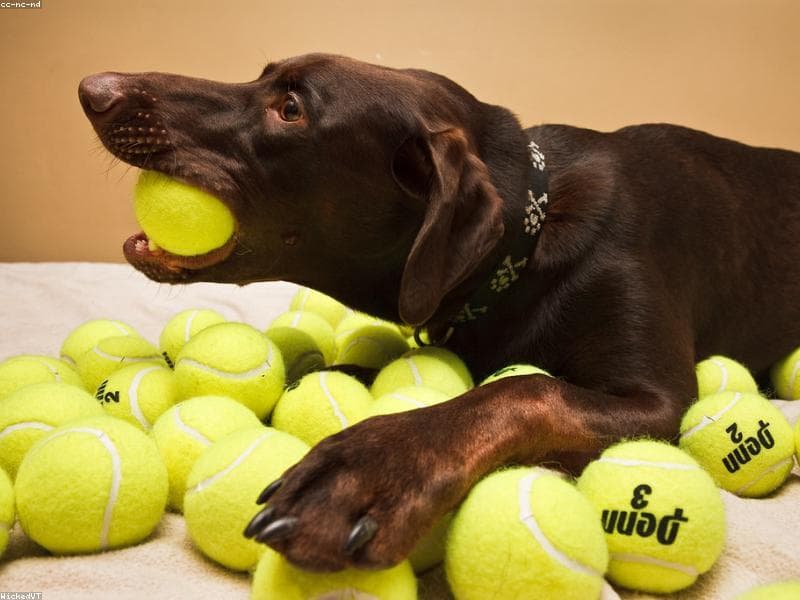
Dogs are remarkably good at hiding discomfort, an instinct inherited from wild ancestors where showing weakness attracted predators. By the time obvious symptoms appear, the anxiety is usually well-established. The early signals are subtle enough that most owners miss them for weeks.
Physical early signals to watch for: lip licking when there's no food around, frequent yawning in stimulating situations, excessive blinking, sudden body shaking as if wet (when they're not), and increased shedding beyond seasonal norms. Bruno started shedding in clumps two weeks before I connected it to the construction noise from the building going up next door. Stress sheds are different from seasonal sheds — the fur comes away in larger amounts with minimal effort.
Behavioral early signals: breaking previously reliable house training (stress overrides learned behavior), sudden food refusal in a dog that normally inhales meals, withdrawing from family interaction, or increased clinginess if the dog is normally independent. Kuttie is an independent INDog who usually greets me once and then goes back to her spot. When she started following me room to room last monsoon, I knew something was off — turned out she was reacting to low-frequency thunder I couldn't hear.
Late-stage stress signals are harder to miss: panting without heat or exercise, pacing without settling, destructive behavior targeting exit points (doors, window sills), excessive barking when alone, and compulsive behaviors like tail chasing or spinning. If you're at this stage, the anxiety has been building for a while.
According to VCA Animal Hospitals, the most commonly missed stress signal is excessive shedding — owners attribute it to diet or grooming when it's actually the body's physical stress response. In India, this gets doubly confusing because seasonal shedding in April-May is normal and significant. Track the pattern: seasonal shedding follows weather changes, stress shedding follows stressful events.
Indian urban dogs face three primary anxiety triggers that don't appear in Western literature. Diwali fireworks — and the extended cracker season that now runs from Dhanteras through New Year in many cities — affect an estimated 78% of Indian urban dogs. Mumbai, Delhi, and Kolkata have particularly intense cracker seasons. The monsoon brings its own trigger: low-frequency thunder that dogs hear more acutely than we do, plus the barometric pressure drop before storms that some dogs appear to sense hours early. And building construction: every major Indian metro is permanently under construction, producing low-frequency vibrations and intermittent loud impacts that cause chronic low-level stress in dogs living nearby.
Warning
Sudden behavioral change in a dog with no prior history is a medical flag, not just a behavioral one. Pain from injuries, arthritis, ear infections, or dental disease commonly triggers what looks like aggression or anxiety. Before assuming a behavioral cause, rule out physical pain — a vet consultation costs Rs 400-800 at most metro clinics and should always be the first step.
Managing Diwali, Monsoon, and Festival Anxiety: What Actually Works
I've tried nearly everything with Bruno over six Diwali seasons. Here's what made a real difference versus what looked good on paper.
Environmental control is the foundation. Close every window and door in the house from around 6pm on cracker-heavy nights. Draw heavy curtains — this reduces both sound transmission and the visual flash of fireworks. Set up an interior room (ideally a bathroom or walk-in closet, rooms with fewer external walls) with Bruno's own bed and a worn t-shirt of mine. Interior rooms in concrete Indian construction are meaningfully quieter than rooms with external walls.
White noise works better than music for most dogs. A ceiling fan or AC on high creates consistent background masking noise. If your dog is particularly reactive, a white noise machine placed near the den space (not in their face) running from before the crackers start creates a consistent sonic environment rather than a sudden intrusion. The key is starting before the anxiety response begins — not after.
Pressure wraps like the Thundershirt (Rs 2,200-3,500 at PetStop, Cessna, or online) help about 60% of dogs according to the research cited by Wagr Petcare. They work via constant gentle pressure, similar to swaddling. Fit matters — too loose and they do nothing. Try it a few days before Diwali so your dog isn't associating it for the first time with an already-stressful night.
For moderate to severe anxiety, consult your vet at least three to four weeks before Diwali. Options include natural supplements like melatonin or herbal calming aids, and for severe cases, prescription anti-anxiety medication taken the evening of. Vetic, Cessna Lifeline, and DCC Animal Hospital in major cities see a spike in anxiety-related consultations in October — book early. A consultation runs Rs 600-1,200 at these clinics; behavioral medications for the night cost Rs 200-800 depending on the drug.
What doesn't work: punishing your dog for panicking (it adds to the anxiety), trying to flood them with exposure during acute distress, or leaving them alone with just a chew toy during peak cracker hours. These approaches make things worse.
Problem Behaviors: Barking, Chewing, and Aggression
Barking is communication before it's a problem. The question is always: what is the dog communicating and why? Alert barking at the door is different from frustration barking on the balcony watching street dogs, which is different from demand barking to make you throw the ball again.
Alert barking: manageable with a solid "quiet" command. The sequence is let them give one or two alert barks (they need to communicate), then ask for quiet, then reward silence immediately with a high-value treat. Kibble won't cut it for counter-conditioning — use boiled chicken or cheese. Consistency across everyone in the household matters more than the technique. If five family members handle this five different ways, Bruno will bark at the door forever.
Excess barking from apartment balconies is a specifically Indian urban problem. Dogs who spend long periods watching street activity — dogs, crows, delivery bikes, vegetable vendors — build up frustration that exits as prolonged barking. The fix isn't removing balcony access entirely; it's structured access (specific supervised times) combined with enough physical and mental exercise that the frustration level stays manageable. A dog who gets 45 minutes of actual exercise daily barks less than one who gets 15 minutes of leash walking.
Destructive chewing in puppies under 12 months is almost always teething plus under-stimulation. Frozen Kongs (stuffed with peanut butter or curd, frozen for 30 minutes) buy you 20-30 minutes of focused chewing on the right object. Frozen raw carrots cost Rs 5 and last longer than most Rs 400 chew toys. For adult dogs chewing furniture, the root cause is almost always anxiety or under-exercise — find the root cause rather than just managing the symptom.
Resource guarding — growling or snapping when approached near food, toys, or sleeping spots — is serious and surprisingly common, especially in dogs with street-dog genetics or early shelter backgrounds. Don't punish the growl. The growl is communication; removing it through punishment doesn't remove the underlying discomfort, it just removes the warning. The dog learns to skip the warning and bite directly. Trade-up training, where you consistently approach and offer something better than what the dog has, is the right approach and takes 4-8 weeks of consistent daily practice.
According to Doggy Village India, separation anxiety is the most common presenting complaint from Indian apartment dog owners, with about 67% of urban dogs showing some symptoms. The hallmark is behavior that happens exclusively when owners leave: destructive behavior targeting doors and windows, sustained vocalization, and inappropriate elimination in dogs who are otherwise reliably trained.
Indian Breeds vs Western Breeds: Real Behavioral Differences
The behavioral differences between Indian native breeds and Western imports aren't just about heat tolerance. They run deeper than that, into independent thinking, noise adaptation, and anxiety profiles.
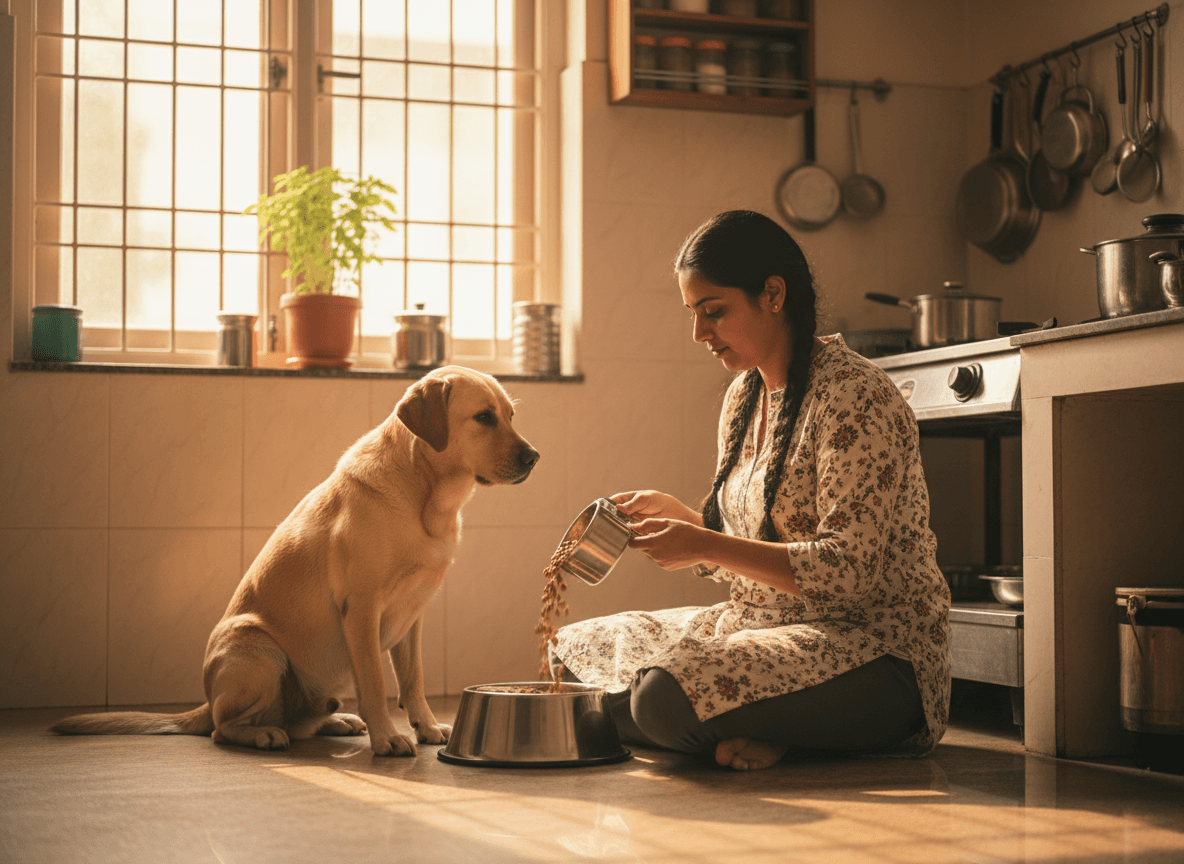
The Indian Pariah Dog (INDog) is a naturally evolved breed with roughly 15,000 years of selective pressure for survival in Indian conditions. According to research on their temperament compiled by DCC Pets, INDogs show lower rates of separation anxiety than most Western companion breeds, because they evolved as semi-independent scavengers rather than as purpose-bred companions requiring constant human proximity. Kuttie is proof — she's fine alone for six hours in a way that Bruno, my Labrador, absolutely is not.
INDogs and other native breeds like the Mudhol Hound and Chippiparai also adapted over generations to the specific acoustic environment of Indian streets: horns, construction, firecrackers, festival noise, crowd sounds. This isn't just familiarity — it's generational adaptation. Labs and Golden Retrievers bred in European kennels for generations face this soundscape as genuinely novel, which is part of why they score higher on noise sensitivity.
Rajapalayams are an interesting case. They're Indian-bred but show unusually high loyalty to one primary handler and can be genuinely standoffish with others in the household — different from the INDog's more distributed social bonding. If you adopt a Rajapalayam into a joint family of ten people, expect a much longer trust-building period than you would with a Labrador.
Behavioral Comparison: Indian Native vs Western Breeds
| Trait | Indian Breeds (INDog, Mudhol) | Western Breeds (Lab, GSD, Golden) |
|---|---|---|
| Heat tolerance | Excellent above 40°C | Struggles above 33-35°C |
| Separation anxiety risk | Low (evolved independent) | Moderate to high (bred for companionship) |
| Street noise adaptation | Excellent (generational) | Requires extensive socialization |
| Stranger acceptance | Cautious but not aggressive | Variable by breed and training |
| Training responsiveness | Intelligent, can be selective | Eager to please, highly consistent |
| Behavioral maturity age | 10-14 months | 18-24 months |
| Exercise needs | Moderate (1-2 hours daily) | High (2+ hours for active breeds) |
When to Get Professional Help
Most behavioral issues respond well to owner-led positive reinforcement training. But some situations call for a professional, and waiting six months costs you more than booking the consultation early.
Consult a veterinary behaviorist (or a certified trainer who works under vet supervision) if: aggression is sudden in a dog with no prior history, if your dog has bitten someone hard enough to break skin, if anxiety is disrupting their sleep or causing self-harm (obsessive licking to the point of wounds), or if a 4-6 week consistent training protocol hasn't produced visible improvement.
In metro cities, expect Rs 2,000-5,000 for an initial behavioral consultation at clinics like Cessna Lifeline (Bangalore), DCC Animal Hospital (Delhi), or Wiggles (Mumbai). This is higher than a standard vet visit but covers a 60-90 minute assessment with a written treatment plan. Follow-up sessions are usually Rs 1,000-2,500. For comparison, replacing furniture chewed by an anxious dog over six months costs significantly more.
If medications are part of the treatment plan (common for severe separation anxiety or generalized anxiety disorder), the vet will typically start with a 4-6 week trial. Common options include fluoxetine or clomipramine — both generic and available in India for Rs 200-600 per month. Medication doesn't replace training; it creates enough baseline calm that the training can actually work.
Building Better Communication Every Day
After five years with Bruno and three with Kuttie, the biggest shift was realizing that understanding behavior isn't a project you complete. It's an ongoing practice of paying attention.
The specific habits that made the biggest difference: spending five minutes daily just watching each dog, not interacting, just observing their resting state and normal range of expression. This makes deviations from normal obvious. Keeping a simple note on the phone of anything unusual — a behavioral log takes thirty seconds per entry and becomes genuinely useful when you're trying to explain something to a vet three weeks later.
Check out our detailed dog body language guide for a deeper breakdown of each signal, and our separation anxiety guide if you're dealing with an anxious dog at home. If you're working through aggression specifically, the dog aggression training guide covers the full protocol.