Key Takeaways
- Dogs and humans share an oxytocin feedback loop triggered by mutual gazing, similar to the bond between a mother and infant (Nagasawa et al., 2015, Science)
- Tail wag direction matters: right-biased wags indicate positive emotions, left-biased wags signal withdrawal (Quaranta et al., 2007)
- Indian Pariah (Indie) dogs show affection differently from Western breeds, often with subtler body language and quiet loyalty rather than jumping or licking
- Dogs form secure attachment bonds to their owners, using them as a 'safe base' the way toddlers do with parents (Topal et al., 1998)
- Physical greeting at reunion raises oxytocin and lowers cortisol in dogs more than verbal greeting alone (Rehn et al., 2014)
The Science Behind Your Dog's Love
Your dog doesn't just tolerate you. According to a landmark 2015 study published in Science, dogs and humans share a biological bonding mechanism that evolved over 15,000 years of domestication. Researchers at Azabu University in Japan found that when dogs gaze at their owners, both species experience a spike in oxytocin, the same hormone that bonds mothers to newborns.
This oxytocin-gaze positive loop doesn't happen with wolves, even hand-raised ones. It's unique to the dog-human relationship. The study measured urinary oxytocin levels in 30 dog-owner pairs and found that owners whose dogs gazed at them longest had a 130% increase in oxytocin, while the dogs themselves showed a 300% increase.
So when your Indie, Lab, or Pomeranian stares at you with those soft eyes, it's not just cute. It's a biological bonding event happening in real time. Knowing which signals indicate genuine attachment (versus trained behavior or anxiety) helps you understand your dog at a deeper level.
Sign 1: The Soft Gaze (Not the Hard Stare)
A relaxed, soft-eyed look with slightly squinted eyelids is the canine equivalent of saying 'I trust you completely.' The muscles around the eyes (orbicularis oculi) relax, the brow smooths, and the gaze lingers without intensity. This is distinct from a hard, fixed stare, which signals resource guarding or a challenge.
Research by Nagasawa et al. confirmed that dogs who held mutual gaze with owners for the longest durations triggered the strongest oxytocin response in both species. The key detail: the gaze must be voluntary. Forcing eye contact can feel threatening to dogs, especially Indian Pariah dogs who retain more of their ancestral wariness.
DodoDoggy Tip
Indian Pariah dogs tend to hold shorter but more frequent gazes than Labrador Retrievers. If your Indie glances at you repeatedly throughout the day rather than holding a long stare, that's their version of the soft gaze. Don't mistake brevity for indifference.
Sign 2: Right-Biased Tail Wagging
Not all tail wags mean the same thing. A 2007 study by Quaranta, Siniscalchi, and Vallortigara00949-9) published in Current Biology found that dogs wag their tails asymmetrically depending on their emotional state. Right-biased wags (controlled by the left brain hemisphere) signal approach motivation and positive feelings. Left-biased wags indicate withdrawal or negative emotions.
When your dog sees you after being apart, watch the tail direction. A wag that sweeps more to the right side of the body indicates genuine happiness. The researchers found this rightward bias was most pronounced when dogs saw their owner, compared to an unfamiliar person or a dominant unfamiliar dog.
Breed note for Indian conditions: Indian Spitz dogs often have curled tails that make wag direction harder to read. Focus instead on the base of the tail. If the base wiggles enthusiastically and the whole rear end sways, that's your cue. Dachshunds and Beagles (both popular in Indian metros) show exaggerated full-body wags that make directionality obvious.
Sign 3: Leaning Into You
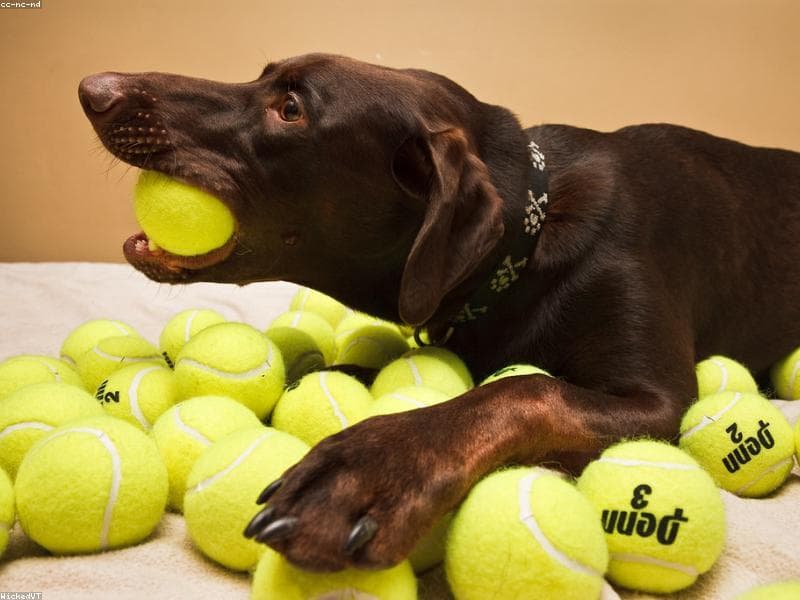
When your dog presses their body weight against your leg or side, they're doing more than seeking warmth. This contact-seeking behavior mirrors how pack animals reinforce social bonds. Dogs distribute their weight toward trusted companions, literally leaning on them for security.
Behavioral researchers categorize this as a 'contact comfort' behavior, rooted in the same neural pathways that make puppies pile on top of each other during sleep. The pressure activates calming signals in the dog's nervous system, lowering heart rate and cortisol levels.
Indian Pariah dogs raised in homes often develop this habit gradually. Because they retain more independent instincts than selectively bred companion breeds, an Indie who leans against you is showing a particularly strong bond. They've chosen closeness despite their genetics favoring self-reliance. German Shepherds and Golden Retrievers, both common in Bangalore, Delhi, and Mumbai households, lean heavily and frequently. It's almost their default resting position near trusted humans.
Sign 4: Sleeping Near You (or On You)
Sleep is when dogs are most vulnerable. Where they choose to sleep reveals who they trust most. A dog who sleeps in the same room, at the foot of your bed, or pressed against you is displaying what behaviorists call 'affiliative resting,' a pattern seen in bonded social groups across canid species.
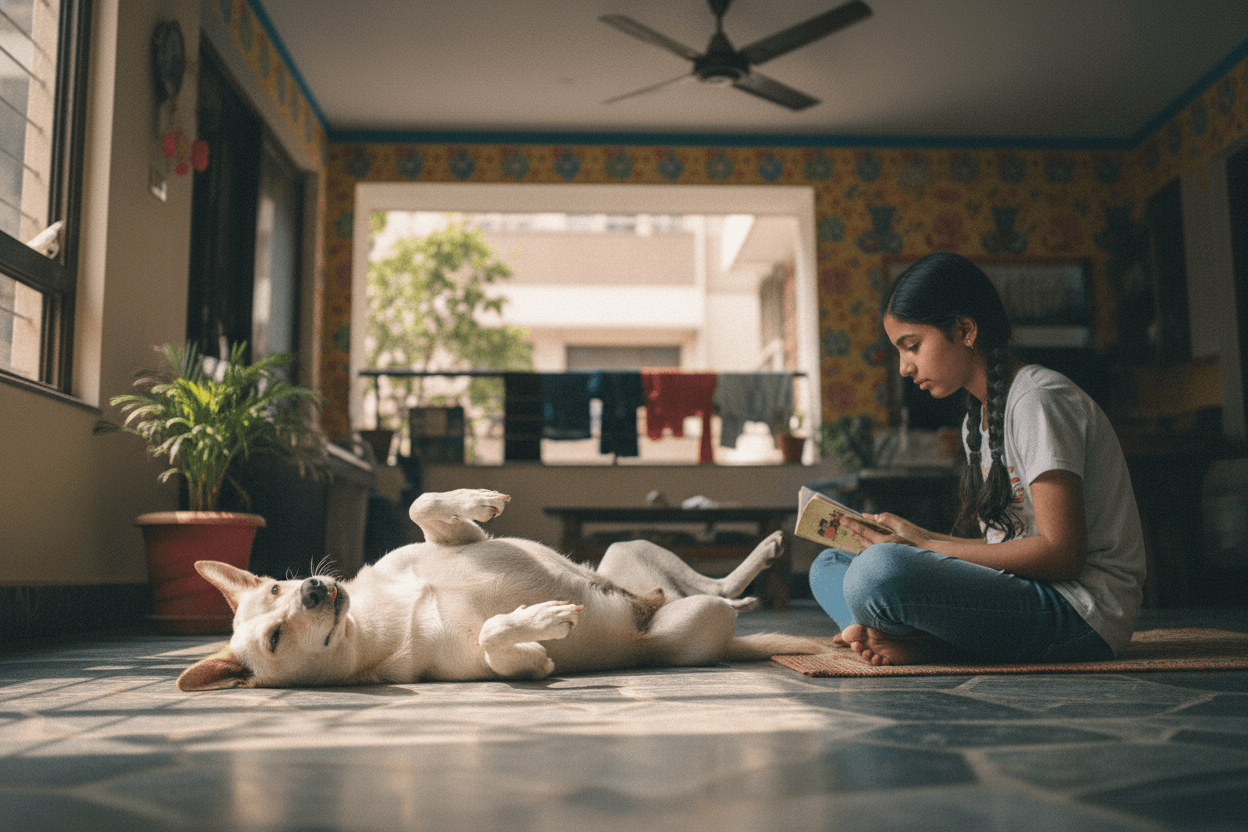
The position matters too. Belly-up sleeping near you (exposing the vulnerable abdomen) indicates complete trust. Side sleeping with legs extended shows relaxation. The 'donut' curl against your body combines warmth-seeking with social bonding.
In Indian apartment settings where space is limited (a typical 2BHK in Mumbai or Bangalore), dogs naturally sleep closer to their owners. During monsoon season, when thunder and heavy rain increase anxiety, watch for your dog moving from their usual spot to be closer to you. This proximity-seeking during stress is a textbook sign of secure attachment.
Sign 5: The Full-Body Greeting
A 2014 study by Rehn, Handlin, and Keeling measured hormonal responses in dogs during reunion with a familiar person after separation. Dogs who received both physical and verbal greeting showed significantly higher oxytocin levels and lower cortisol compared to dogs who got only verbal acknowledgment or were ignored.
That ecstatic greeting your dog gives you, the spinning, the full-body wiggle, the zooming around the room, isn't just excitement. It's a cortisol dump. Your arrival resolves the stress of separation, and the physical reunion amplifies the oxytocin response. The intensity of greeting correlates with the strength of the attachment bond.
Breed variations are significant here. Labrador Retrievers (India's most popular breed) tend to jump, lick, and vocalize during greetings. Indian Pariah dogs may greet more subtly: a quick tail wag, a nose touch to your hand, and then following you around the house. Pugs and Shih Tzus (common in Indian apartment homes) often do full-body wiggles and snort with excitement.
Sign 6: Bringing You Their Favorite Things
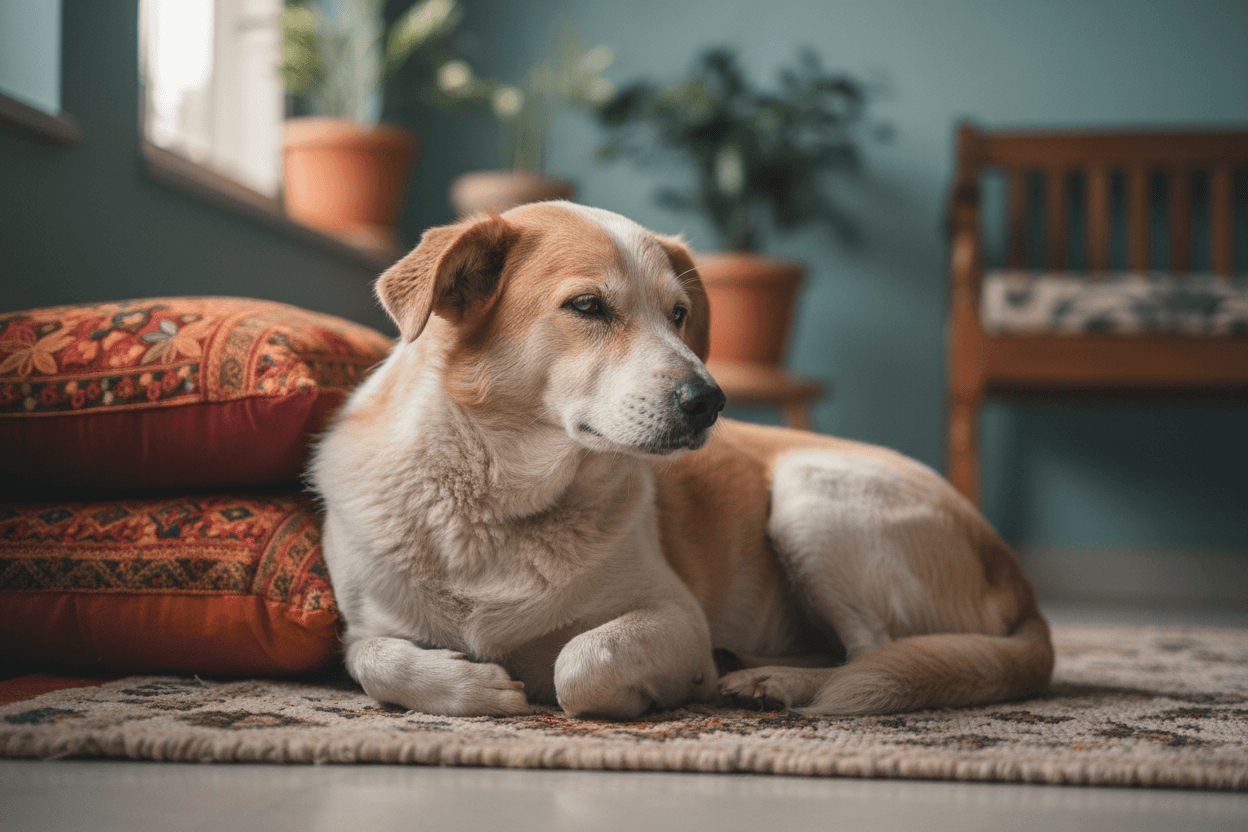
When your dog drops a toy, a shoe, or a random sock at your feet, they're engaging in resource-sharing behavior. Canine cognition researchers at Eotvos Lorand University in Budapest found that 'gifted word learner' dogs were significantly more likely to bring novel objects to their caregivers to initiate interaction, a behavior that mirrors early communication in human toddlers.
This isn't always a play request. Dogs who bring you their most prized possession (that one chewed-up squeaky toy they guard from other dogs) are performing a trust display. They're sharing a valued resource with someone they consider part of their inner circle.
Retrieving breeds do this instinctively, which is why Labradors and Golden Retrievers in Indian homes often greet you with something in their mouth. Indie dogs raised with toys may bring objects less frequently but more selectively, choosing specific items for specific people in the household.
Sign 7: Checking In During Walks
The 'secure base effect' is a concept from attachment theory, first applied to dogs by Topal, Miklosi, Csanyi, and Doka in 1998:-a-Topa%CC%81l-Mikl%C3%B3si/d5667bd3f1a8915c1088ec38bc95d9318bbb3d4d). Just as human toddlers explore freely when their parent is nearby but become distressed when separated, dogs use their owners as a secure base from which to explore the world.
On walks, this shows up as periodic 'check-ins,' your dog runs ahead to sniff something, then glances back at you or trots back to your side before exploring again. Research found that dogs explore new environments more confidently and for longer durations when their owner is present versus a stranger.
Morning walks in Indian parks (Cubbon Park in Bangalore, Lodhi Garden in Delhi, Oval Maidan in Mumbai) are a great place to observe this. Your dog may seem distracted by other dogs, squirrels, or street food smells, but if they keep circling back to your position, that's the secure base effect in action.
Sign 8: Following You Room to Room
Behaviorists distinguish between 'shadowing' (following driven by anxiety about being left) and 'companionate following' (choosing proximity because it feels good). The difference lies in body language. An anxious follower pants, paces, and shows tension in the jaw and shoulders. A companionate follower moves casually, often settling down once they can see you.
A 2020 study in Frontiers in Psychology found that dogs classified as securely attached (about 61% of the tested population, similar to the proportion in human toddlers) showed relaxed following behavior. They'd settle in whatever room the owner occupied but didn't panic when the owner moved.
In Indian joint-family homes where multiple people are around, pay attention to which family member your dog follows most. Dogs typically shadow their primary attachment figure, the person who feeds, walks, and spends the most one-on-one time with them. In homes with domestic help, dogs often distinguish clearly between the person who feeds them and the person they're bonded to.
Sign 9: Exposing Their Belly
A dog rolling onto their back to show you their belly is displaying 'ventral recumbency,' the most vulnerable position a dog can assume. The abdomen houses internal organs with no bony protection, so this posture signals absolute trust that you won't harm them.
Context determines meaning. A slow, relaxed roll with a loose, wiggly body and soft eyes means 'I love you, please rub my belly.' A quick flip during play with a tense body and tucked tail is a submissive appeasement gesture, different emotional content entirely.
Breed differences: Indian Pariah dogs are less likely to expose their belly to anyone outside their core family. This cautious approach comes from their independent temperament. A belly roll from an Indie carries more weight than the same gesture from a Labrador, who might roll for anyone offering scratches. Dachshunds in Indian homes often do a half-roll, staying partially on their side, which is their compromise between wanting belly rubs and maintaining some alertness.
Sign 10: Yawning When You Yawn
Contagious yawning in dogs is linked to empathy and social bonding. A 2013 study from the University of Tokyo found that dogs yawned more in response to their owners' yawns than to strangers' yawns. The researchers controlled for stress-related yawning and confirmed the response was driven by emotional connection, not anxiety.
Further research showed that dogs with stronger bonds to their owners (measured through behavioral attachment tests) were more susceptible to contagious yawning. Puppies under 7 months didn't show the effect, suggesting it develops alongside the attachment bond.
Try it yourself: yawn deliberately in front of your dog when they're relaxed and watching you. If they yawn within 5 minutes, that's a genuine empathic response. Dogs who mirror your yawns consistently are demonstrating emotional attunement that goes beyond basic training. Our basic training guide covers this in detail.
How Indian Breeds Show Love Differently
India's dog population includes a unique mix of native breeds (Indian Pariah, Rajapalayam, Mudhol Hound, Chippiparai), popular foreign breeds (Labrador, German Shepherd, Golden Retriever, Pomeranian, Pug), and Indian Spitz. Each breed type expresses affection through different behavioral patterns shaped by their breeding history.
| Breed/Type | Primary Affection Signal | Subtlety Level |
|---|---|---|
| Indian Pariah (Indie) | Quiet following, brief eye contact, nose touches | High (easy to miss) |
| Labrador Retriever | Full-body greeting, toy bringing, constant contact | Low (very obvious) |
| German Shepherd | Leaning, following one person, protective positioning | Medium |
| Indian Spitz | Vocalizing, spinning, sitting on or near owner | Low to medium |
| Pug | Full-body wiggle, lap-seeking, snoring near you | Low (unmissable) |
| Pomeranian | Barking greeting, lap-sitting, pawing for attention | Low |
| Beagle | Nose nudges, howl greeting, leaning | Medium |
| Dachshund | Burrowing under blankets near you, half-belly roll | Medium to high |
Indian Pariah dogs deserve special attention. Having evolved on the Indian subcontinent for thousands of years alongside humans without selective breeding for companionship traits, they express love more subtly than breeds specifically developed to please humans. An Indie who chooses to sleep in your room, follows you to the kitchen, or brings you a found object is showing deep trust. These aren't dogs bred to be affectionate on command.
Signs That Look Like Love but Aren't
Misreading anxiety as affection can prevent you from addressing real behavioral issues. Here are three commonly misinterpreted signals.
- Constant shadowing with panting and lip-licking: This may indicate separation anxiety, not affection. True companionate following is relaxed. Anxious following involves tense muscles, frequent yawning (stress, not contagious), and an inability to settle even when you're stationary.
- Jumping on you aggressively at the door: While some greeting excitement is normal, frantic jumping combined with whining, drooling, or destructive behavior while you're away suggests distress, not joy. Consult a veterinary behaviorist if this pattern escalates.
- Licking your face obsessively: Occasional face licks are affiliative. Compulsive, repetitive licking that your dog can't seem to stop may indicate a compulsive disorder or nutritional deficiency. Dogs in Indian summers sometimes lick excessively due to dehydration or salt-seeking behavior.
Strengthening the Bond with Your Dog
The research on attachment and oxytocin points to concrete actions that deepen your bond. These aren't vague suggestions. Each one is grounded in the studies cited above.
- Spend 5 minutes daily in quiet mutual gazing (sit on the floor, let your dog approach, and maintain soft eye contact). This activates the oxytocin loop directly.
- Greet your dog physically when you come home. The Rehn et al. study showed that touch plus voice at reunion raises oxytocin 40% more than voice alone.
- Walk in new environments together. Novel settings activate the secure base effect, strengthening your dog's reliance on you as their safety anchor.
- Let your dog sleep near you. Affiliative resting reinforces the social bond through prolonged proximity and shared body heat.
- Respond to their check-ins during walks with a quick word or hand touch. Acknowledging their 'secure base' behavior encourages them to keep doing it.
When to Consult a Veterinary Behaviorist
If your dog shows none of these affection signs, or if bonding behaviors suddenly disappear, a veterinary behaviorist can help identify underlying issues. Pain, illness, past trauma, and sensory decline (common in senior dogs) can all suppress normal attachment behavior.
In major Indian cities, certified animal behaviorists are available at DCC Animal Hospital (Delhi), Cessna Lifeline Veterinary Hospital (Bangalore), and Max Vets (multiple cities). Consultation fees typically range from Rs 1,500 to Rs 3,000 per session. Some clinics offer virtual consultations at Rs 800 to Rs 1,200, making expert help accessible even in Tier 2 and Tier 3 cities.
If you're in Bengaluru, costs vary significantly by neighbourhood — Raghavendra Colony, Chamrajpet averages ₹300 while DOMALUR, Domlur runs around ₹8,500.